

 By
The Sound of Music locations are scattered across Salzburg and the lakes east of it, and the strangest thing about visiting them is that the film is genuinely famous everywhere except here. Austrians largely did not watch it, do not think about it, and are periodically bemused that several hundred thousand people a year arrive because of it.
This guide does not retell the film. It shows you where the places are, what was really filmed at each, what was built in a studio in Hollywood, and how much of the story actually happened.
The paradox: famous everywhere except here
The 1965 musical, directed by Robert Wise with Julie Andrews and Christopher Plummer, became one of the most widely seen films ever made. In Austria it was barely released, the German dub cut the songs, and it never entered the culture.
The result is something you notice immediately on the ground: a local guide can tell you in detail where a scene was shot, and then tell you they have never seen the film. This is not an act.
The villa interiors, the children bedrooms, the staircase and the final cemetery scene were all built on sound stages in Hollywood. Nothing of them exists in Salzburg. What is here are exteriors, gardens and a handful of squares, which is plenty, but expecting to walk into the house will not work.
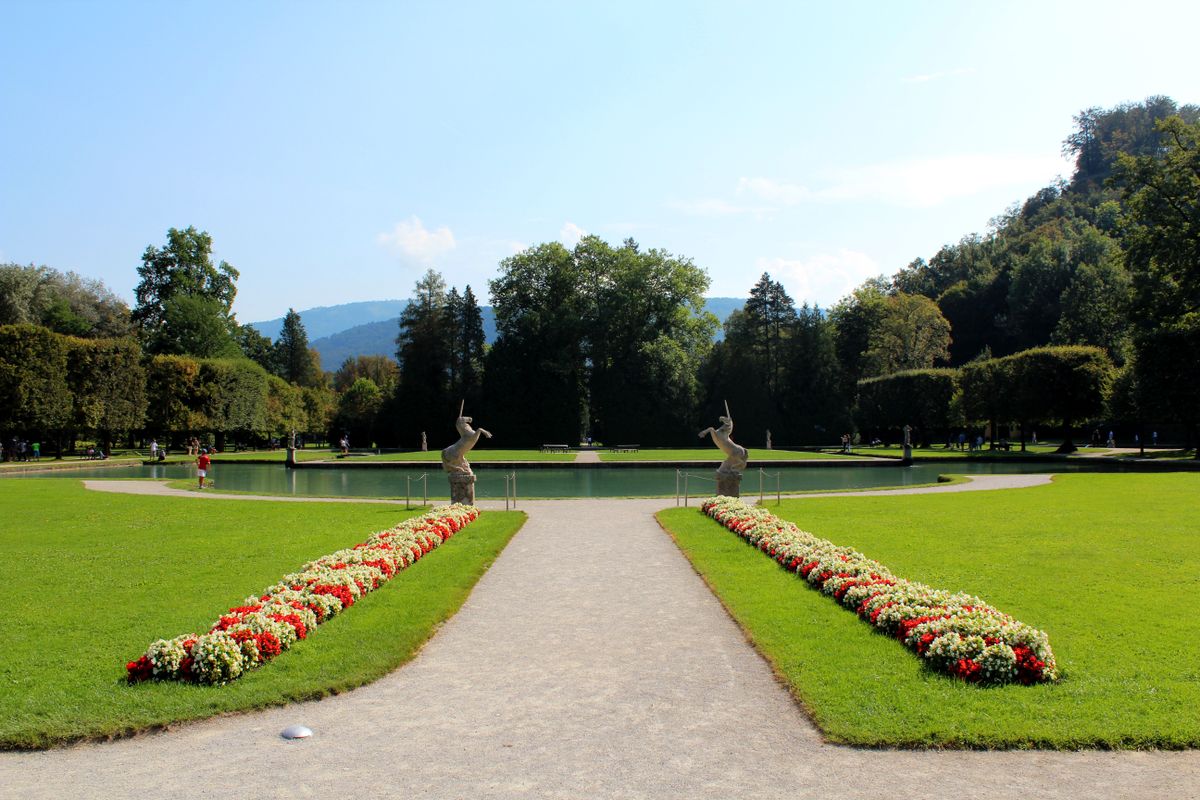
The Mirabell gardens: the steps and Pegasus
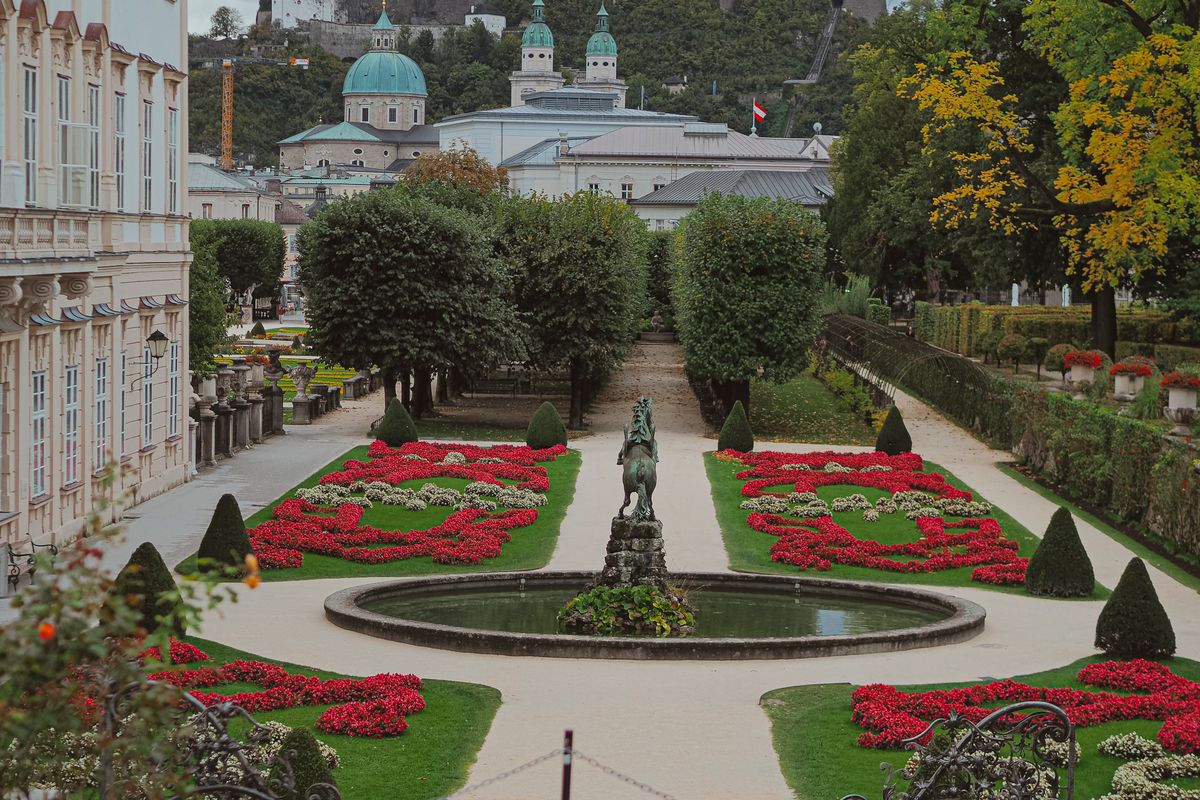
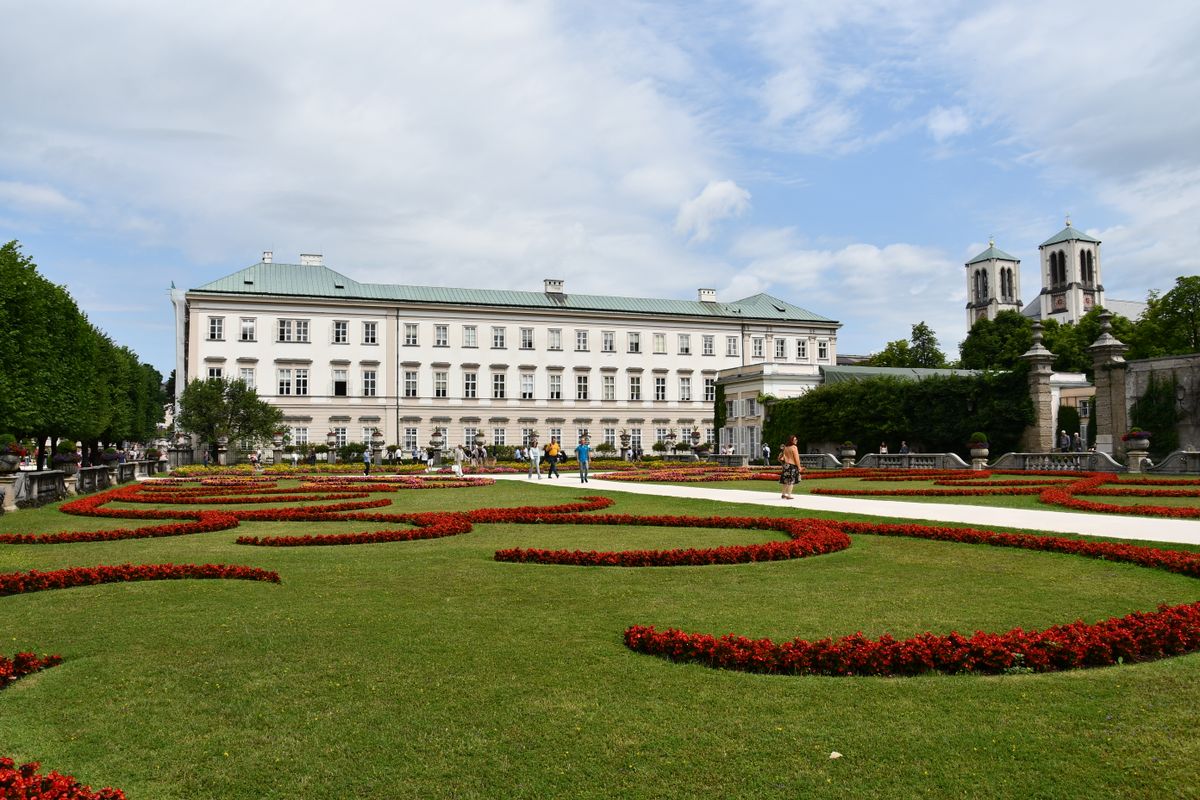
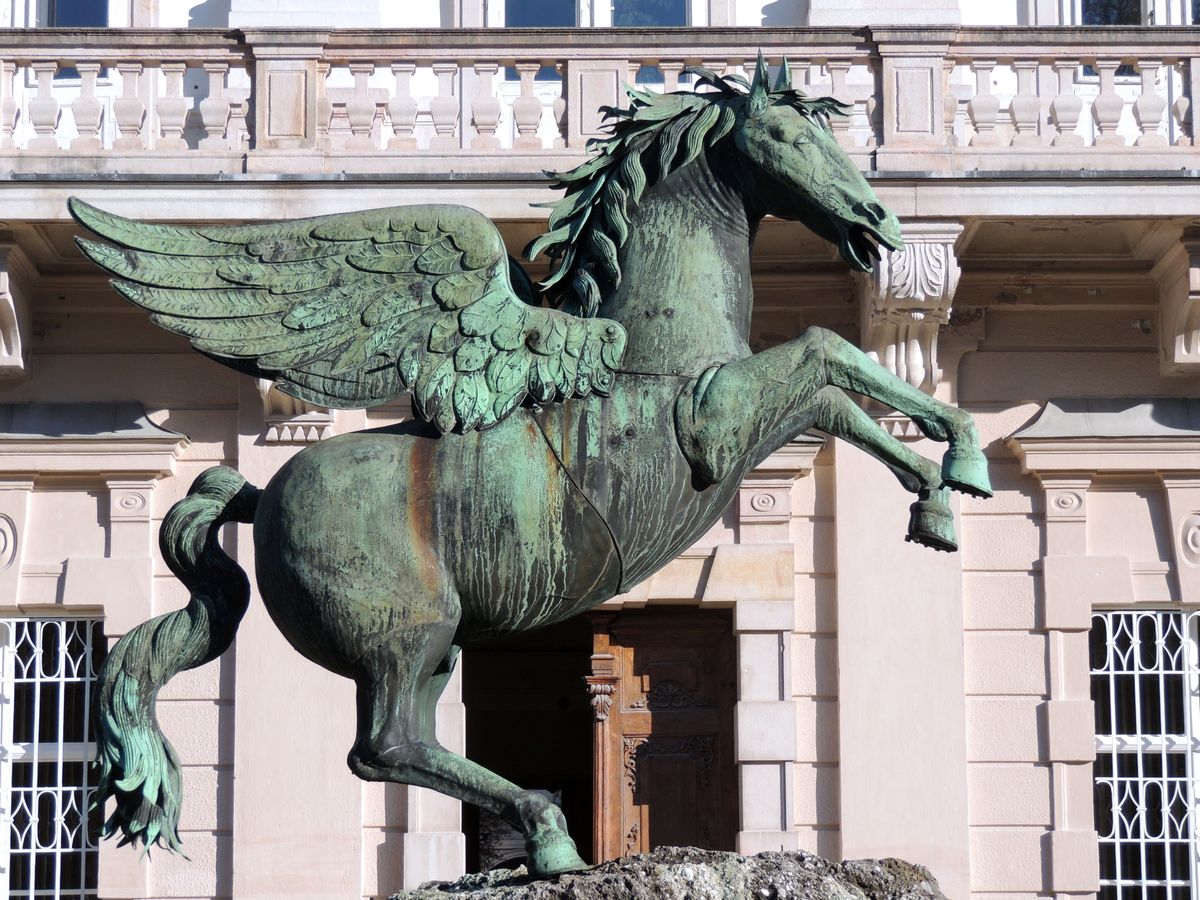
If you have time for one location, this is it. The gardens of the Mirabell palace gather more recognisable elements in one place than anywhere else: the Pegasus fountain, the terraced steps, the dwarf garden and the long gravel walk.
The palace was built in 1606 by the prince-archbishop Wolf Dietrich for Salome Alt, the woman with whom he had fifteen children while nominally celibate, which is a story the guides tell with some relish.
Inside, the palace holds the Marble Hall, where the child Mozart performed and where weddings and concerts are held today. Entry to the gardens is free and always open.
Between seven and nine in the morning the gardens are practically empty, the light comes from the east across the parterre and the fountain is clear of people. By ten the tour groups arrive in sequence and the steps are occupied continuously until late afternoon.
The family villa: two castles, not one
This is the most common confusion of the whole subject. The family house in the film is not one building but three: two real castles used for different sides, plus a Hollywood interior.
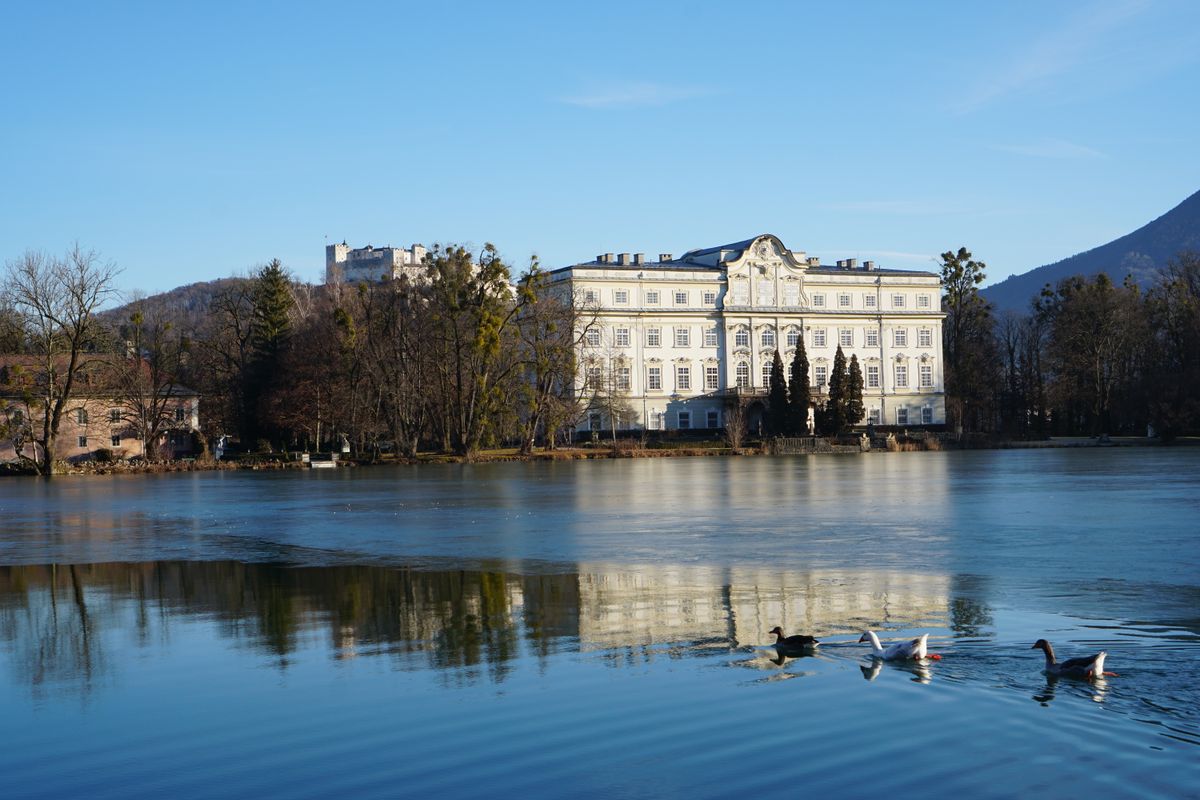
The terrace with the balustrade, the steps down to the water and the reflection of the building in the Leopoldskroner Weiher lake are Schloss Leopoldskron. It is privately owned, operates as a hotel and conference centre, and the garden is not open to the public. You can see it from across the lake, and that is the standard view.
The gate the cars drive through, the front courtyard and the yellow wall are Schloss Frohnburg, which belongs to the Mozarteum music university and is likewise not open.
The two castles are less than ten minutes apart, and between Frohnburg and the Hellbrunn palace runs the long tree-lined avenue that appears in several sequences and is a public path.
Hellbrunn and the glass pavilion
The glass pavilion where the teenage duet is sung was built specially for the film, in the garden at Leopoldskron. It was later moved to the grounds of Hellbrunn palace, where it now stands and can be walked around.
A detail that surprises most visitors: the pavilion doors are locked. After an elderly visitor injured herself trying to recreate the dance across the benches, the interior was closed permanently. You can photograph it from outside and no more.
While you are there, Hellbrunn is worth it anyway. Built in 1615 as a summer residence, its real attraction is the trick fountains, an elaborate seventeenth-century water joke system designed to soak the archbishop guests, still operated by guides who enjoy it far too much.
Nonnberg abbey
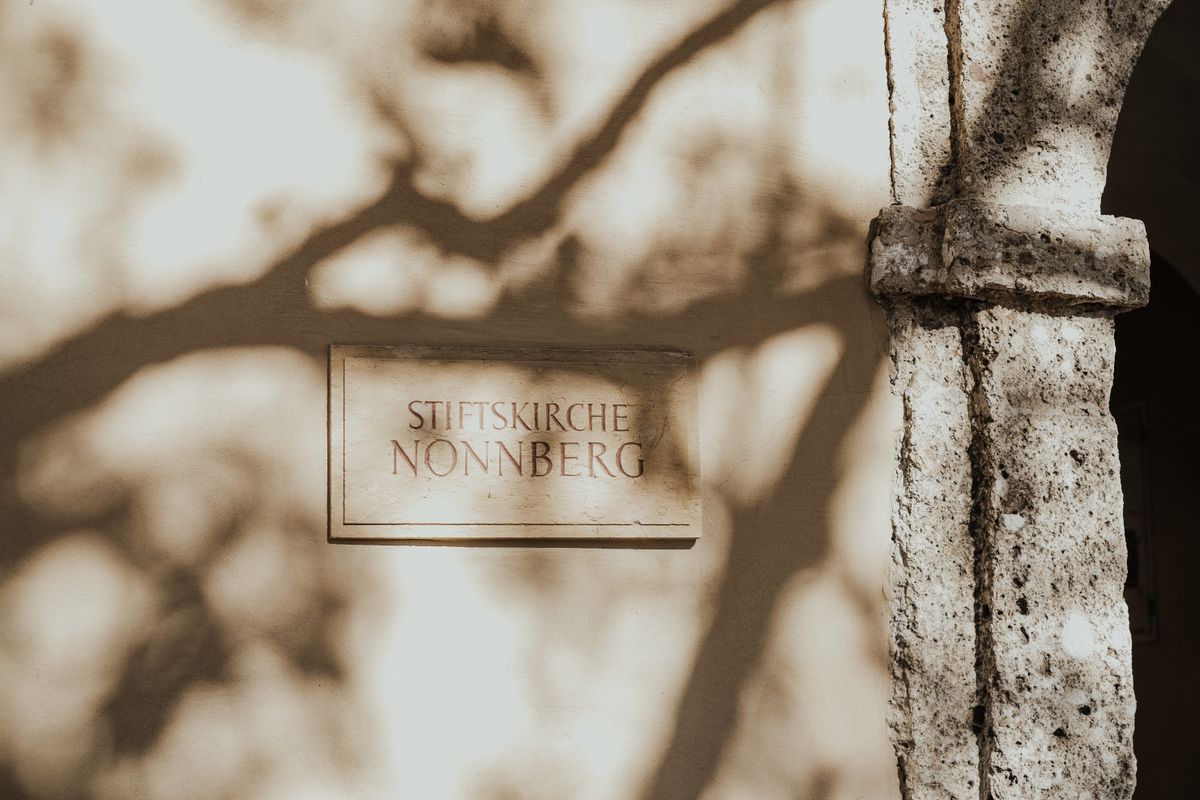
The Benedictine abbey perched on the rock below the fortress is the only location in the film with a genuine connection to the real story: this is the convent where Maria was actually a novice.
The community was founded around 714 and has functioned continuously ever since, which makes it the oldest continuously operating convent north of the Alps.
What you can do in practice: climb the Nonnbergstiege steps from behind the old town, about ten minutes of steady ascent, and enter the church, which is open to visitors. The courtyard and the cloister are not.
Nonnberg is not a tourist attraction but a working convent with a small and elderly community, and the sisters have asked repeatedly that visitors keep quiet and stay out of the enclosure. Do not sing on the steps. It happens, and it is not appreciated.
The old town: Residenzplatz and the festival halls
A few short but memorable shots were filmed in the historic centre, all within a few minutes of each other and easily combined into one walk.
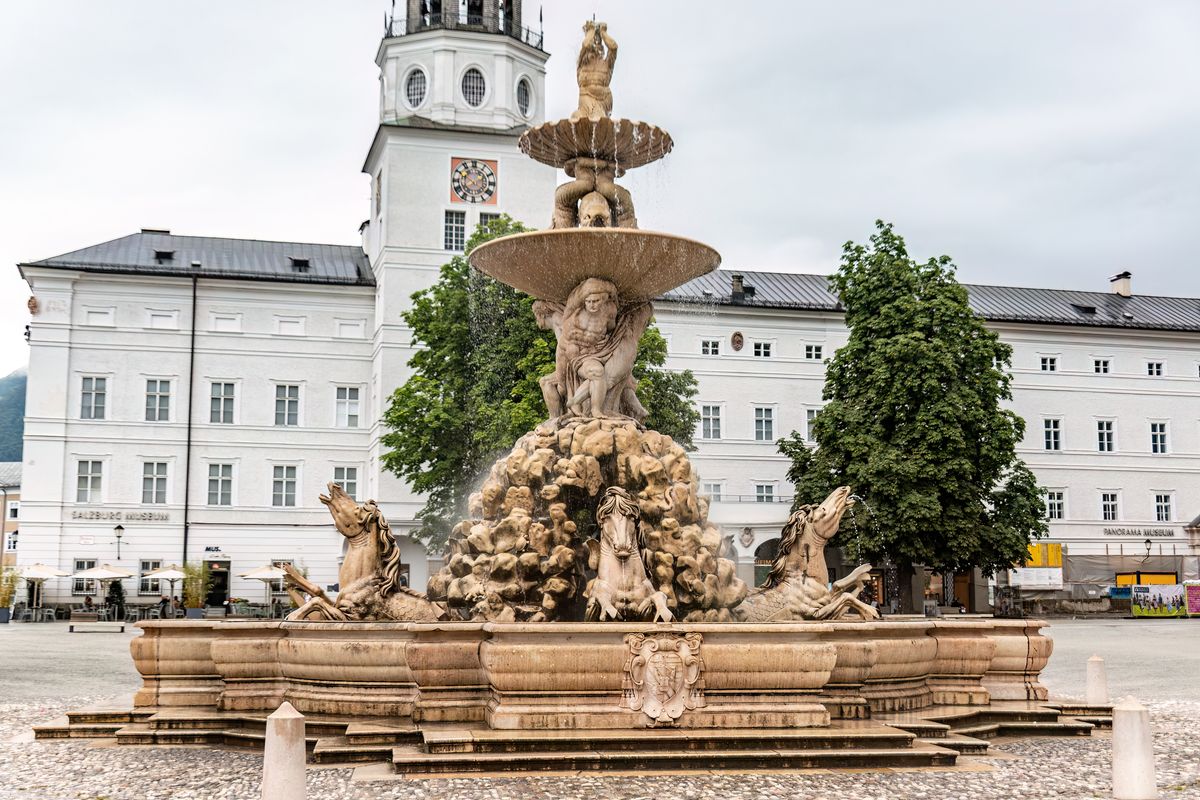
Residenzplatz has the monumental seventeenth-century marble fountain with horses and tritons that the family drives past. It is the largest baroque fountain north of the Alps.
The Felsenreitschule, the hall with arcades cut directly into the rock of the Monchsberg, originally a riding school and now a festival venue, is where the concert scene takes place. It is used for real performances and can be seen on a guided tour of the festival halls.
St Peter cemetery inspired the hiding scene, though that was rebuilt in a studio. The real cemetery, with its arcaded crypts against the rock face, is more atmospheric than the set.
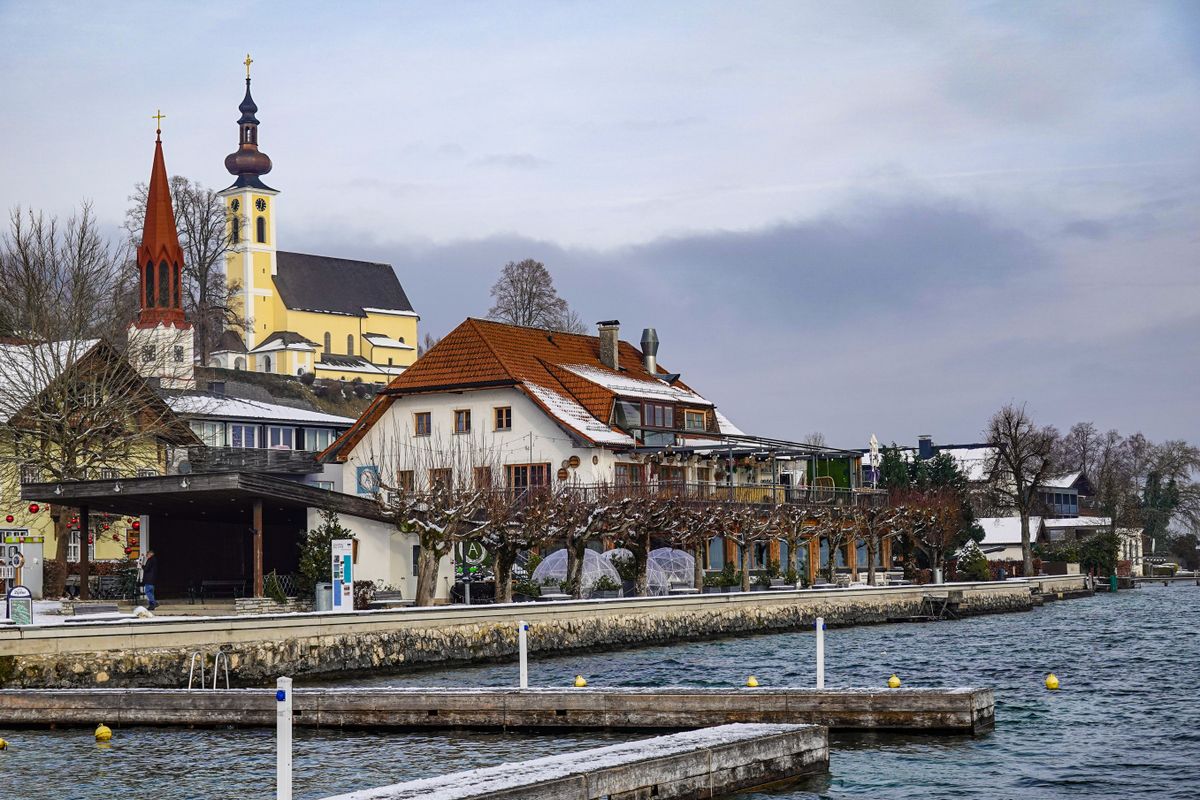
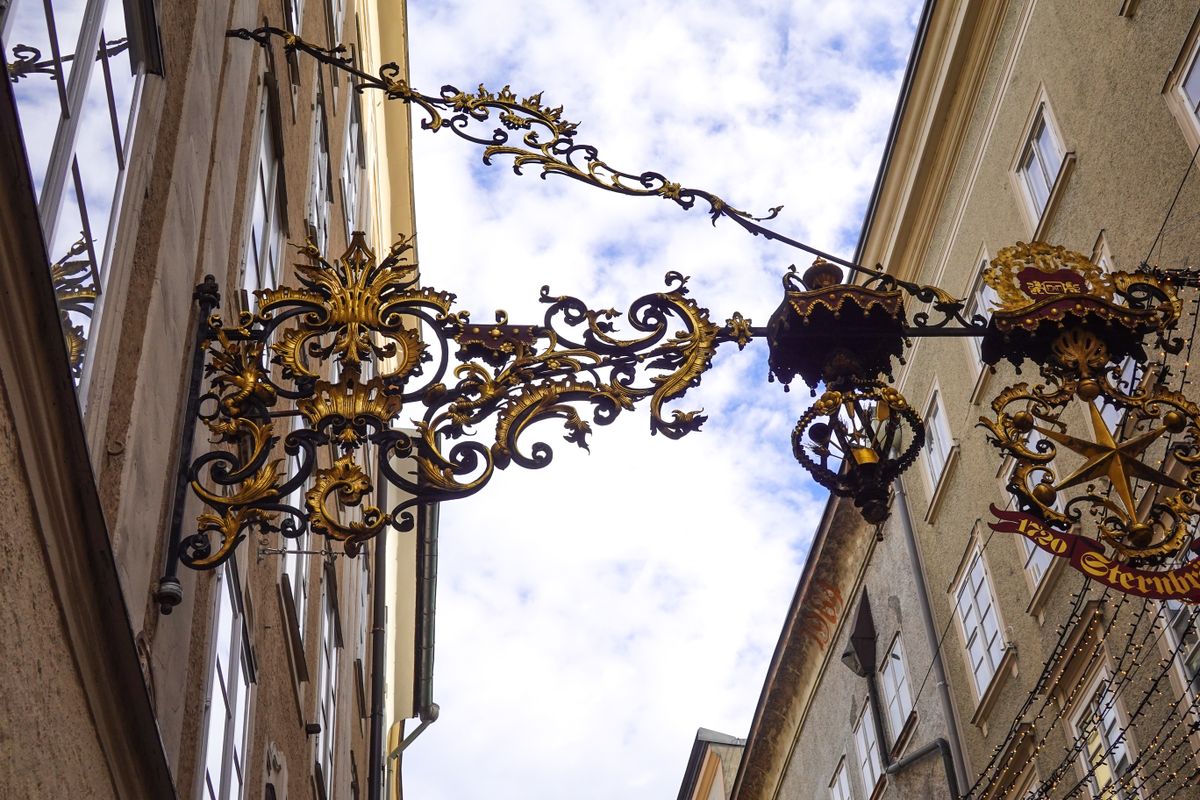
While in the area, Getreidegasse deserves the walk regardless of the film: the wrought iron guild signs hanging above the street are a genuine medieval survival, and Mozart was born at number nine.
Mondsee: the wedding church
The wedding scene was not filmed in Salzburg but about thirty kilometres east, in the small town of Mondsee, in the basilica of St Michael.
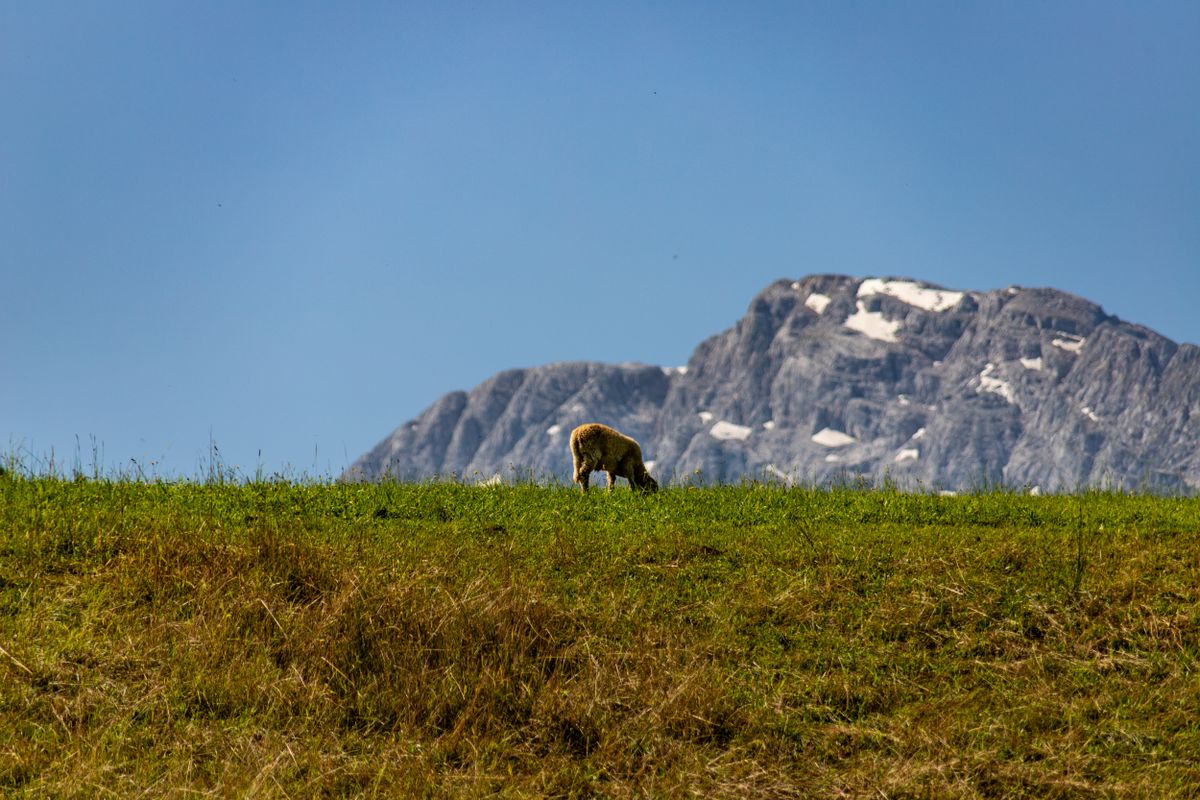
The church belongs to a former Benedictine abbey founded in 748, dissolved in the early nineteenth century. Its yellow twin-towered facade and the baroque interior are what appear on screen, and it remains an active parish church.
Mondsee is reached by bus 140 from in front of the Salzburg railway station in about fifty minutes, or by car in around half an hour. The lake itself is one of the warmest in the region and the town makes an easy half day.
The meadows and lakes of the opening
The opening shots, the flight over the mountains and the meadow where Maria turns, are the most searched for and the most misleading.
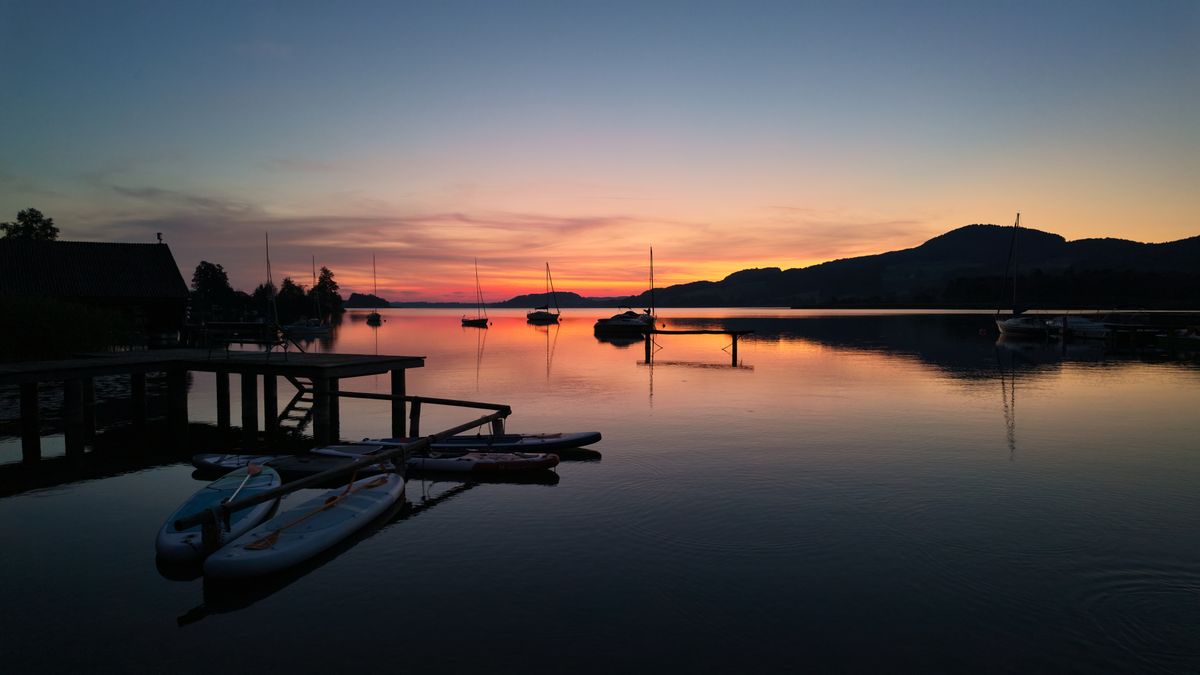
The famous meadow is not in Austria. It was filmed at Mehlweg, near Marktschellenberg, in Bavaria, a few kilometres over the German border. There is no monument, no sign and no path; it is a working alpine pasture.
The practical conclusion is not to hunt the exact square metre. Any alpine meadow around Salzburg gives you the same thing, and several of them are easier to reach and have somewhere to park.
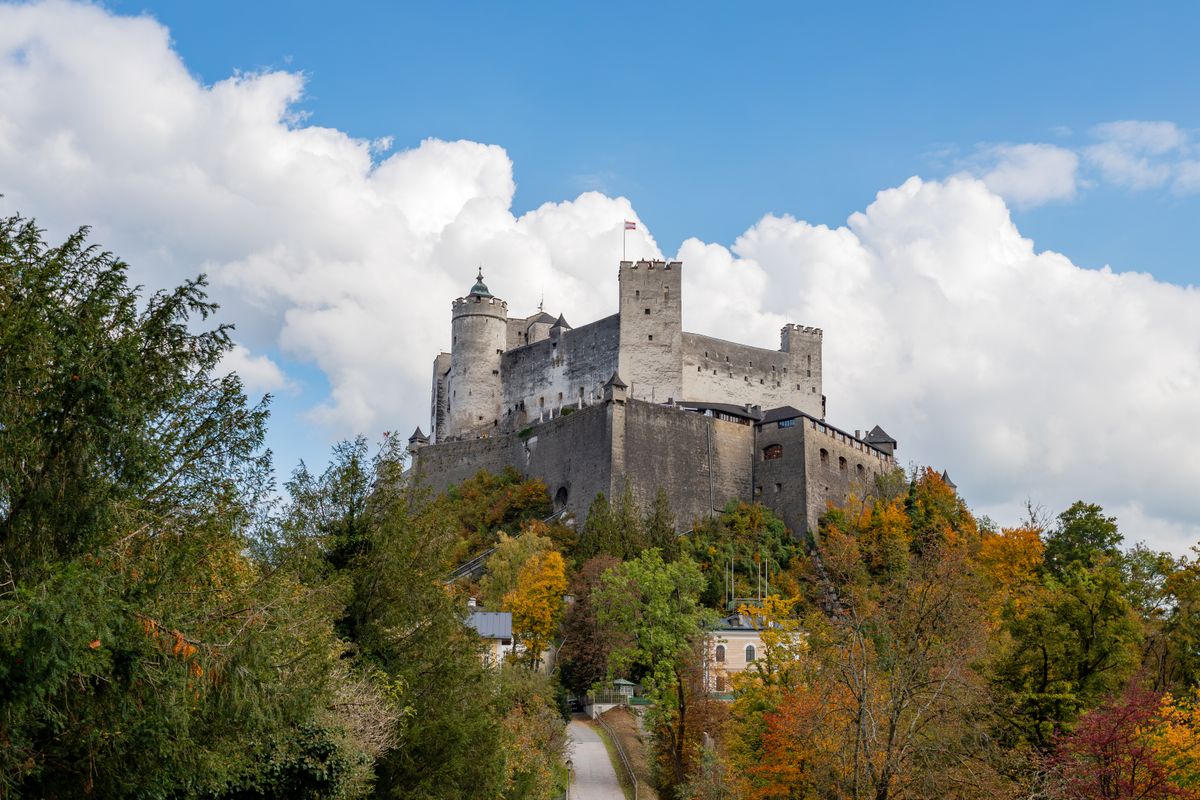
As for the lakes, the opening aerials sweep across the Salzkammergut. Wolfgangsee, with the village of St Gilgen on its shore, appears clearly, and Fuschlsee and Mondsee are in the sequence too.
Sound of Music locations: guided tour or on your own
Both work, and they solve different problems. Here is the honest comparison.
| Criterion | Organised tour | On your own |
|---|---|---|
| Price for two | 90 – 110 euros | cost of tickets and bus fares |
| Duration | about 4 hours | a full day |
| Covers Mondsee | yes | only with extra time |
| Covers Leopoldskron | from the road | from across the lake |
| Commentary | yes, with the songs | none |
| Flexibility | none | complete |
The simple rule: if you have a car, go on your own, because everything outside the city becomes easy. If you do not have a car, the tour is the efficient answer, mainly because it solves Mondsee, which otherwise costs you most of a second day.
Without a car and without a tour, a realistic day on foot and by bus covers the Mirabell gardens, the old town, Nonnberg and Hellbrunn, with Leopoldskron seen from the lakeside path. Bus 25 runs from the main station to Hellbrunn in about twenty minutes.
The real von Trapp story
The film kept the skeleton and rewrote nearly every detail. The reality, told plainly, is richer than the version on screen.
Georg von Trapp was not the cold disciplinarian of the film. He was a decorated submarine commander in the Austro-Hungarian navy, and by every account of those who knew him a warm and musical father. The invented sternness upset his children considerably when the film appeared.
Maria Kutschera came to the house as a tutor for one of the daughters, also called Maria, who was recovering from scarlet fever, not as a governess for all of them. She married Georg in 1927, eleven years before the events the film compresses.
The singing career began out of necessity rather than joy. The family lost its money in the collapse of an Austrian bank in the early nineteen-thirties, took in lodgers, and started performing for income.
The escape was not a climb over the mountains. They took a train to Italy, where Georg held citizenship, having been born in a part of the empire that had become Italian. Walking south over the mountains from Salzburg would in any case have taken them into Germany.
They settled in Vermont, where they opened a lodge that still operates today, run by descendants. Information on the Salzburg sites is on the city tourism portal and on the Hellbrunn palace site.
Frequently asked questions (FAQ)
Conclusion
Salzburg carries this film lightly, which is part of its charm. The gardens, the two castles, the abbey and the fountain are all genuine, and the interiors everyone remembers were built six thousand miles away.
Go to the Mirabell gardens at eight in the morning, look at Leopoldskron from across the lake, climb the steps to Nonnberg quietly, and read the real family story afterwards. It is the better one.
