
 By

It is the most driven route in Iceland, it takes a single day, and it earns the traffic. The Golden Circle links a parliament site in a rift valley, a geyser that erupts every few minutes and a waterfall that falls into a canyon, all within about 230 kilometres of Reykjavik.
The three main stops, the detours worth adding, what it costs, and whether to drive it yourself or take a coach.
What the Golden Circle is
It is a loop of roughly 230 to 250 kilometres from Reykjavik taking in three sites: Thingvellir national park, the Geysir geothermal area and Gullfoss. The roads are paved the whole way and passable in a normal car in any season.
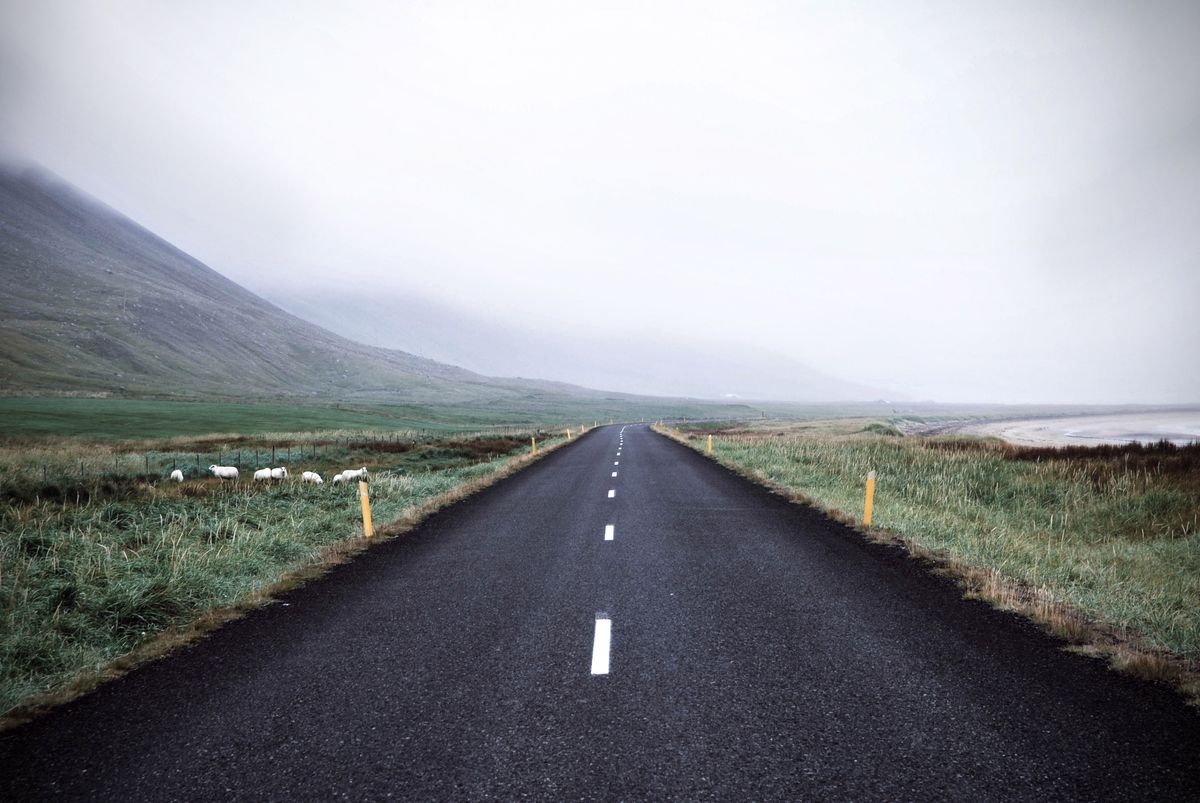
The whole loop can be driven in about three and a half hours without stopping, which nobody does. A realistic day with stops, photographs and lunch is seven to nine hours.
Thingvellir, the parliament in a rift
Thingvellir is where the Icelandic parliament, the Althing, met from the year 930, which makes it one of the oldest parliamentary sites in the world. It is a UNESCO site for that history, not for the landscape.
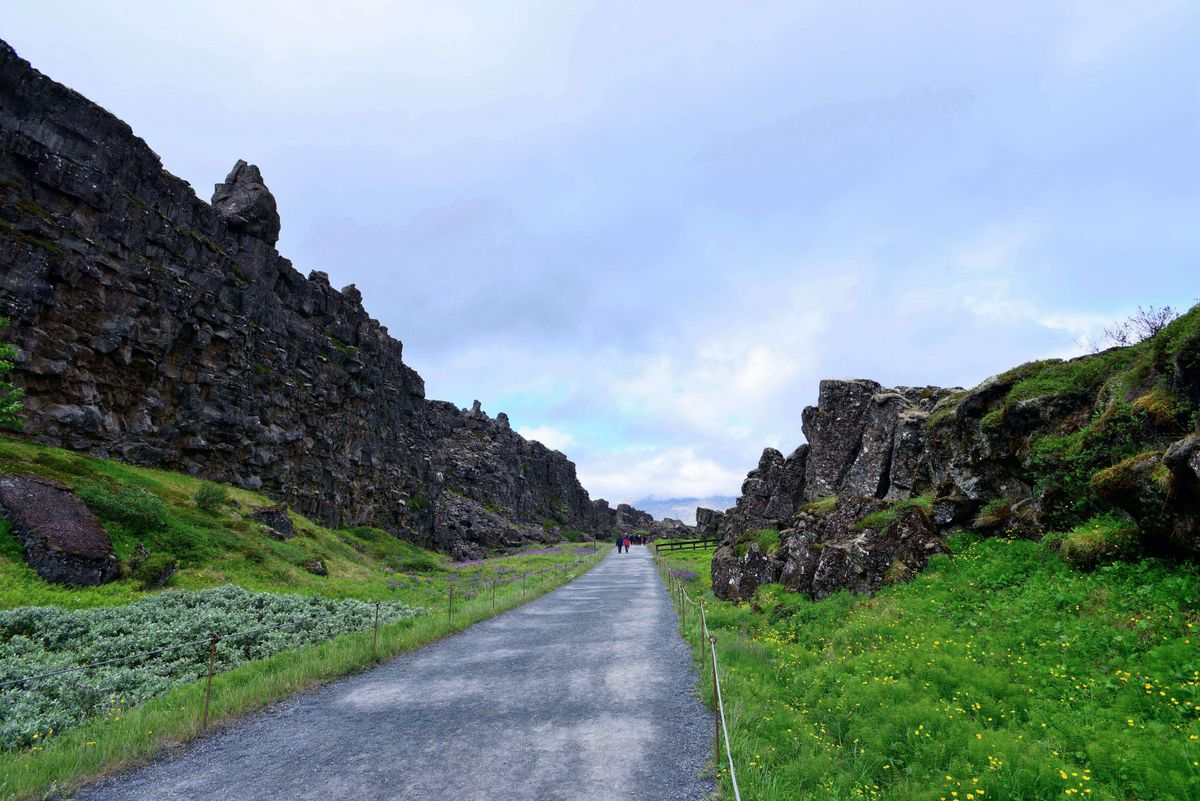
The landscape is what people photograph. The site sits in a rift valley where the North American and Eurasian plates are pulling apart, and the Almannagja gorge is the visible edge of the North American plate. The Silfra fissure nearby is filled with glacial meltwater so clear that divers report visibility of a hundred metres.
Geysir and Strokkur
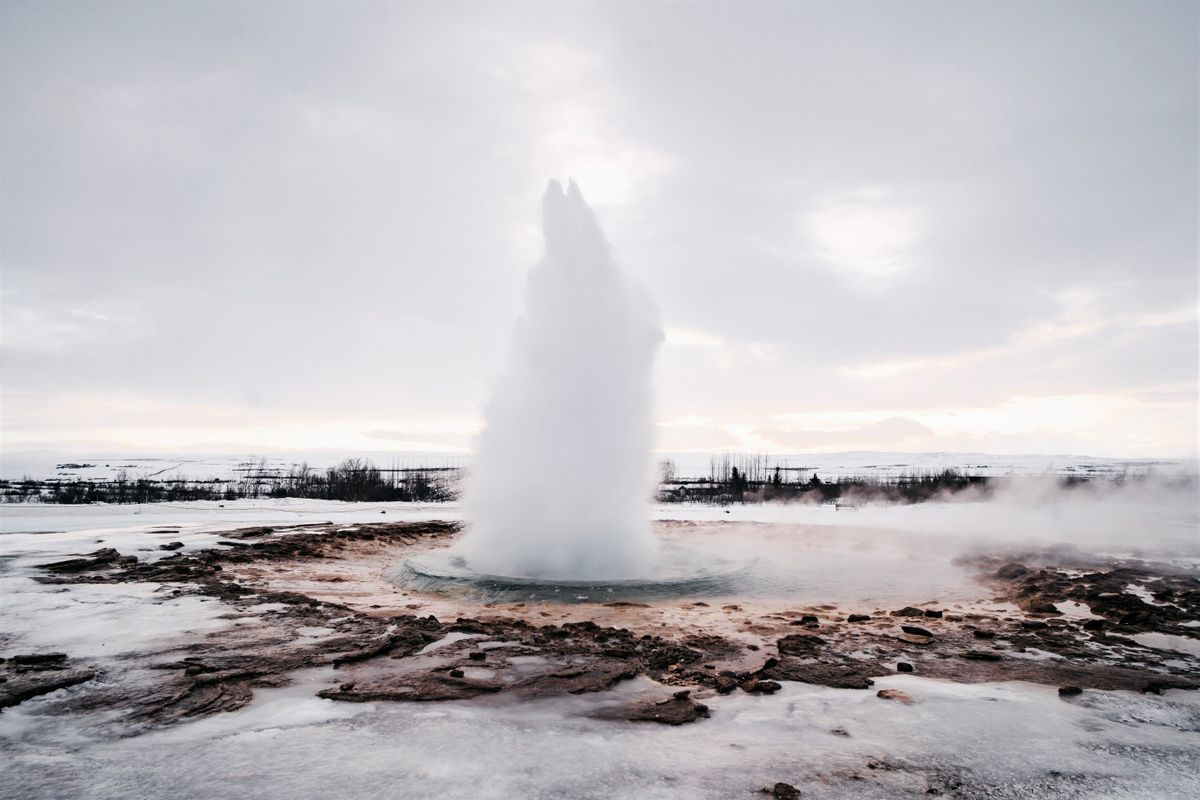
The original Geysir gave its name to every geyser in the world and is now largely dormant, erupting rarely and unpredictably. The one that performs is Strokkur, next to it, which erupts every four to ten minutes and throws water up to about twenty metres.
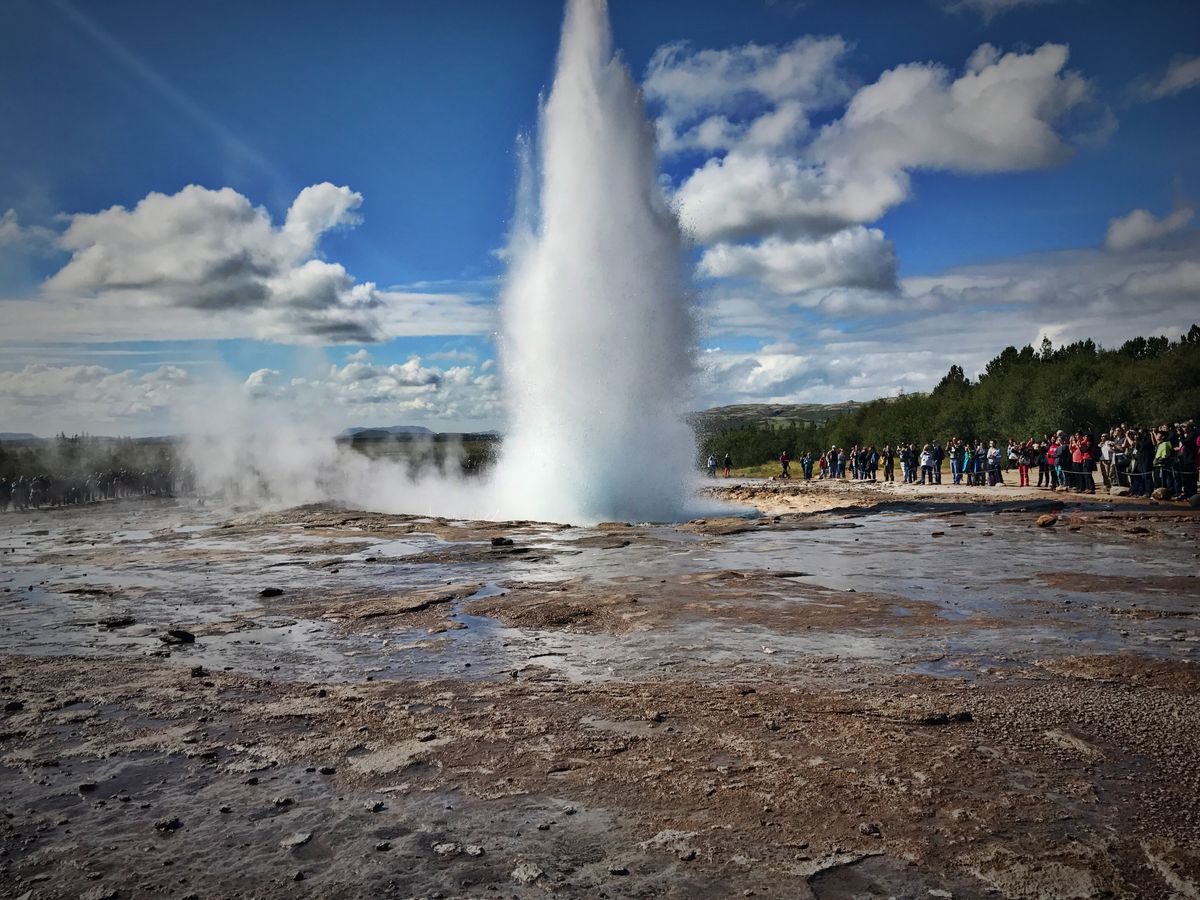
The whole field is thermal: boiling pools, steam vents and mud. Stay on the paths. The water in the pools is at boiling point and the ground beside them is not always solid.
Gullfoss, the golden falls
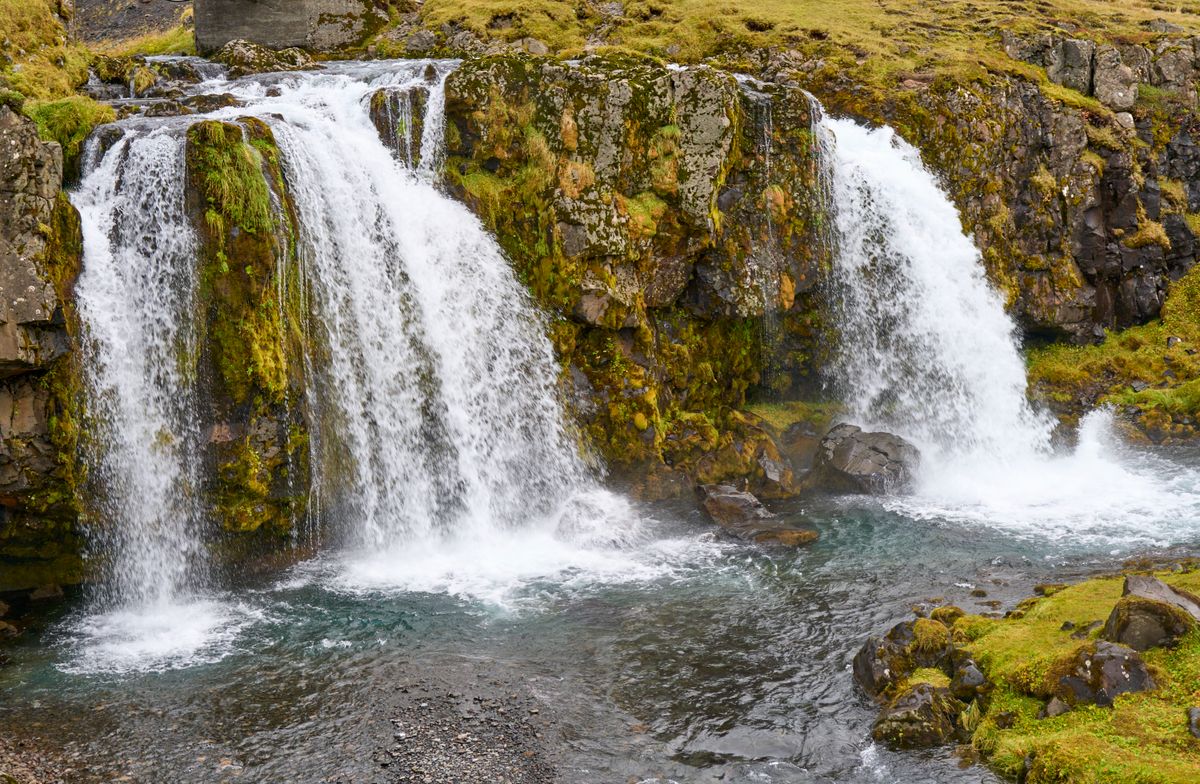
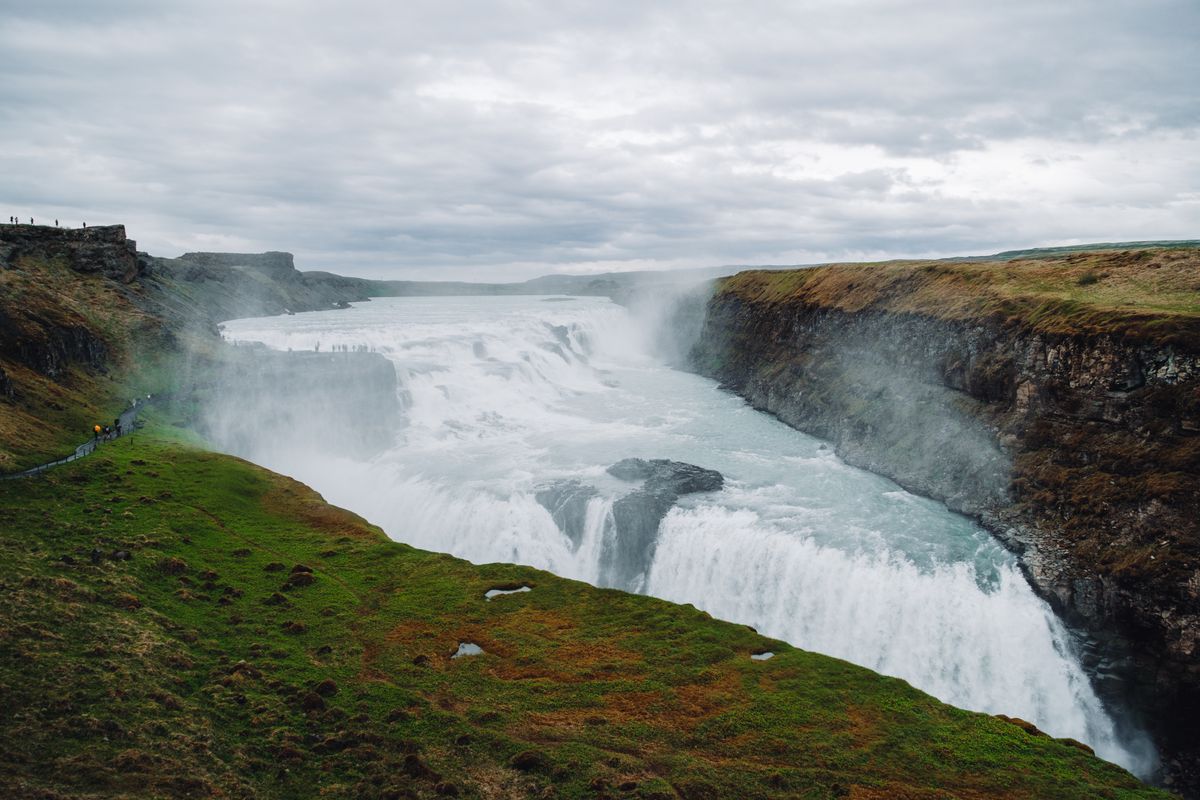
Gullfoss drops in two stages into a canyon around seventy metres deep, and the volume of water is the point rather than the height. On a sunny day the spray produces rainbows, which is where the name comes from.
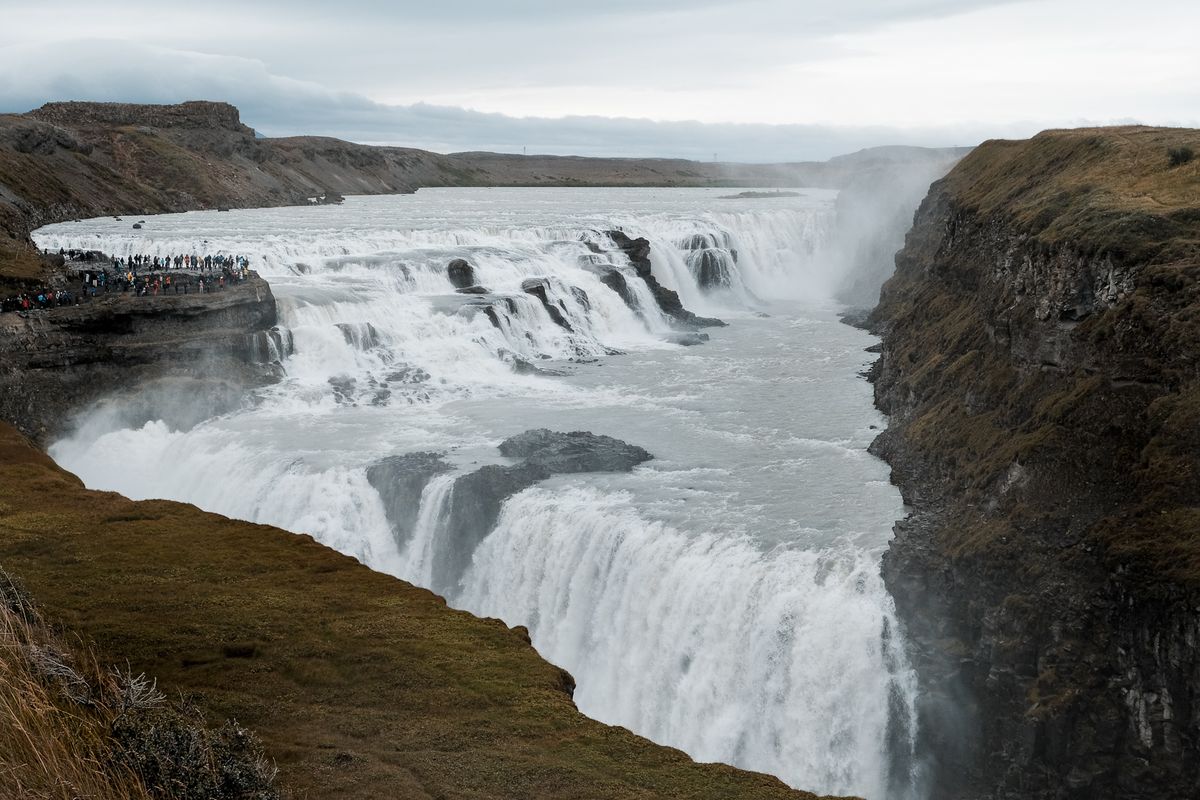
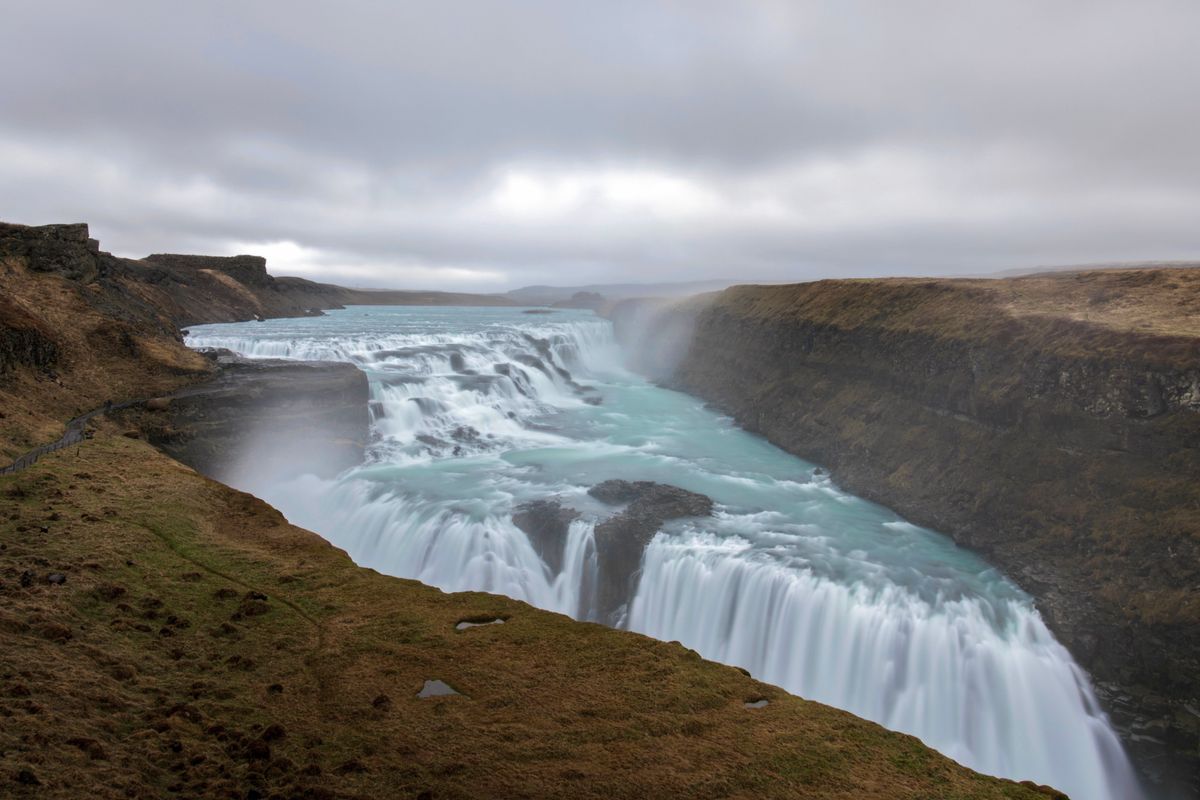
The falls were nearly lost to a hydroelectric scheme in the early twentieth century. The campaign to save them, led by the daughter of the landowner, is a founding story of Icelandic conservation.
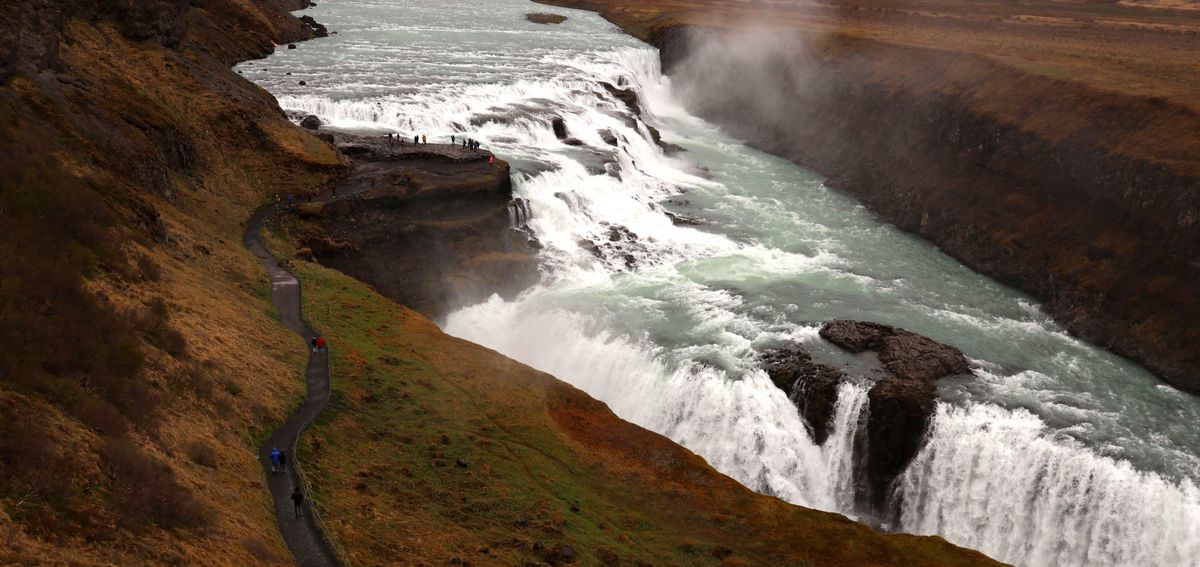
There are two viewing levels. The lower one takes you close enough to be soaked. Waterproofs are not optional, and the lower path closes in winter ice.
Detours worth adding
- Kerid, a volcanic crater with a red rim and a green lake, with a small entry fee.
- The Secret Lagoon at Fludir, the oldest swimming pool in Iceland and far cheaper than the Blue Lagoon.
- Fridheimar, a tomato greenhouse where you eat tomato soup among the plants, booking essential.
- Bruarfoss, a smaller waterfall of an unlikely blue, reached by a walk of about three kilometres each way.
- Skalholt, a bishopric from 1056 and one of the historic centres of the country.
- Efstidalur, a dairy farm making ice cream, with the cows visible from the counter.
What it costs
| Item | Detail |
|---|---|
| The three main sites | free to enter |
| Parking at Thingvellir | paid, and enforced by camera |
| Kerid crater | a small entry fee |
| Hire car for a day | the main cost if driving yourself |
| Coach tour | usually cheaper than a car for one or two people |
| Fuel | expensive, and the loop is about 250 kilometres |
Self drive or organised tour
Driving yourself gives you the early start and the late finish, which is the whole trick: leaving Reykjavik at eight means having Thingvellir almost to yourself before the coaches arrive at ten.
A coach tour is often cheaper for one or two people, requires no winter driving and removes the parking problem. For a group of three or four, a hire car wins on both cost and flexibility.
When to go and practical advice
In summer there is light until midnight, so the loop can be driven in the evening with almost nobody on it. In winter there are about four hours of usable daylight, the roads are icy and the schedule has to be much tighter.
Wind is the underrated hazard. Car doors are torn off by gusts in Iceland every year, and the insurance usually excludes it. Hold the door. Road conditions are published at the Icelandic road administration site and safety information at SafeTravel.
Frequently asked questions (FAQ)
Conclusion
The Golden Circle is the most popular day in Iceland for a good reason: a rift valley, a geyser and a major waterfall in one paved loop from the capital.
Start early or go in the evening, add Kerid and the Secret Lagoon, wear something waterproof at Gullfoss, and hold on to the car door.
