

 By
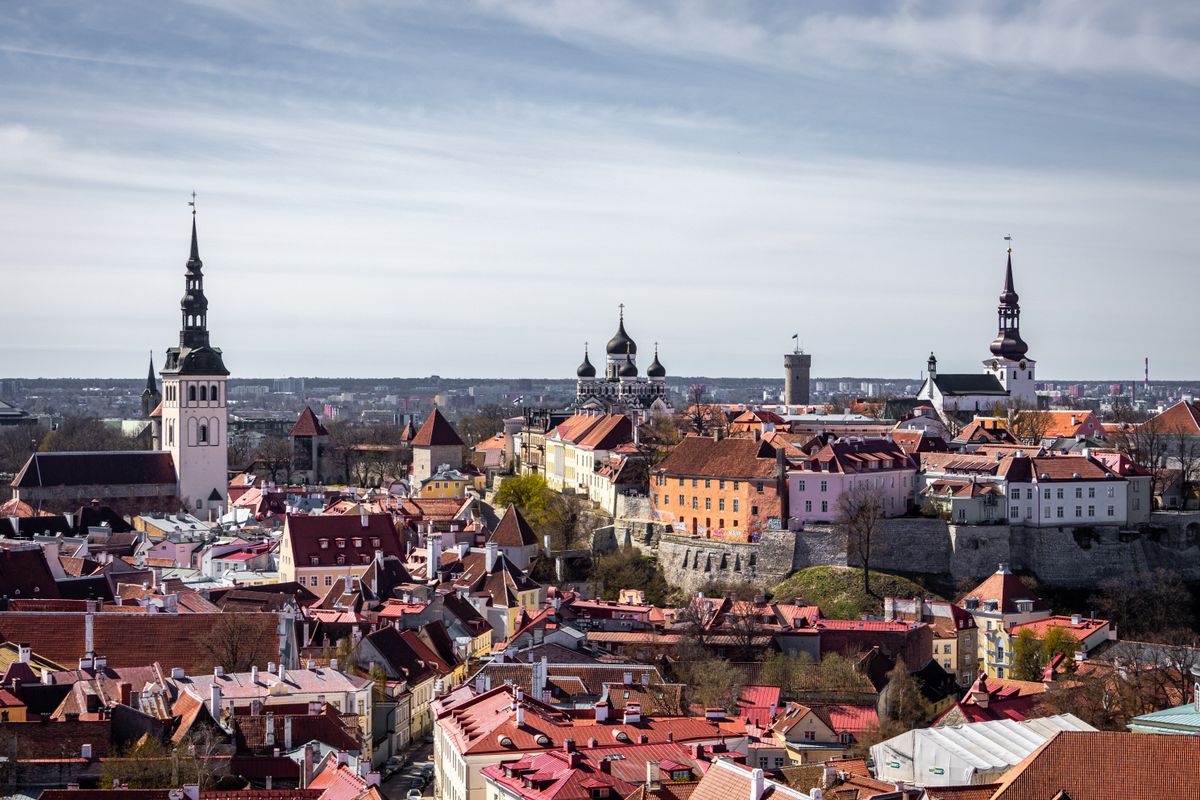
Tallinn holds a contrast almost nowhere else manages: a Hanseatic walled town preserved nearly intact, inside a country that has been running its elections, taxes and medical records online for two decades. You can walk from a fourteenth-century pharmacy to a company registered in eighteen minutes over the internet, and both are ordinary here.
This guide covers the two towns inside the old town, where the viewpoints are, the walls, the churches, Kadriorg and the wooden quarters most visitors miss, plus prices, crowds and a two day plan.
Tallinn: a town that genuinely survived
The old town has been UNESCO listed since 1997 and is considered one of the best preserved medieval urban ensembles in northern Europe. The street plan, the walls and most of the buildings are original rather than reconstructed.
One correction is worth making, because the usual tourist formula says the city escaped the war untouched. That is not accurate. In March 1944 Soviet bombing destroyed a substantial part of the town, particularly around Harju street, where the open lawn beside the ruins of St Nicholas church is the scar left behind.
The first record of the city dates from 1219, when the Danish king Valdemar the Second took the hilltop fortress. The name itself is thought to derive from taani linn, the Danish town, and the Danish flag is supposed to have fallen from the sky here during that battle.
Toompea and the lower town: two cities, not one
The most useful key to reading the old town is that for centuries it was two separate entities, with different administrations, different laws and a wall between them.
Toompea, the hill, belonged to the nobility and the bishop. The castle was there and power was exercised there. The lower town belonged to the merchants, the Hanseatic guilds and the craftsmen, and it guarded its independence carefully, including by locking the gates between the two at night.
The difference is still palpable. Toompea is quiet, full of government buildings and embassies. The lower town is where the squares, the shops and the noise are. The castle on Toompea now houses the Estonian parliament, in a pink baroque building that looks nothing like a fortress.
The viewpoints on the hill
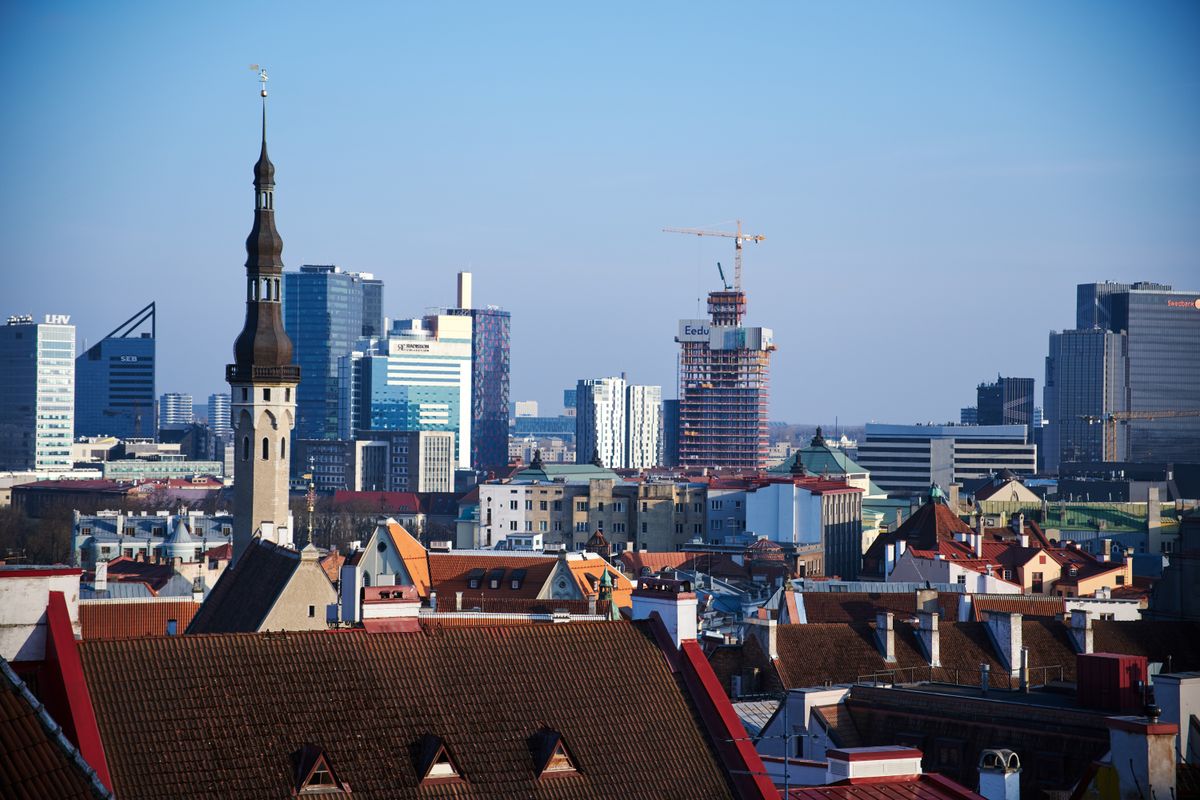
The photograph you will recognise instantly, with the sea of red roofs, the spires and the glass towers on the horizon, is taken from Toompea, from one of two platforms a few minutes apart.
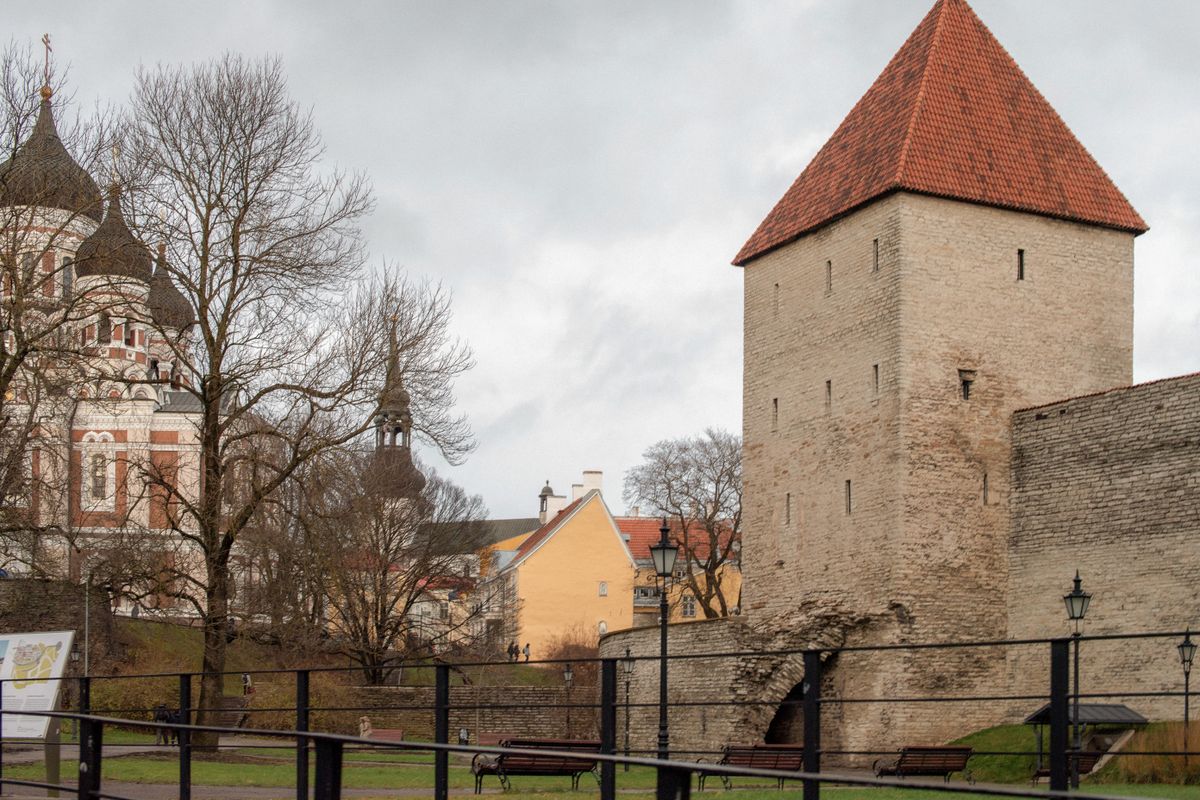
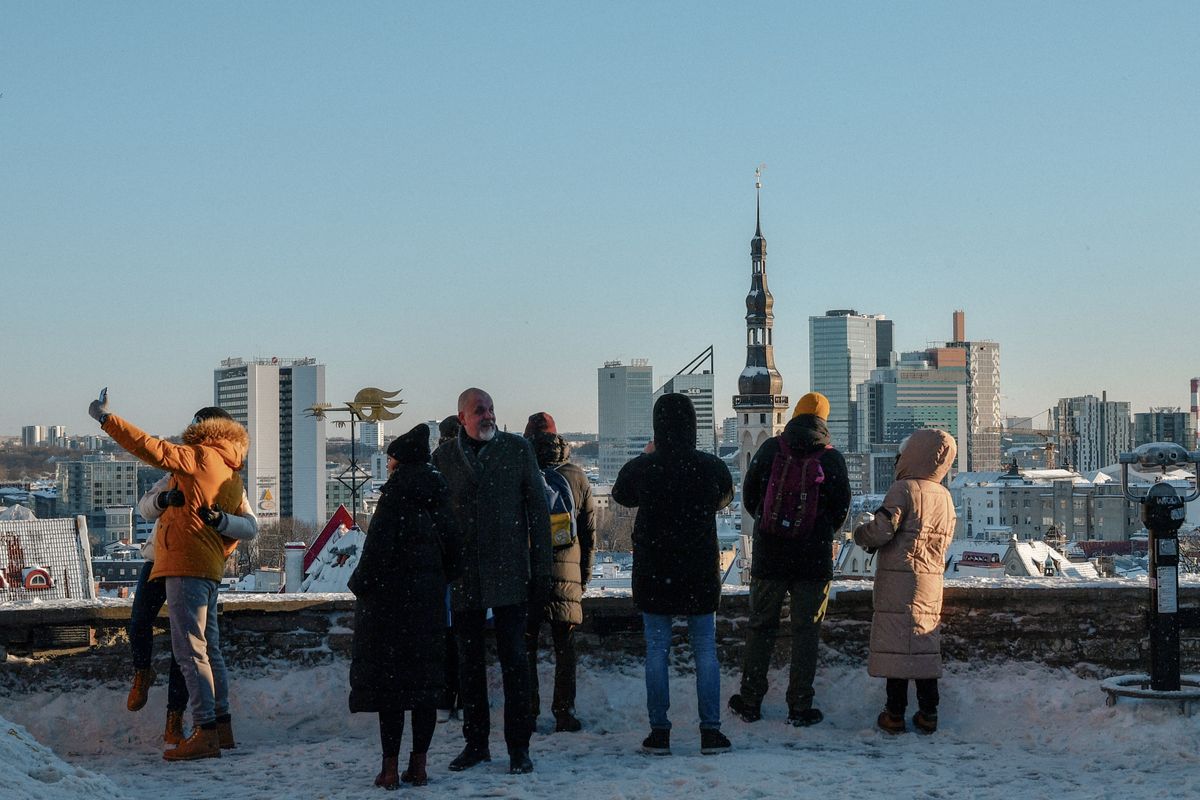
Kohtuotsa is the famous one, facing north-east, with the old town in front and the modern skyline behind. On the wall beside it someone painted the words the times we had, which has become the most photographed graffiti in Estonia.
Patkuli, the other, looks north-west toward the port and the sea, and frames the walls with their conical towers better. It is reached by a long flight of steps and is usually less crowded.
Both platforms face so that the good light comes in the morning and the evening. At midday, especially when cruise ships are in, you will be photographing over other people shoulders. Kohtuotsa before nine in the morning is a different place entirely from Kohtuotsa at noon.
Alexander Nevsky cathedral and its awkward history
The Orthodox cathedral with black onion domes, right at the top of the hill, is the most photographed building in the city and the one Estonians are least sentimental about.
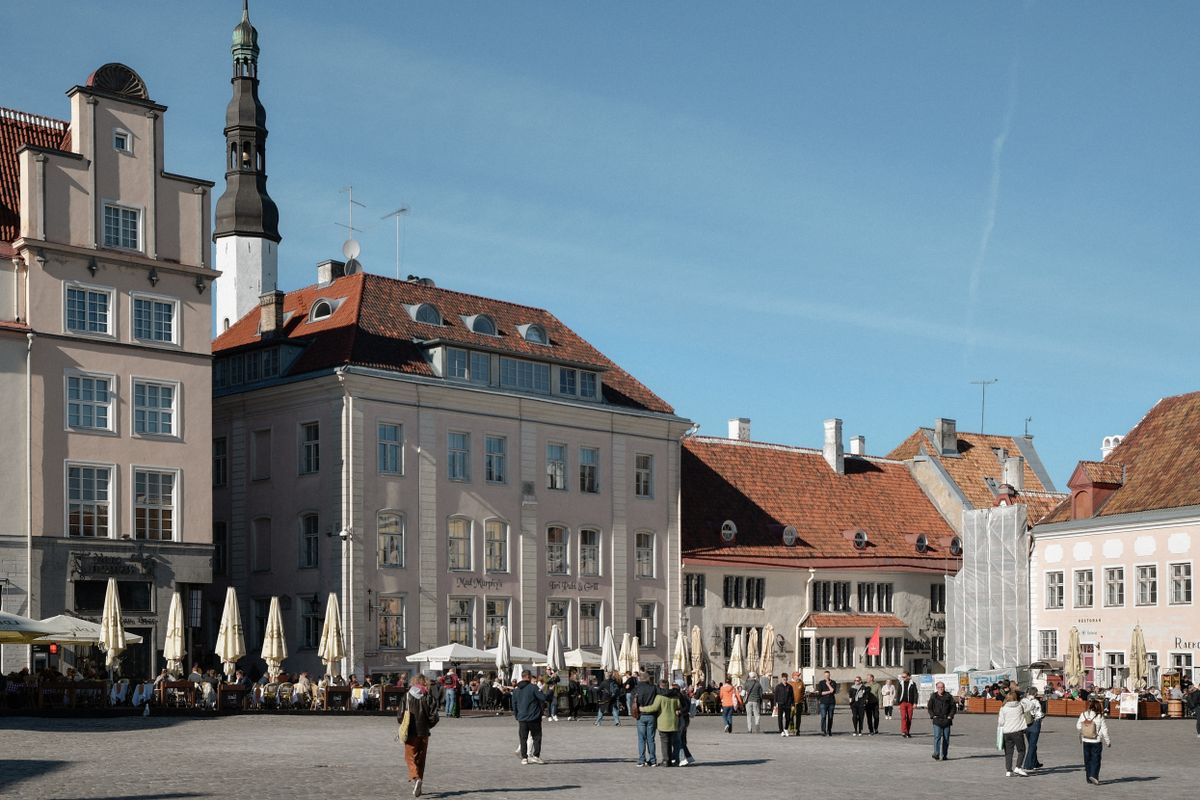
It was completed in 1900, during the russification of the Baltic provinces, and was deliberately placed on the hill, directly opposite the seat of local power, as a statement. There were serious proposals to demolish it in the nineteen-twenties, after independence.
Entry is free, with modest dress and silence expected. Photography inside is forbidden and the rule is enforced strictly. It is worth going in: the iconostasis and the mosaic work are genuinely fine, whatever the politics of its founding.
Town Hall Square and the pharmacy from 1422
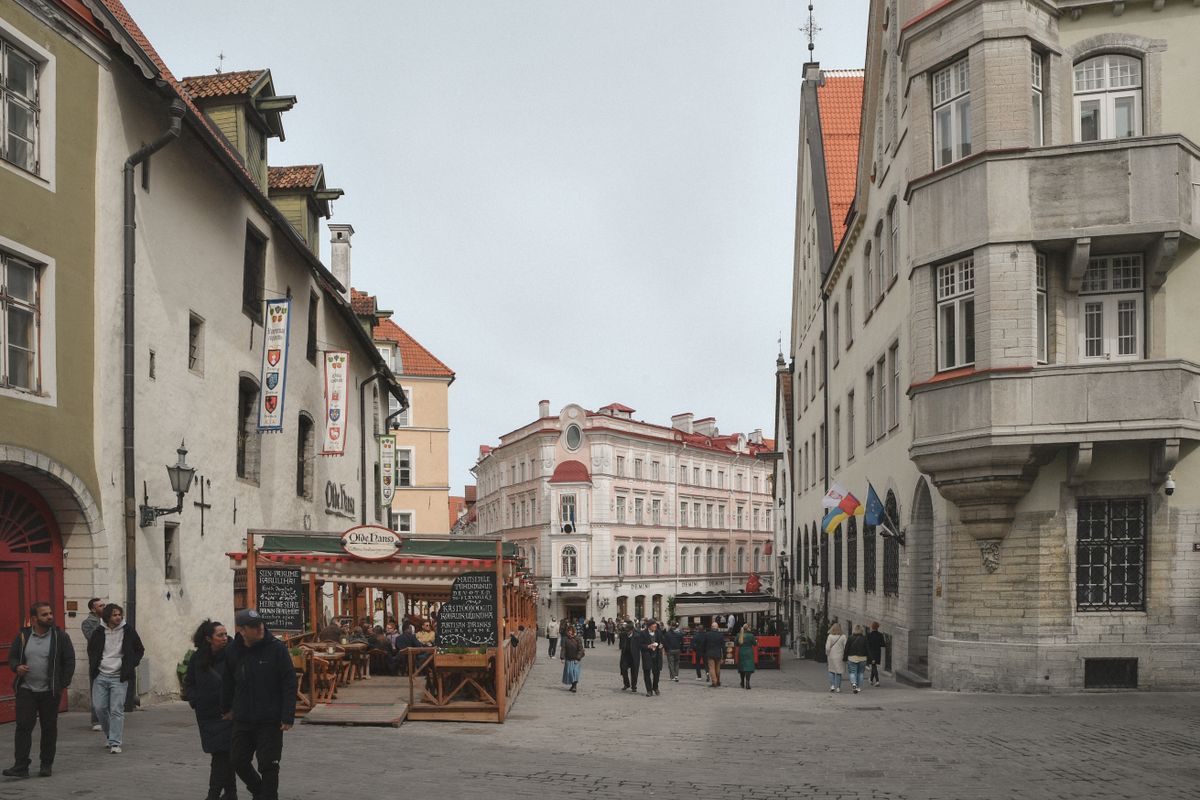
Raekoja plats is the centre of the lower town and one of the few medieval squares in northern Europe left in a form this complete.
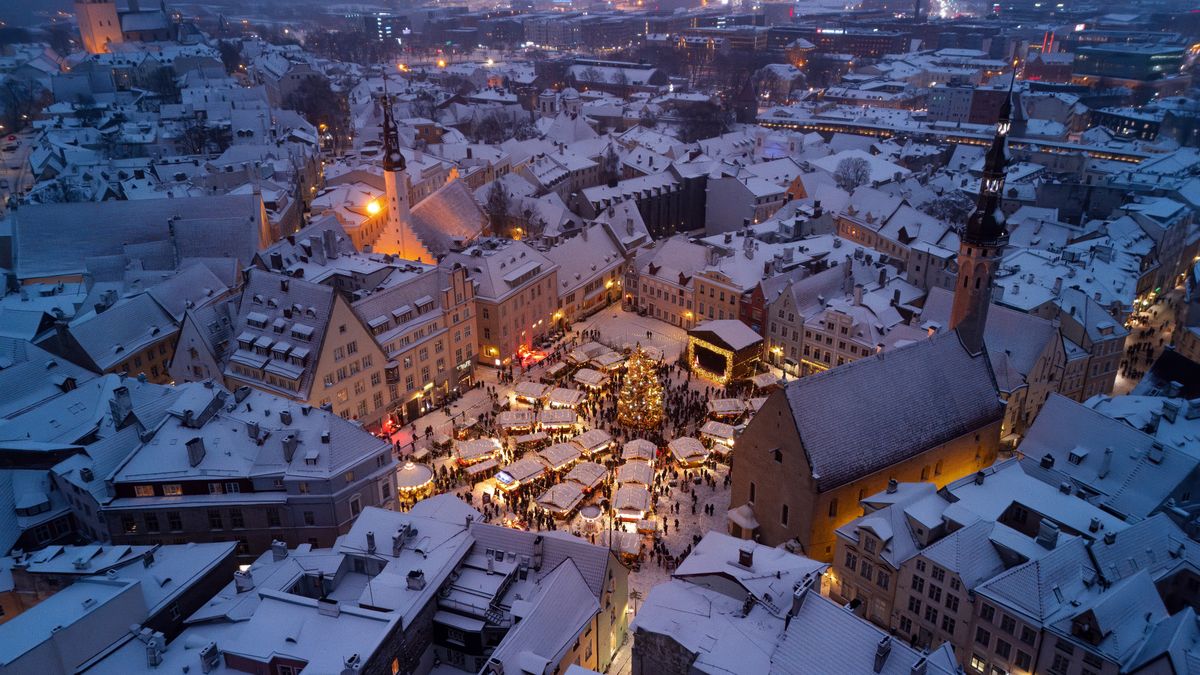
The town hall, built between 1402 and 1404, is the only Gothic building of its kind surviving in northern Europe. On its spire stands Old Thomas, a weathervane in the shape of a guard, who has been the city mascot since 1530.
The pharmacy on the square is the part that surprises most. It has operated on the same spot for at least six hundred years, documented from 1422, which makes it one of the oldest continuously running pharmacies in Europe. A small museum at the back displays what was sold here in the Middle Ages, including powdered mummy and burnt bees.
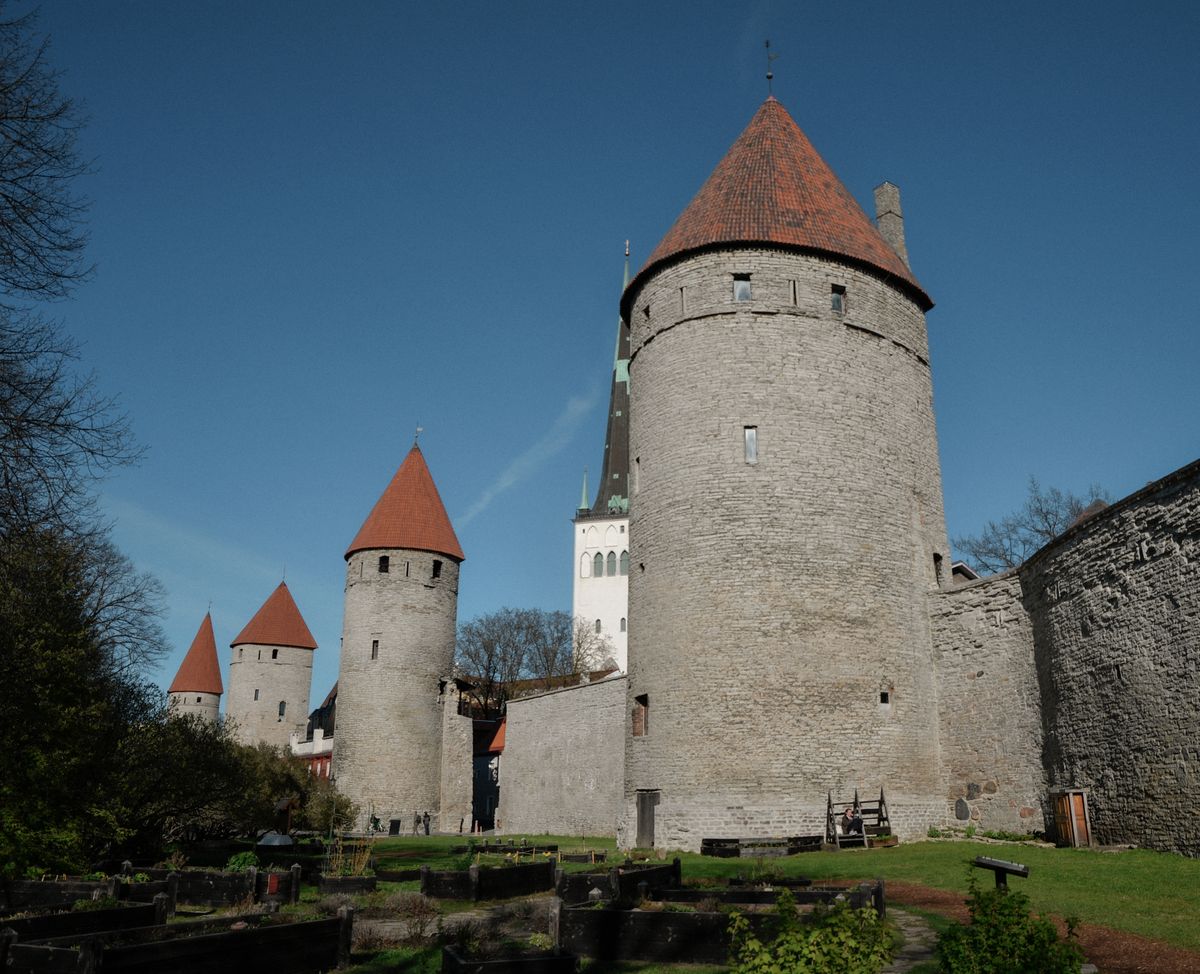
The square is also the source of the most good-natured dispute in the region: Estonians maintain that the first public Christmas tree stood here in 1441, while Latvians make the same claim for Riga in 1510. Neither side is giving ground.
The walls, the towers and the gates
At their height the medieval fortifications ran about two and a half kilometres and had more than forty towers. Roughly two kilometres and about twenty towers survive, which is among the highest survival rates in Europe.
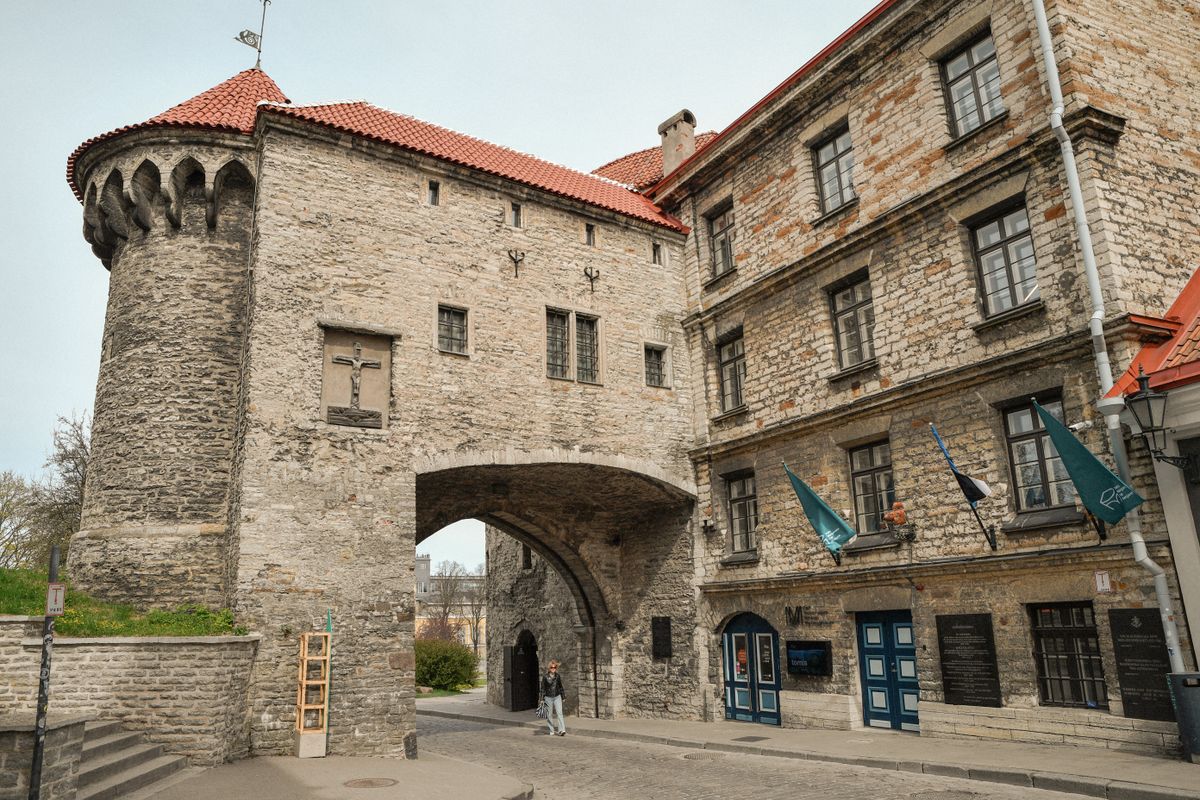
Several stretches of wall walk can be visited with a ticket, and it is worth doing: the passages are narrow, with wooden floors and arrow slits looking down onto the street.
Viru gate, with its two remaining towers from a much larger complex, is the entrance most visitors use. The Great Coast Gate, toward the port, is flanked by a massive sixteenth-century artillery tower nicknamed Fat Margaret, with walls four metres thick, now a maritime museum.
Also worth seeking out are St Catherine passage, a covered medieval lane with craft workshops, and the bastion tunnels, dug in the seventeenth century and used as air raid shelters in the twentieth.
The churches and the tower that was the tallest in the world
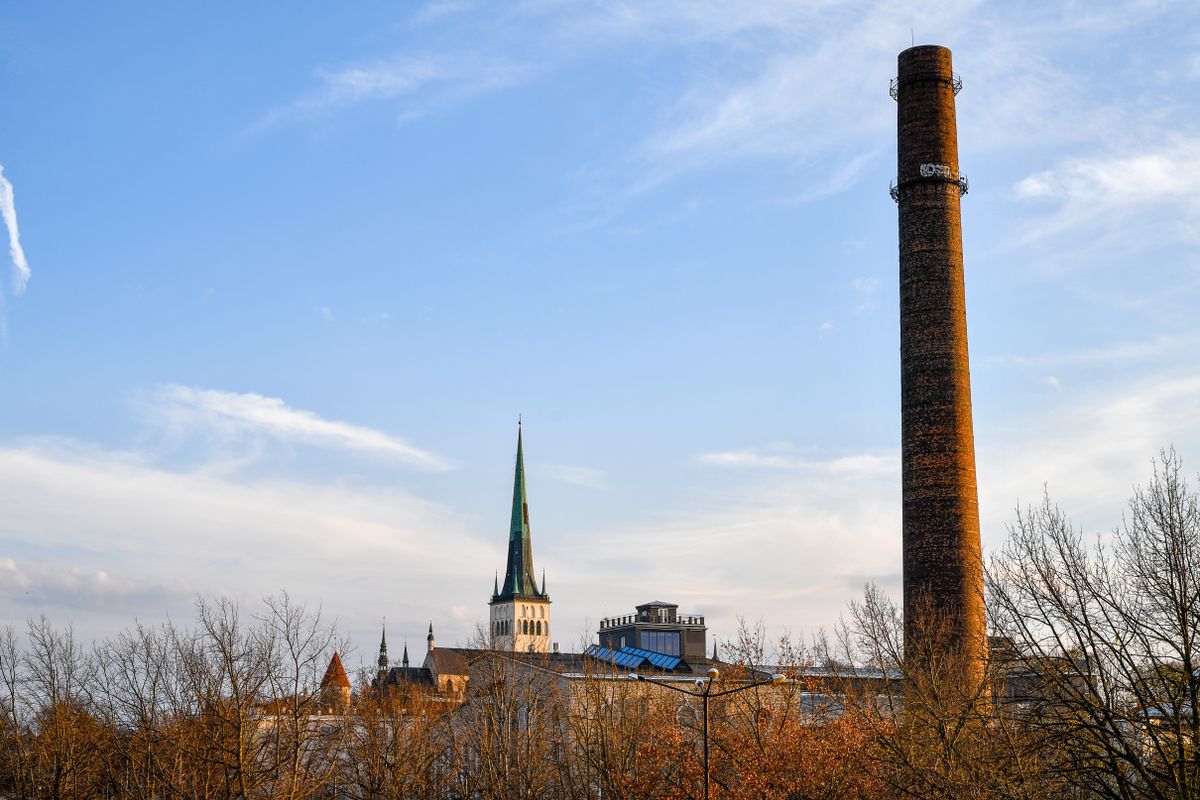
St Olaf has the best story. In the sixteenth century its spire is said to have reached almost a hundred and sixty metres, which would have made it the tallest building in the world. It also made it the most reliable lightning conductor in the Baltic: it has been struck at least ten times and burned down three.
The Church of the Holy Spirit, next to the square, has a wooden carved clock on its facade from the seventeenth century, the oldest public clock in the city.
The Dome Church on Toompea, the oldest church on the Estonian mainland, has its walls covered with funerary coats of arms of Baltic German noble families, which is an unusual and slightly overwhelming sight.
Kadriorg: the palace Peter the Great built
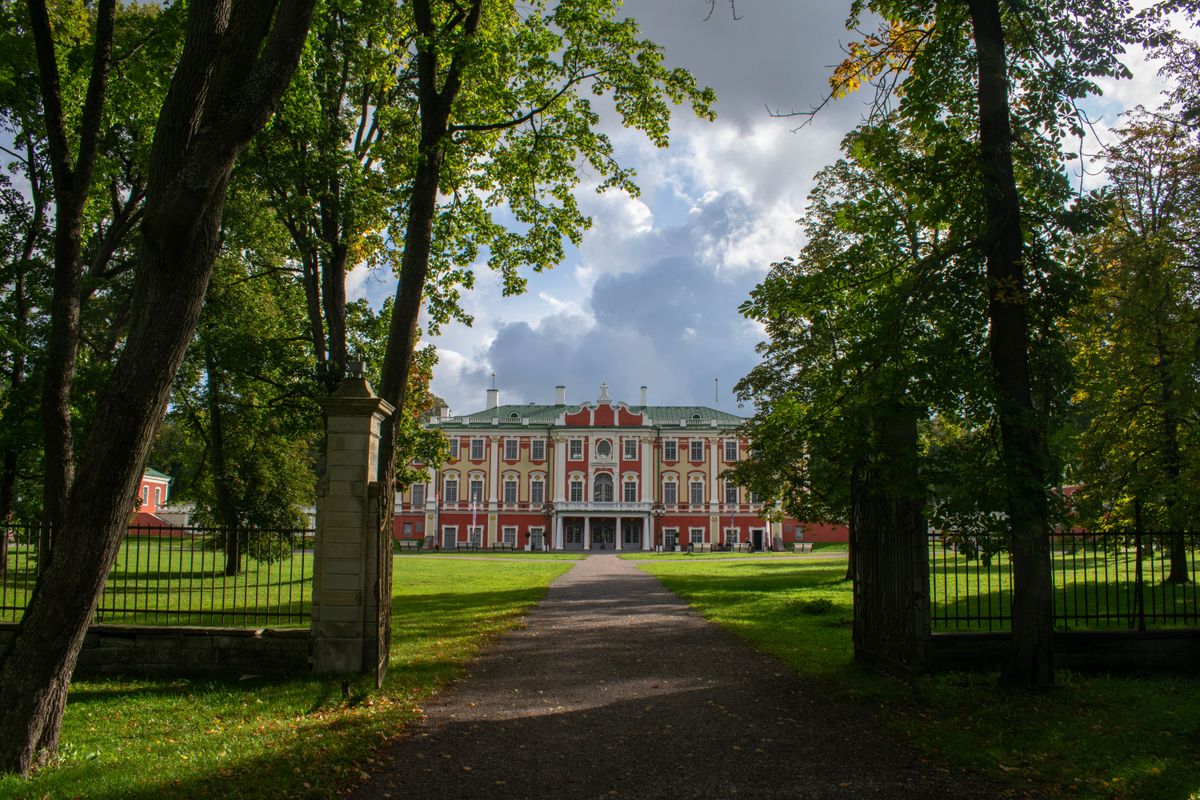
Twenty minutes on foot or a few tram stops east lies something completely different: a baroque palace and park, begun in 1718 by Peter the Great for his wife Catherine, which is what Kadriorg means.
The palace now holds the foreign art collection of the national museum, and the main hall, with its stucco work, is worth the ticket on its own.
In the same park stands KUMU, the Estonian art museum, opened in 2006 in a modern building cut partly into the limestone cliff. Its section on Soviet-era art, and on what artists did and did not do under that system, is one of the most honest museum displays in the region.
Kalamaja, Telliskivi and the Seaplane Harbour
North of the medieval walls begins the part of the city most visitors miss entirely, although it is where the place actually lives.
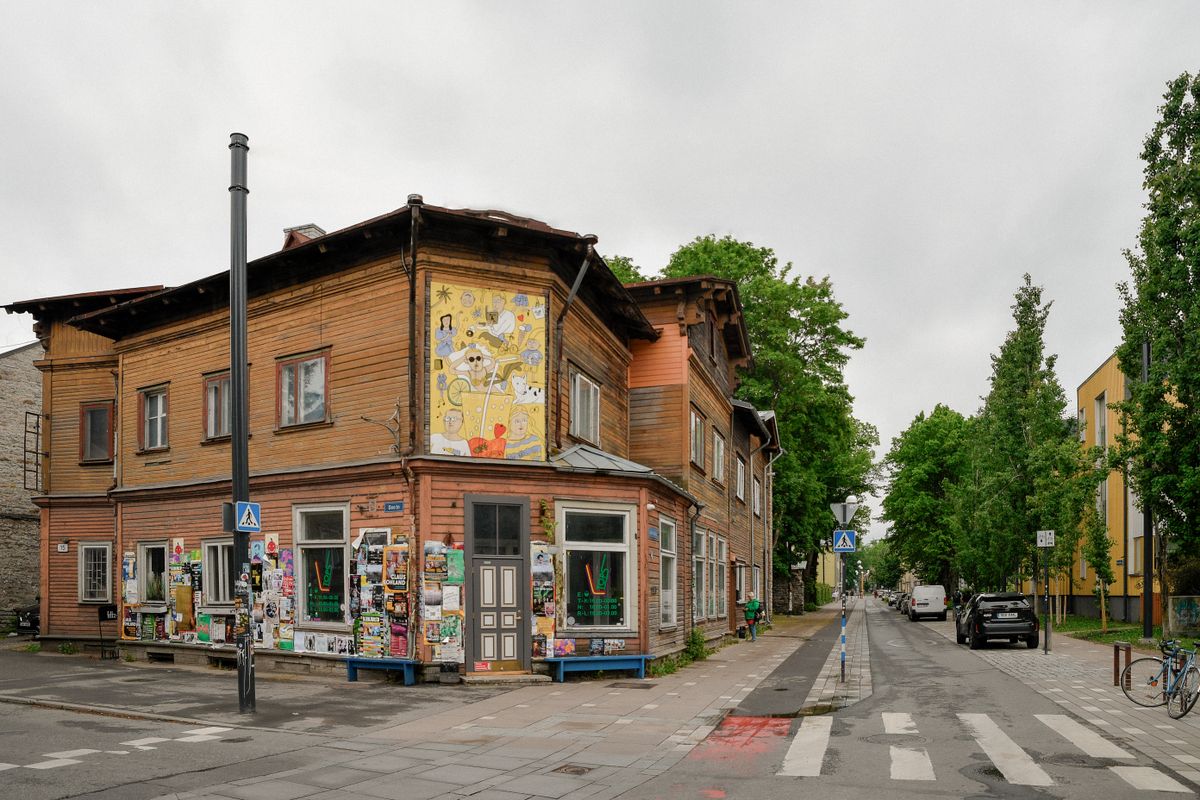
Kalamaja, the fish village, was the fishermen quarter and later the workers quarter. It is full of two and three storey wooden houses painted in strong colours, and it has become the most desirable place in the city to live.
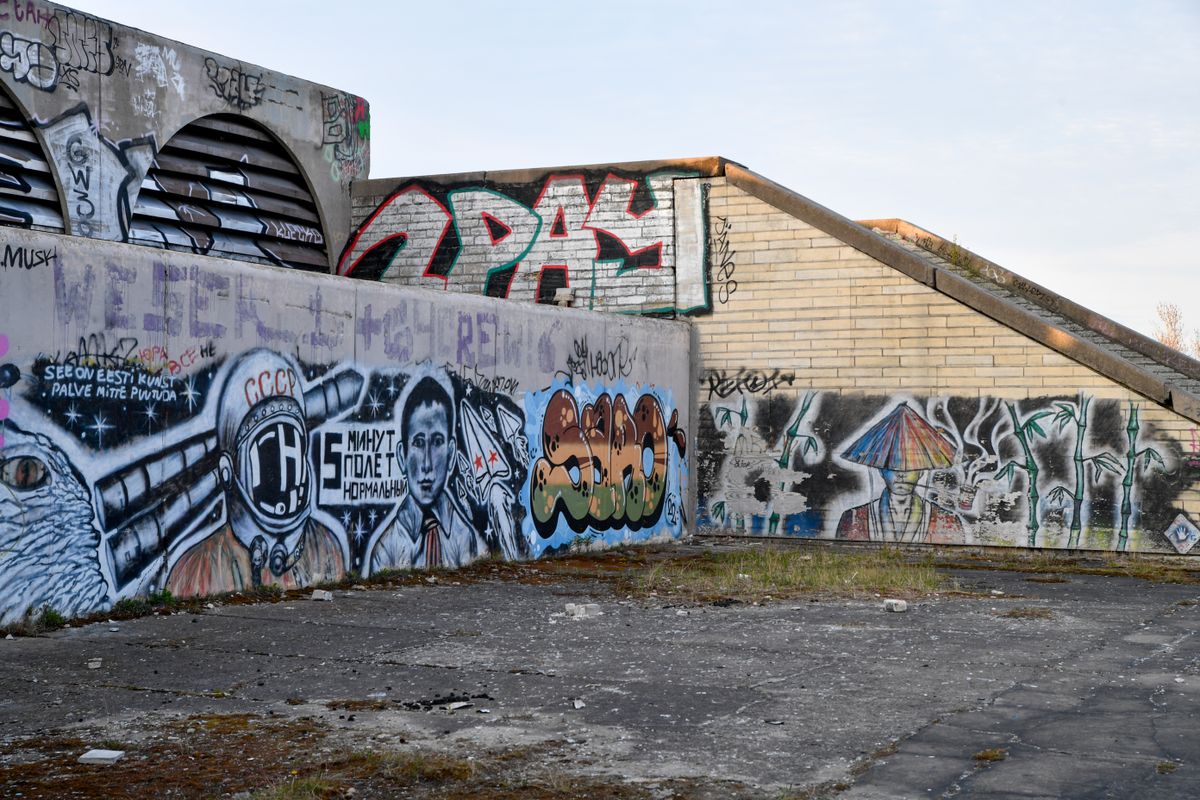
Telliskivi, a former industrial site by the station, is now the most active creative quarter: workshops, shops, a food hall, street art on every wall and a flea market at weekends.
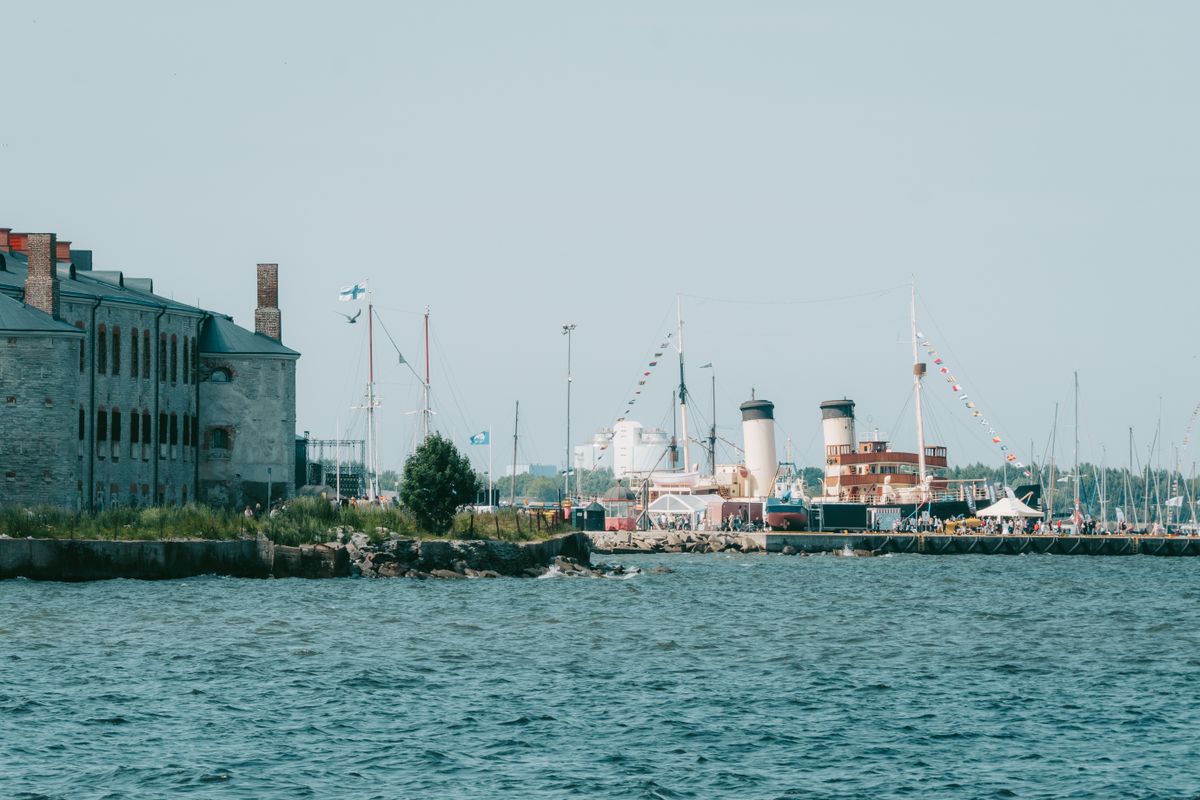
The Seaplane Harbour is, for many, the surprise of the visit. The hangars were built during the First World War using a then-experimental thin concrete shell, and now hold a submarine you can walk through, a steam icebreaker and a great deal else. Next door, Noblessner, the former shipyard where submarines were built, is now a waterfront promenade with restaurants.
Transport, prices and crowds
Estonia is probably the most digitised society in Europe, and it shows during a visit. Almost everything is paid by card, public wifi is everywhere and it works, and paperwork is minimal.
You will often read that public transport in Tallinn is free. It is, but only for residents registered in the city, who tap a personal card. Visitors pay normally, either with a contactless bank card on board or with a paper ticket. The old town is walkable end to end anyway, so this matters mainly for Kadriorg and the harbour.
In summer the old town fills abruptly between ten in the morning and five in the afternoon, when passengers from the ships in the port come ashore. Before ten and after six it empties just as abruptly. If you are staying overnight you have the town almost to yourself at both ends of the day, and that is the single biggest advantage over a day visit.
| Item | Price |
|---|---|
| Hotel in or near the old town, per night | 80 – 150 euros |
| Lunch for two at a normal restaurant | 30 – 50 euros |
| Dinner for two with drinks | 50 – 90 euros |
| Wall walk and tower ticket | 10 – 16 euros |
| KUMU museum, two tickets | 16 – 20 euros |
| Ferry to Helsinki, return, two people | 60 – 120 euros |
Across the gulf, eighty kilometres away, Helsinki is two hours by ferry, which makes it the easiest possible extension to a trip. Official information is on the city tourism portal and on the Estonian national portal.
A two day itinerary
Day one is the old town: up to Toompea early for the viewpoints, the cathedral and the Dome Church, then down into the lower town for the square, the pharmacy, the wall walk and St Olaf. Evening on Town Hall Square once the ships have gone.
Day two is everything outside the walls: Kadriorg and KUMU in the morning, then Kalamaja and Telliskivi in the afternoon, ending at the Seaplane Harbour and the Noblessner waterfront.
With a third day, take the ferry to Helsinki, or go along the coast to Pirita, where there is a long beach, the ruins of a fifteenth-century convent and the marina built for the 1980 Olympic sailing events.
Frequently asked questions (FAQ)
Conclusion
Tallinn works because of the contrast. A walled Hanseatic town that mostly survived, a pharmacy that has been trading for six centuries, and a country that files its taxes on a phone in three minutes.
Give it two days, go up to Kohtuotsa before nine, walk out to Kalamaja where the wooden houses are, and stay the night rather than coming off a ship, so you get the town in the hours when it is empty.
