

 By
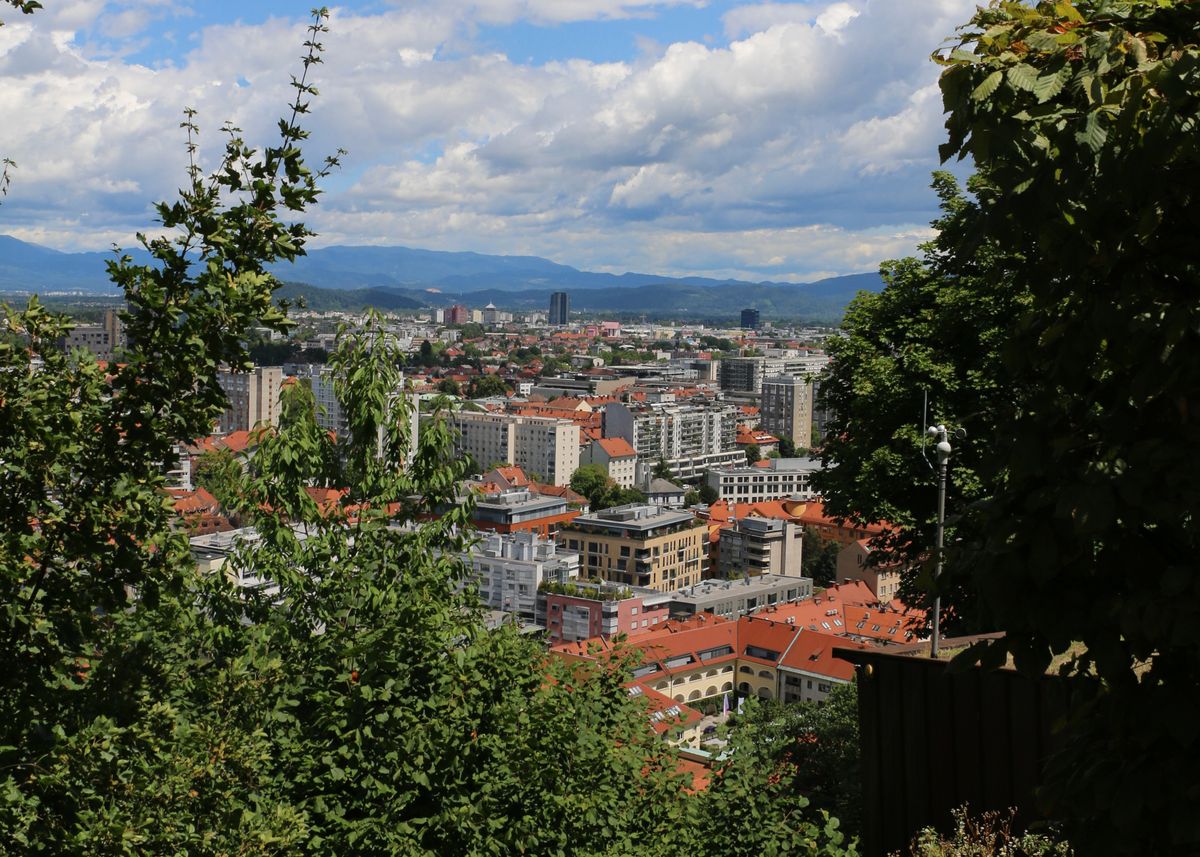
Ljubljana is the smallest capital most people never think of visiting, and the one that most consistently surprises those who do. It has no single monument that pulls crowds across continents. What it has is a car-free centre, a river with terraces down both banks, and a body of work by one architect so coherent that UNESCO listed it.
This guide is a complete two day itinerary, with what to see and in what order, plus the context that makes the visit better: who Plecnik was, why the bridges matter, and what the food and prices are actually like.
Why Ljubljana is called the green capital of Europe
The title is not marketing. It is a designation awarded by the European Commission, which Ljubljana received in 2016, and the reasons are concrete rather than decorative.
The historic centre was closed to car traffic entirely, and the main boulevard, formerly a four-lane artery, was turned into a pedestrian and cycle route. Three quarters of the city is green space, and drinking water comes untreated from the aquifer under the city.
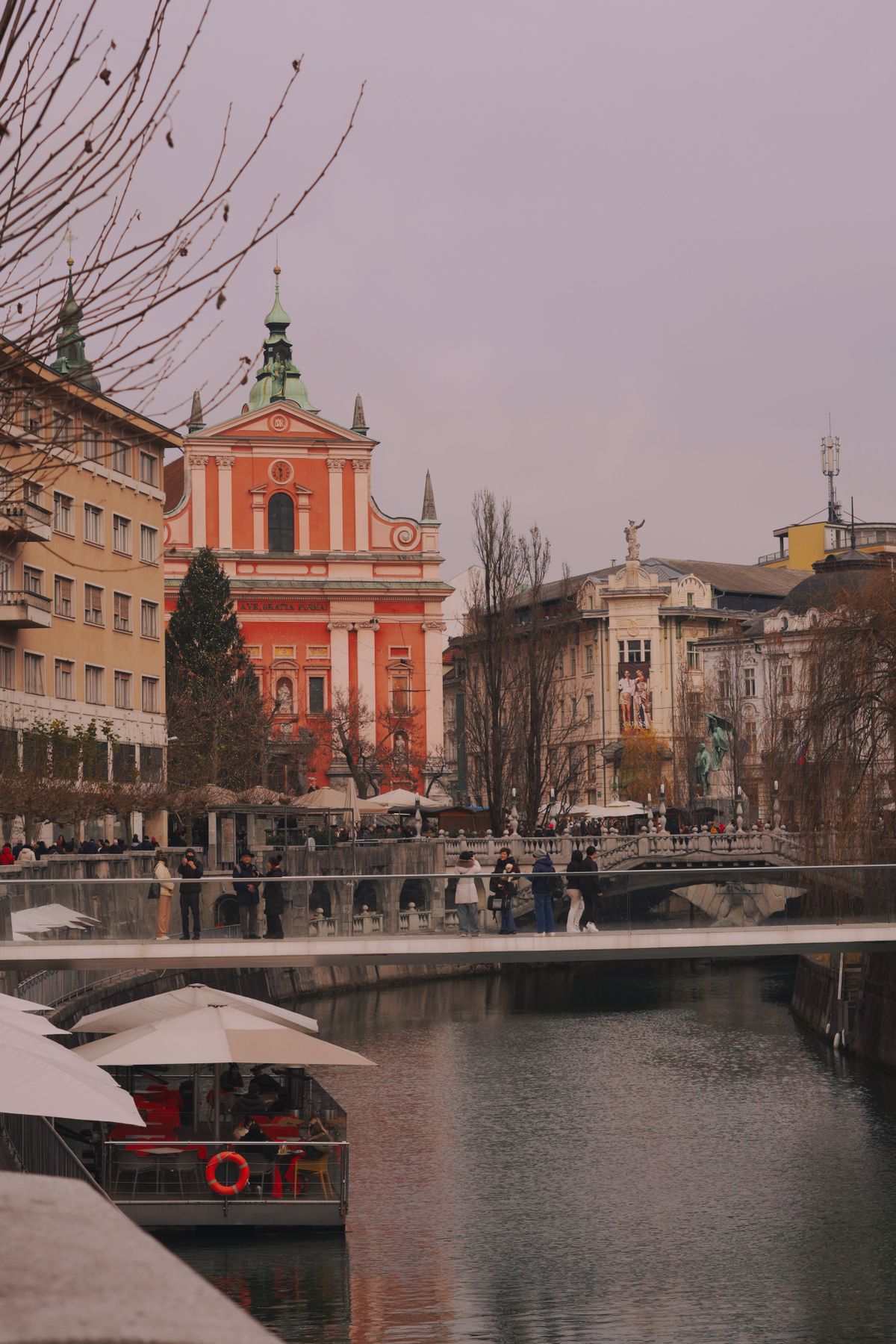
The practical effect for a visitor: you hear no cars in the centre, you cross the street anywhere you like, the terraces occupy the riverbanks, and the air is noticeably clean for a capital.
Day one: the old town, the river and the castle
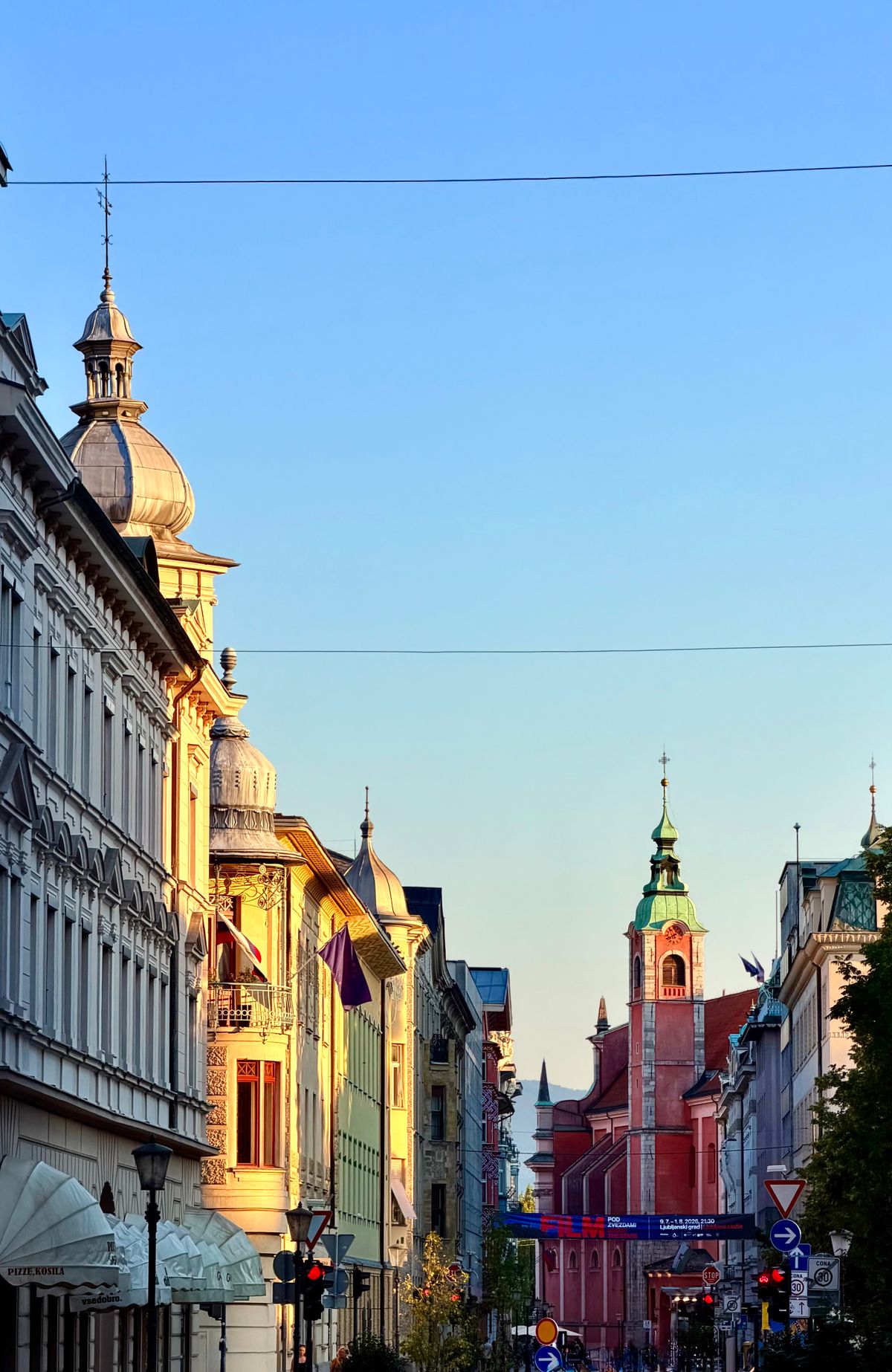
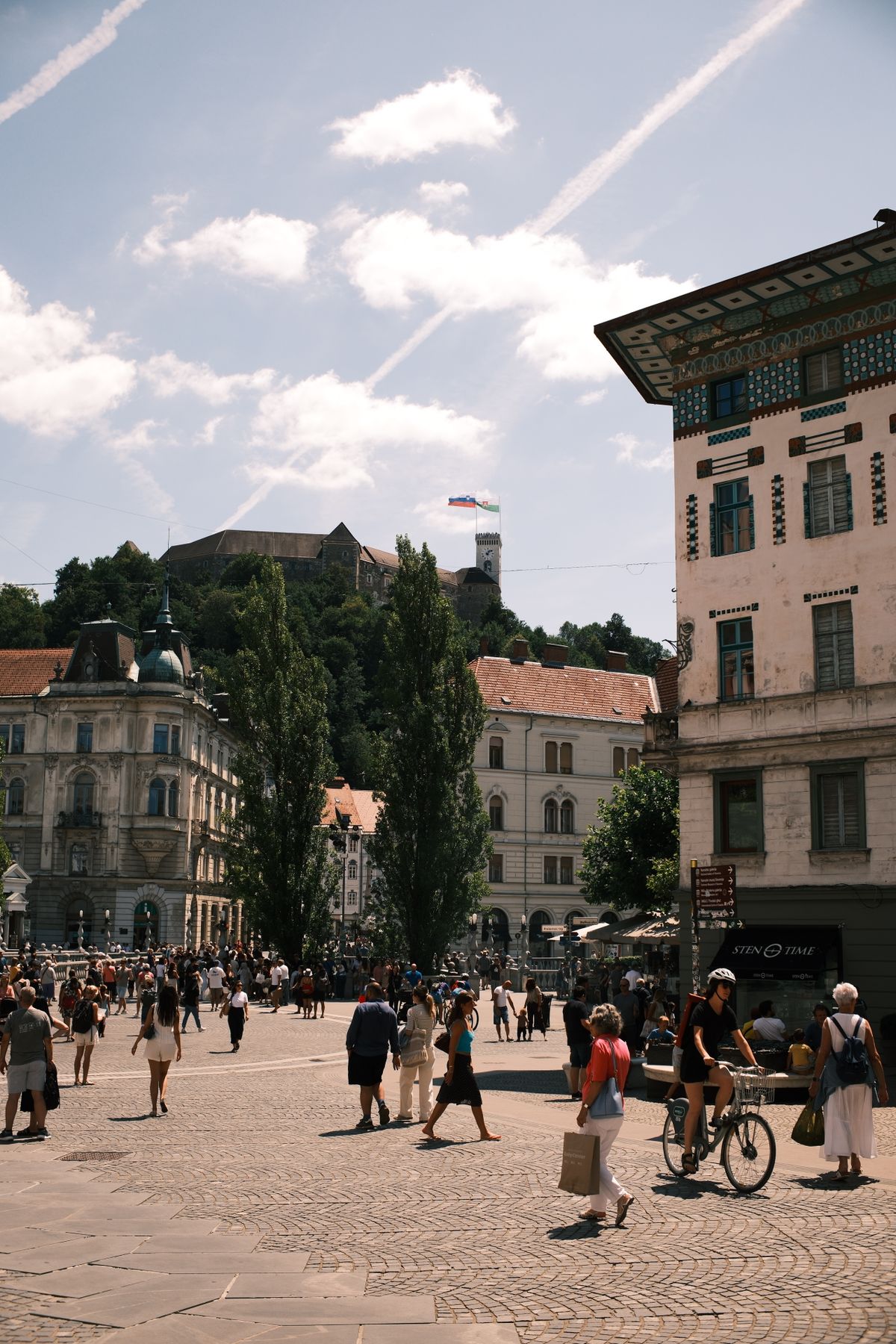
Start in Presernov square, the heart of the city, dominated by the pink facade of the Franciscan church and the statue of the national poet France Preseren, who is looking, for reasons every local will explain, at the window of the woman who rejected him.
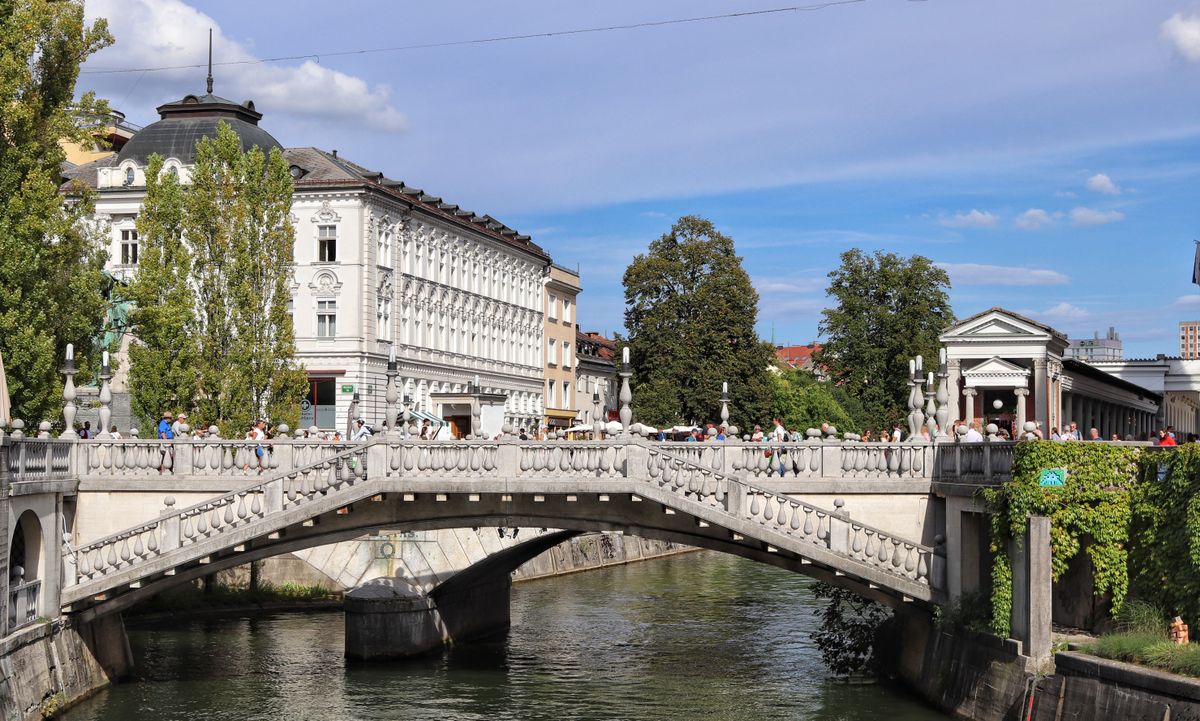
From there you cross Tromostovje, the Triple Bridge, an unusual structure of three bridges joined together, two of them added in the nineteen-thirties to widen a single medieval crossing without demolishing it.
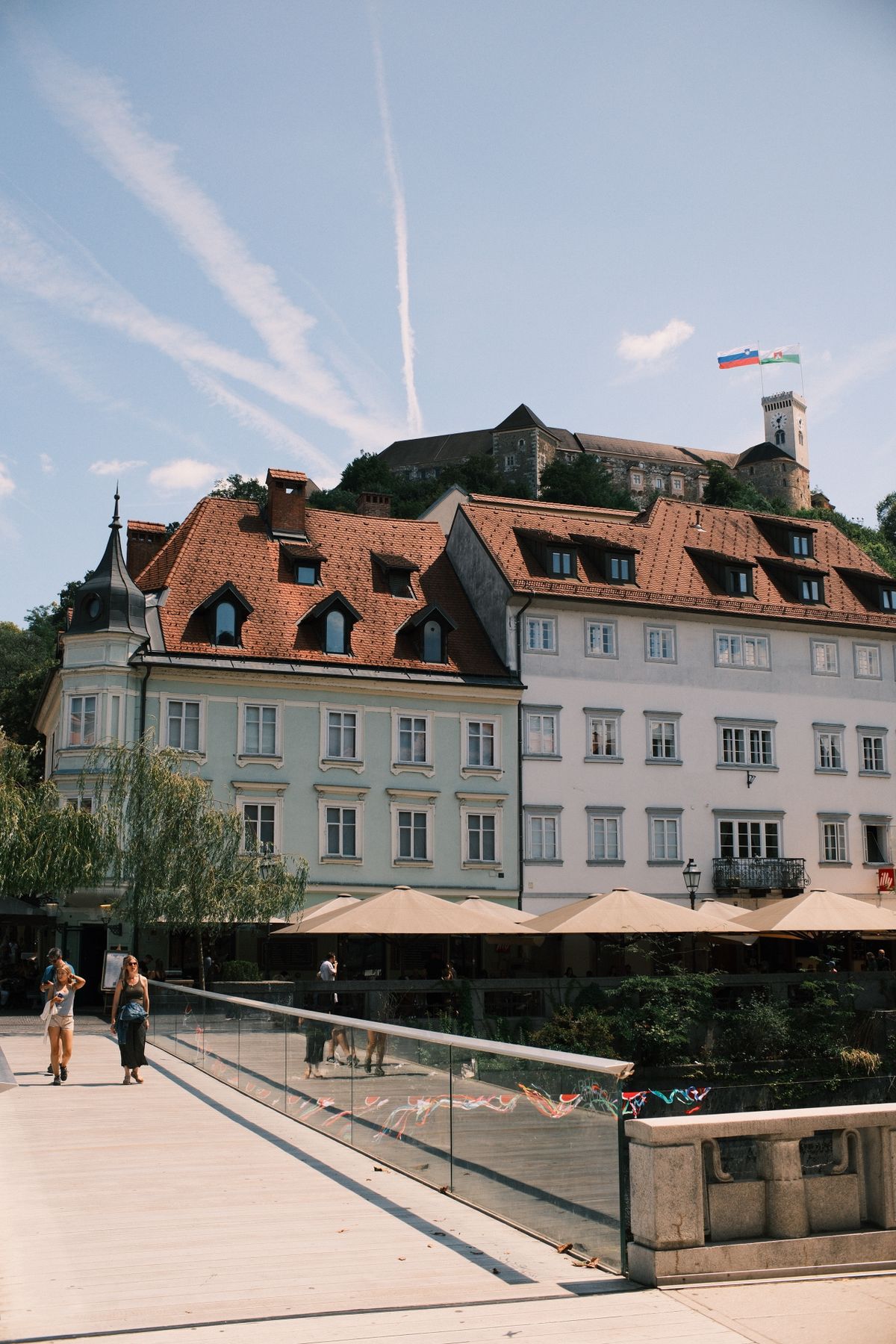
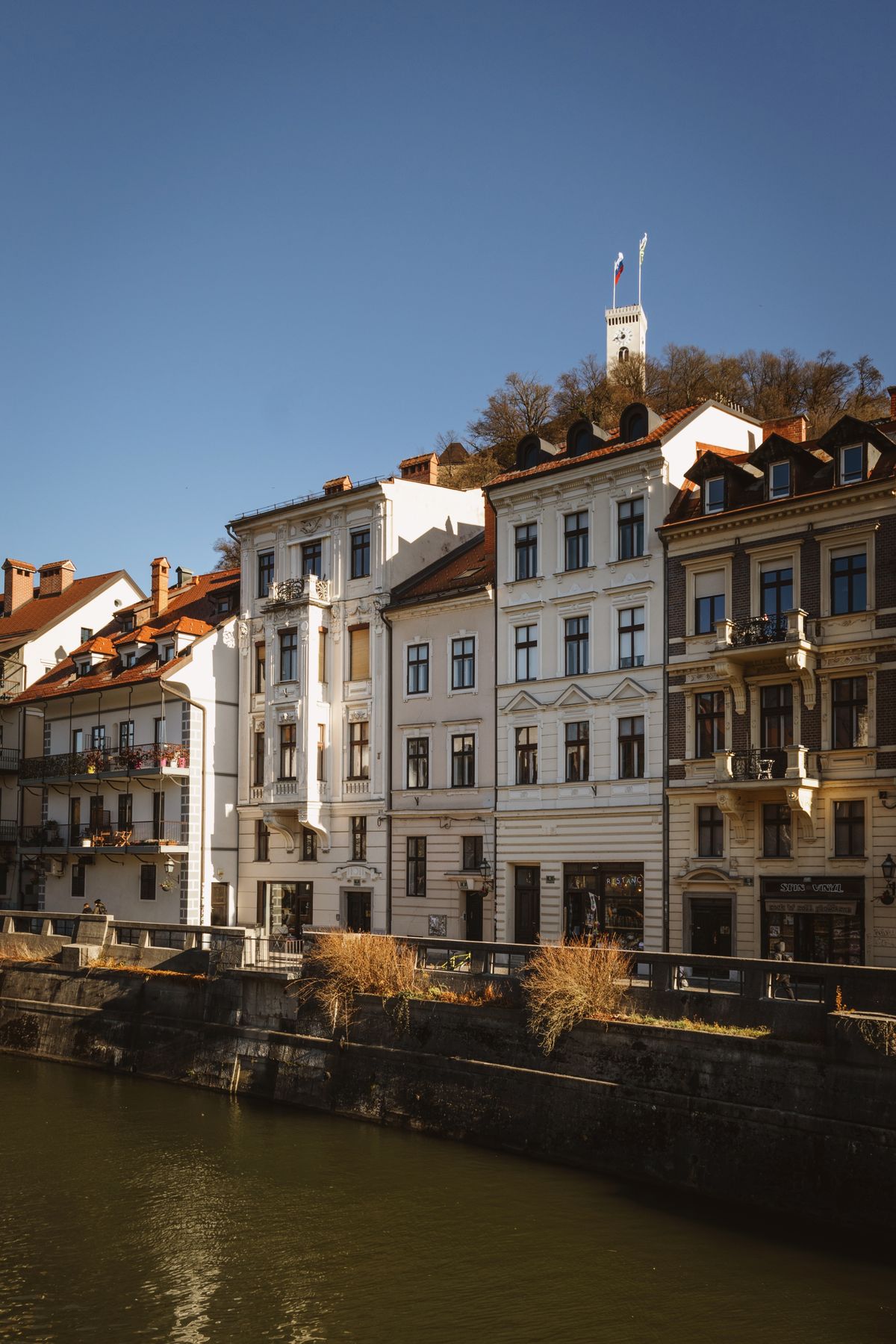
Continue along the right bank through the old town: Mestni trg with the town hall and the baroque fountain, Stari trg with coloured baroque facades and courtyards you can walk into, and the lanes climbing toward the castle hill.
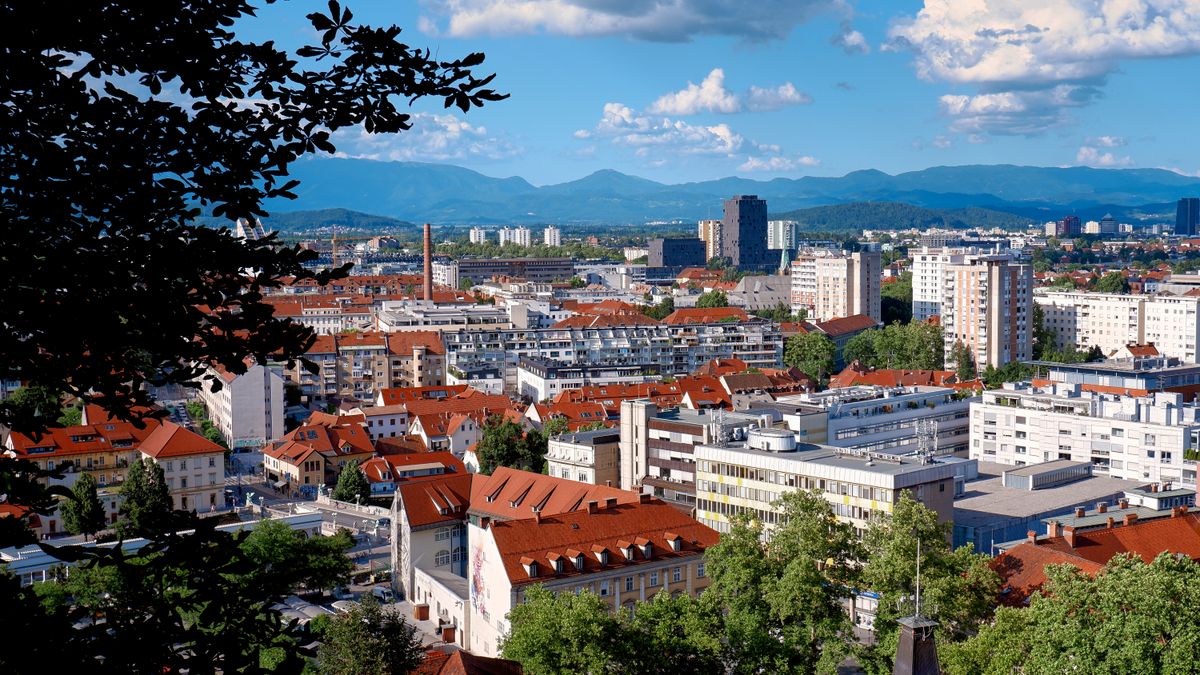
At midday, go up to the castle. Two options: the funicular, which leaves near the central market and takes under two minutes, or the footpath, which takes twenty minutes and is not steep. The castle has a viewing tower, a puppetry museum and a restaurant, and the ticket combinations are worth checking before buying.
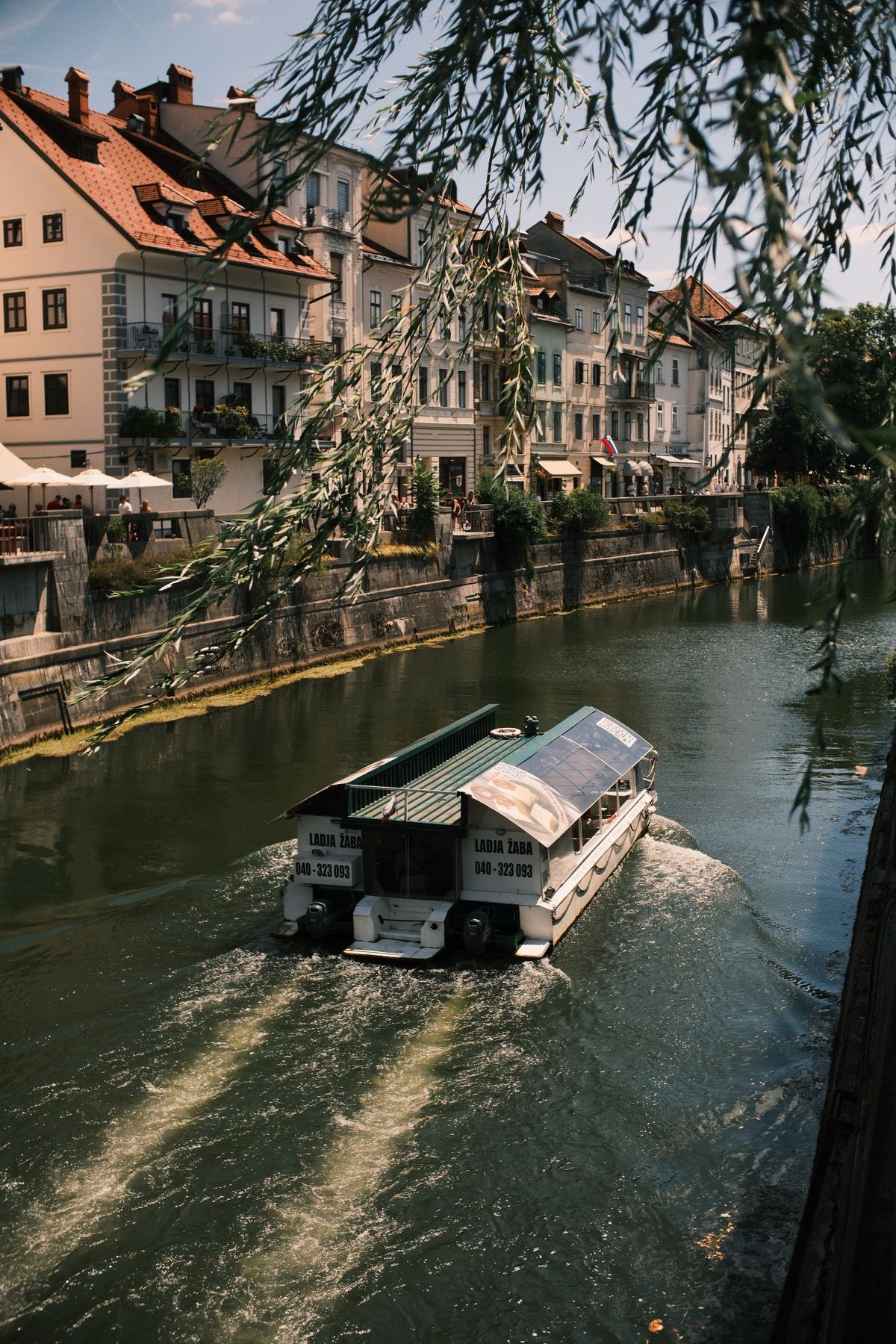
Come down toward evening and give the last hours to the riverbanks. The terraces on Cankarjevo nabrezje fill from six, and the walk along the water is the thing the city does better than almost anywhere its size.
Plecnik, the architect who designed a whole city
To understand Ljubljana you need one name: Joze Plecnik. Born here in 1872, trained in Vienna and made his reputation in Prague, he returned in the nineteen-twenties and spent the rest of his life redesigning his home town.
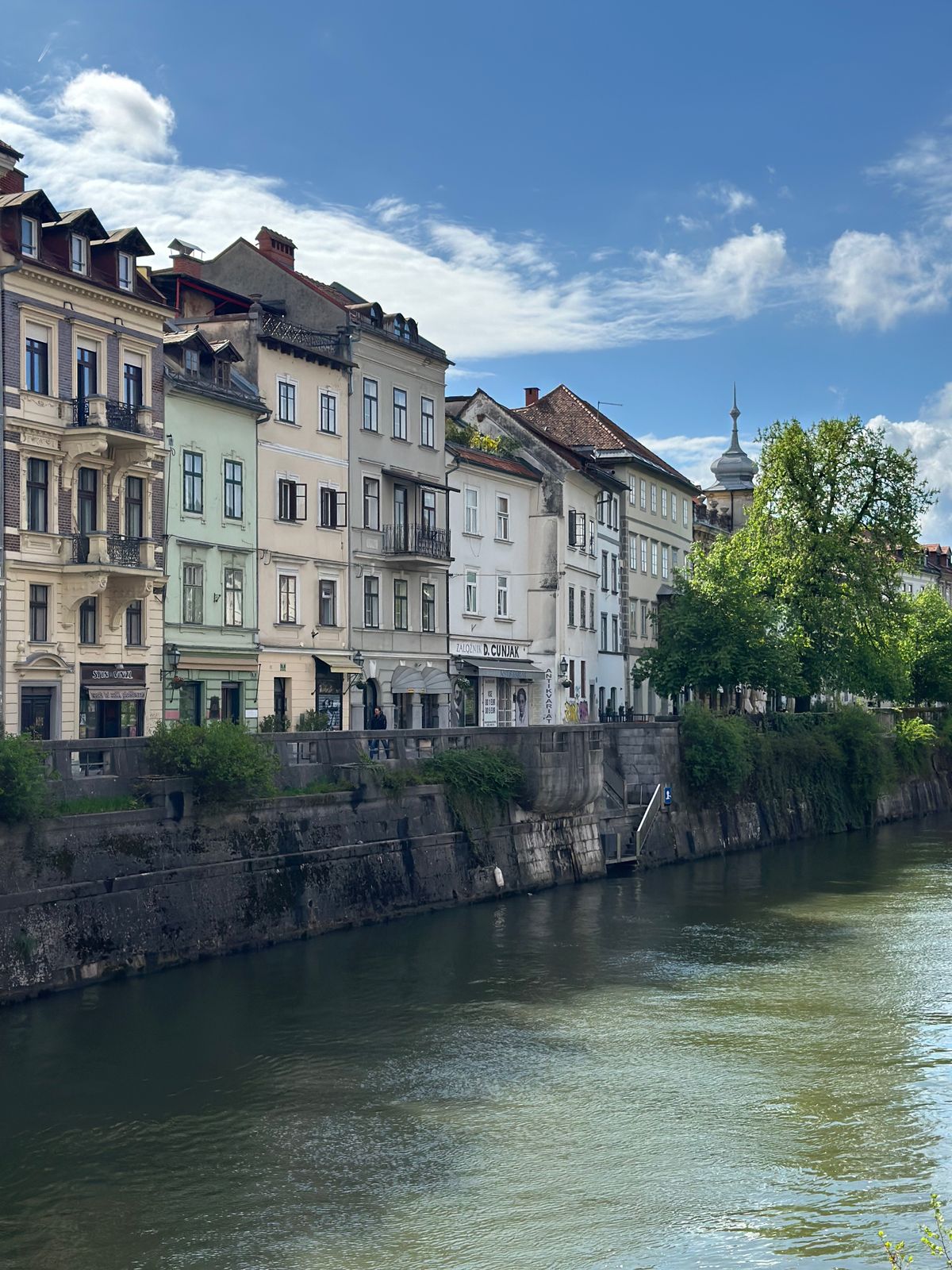
He did not simply put up buildings. He treated the city as a single composition: he laid out the riverbanks with railings, steps and poplars, designed the market colonnade, the Triple Bridge, the national library, the cemetery, and dozens of smaller interventions that most visitors walk past without noticing.
In 2021 an ensemble of his Ljubljana works was inscribed on the UNESCO World Heritage list, a rare case where the recognition goes to the work of a single twentieth-century architect rather than to a historic centre.
The national library is the piece to see if you see only one. The staircase is dark and heavy, deliberately, and opens abruptly into a bright reading room, a transition Plecnik described as the passage from darkness into knowledge.
The bridges: dragons, butchers and padlocks
The Ljubljanica river crosses the centre, and its bridges are attractions in their own right rather than ways of getting across.
The Dragon Bridge, built in 1901, is guarded at each end by four bronze dragons. The dragon is the symbol of the city, tied to the legend of Jason and the Argonauts, who according to the story killed one here. Local humour claims the dragons wag their tails when a virgin crosses.
The Butchers Bridge is the newest and the most argued over: its railings are buried under lovers padlocks and it carries a set of deliberately disturbing sculptures by Jakov Brdar, including a flayed Prometheus. Opinion in the city remains divided.
The Cobblers Bridge, another Plecnik design, is a wide platform with columns rather than a crossing, intended as a small public square over the water. It works exactly as he planned.
Day two: the market, museums, Tivoli and Metelkova
Begin at the central food market under the Plecnik colonnade. You will find seasonal fruit, mountain cheeses, honey and cured meats, and on Fridays in the warm season the Odprta Kuhna open kitchen fills the adjoining square with stalls from restaurants across the country. It is the single best eating opportunity in the city.
Then choose one or two of the museums depending on interest: the National Gallery for Slovenian painting, the Museum of Modern Art, the City Museum with Roman remains in the basement, or the National Museum of Contemporary History in Tivoli.
In the afternoon, walk into Tivoli Park, the largest in the city, which starts a few minutes from the centre and climbs into genuine forest. The photographic promenade along its main avenue usually carries a large open-air exhibition.
In the evening, if you want the other face of the city, go to Metelkova, a former army barracks occupied by artists and squatters in the early nineteen-nineties and never given back. Every surface is painted, the bars are in old military buildings, and it is either the most interesting place in Ljubljana or the one you will leave after ten minutes.
What to eat and drink in Ljubljana
Slovenian cooking has an advantage few small countries enjoy: the country sits exactly where three culinary worlds meet, the Alpine, the Mediterranean and the Pannonian, and the food changes noticeably within an hour drive.
In the capital, look for struklji, rolled dumplings with dozens of fillings; jota, the sauerkraut and bean soup; Karst prosciutto, air-dried in the wind of the limestone plateau; and the Alpine cheeses from the Bohinj valley.
Slovenia produces very good wine that is barely known abroad, from three distinct regions: the Adriatic coast, the eastern hills, and the Karst, whose teran red is grown on iron-rich red soil and tastes like nothing else nearby.
For cheap eating, the set lunch menu in ordinary restaurants runs between eight and thirteen euros and includes soup, a main course and often a salad. It is served on weekdays and it is what everyone who works in the centre eats.
Day trips, budget and when to go
Ljubljana is so centrally placed that most of Slovenia becomes a day trip. Bled and Bohinj are an hour away, the Postojna and Skocjan caves an hour, Piran on the coast an hour and a half, and the Vipava valley wine country the same.
| Item | Price |
|---|---|
| Hotel in the centre, per night | 90 – 150 euros |
| Set lunch menu, per person | 8 – 13 euros |
| Dinner for two with wine | 45 – 75 euros |
| Funicular return, two people | 10 – 12 euros |
| Castle ticket, two people | 24 – 30 euros |
| Boat on the Ljubljanica, two people | 20 – 24 euros |
Ljubljana is generally twenty to thirty per cent cheaper than Vienna or Venice, and more expensive than the capitals further east. There is a city tourist card covering public transport, the funicular, the boat trip and several museums, which pays for itself only if you plan a museum-heavy day.
In the city you need nothing but your feet. The station to the historic centre is fifteen minutes on foot. If you arrive by car, leave it in a car park at the edge of the centre, because access inside the pedestrian zone is prohibited and enforced.
May, June and September are the best months. July and August are hot and the terraces are full; December has a well-run Christmas market along the river. Official information is on the city tourism portal, and the Plecnik listing on the UNESCO site.
Frequently asked questions (FAQ)
Conclusion
Ljubljana has no monument that people cross continents for and no museum on the scale of Vienna or Paris. It has something rarer: a centre with no cars, a river you can sit beside all evening, and a single architect whose work gives the whole place coherence.
Give it two days, walk up to the castle rather than taking the funicular, eat at the market on a Friday, drink a glass of Slovenian wine by the water, and use it as the base from which to see the rest of the country.
