

 By
Harry Potter filming locations fall into three categories that are constantly confused: places genuinely filmed on site, places built entirely in a studio, and places connected to the books rather than the films. Almost every disappointment on the ground comes from mixing these up, so this guide separates them from the start.
You will find what is real in London, what is real in Scotland, what only exists at Leavesden, and how to link it into a trip that does not involve driving four hundred miles for a five second shot.
Harry Potter filming locations: three categories
The first category is places where cameras actually rolled: Kings Cross, Leadenhall Market, the Glenfinnan viaduct, Glencoe. The second is sets built at Leavesden, which is most of the interiors including the great hall and the castle itself. The third is places associated with the books, especially in Edinburgh, where nothing was ever filmed.
There is no real castle that is the school. Its silhouette is a combination of a large physical model, computer imagery and pieces of several cathedrals and colleges used for individual corridors and courtyards, chiefly Durham, Gloucester and Oxford. Anyone travelling to see the school as a single building will not find one, because one was never built.
Kings Cross and the confusion with St Pancras
The station is the real one and can be visited freely, since it is a working station. In the western departures hall, beside platforms nine and ten, a luggage trolley is set half into the wall with a sign above it.
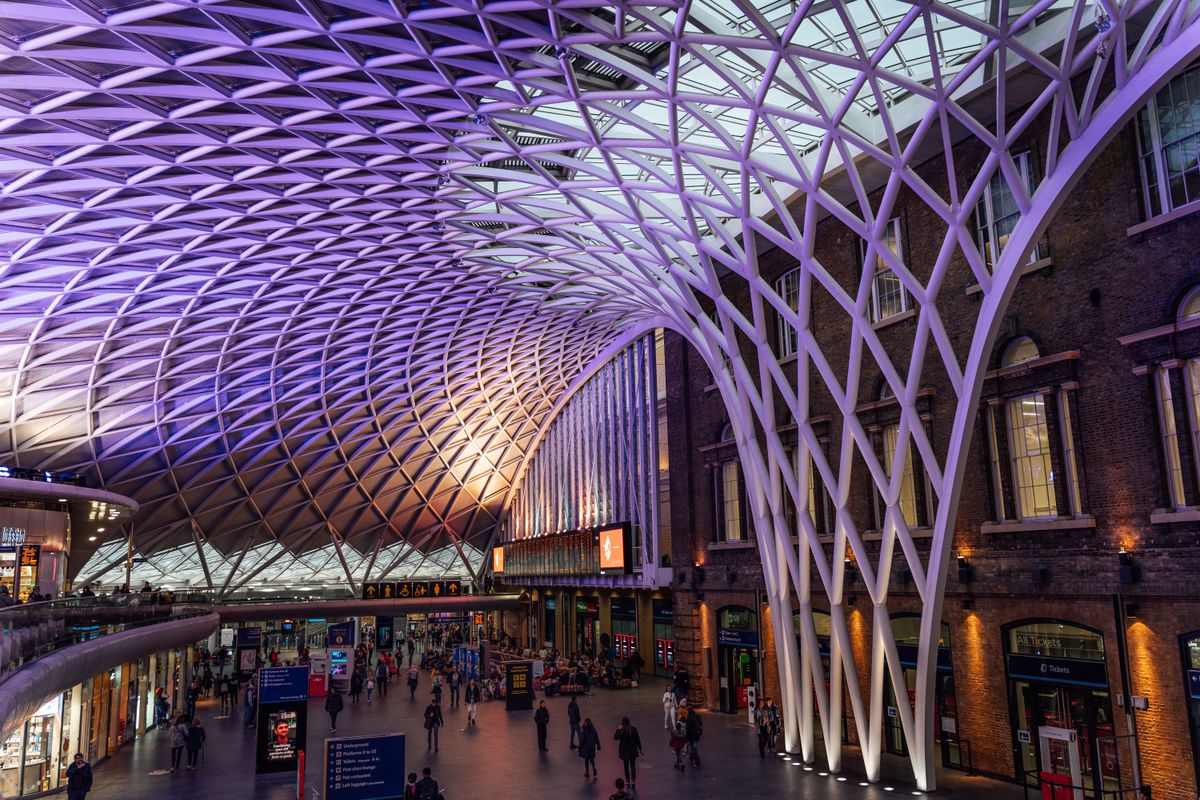
Photographing yourself there is free. There is also a professional photographer who works the spot with a scarf and a wand, charges for the print, and generates the queue you will find at any reasonable hour.
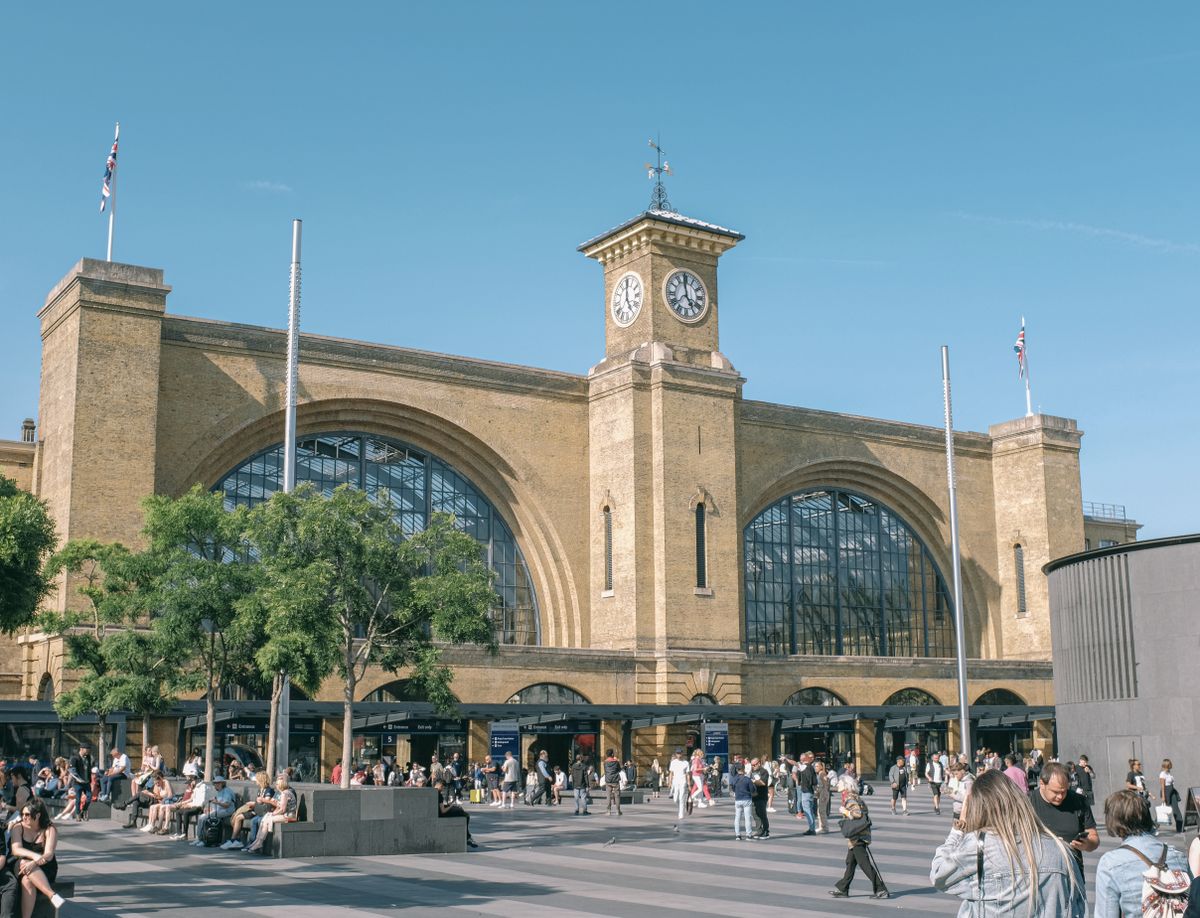
Two points surprise most visitors. The scenes on the platform were shot at platforms four and five, not nine and ten, because the real nine and ten are in a separate modern section with no arches. And the grand red brick exterior everyone photographs as the station is not Kings Cross at all.
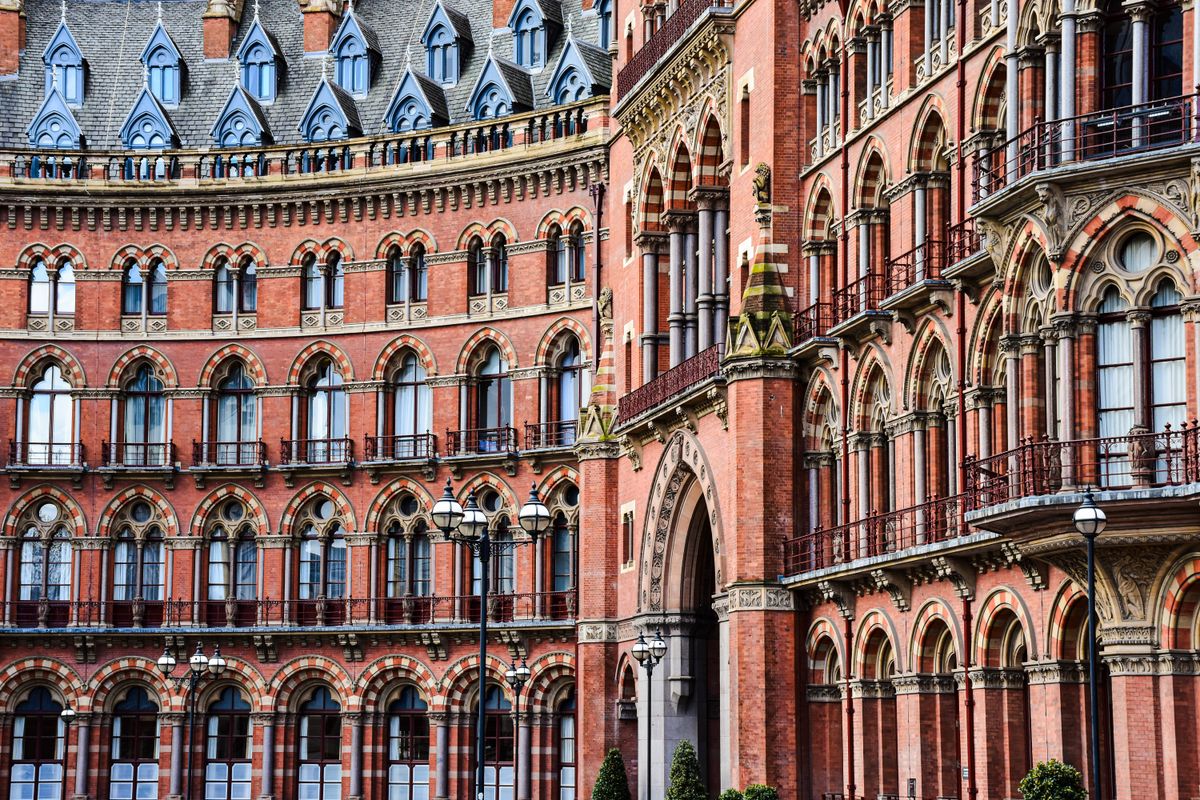
That building is St Pancras next door, the former Midland Grand hotel, opened in 1873, saved from demolition in the nineteen-sixties and restored. The actual Kings Cross exterior is a plain yellow brick facade with a clock, and it looks nothing like the film.
Leadenhall Market and the entrance to the alley
The covered market in the heart of the financial district played the wizarding shopping street in the first film. Specifically, a blue door in Bulls Head Passage served as the entrance to the pub that leads through to the alley.
The present structure dates from 1881 and is the work of Horace Jones, who also designed Tower Bridge. The green and burgundy ironwork and the painted vaults are the reason it photographs so well.
The market sits in the middle of the City, so the shops and restaurants are shut on Saturday and Sunday, and the arcade is atmospheric but dead. On weekdays between twelve and two it fills with several thousand people who work nearby. Early morning on a weekday is the sweet spot.
The rest of London: the bridge, the market, the ministry
The other London locations are brief appearances but they link into a good day on foot.
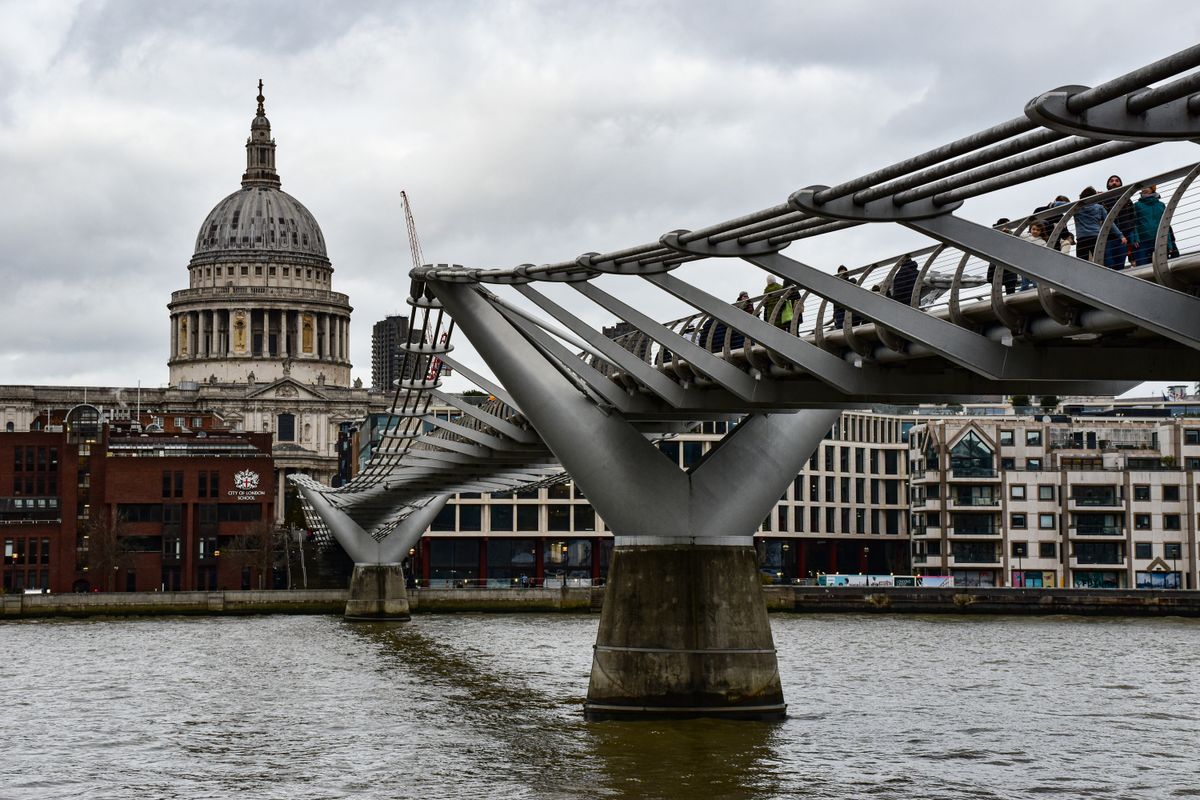
The Millennium Bridge, the steel footbridge between Tate Modern and St Pauls, is the one that collapses at the start of the sixth film. It is free, always open and takes two minutes to cross.
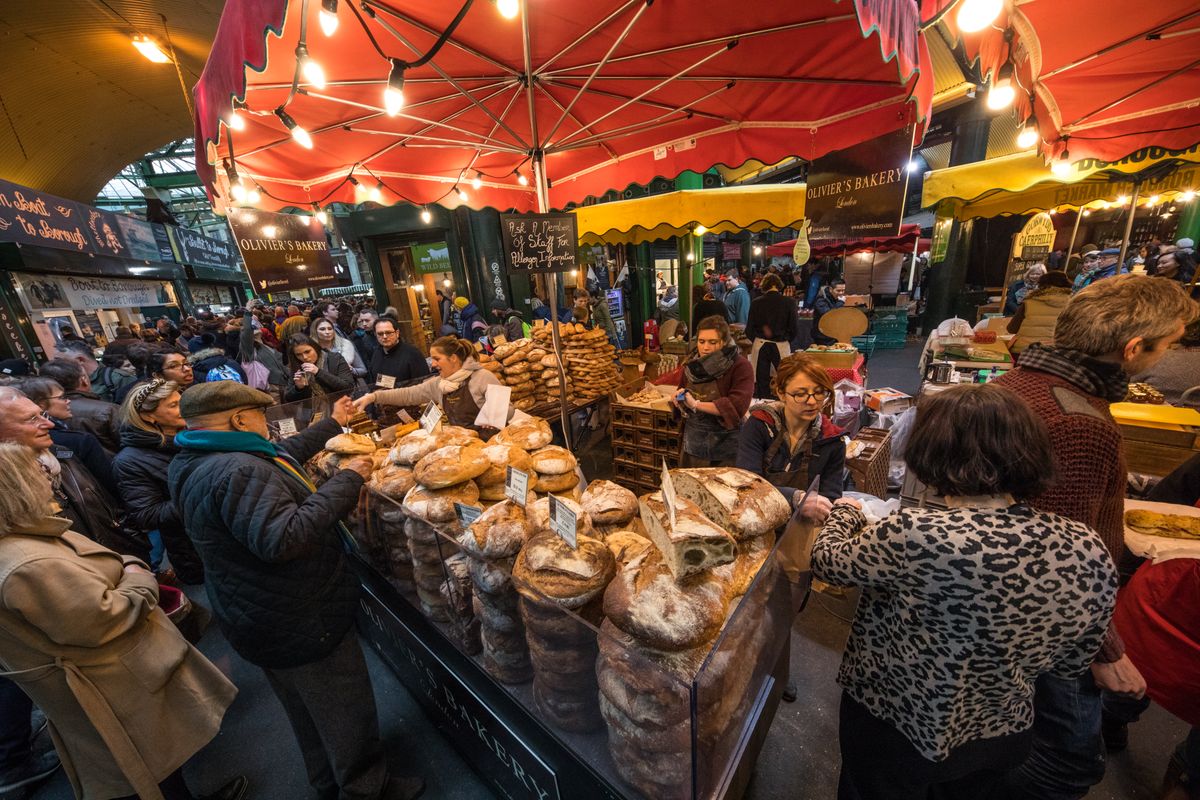
At Borough Market, the exterior of the inn in the third film was built on a street attached to the market. The market itself is one of the best food markets in Britain and justifies the stop regardless.
Scotland Place, a short alley off Whitehall, is where the telephone box used as the visitors entrance to the ministry stood. The box is gone; the alley is not.
Two places that appear on every list but cannot be entered: Australia House on the Strand, whose hall played the wizarding bank and which is a working embassy, and the reptile house at London Zoo, which is open but requires a zoo ticket.
The studios at Leavesden
North of London, in the hangars where all eight films were actually shot over a decade, a permanent studio tour has operated since 2012.
This is where the real great hall is, meaning the set built for filming, along with the shopping street, the headmaster office, the forest, the train and the enormous model of the castle used for the exterior shots. If you only do one thing on this list, do this one.
Tickets carry a fixed entry time, are not sold at the door, and sell out weeks or months ahead in school holidays. There is no way to turn up and get in. Book before you book anything else about the trip. Details are on the official studio tour site.
The Glenfinnan viaduct: where to watch it from
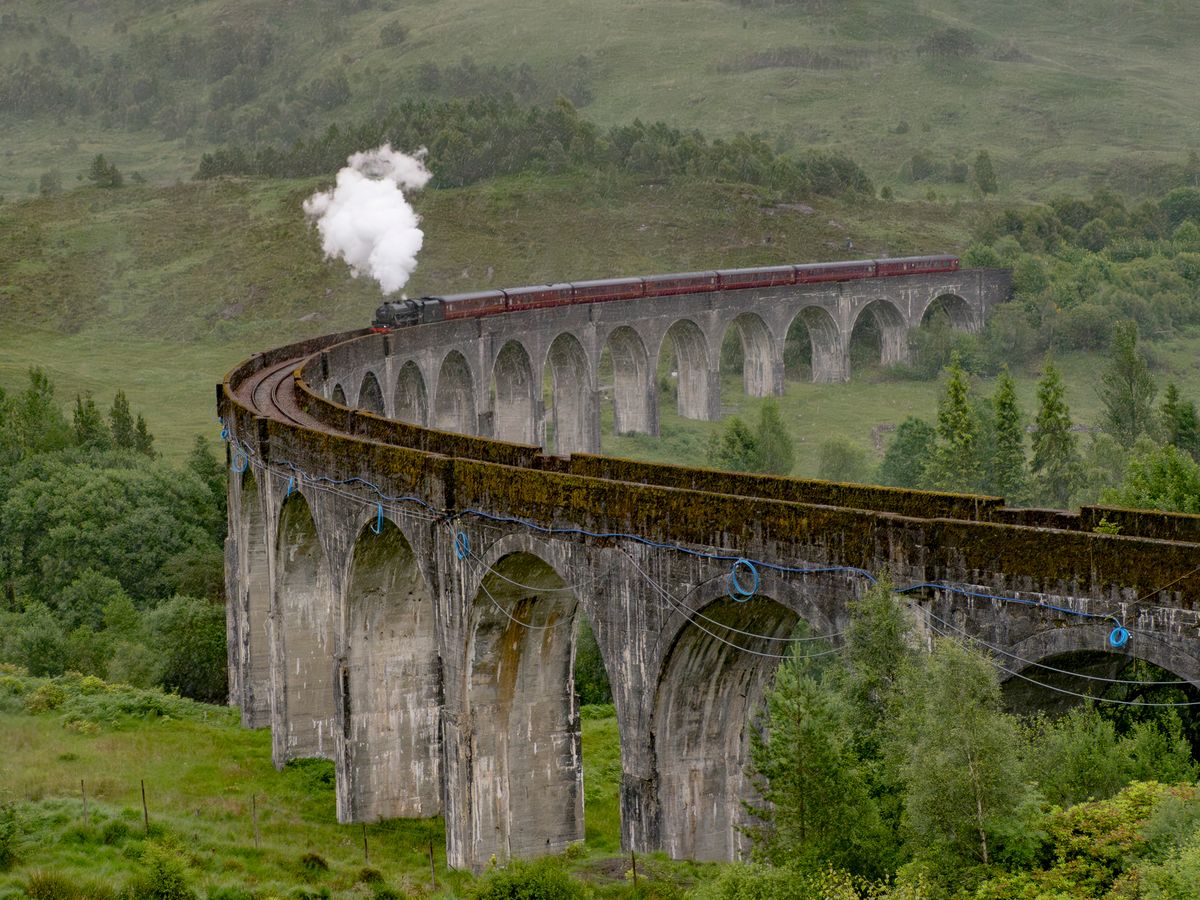
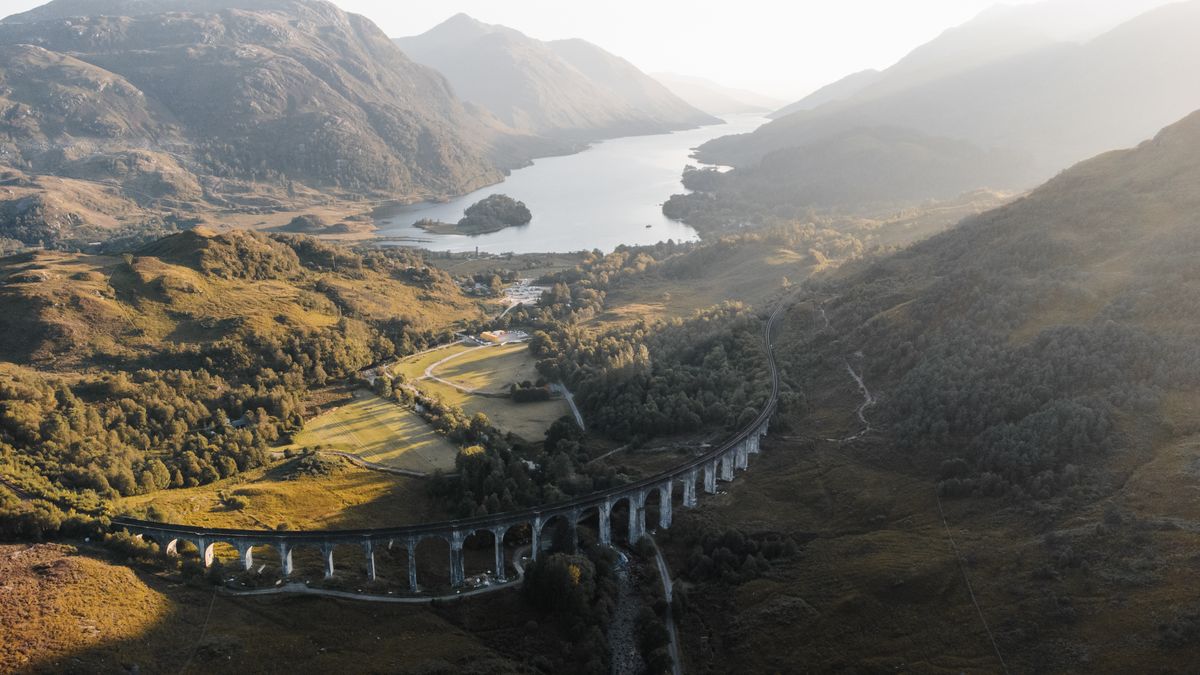
The concrete curve of twenty-one arches, three hundred and eighty metres long and about thirty high, is the most recognisable non-studio image in the films.
The classic viewpoint is reached by a marked path from the visitor centre car park near Glenfinnan station, about twenty minutes uphill. There is a second, lower viewpoint that is easier and gives a side-on angle.
The steam train runs seasonally in the warmer months, with one or two services a day, while the ordinary scheduled train crosses the viaduct several times daily and looks, from a distance, very nearly as good.
The car park charges and fills hours before the steam train passes. Stopping on the verge of the A830 is prohibited and enforced, because the road is fast and the sightlines are poor. Arrive at least ninety minutes before the train, or come for a scheduled service instead, when the pressure disappears entirely.
The lochs: Shiel, Eilt and Morar
The road running from Fort William to the coast passes three lochs used heavily in the films, all within an hour of each other.
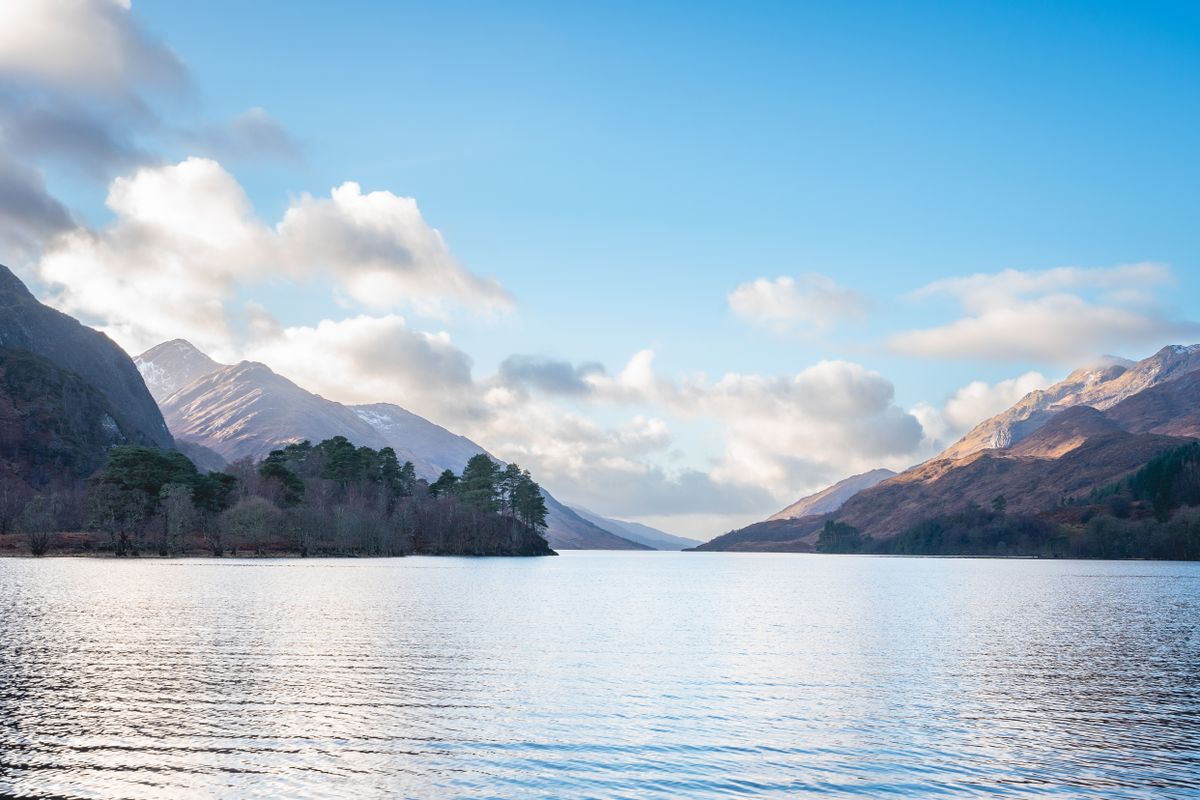
Loch Shiel is the water seen below the castle in several films. It begins directly under the viaduct at Glenfinnan, where a monument to the 1745 rising stands at its head.
Loch Eilt, further along the same road, has a small pine-covered island in the middle that served as the headmaster grave. There is a lay-by directly opposite it.
Loch Morar, the deepest freshwater lake in the British Isles at over three hundred metres, appears in a handful of shots and has, inevitably, its own monster legend.
Glencoe, Glen Etive and Glen Nevis
The Glencoe valley appears in several films and is, independently of that, one of the most impressive landscapes in Europe, as well as the site of a notorious 1692 massacre that locals have not forgotten.

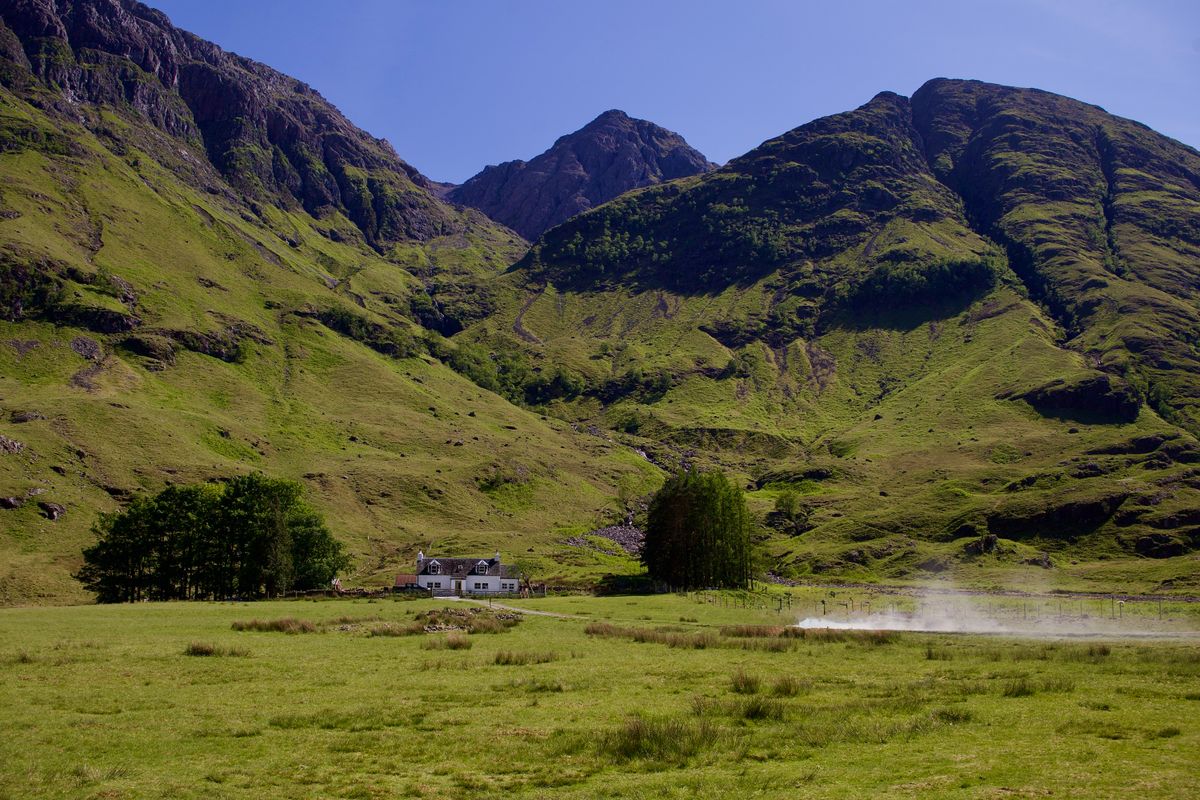
The gamekeeper hut was actually built here, at a place called Torren, for the third film. It was dismantled afterwards, so there is nothing to find at the site, but the setting is unmistakable.
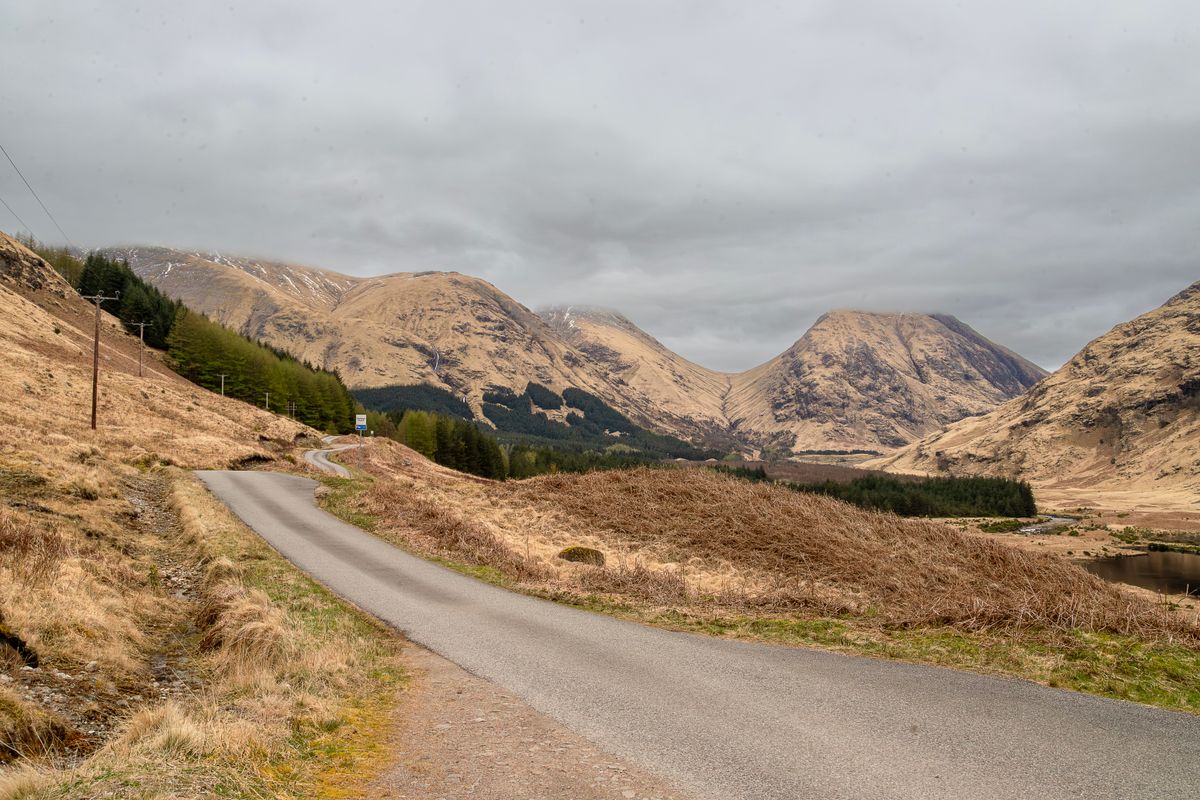
Glen Etive is the narrow single track road that branches off the main valley and runs ten miles down to a sea loch. It is slow, spectacular and has passing places rather than two lanes.
Glen Nevis, at the foot of the highest mountain in Britain, hosted the tournament ground and appears in several later films.
From May to September, near water and on windless days, swarms of midges can make standing still outdoors genuinely intolerable. They are worst at dawn and dusk, exactly when the light is best. Repellent helps, a head net helps more, and any breeze at all disperses them.
Edinburgh: where it was written, not filmed
This needs stating plainly: not a single frame of any film was shot in Edinburgh. All the Scottish filming was in the Highlands. What Edinburgh has is the places where the books were written and the things that fed them.
Victoria Street, the curved sloping street in the old town with brightly painted shopfronts on two levels, is widely said to have inspired the wizarding shopping street. It is beautiful, it is free, and it is now largely occupied by shops selling wands.
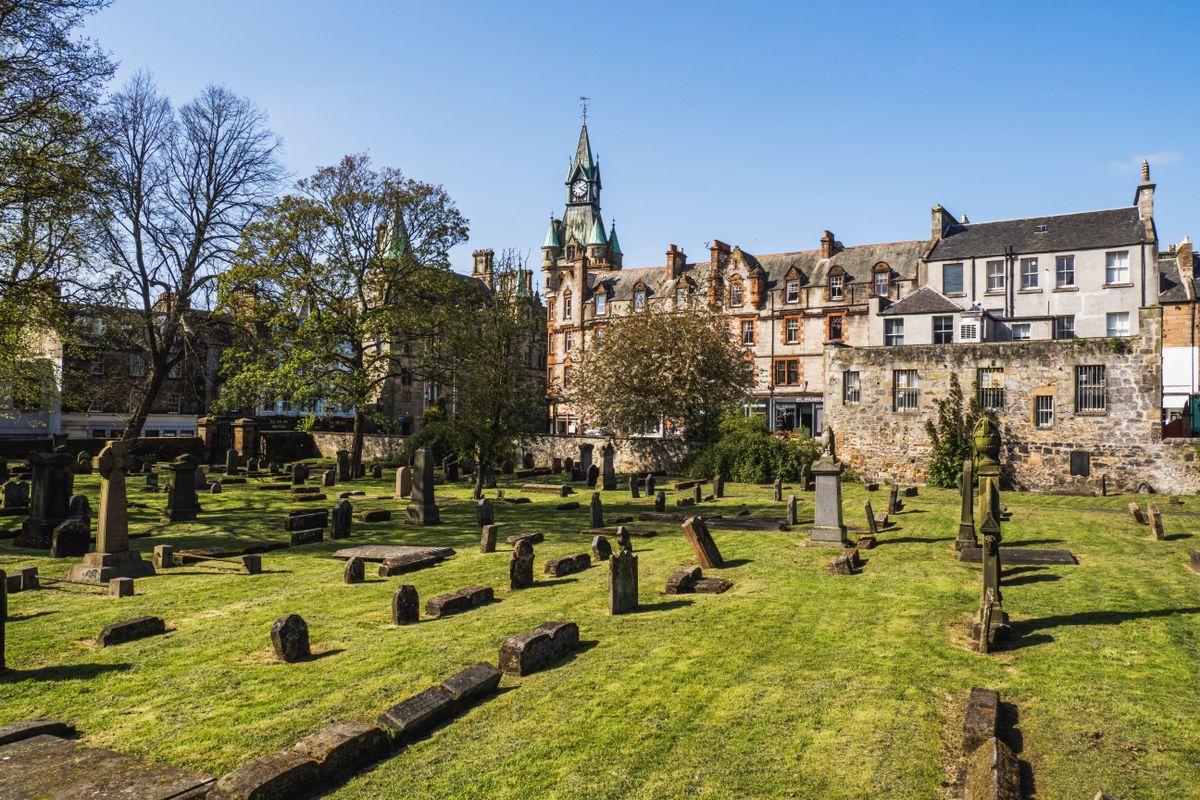
Greyfriars cemetery contains headstones with names that will sound familiar to anyone who has read the books, including one Thomas Riddell. The school visible over the cemetery wall, George Heriot, founded in 1628, has towers and a courtyard and is often cited as an influence.
The cafes where parts were written are marked, though the best known one, on George IV Bridge, was closed after a fire in a neighbouring building.
Itinerary and logistics
Some of the most iconic images are in neither London nor the Highlands. Alnwick castle in Northumberland, where the flying lessons were filmed, sits conveniently on the route between London and Edinburgh. Durham cathedral and Gloucester cathedral supplied corridors and courtyards.
| Leg | Days | How |
|---|---|---|
| London locations plus the studio tour | 3 days | on foot and train |
| London to Edinburgh, stopping at Alnwick | 1 day | train or hire car |
| Edinburgh | 2 days | on foot |
| The Highlands: viaduct, lochs, Glencoe | 3 – 4 days | hire car essential |
The best combination uses the train for the long distance and a hire car for the Highlands, where public transport is sparse and the good places are between the stops.
Three practical notes. Driving is on the left. Highland roads are frequently single track with passing places, and the etiquette is to pull in and let the faster car through. And the weather changes hourly, so the forecast is a suggestion. Regional information is on the Scottish tourism site.
Frequently asked questions (FAQ)
Conclusion
The trip works if you keep the three categories straight: the studio tour for everything built, the Highlands for everything landscape, London for the handful of streets, and Edinburgh for the writing rather than the filming.
Book the studio tour first, go to Leadenhall early on a weekday, watch a scheduled train cross the viaduct rather than fighting for the steam service, and give Glencoe a full day rather than a photo stop.
