
 By

Koli National Park is the place from which Finns built their idea of what their own country looks like. From the rock at Ukko-Koli you see Lake Pielinen and its hundreds of islands, and that view ended up on the canvases of painters and in the music of the early twentieth century, when Finland was looking for an identity of its own. It is not spectacular in the alpine sense. It is spectacular in the northern sense: horizontal, quiet and very large.
What you see from the top, why the place matters here, what the trails are, when the light is best and how to reach it.
What Koli National Park is and why it matters
The park lies in North Karelia, in eastern Finland, on the western shore of Lake Pielinen. It was established in 1991 and covers around thirty square kilometres, which by Finnish standards makes it small. Its value is not in area but in relief.
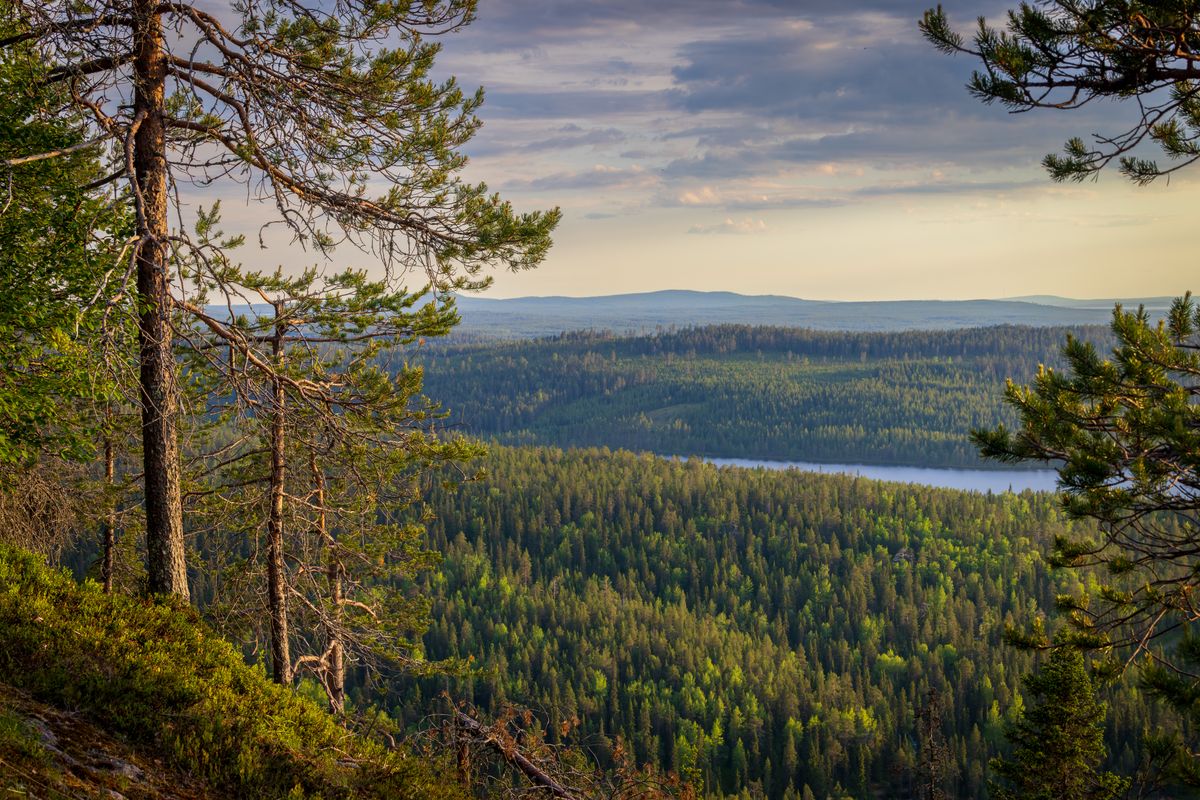
The Koli ridge is a spine of quartzite roughly two billion years old, worn down by ice and left standing like a stone island above a plain of forest and water. The summit of Ukko-Koli reaches three hundred and forty seven metres, which reads as nothing on paper but is the highest point in southern Finland.
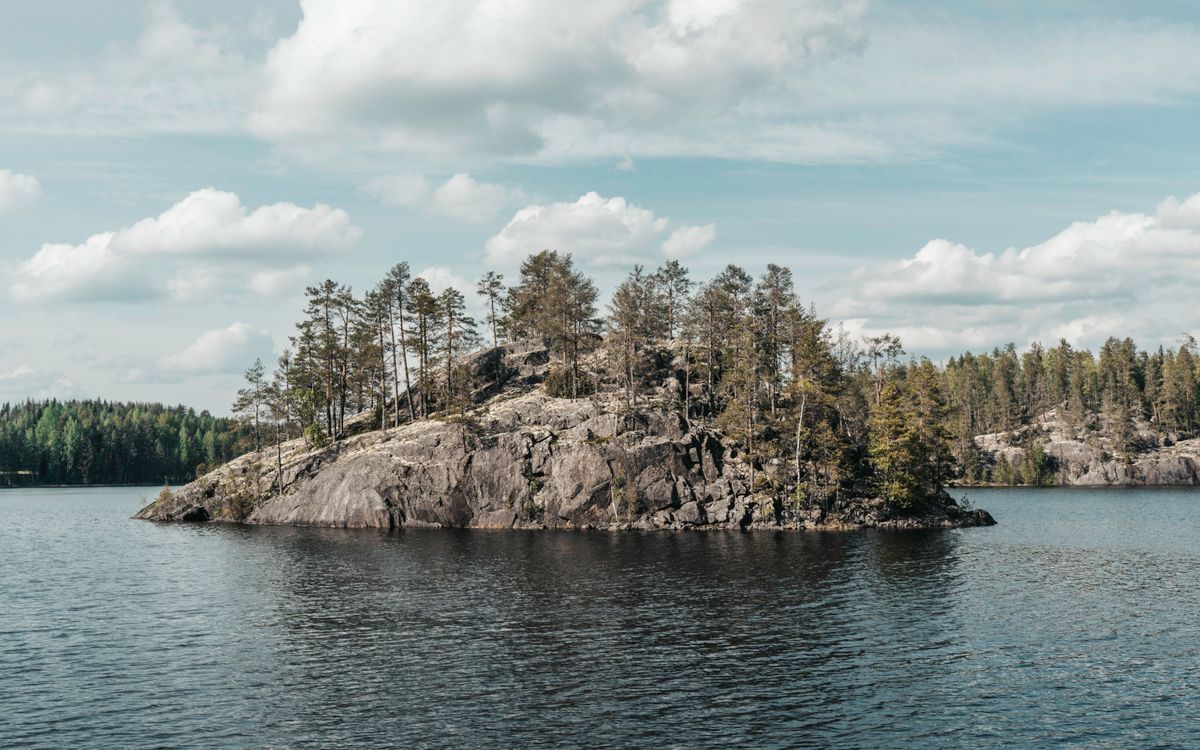
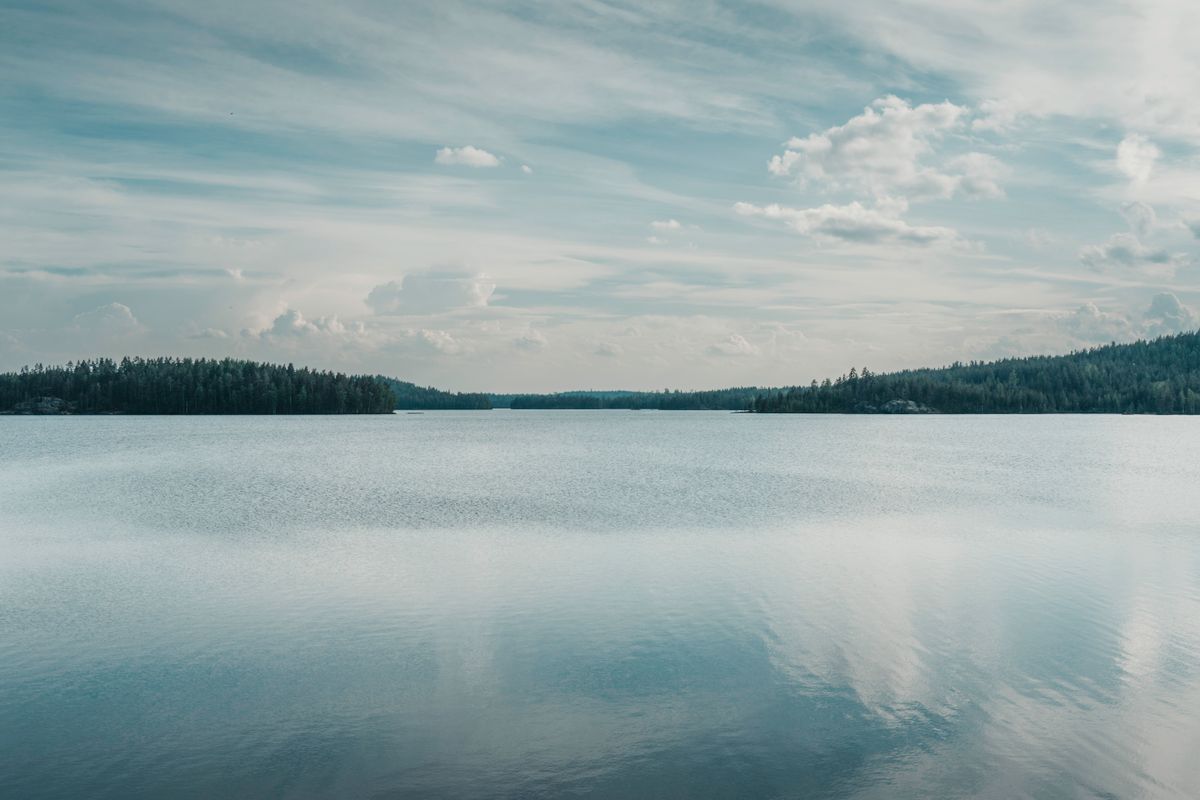
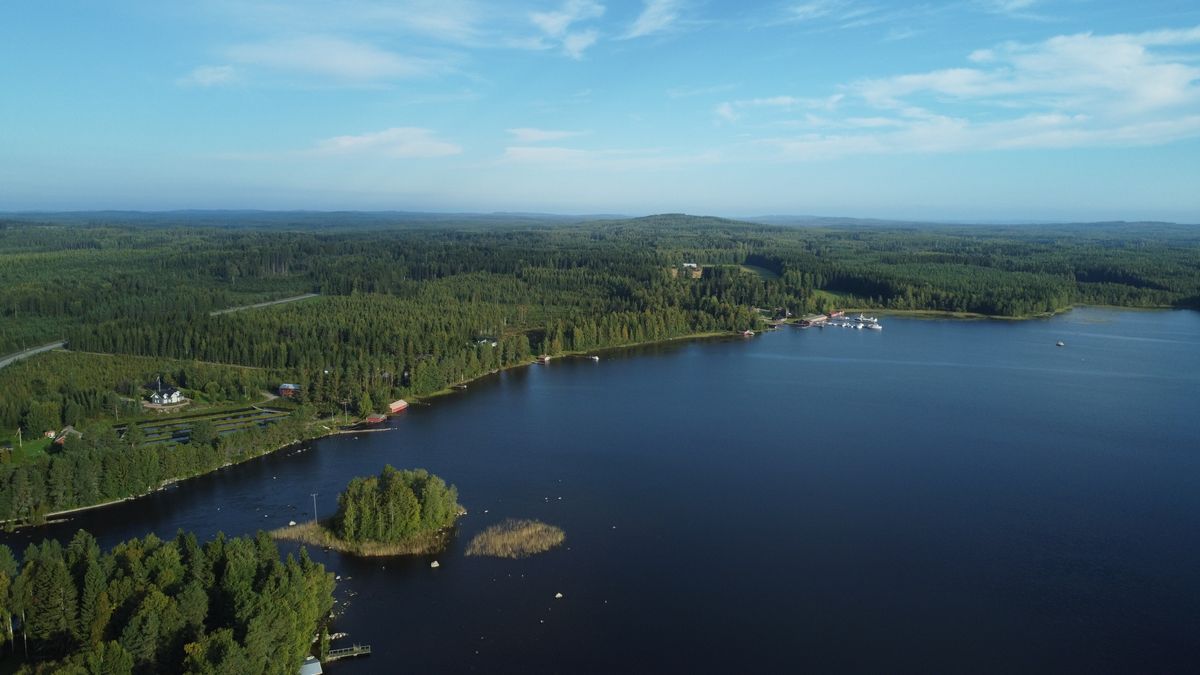
From there you look out over Pielinen, the fourth largest lake in the country, scattered with wooded islands all the way to the horizon. This is the image Finns call the national landscape, and it turns up in textbooks, on stamps and in nineteenth century painting.
Painters, composers and the making of a symbol
At the end of the nineteenth century Finland was still a grand duchy under the Russian crown, and its cultural class was looking for roots that were neither Swedish nor Russian. It found them in Karelia, the eastern region from which the national epic, the Kalevala, had been collected.
That movement, known as Karelianism, sent painters, writers and musicians east. Eero Jarnefelt painted the view from Koli more than once, and the place became a kind of artistic pilgrimage. The story goes that when Jean Sibelius visited in 1909, a piano was hauled all the way to the summit.
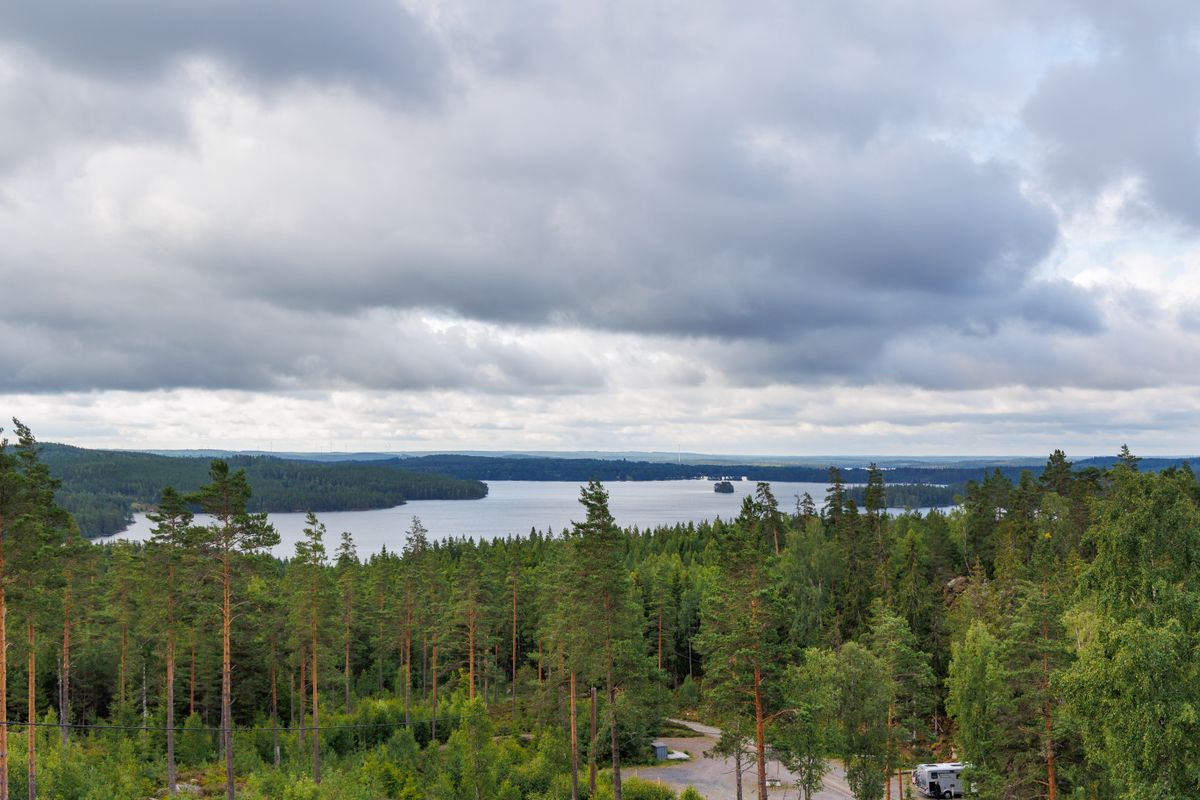
It is worth knowing before you climb, because otherwise Koli risks looking like nothing more than a hill with a good view. With that context the view carries different weight: this is where a country decided what it wanted to look like.
Ukko-Koli is the best known and the busiest, because it is a few minutes from the car park. Akka-Koli and Paha-Koli, the two neighbouring summits, offer similar views and almost always fewer people. Do all three, they are a few hundred metres apart.
Trails, from ten minutes to three days
The park has a well marked network, all of it starting from the same place: the Ukko visitor centre, just below the summit. The range is enormous, from a walk up a staircase to a multi-day circuit.
- The climb to Ukko-Koli, a few minutes on steps and surfaced path from the car park. Accessible to almost anyone.
- The short trails around the summits, between one and five kilometres, linking the three tops and dropping towards the lake.
- Day trails through the park forest, with sections of old growth and bogs crossed on wooden boardwalks.
- The Herajarvi circuit, the long route of the area, a few dozen kilometres over two or three days, with shelters and fire pits along the way.
- In winter, ski touring and snowshoe routes, plus a small downhill slope on the ridge itself.
The long routes use the Finnish system of open wilderness huts, simple shelters with no booking and no charge, where one unwritten rule applies: whoever arrives later has priority for a sleeping place, and you leave cut firewood for the next person.
Current information on trails, huts and any closures is published by the parks authority at nationalparks.fi, in English, and is worth checking on the day you set out.
When to go and what light you get
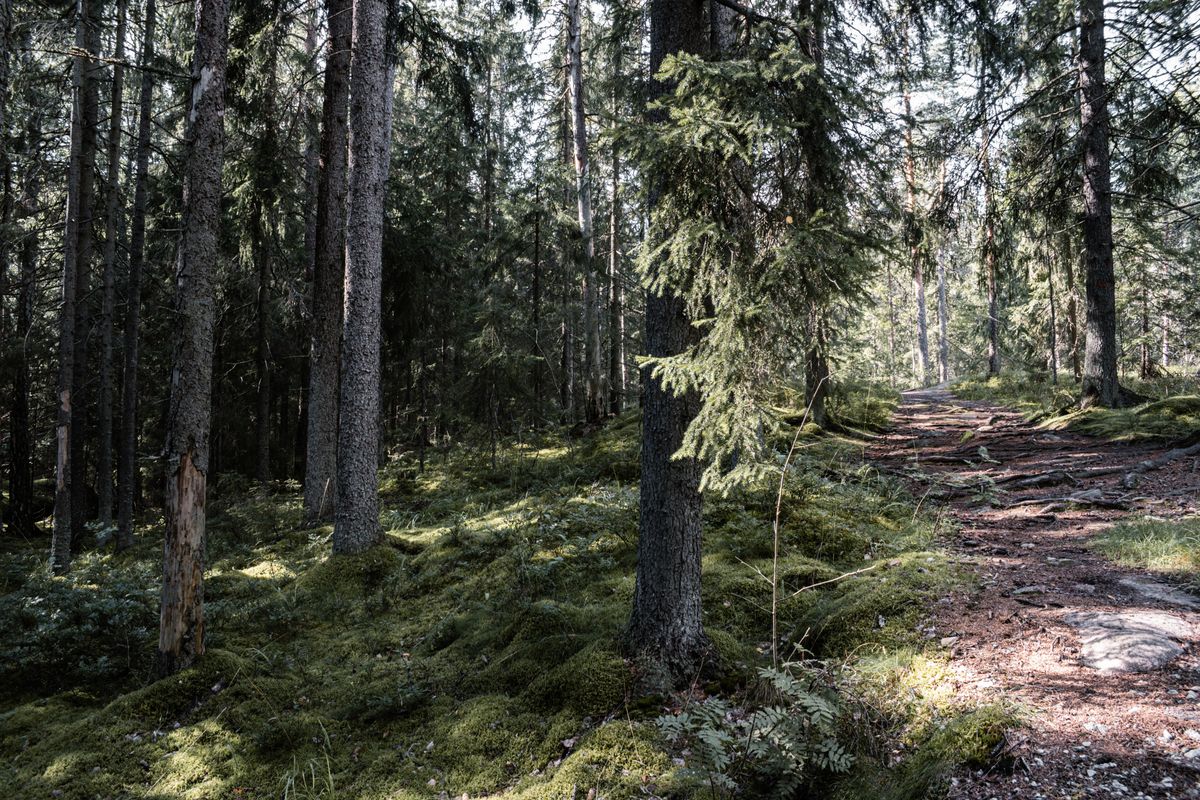
The seasons here bear no resemblance to one another, and the choice changes the experience completely.
| Period | What you get |
|---|---|
| June to August | very long days, total green, the best window for long trails |
| Late August, early September | fewer people, cool evenings, mosquitoes almost gone |
| Mid September | ruska, the autumn colour, two or three weeks of yellow and red |
| October and November | low light, mist on the lake, the quietest time of year |
| December to March | snow, frozen lake, short days, ski touring |
| April and May | thaw, soft tracks, the weakest season |
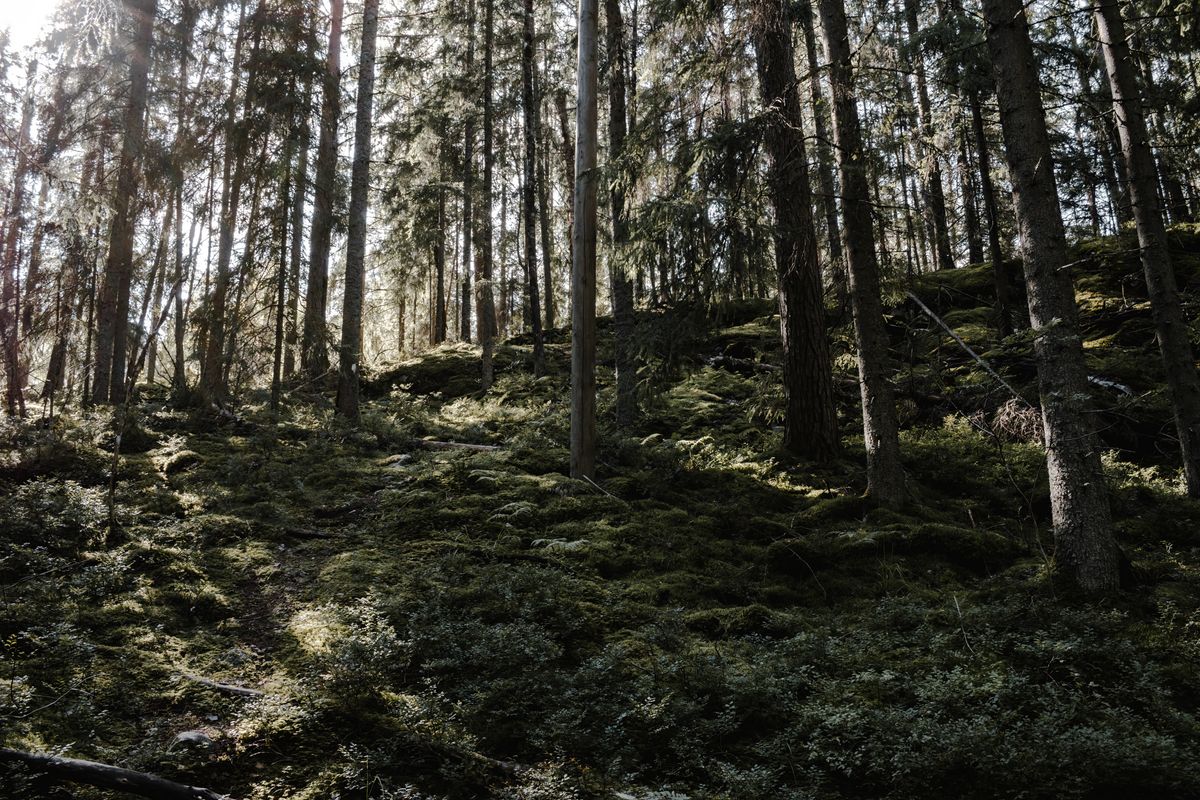
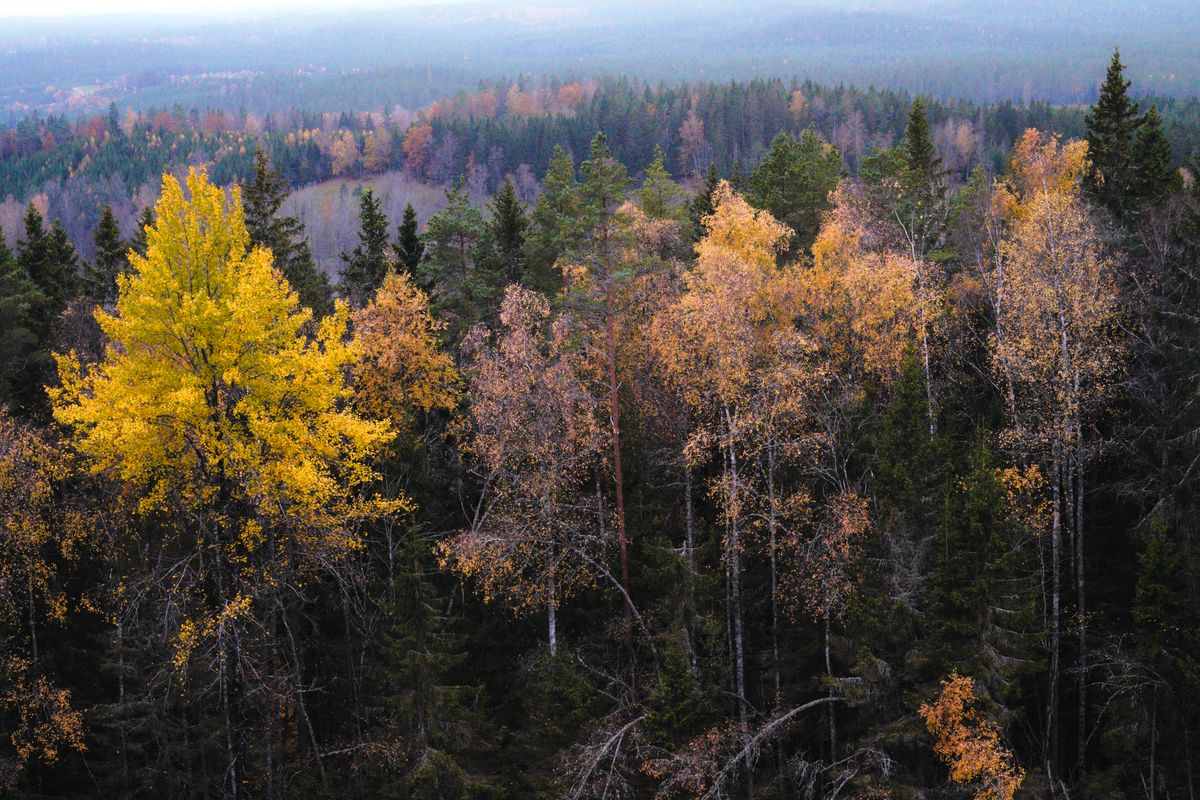
Ruska is the strongest argument. It is the moment when the birches and broadleaves inside the conifer forest catch fire, and the contrast with the dark green of the spruce produces exactly the landscape of the paintings. It is short and shifts by a week or two from year to year.
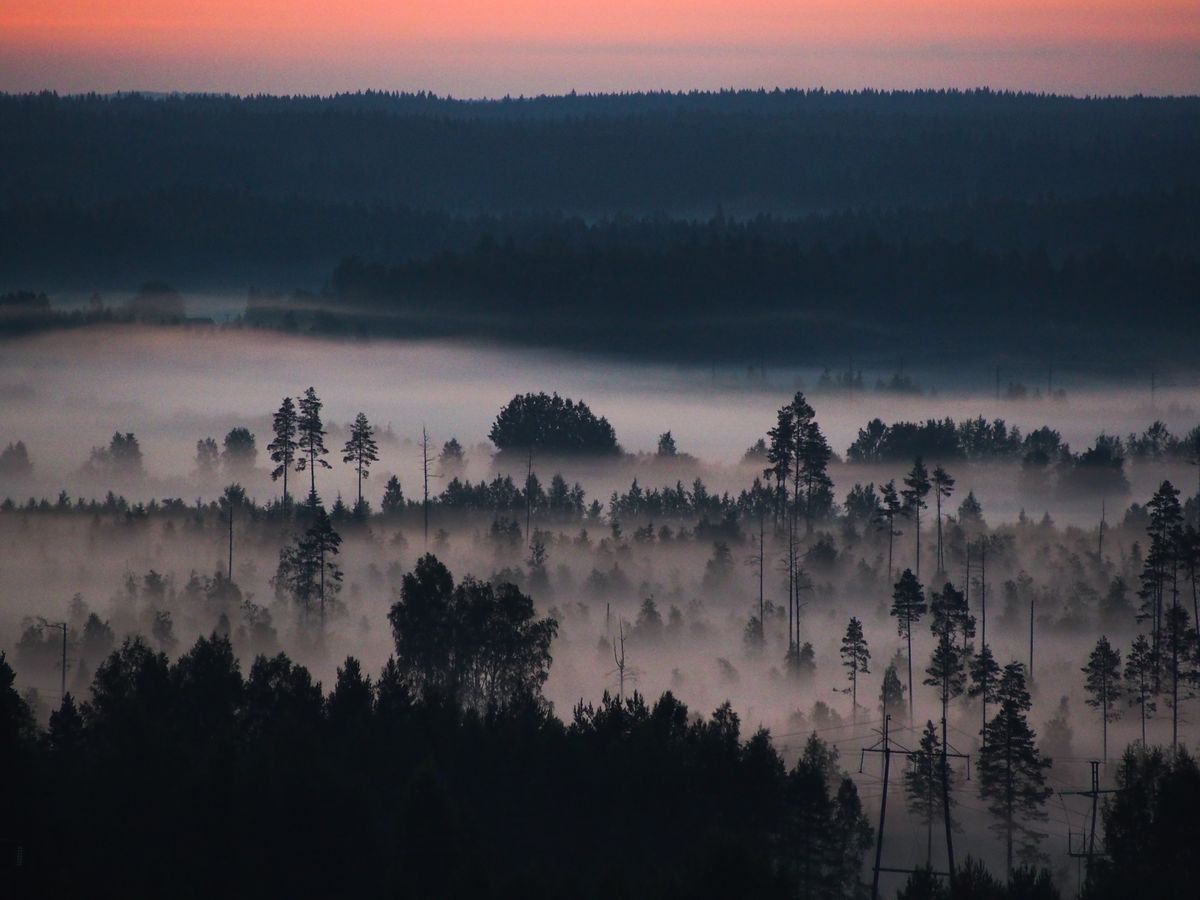
The best light is at sunrise, when mist still sits on the lake and the islands emerge from it one by one. If you drive up from Joensuu in the morning, you have missed it. There is accommodation on the ridge itself and guesthouses in the village below.
Getting there and what it costs
Koli sits on no standard Finnish itinerary, and that is part of the appeal. The simplest approach is through Joensuu, the regional capital.
| Stage | Detail |
|---|---|
| Helsinki to Joensuu by train | around 4 hours 30 minutes |
| Helsinki to Joensuu by air | about an hour |
| Joensuu to Koli by car | roughly 70 km, about an hour |
| Bus from Joensuu | daily services, sparser out of season |
| Park entry | free, as at all Finnish national parks |
| Parking at the visitor centre | charged |
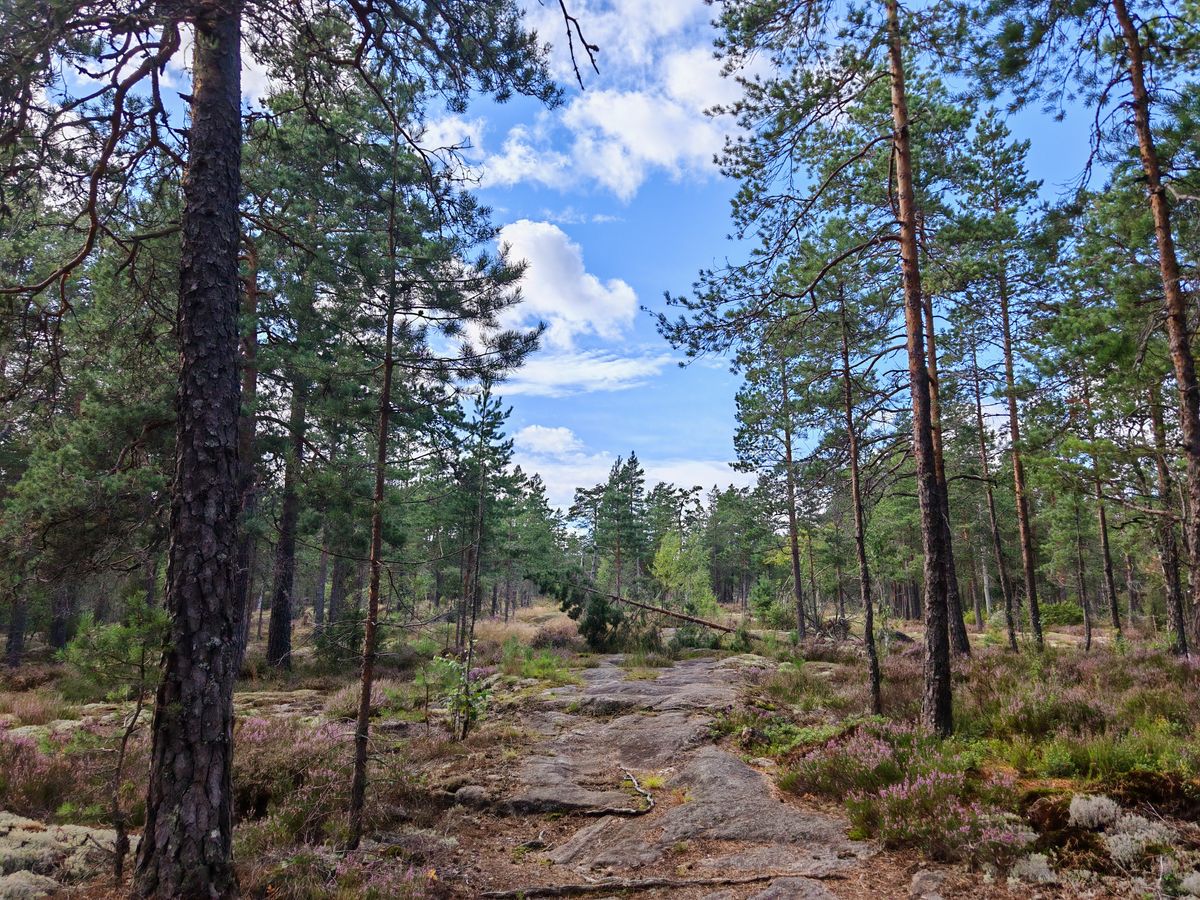
A hire car makes the difference, because buses are few and tie you to a timetable. Finland has excellent roads and almost no traffic in the east, so driving is relaxed. Watch for elk and reindeer at dawn and dusk: collisions are real, and the warning signs are not decorative.
Prices are Nordic: accommodation from around eighty euros a night, a restaurant meal between twenty and thirty euros. You save seriously by cooking at a cabin and shopping in supermarkets. General background on the country is on the official portal Visit Finland.
Frequently asked questions (FAQ)
Conclusion
Koli National Park has no glaciers, no vertical walls and no guidebook superlatives. It has a quartzite ridge two billion years old, a lake with hundreds of islands and silence. Those are exactly the things that made a whole country recognise itself in it.
Come in September, sleep on the ridge and climb before sunrise. The rest takes care of itself.
