

 By
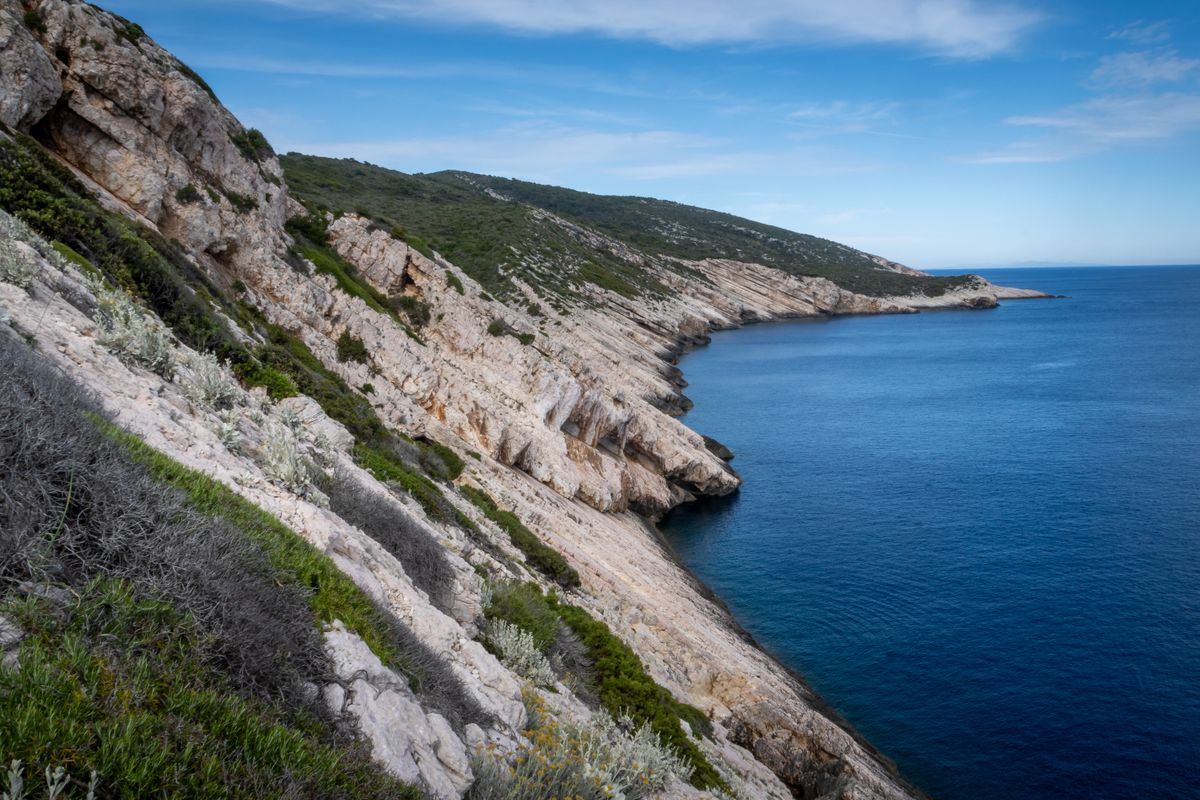
Vis island sits further out to sea than any other inhabited Croatian island, and for forty years it was closed to foreigners entirely. That accident of Cold War geography is the reason it looks the way it does today: while the rest of the Dalmatian coast filled up with concrete hotels, nothing at all was built here.
This guide covers what the military decades left behind, the difference between the two towns, how to reach the Blue Cave and Stiniva without wasting a day, what to drink, and the ferry logistics that decide the whole trip.
Vis island: forty years off limits
Position explains everything. Vis is the Croatian island furthest out to sea, and whoever controls it controls access to the Dalmatian coast. The Romans fortified it, the Venetians held it, the British took it during the Napoleonic wars and the Austrians after them.
| Element | Value |
|---|---|
| Area | about 90 sq km |
| Population | about 3,400 |
| Distance from Split | 45 km |
| Ferry crossing | 2 hours 20 minutes |
| Closed to foreigners | 1950 to 1989 |
| Towns | Vis and Komiza |
In the Second World War the island was the main base of Tito partisans, who had their headquarters here in 1944, in a cave on the slope of Mount Hum. After the war, Yugoslavia turned the whole island into a strategic military zone.
From 1950 to 1989 foreigners were banned outright, and Yugoslav citizens needed a permit. In the same period the army built a considerable underground network: tunnels cut into rock, submarine shelters, artillery positions and fuel depots, most of which are still there and some of which can be visited.
The side effect was paradoxical. No hotels, no apartment blocks, no marina developments. When the island reopened, it did so with an intact coastline and a village economy, and it has been careful about that ever since.
Vis and Komiza, the two towns
The island has two settlements, on opposite coasts, ten kilometres apart, and they are different enough that the choice between them matters.
| Criterion | Vis | Komiza |
|---|---|---|
| Where | north-east coast | west coast |
| Character | port town, Venetian houses | fishing village, vertical |
| Ferry arrives | yes | no |
| Blue Cave access | further | closer |
| Best for | short stays, logistics | a week, quiet |
Vis town, on the north-east coast, is the main port and where the ferry lands. It grew from two old cores, Luka and Kut, with Venetian houses, a waterfront promenade and the remains of a Greek settlement called Issa underneath the modern streets.
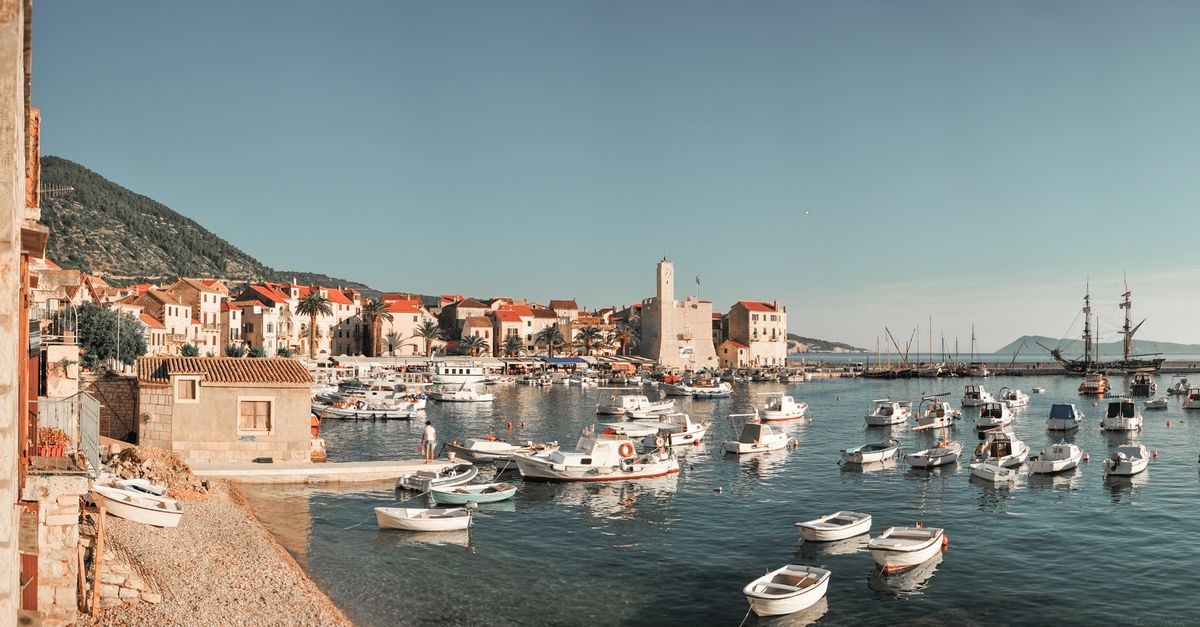
Komiza, on the west coast, is the fishing village. It is more compact and more vertical, with narrow lanes climbing straight up from the harbour, and a sixteenth-century Venetian fort on the waterfront.
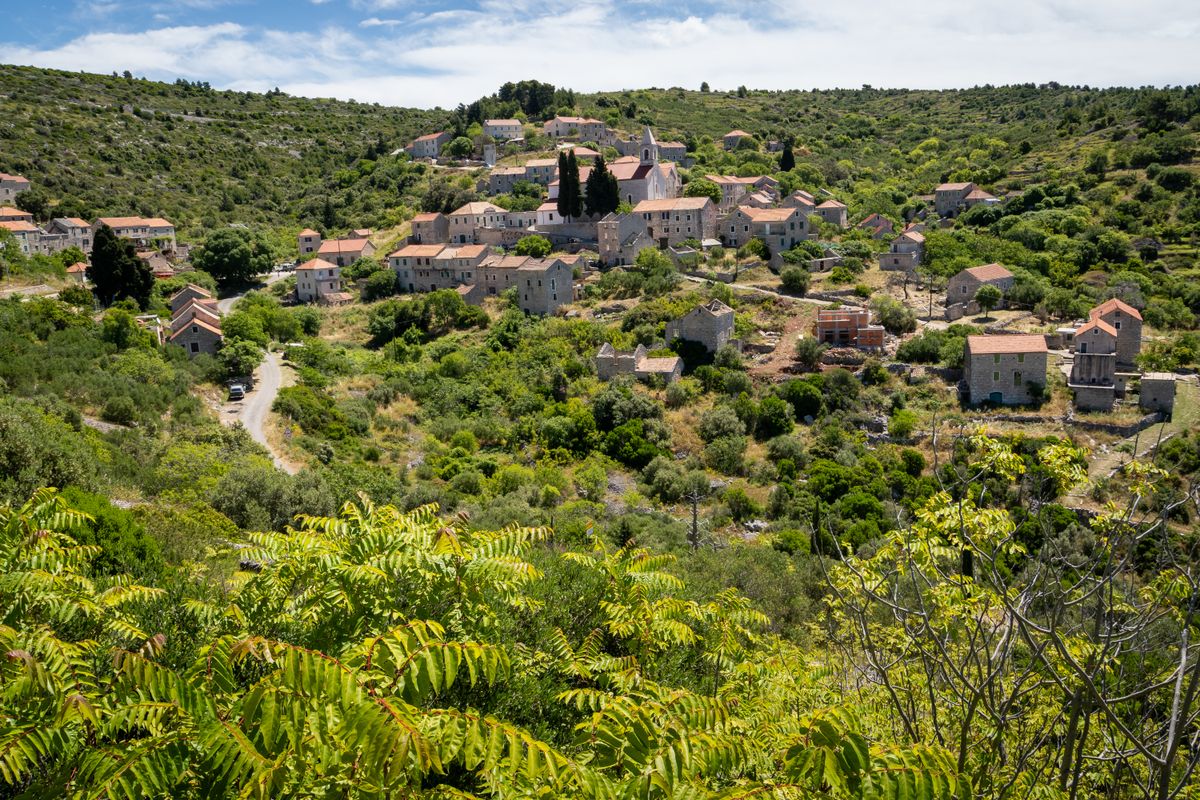
Komiza was for centuries the most important fishing centre in the Adriatic. At the end of the nineteenth century a wave of its fishermen emigrated to California, where they effectively founded the fishing industry of San Pedro, and the connection is still maintained.
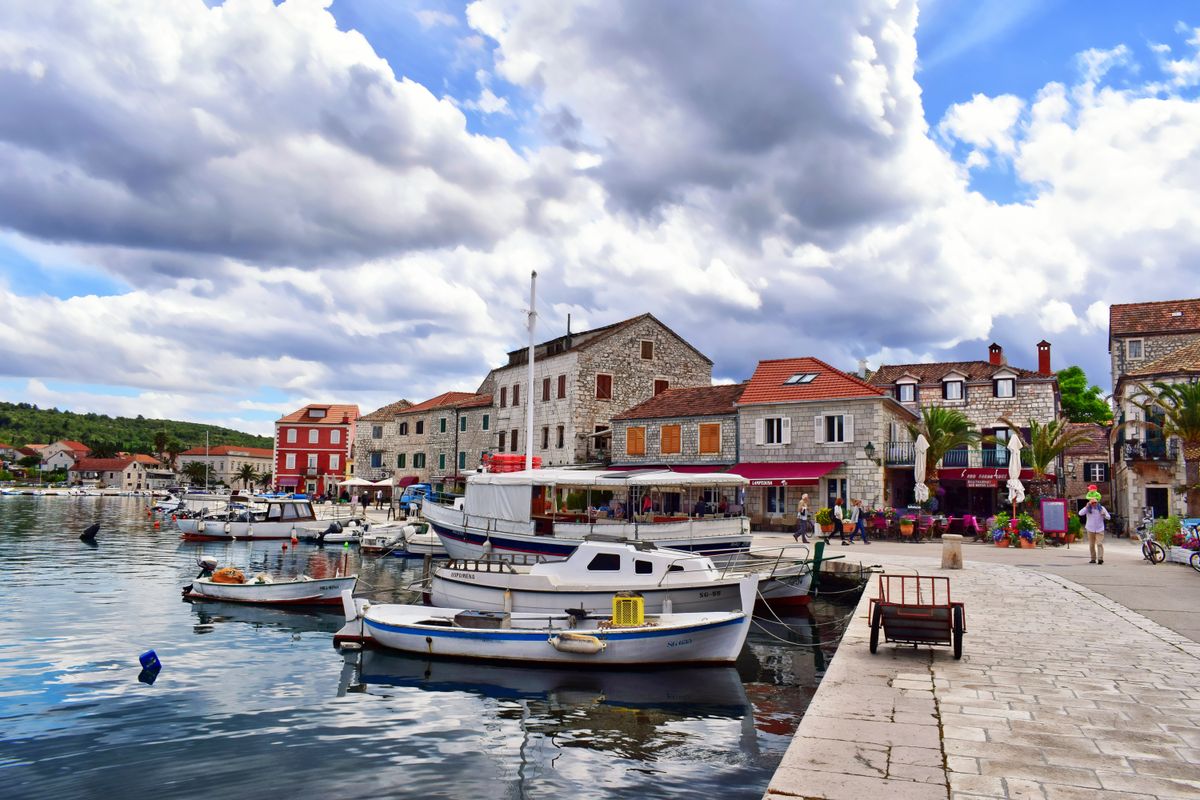
The traditional boat here is the falkusa, with a triangular lateen sail and detachable washboards, and building them was a local specialty. A few have been reconstructed and race each year, but they are not easy to see outside the regatta.
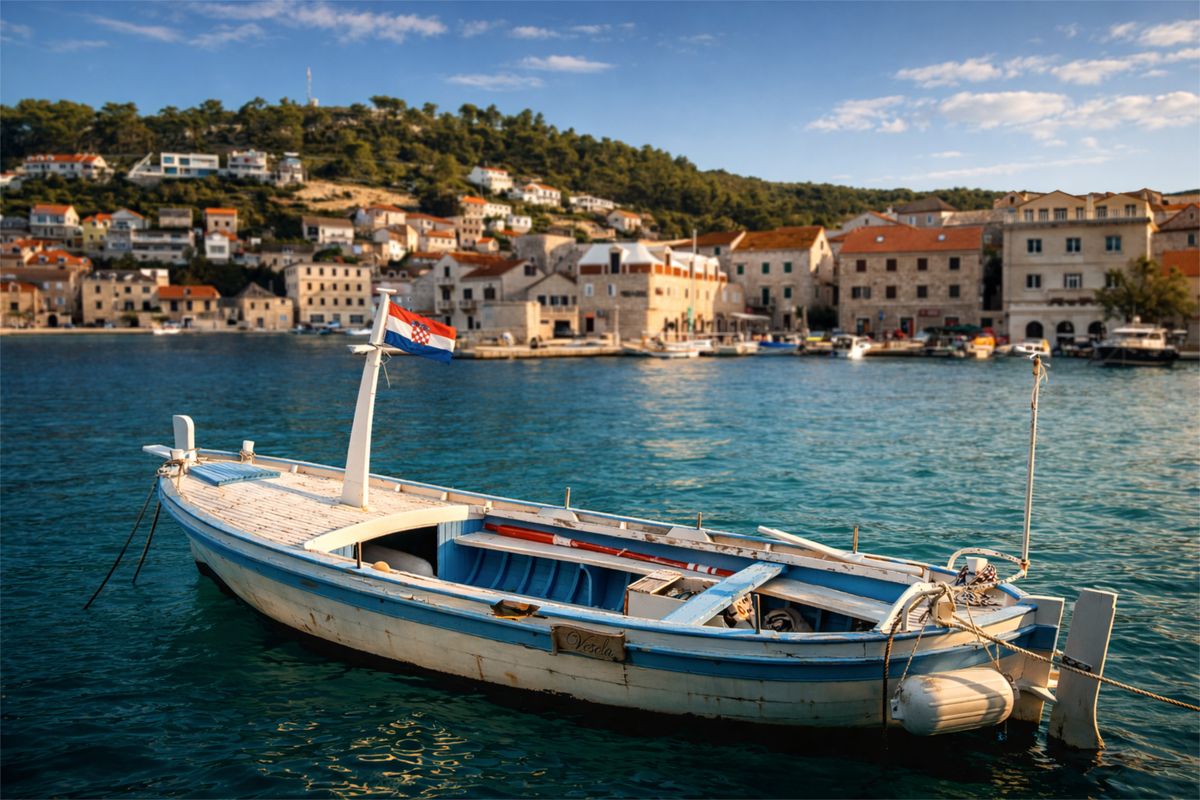
For a short stay, Vis town is more practical. For anyone staying a week and wanting quiet, Komiza is the better choice.
The Blue Cave, Stiniva and the coast
The main attraction is not on Vis at all but on Bisevo, an islet five kilometres to the south-west with twenty permanent residents.
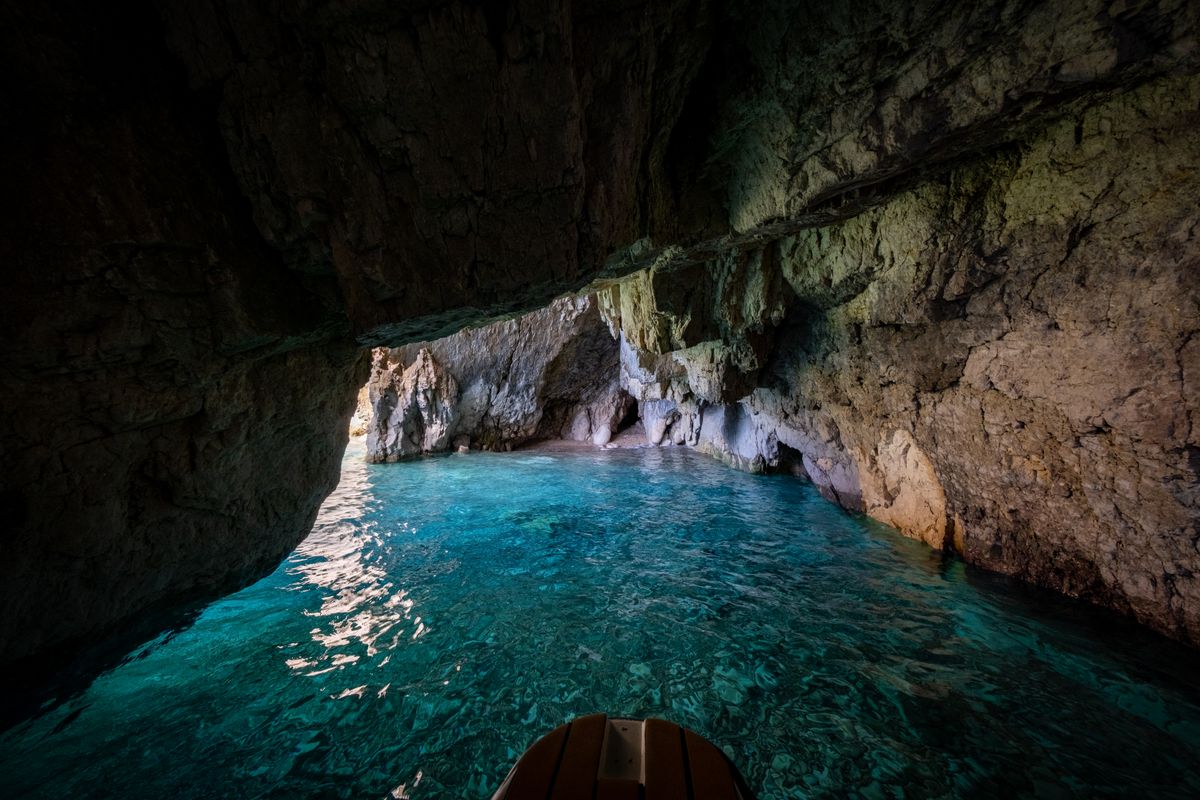
Modra spilja, the Blue Cave, is a sea grotto where light enters through a submerged opening and reflects off the white floor, filling the whole chamber with blue. The effect peaks between roughly eleven and two, when the sun is high enough, and outside that window it is simply a dark cave.
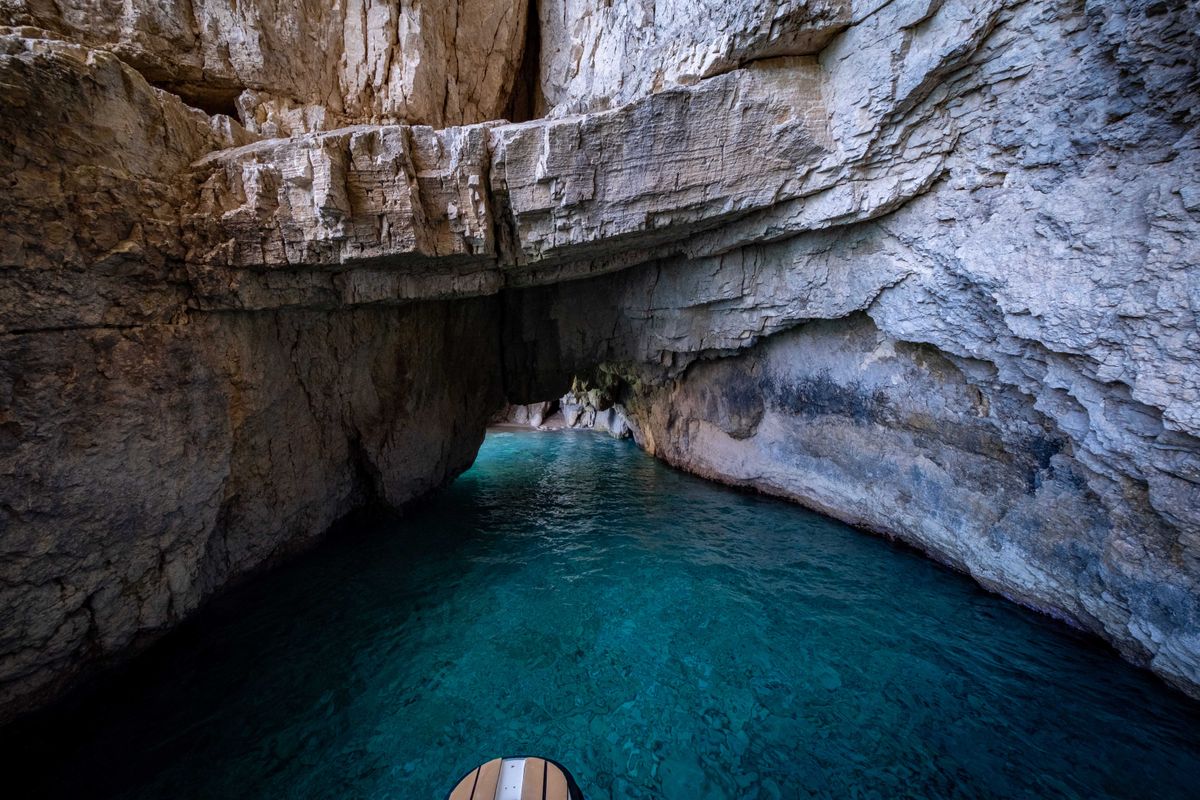
Access is by small boat only, in timed groups with a fixed entry slot, and the mouth is so low that you have to duck. Rough sea closes it without warning, sometimes for days.
Book ahead and choose a midday slot, because outside that window the blue effect simply does not happen. Check the wind forecast the day before: in any swell the entrance closes and tours are cancelled on the spot, usually without a refund of the boat fare. Going from Vis rather than on a day trip from Split gives you the option of trying again the next morning.
Stiniva is the other emblematic image of the island: a tiny cove closed between two rock walls that come within a few metres of each other, leaving a gap barely wide enough for a small boat.
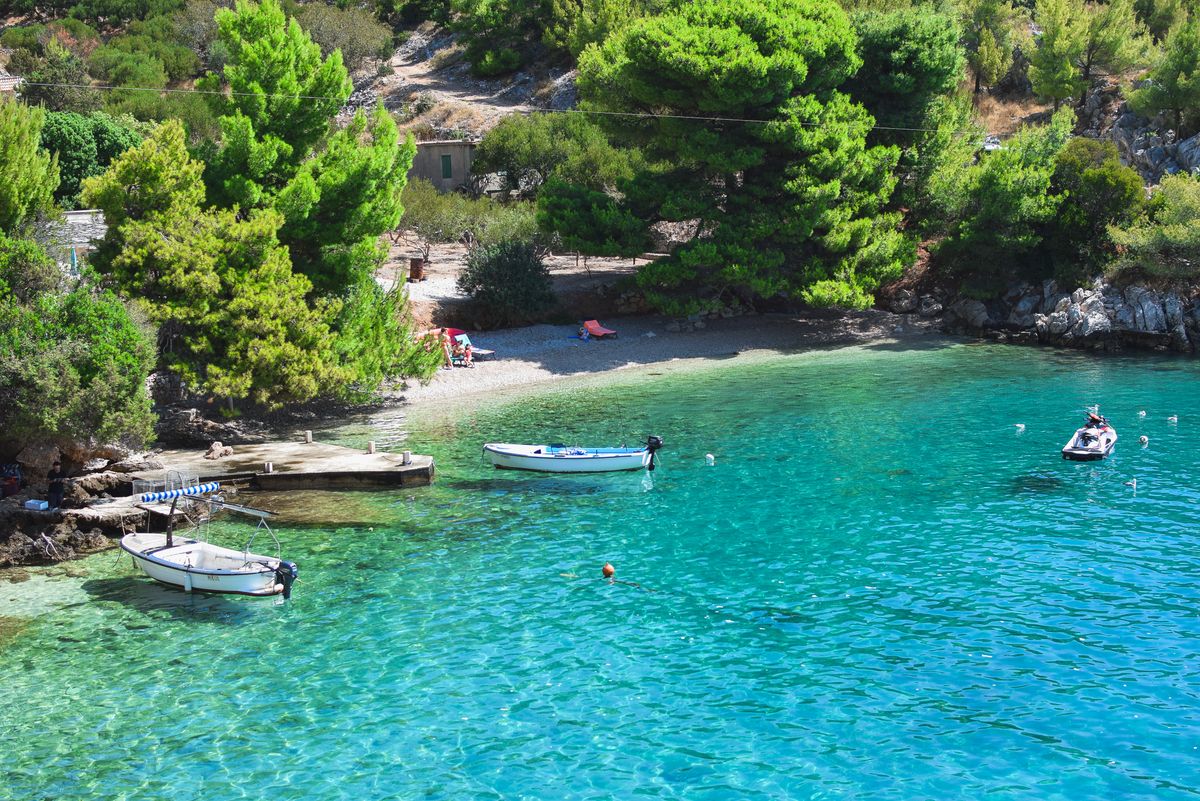
You reach it by sea, or on land by a steep path that descends in about twenty minutes and climbs back considerably harder. It is not suitable in flip-flops, and in high summer the cove fills with boats by mid-morning.
The rest of the south coast is essentially unbuilt: cliffs, coves with no road access and a few beaches reachable only by boat. It is the clearest evidence of what those forty closed years preserved.
The wine and the food
Wine on Vis has a continuity of more than two thousand four hundred years. The Greeks of Issa, the colony where Vis town now stands, exported wine across the Adriatic, and their amphorae turn up regularly in the seabed around the island.
The signature grape is vugava, a white cultivated almost exclusively here, giving full wines with low acidity and ripe fruit. It is difficult to find off the island, which makes tasting it on the spot the point.
The red is plavac mali, the classic Dalmatian variety and a relative of Californian zinfandel. On Vis it produces lighter wines than on Hvar or the Peljesac peninsula, because the soils are thinner and the sea air is constant.
The vineyards are small, often on stone terraces cut into slopes, and many producers are family holdings selling directly. Tastings happen without ceremony, in a cellar, usually with bread and cheese and no fee.
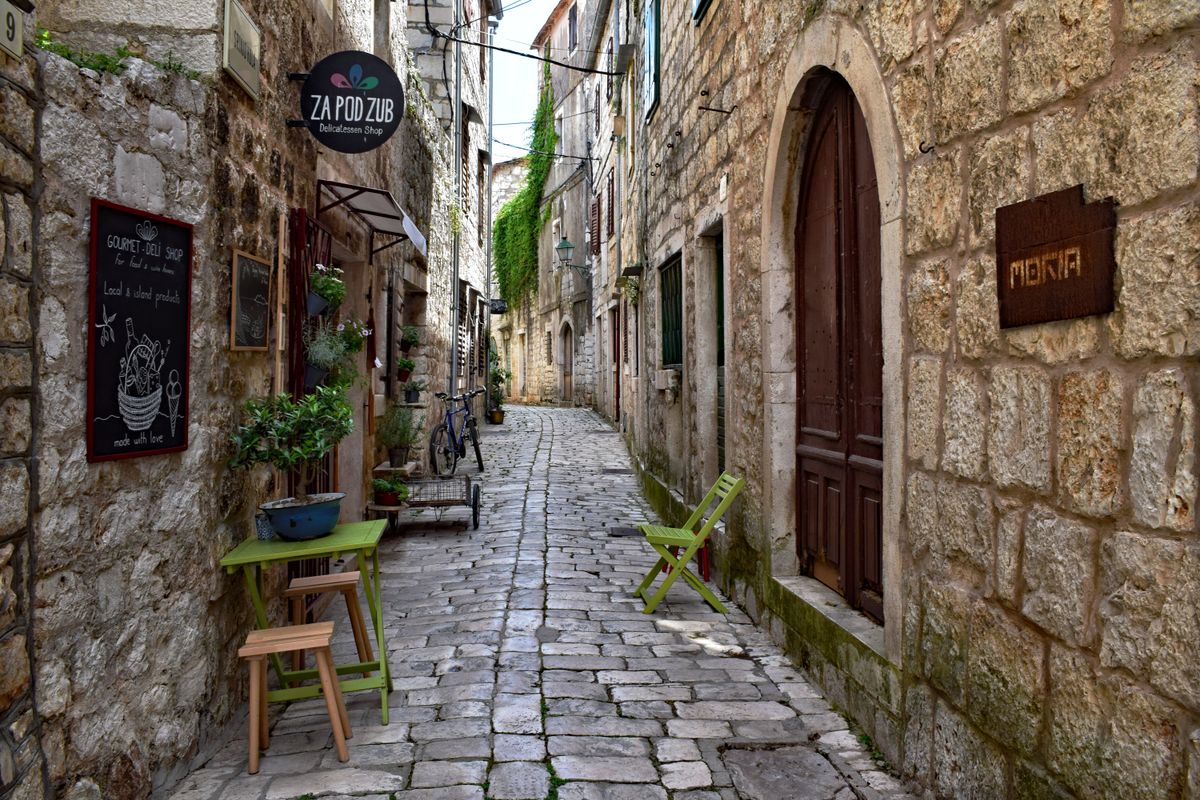
The local speciality is viska pogaca, a flat pie with onion, salted sardines and tomato, baked in a tray and cut into squares. It is sold at bakeries and is the best two euros you will spend on the island.
Otherwise it is Dalmatian fishermen cooking: grilled fish sold by weight, octopus cooked peka style under an iron bell buried in embers, sardines, and vegetables from the garden. The key word is konoba, which originally meant cellar and now means the family tavern with a short menu and whatever came in that day.
Practical: getting there, costs, when to go
Vis has no airport and will not get one. The only way in is the ferry from Split, and that is the first logistical decision of the trip.
| Stage | How | Duration |
|---|---|---|
| To Split | flight, or bus from Zagreb | depends on origin |
| Split to Vis, car ferry | ferry | 2 hours 20 minutes |
| Split to Vis, fast boat | catamaran | 1 hour 20 minutes |
| Vis town to Komiza | bus, scooter or car | 20 minutes |
The car ferry runs two or three times a day in summer and once or twice in winter. Booking online for July and August is essential, weeks in advance for vehicles. The catamaran is faster but takes no cars and has limited seats. Timetables are on the ferry company site.
| Item | Price |
|---|---|
| Apartment, per night, June | 60 – 100 euros |
| Apartment, per night, August | 110 – 180 euros |
| Car ferry return with a vehicle | 60 – 90 euros |
| Blue Cave boat tour, per person | 40 – 70 euros |
| Meal for two at a konoba | 35 – 60 euros |
| Scooter hire, per day | 25 – 40 euros |
On the island a car helps but is not essential. Distances are short, a bus links the two towns, and a scooter is what most visitors actually use. Accommodation is almost entirely private apartments and rooms; there are no large hotels, and in July and August the island fills completely.
June and September are the optimal months. In August the island takes more visitors than its small infrastructure absorbs comfortably, and the Blue Cave queues become genuinely long. General information is on the Croatian national tourism portal.
A day trip from Split is possible but not advised. Vis deserves a minimum of two nights, and the organised day tours spend more time on the boat than on the island.
A note about the photographs
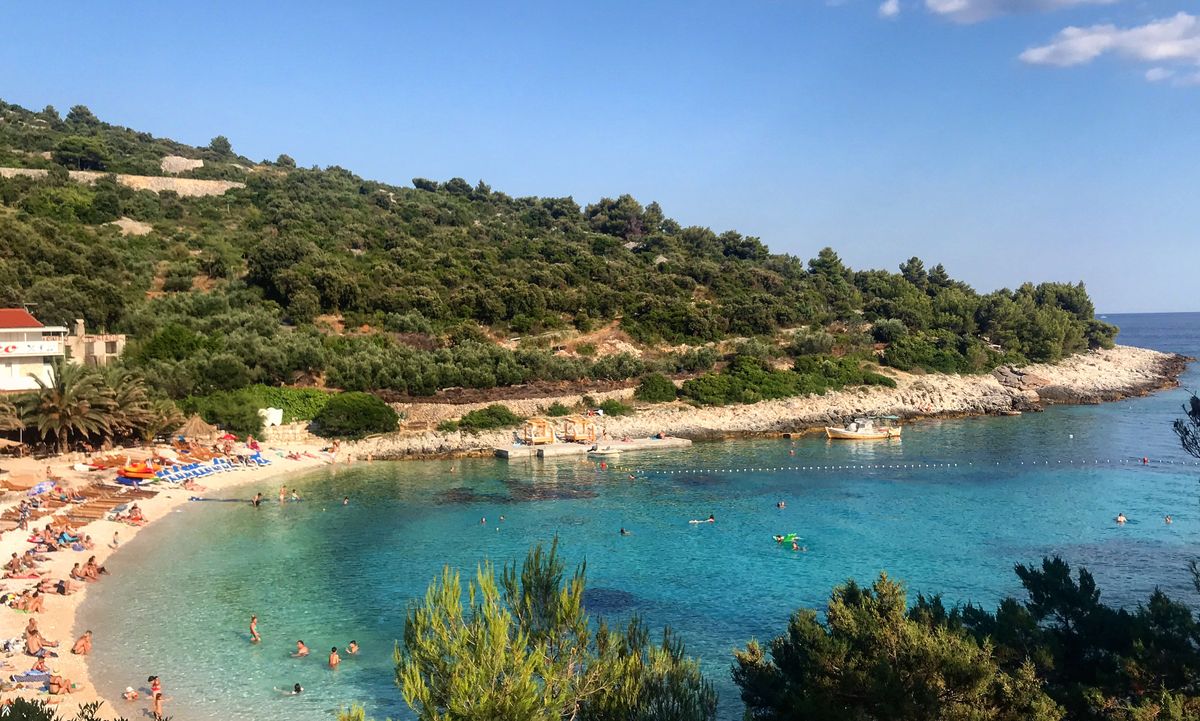
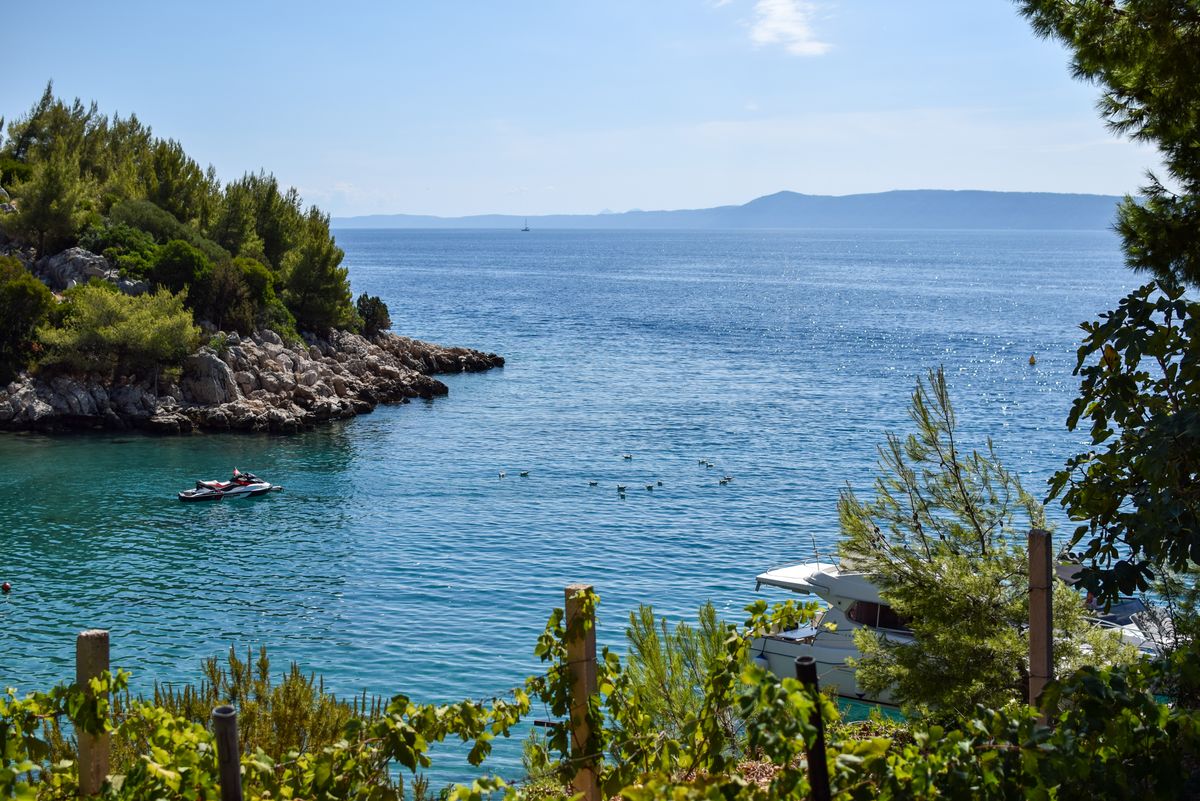
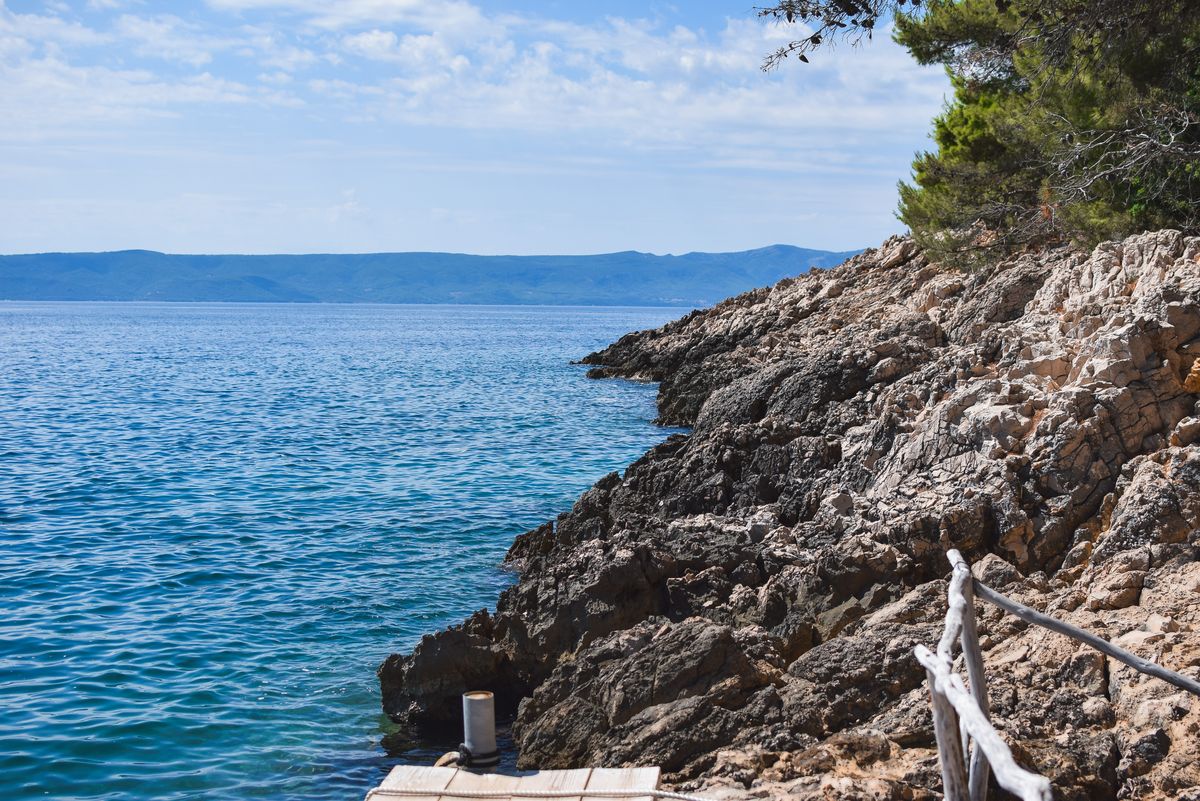
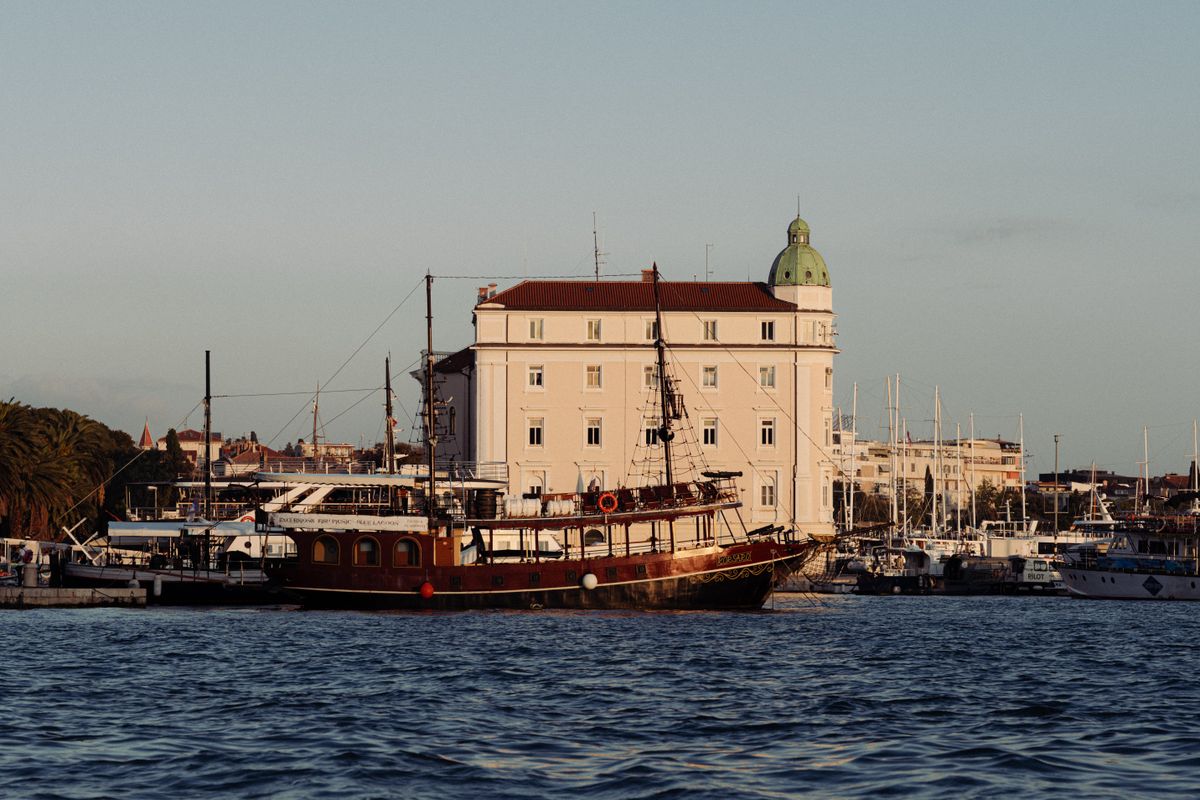
This needs saying plainly: Vis is among the most poorly photographed destinations in Croatia in free archives, and this article contains exactly three images confirmed as taken on the island itself, the coast, one bay and Komiza harbour.
The remaining photographs come from the Split-Dalmatia county that Vis belongs to, or from the ferry routes that are genuinely part of the journey, and each is captioned with what it actually shows. The two cave images are explicitly illustrative and are not the Blue Cave. Missing entirely: the Blue Cave on Bisevo, Stiniva beach, the Green Grotto, the military tunnels, the falkusa boat, the terraced vineyards, and the islets of Ravnik and Budikovac.
Frequently asked questions (FAQ)
Conclusion
Vis is the clearest demonstration in Croatia of what forty years of prohibition can preserve. There are no resort blocks, no marina developments and no coastal road because for four decades nobody was permitted to build any.
Take the ferry rather than a day tour, give it two nights minimum, book the Blue Cave for midday, and drink the vugava while you are there, because you will not find it at home.
