
 By

Monsanto is a village in eastern Portugal, hard against the Spanish border, built on a granite hill covered in enormous boulders. People did not move them out of the way, because they could not. They built between them, under them and sometimes directly on them, and some houses use a single stone weighing hundreds of tonnes as their entire roof. This is not a reconstruction for visitors, it is how people lived here for centuries.
What the houses actually look like, the story of the hilltop castle, the legend of the calf thrown over the walls, how to get there and how hard the walking is.
What Monsanto actually looks like
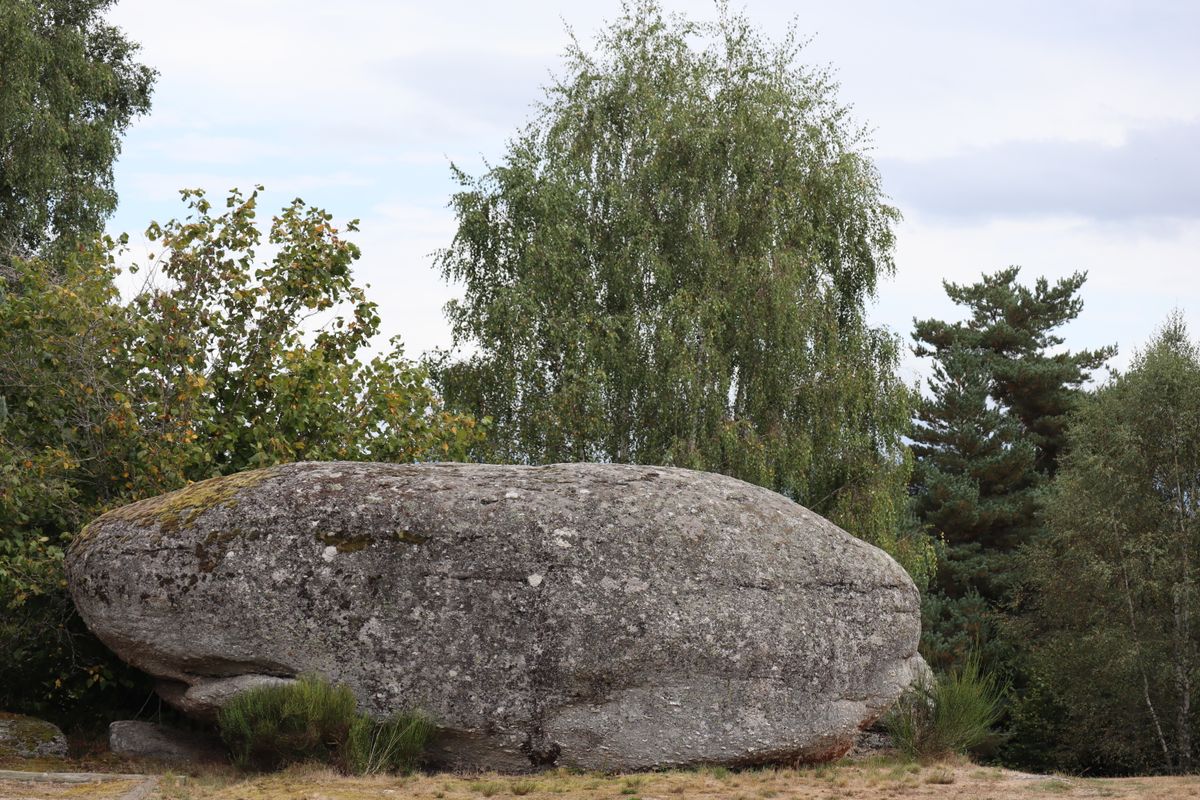
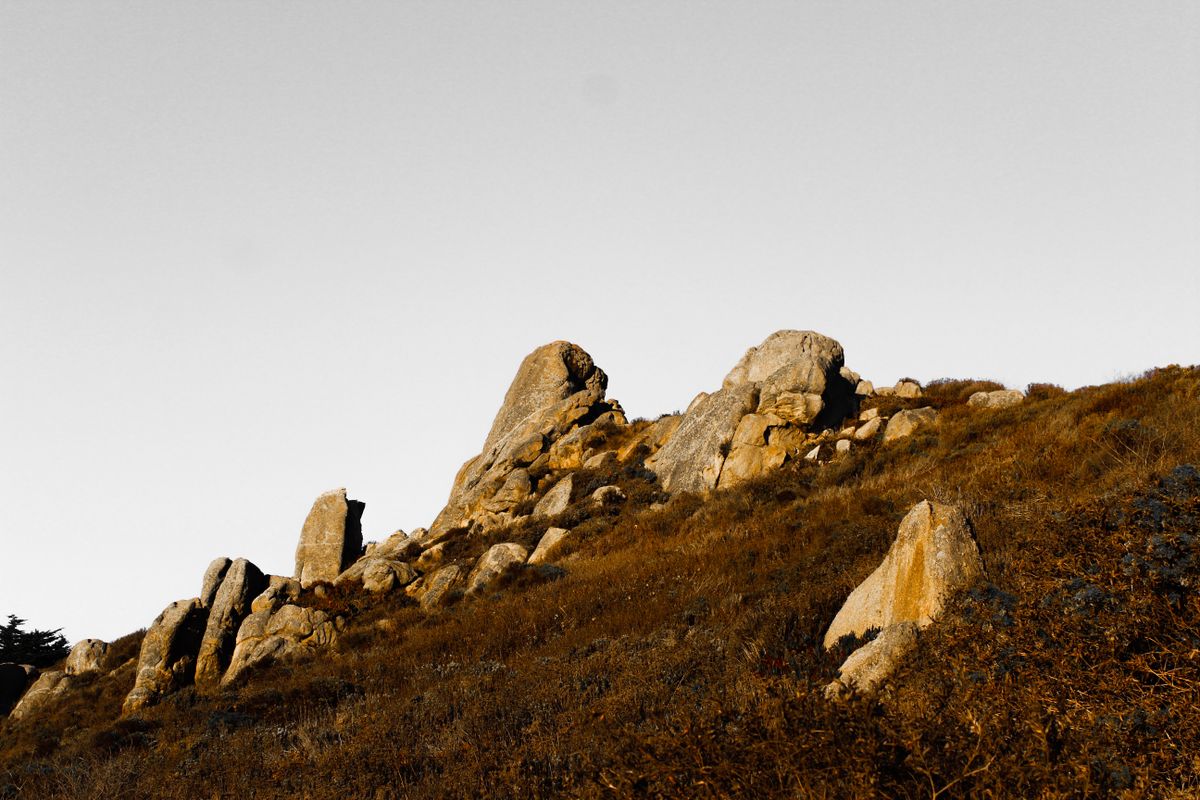
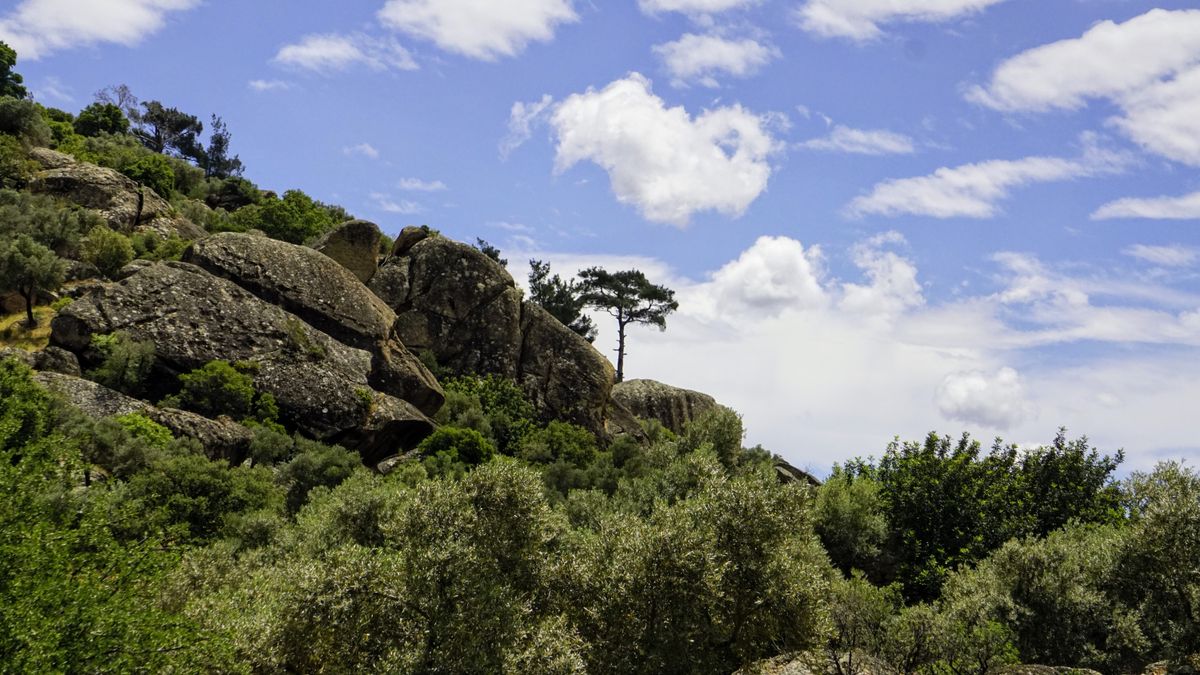
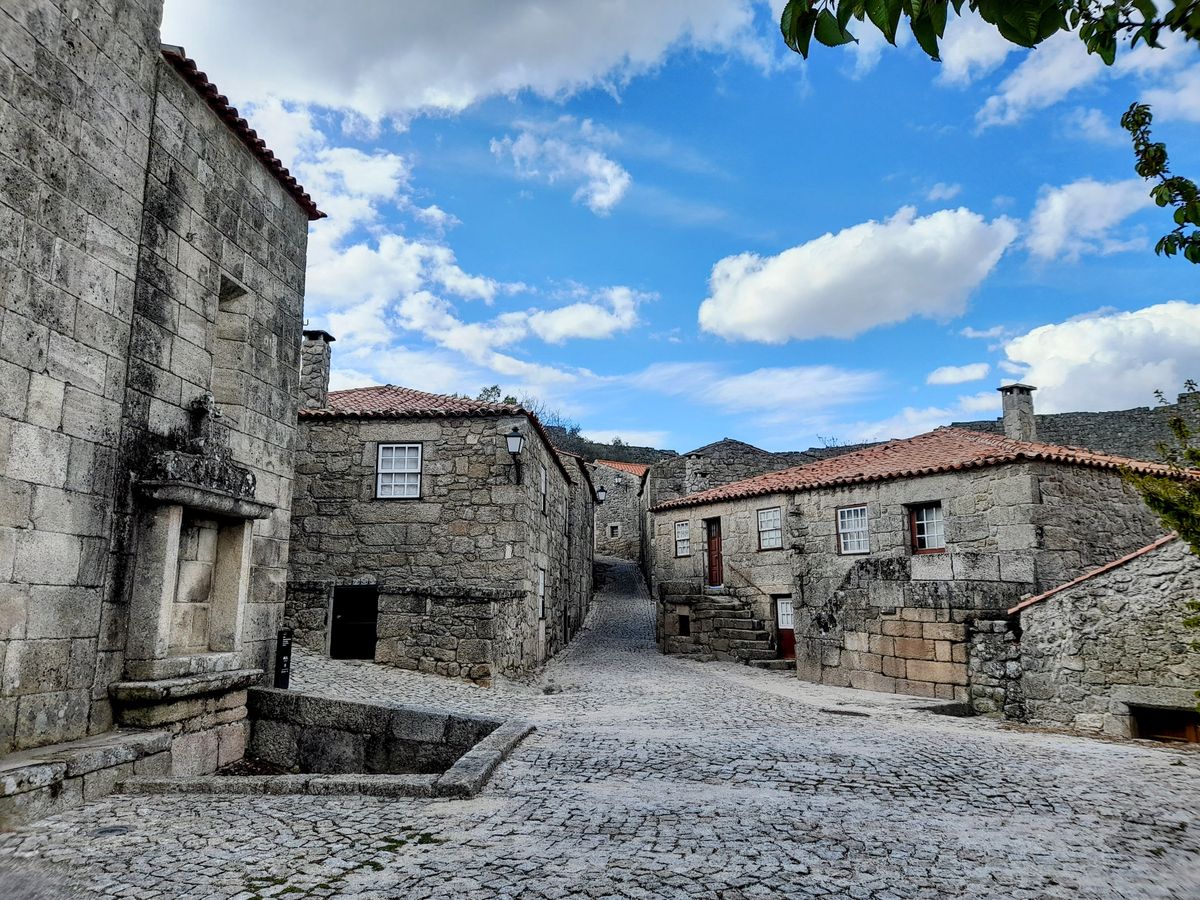
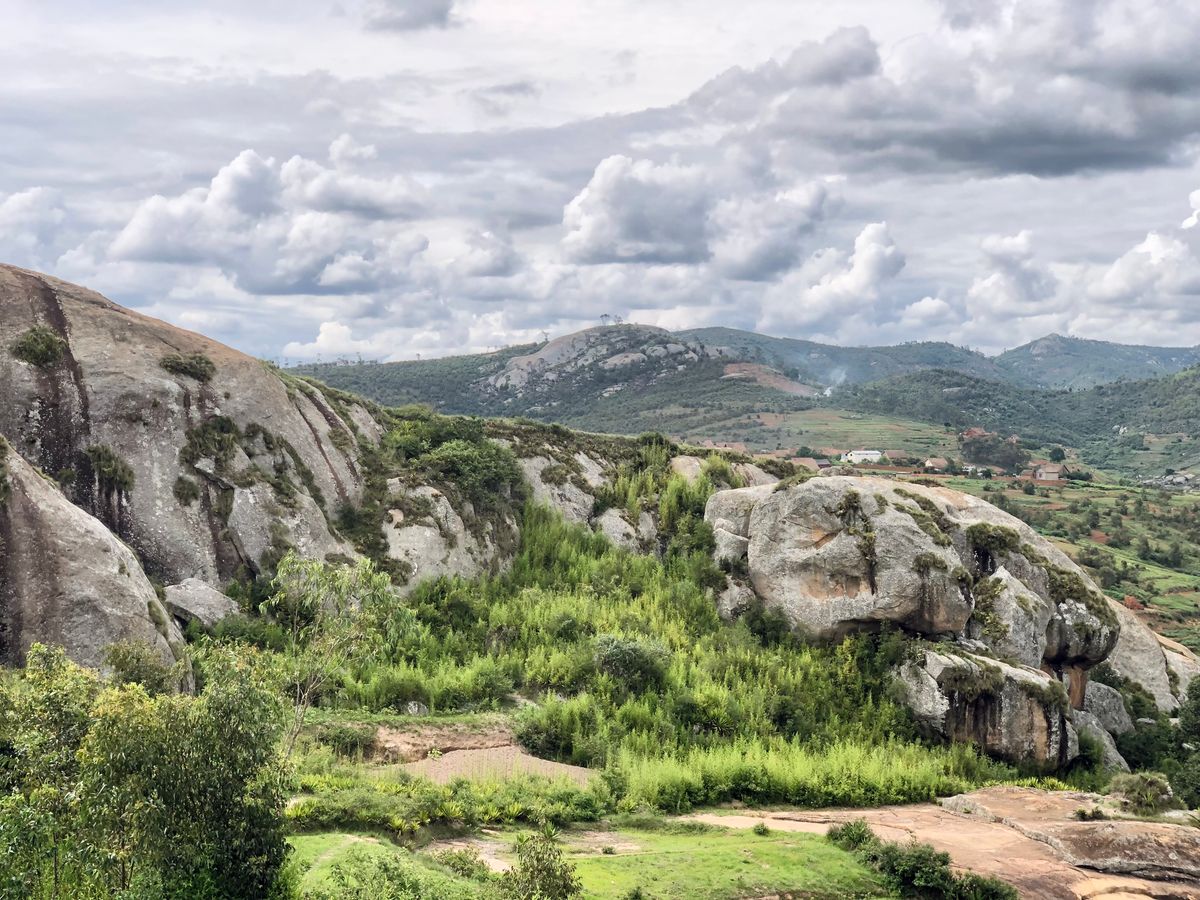
The village climbs a granite slope to roughly 750 metres, and the boulders are everywhere: in yards, in the middle of streets, inside the walls of houses. The local solution was pragmatic. Where a stone blocked the way, they built around it. Where a stone was large and flat, it became a roof. Where two sat side by side, they walled the gap and got a room.
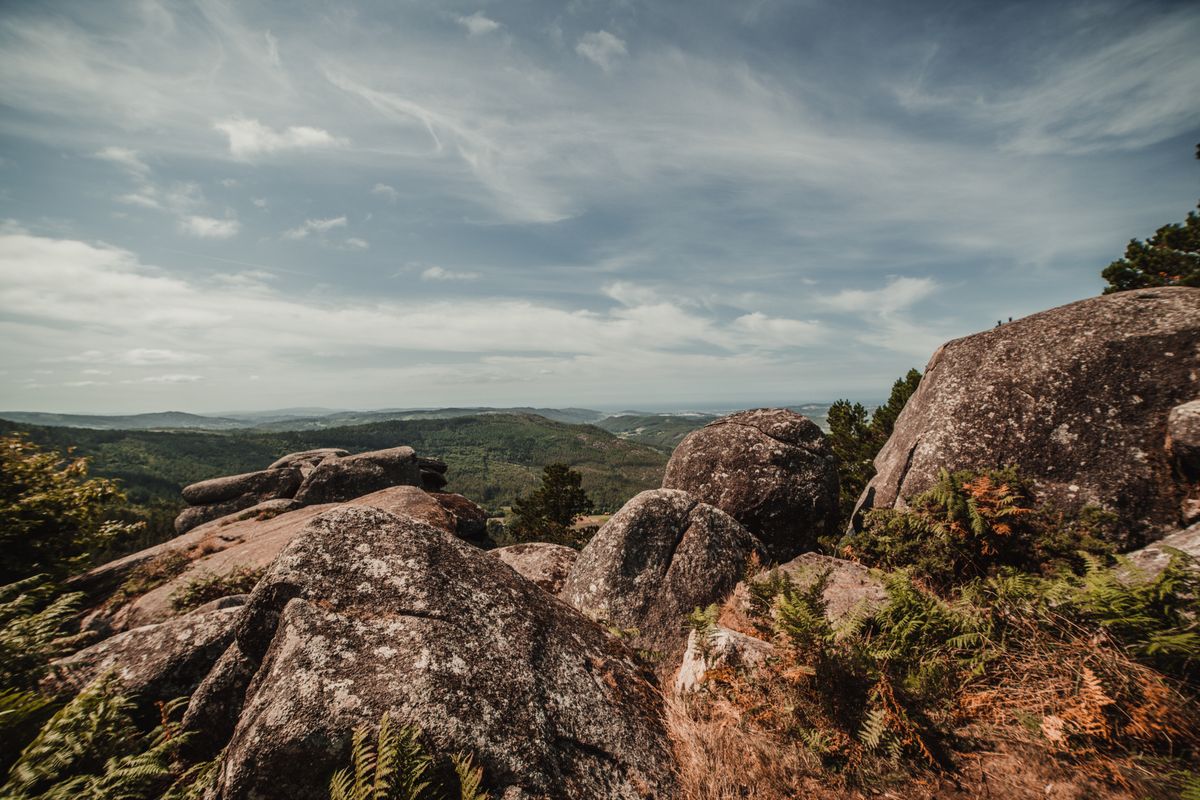
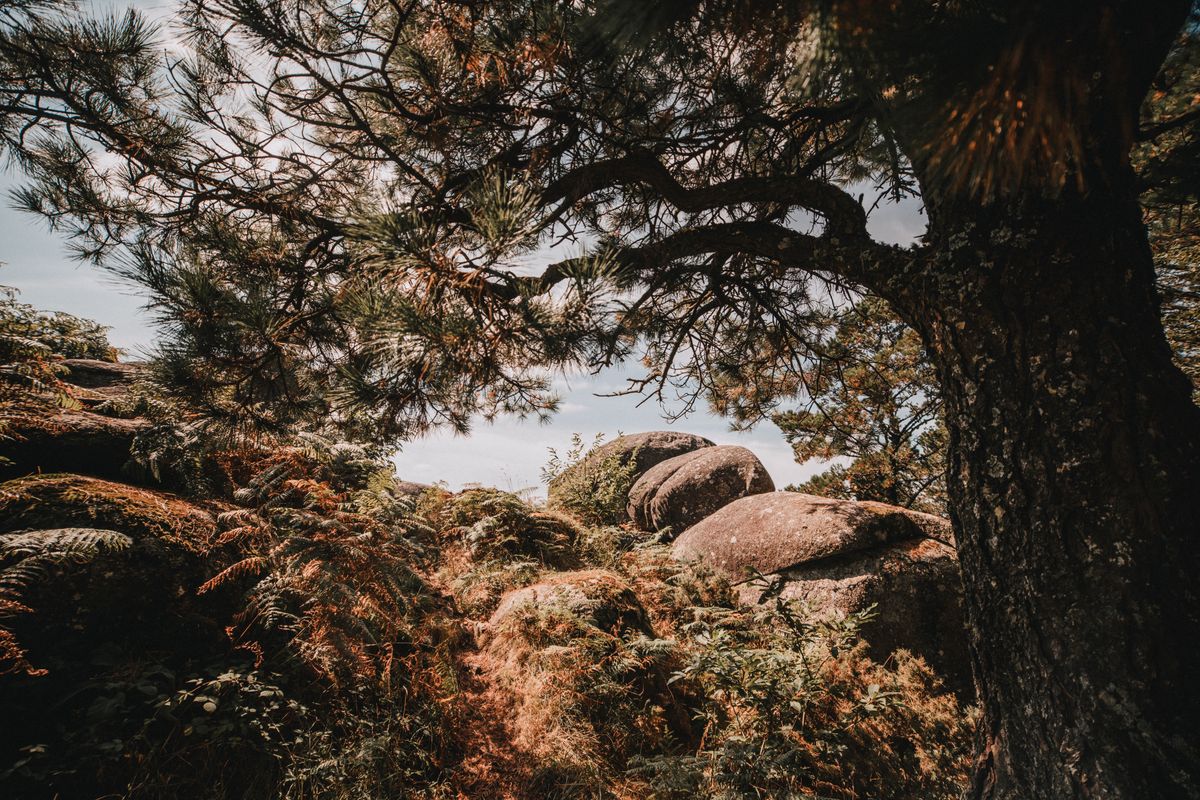
The result is a village where it is hard to say where the geology ends and the architecture begins. The most photographed house has a single boulder as its complete roof, with no structure underneath it at all.
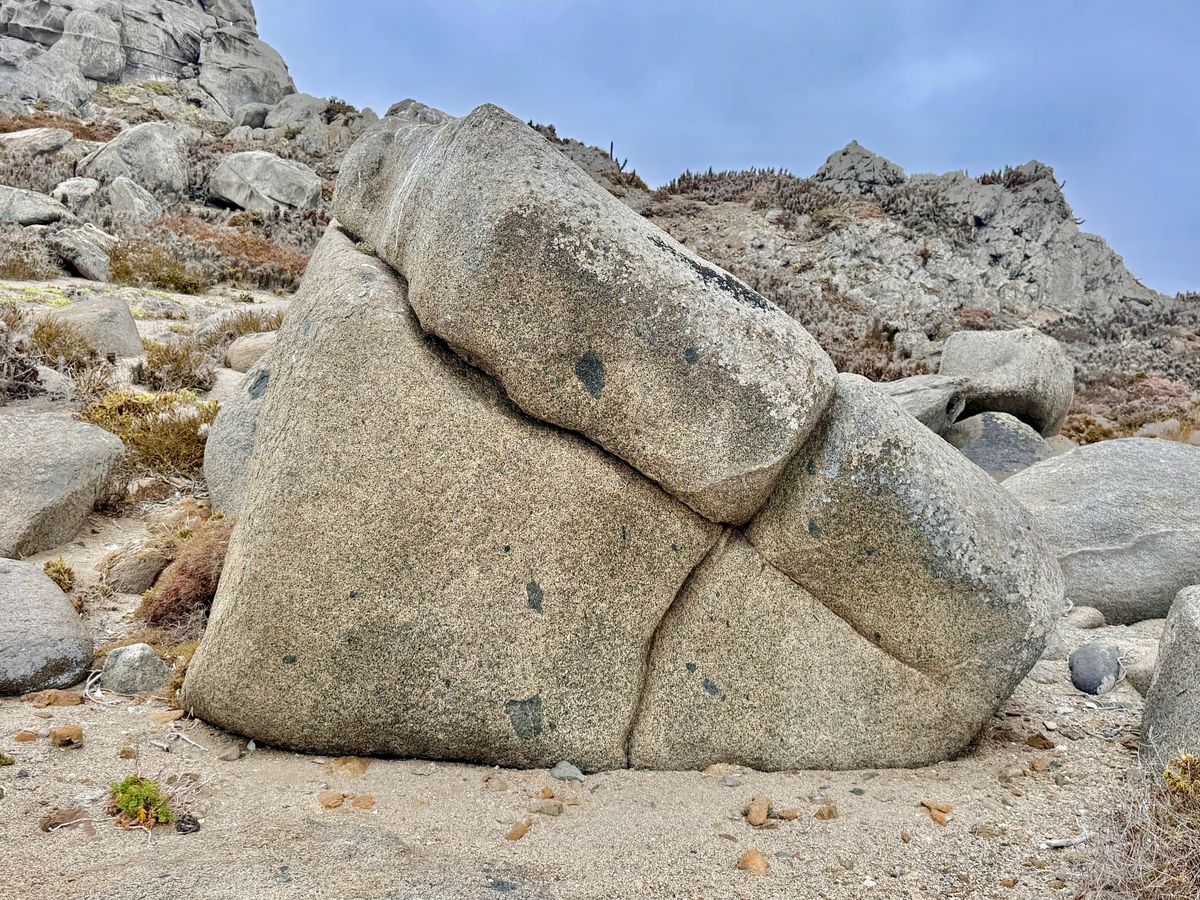
The material is the same throughout: grey granite, sometimes whitewashed inside. Windows are small and doors low, and a few doorways carry carved Manueline surrounds from the sixteenth century, a sign that the village was once prosperous.
The hilltop castle and the explosion that destroyed it
Above the village, on the ridge, stand the ruins of a castle granted to the Templar order in the twelfth century by the first king of Portugal. The position explains everything: from here the whole plain is visible into Spain, and this was contested frontier country for centuries.
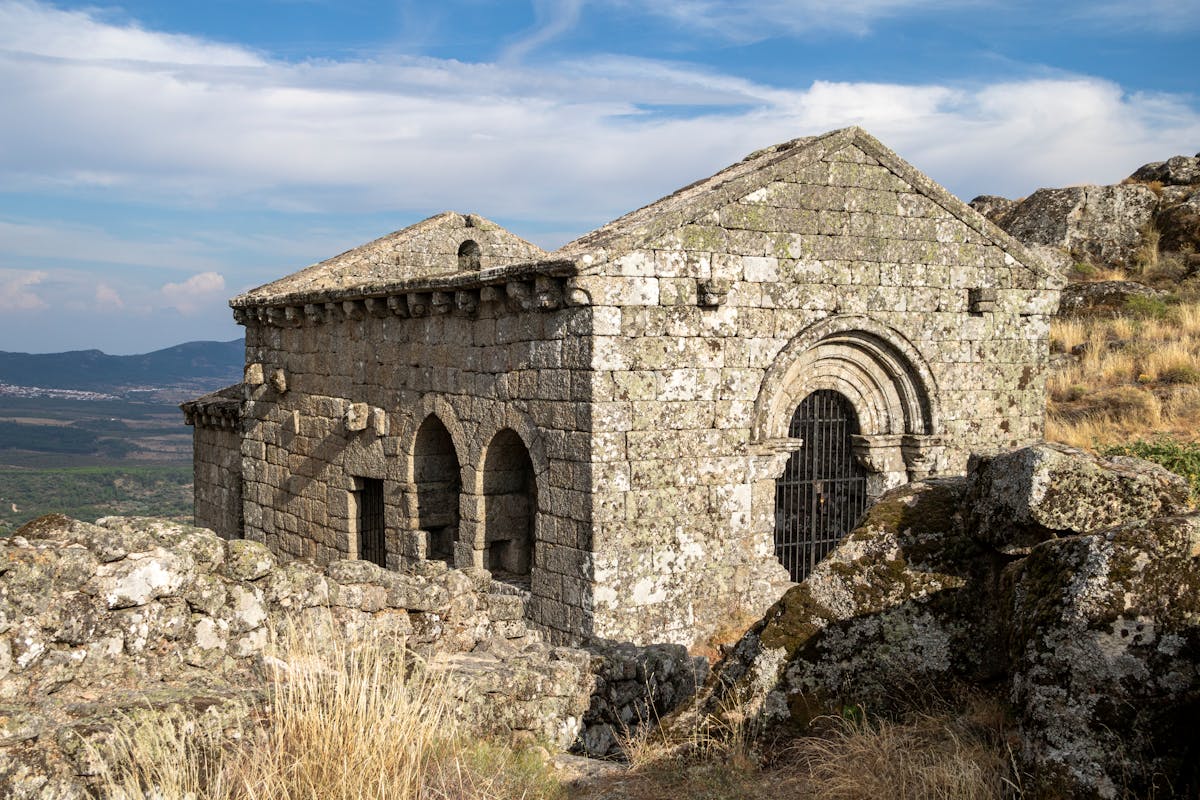
The castle did not fall in battle. In the nineteenth century its munitions store exploded and destroyed much of the walls. What remains is fragments of curtain wall, cisterns cut into the rock, and anthropomorphic graves carved directly into the granite, older than the castle itself.
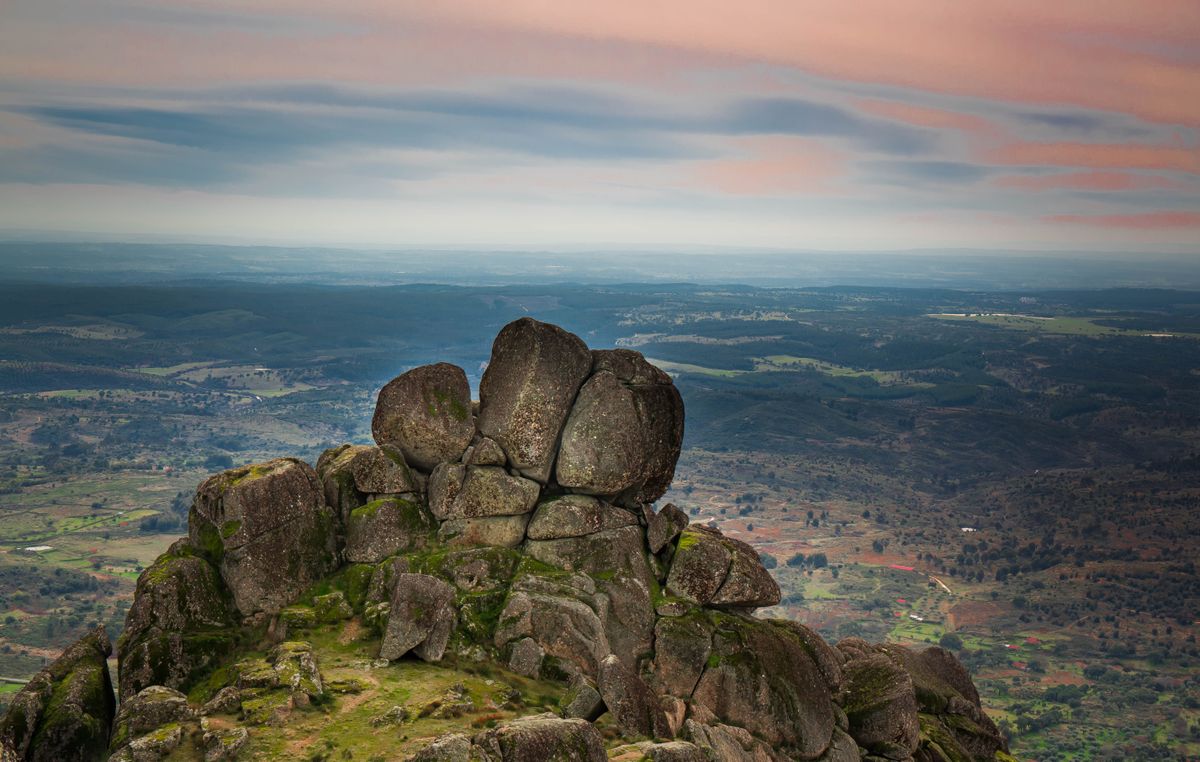
The climb from the village takes twenty to thirty minutes on a steep cobbled path. It is not technical, but it needs decent footwear, because the stone has been polished smooth by use and is slippery.
The siege legend and the silver cockerel
The local story says the village was besieged at length, and that when supplies had almost run out the villagers threw their last calf over the walls, stuffed with the last of the grain. The besiegers concluded there was food in abundance inside and gave up. The motif appears in many places across Europe, but here it is still marked every year.
Every third of May the women of the village climb onto the castle walls and throw clay pots filled with flowers down from them. It is one of the few festivals in Portugal that still keeps the original gesture rather than just the memory of it.
The second symbol of the village is a silver cockerel. In 1938, in a competition run by the regime of the day, Monsanto was declared the most Portuguese village in Portugal, and the prize was a silver cockerel placed on the tower in the village. The original is kept in the village and a replica stands on the tower.
The local craft is the marafona, a cloth doll built on two crossed sticks, with no face. It was placed under a bride pillow or kept in the house as a protective charm, particularly against storms. It has no face for a practical reason that hardened into tradition: it was made from scraps of clothing by women who had no time for detail. It is sold in the village and is the only souvenir here that means anything.
What else there is nearby
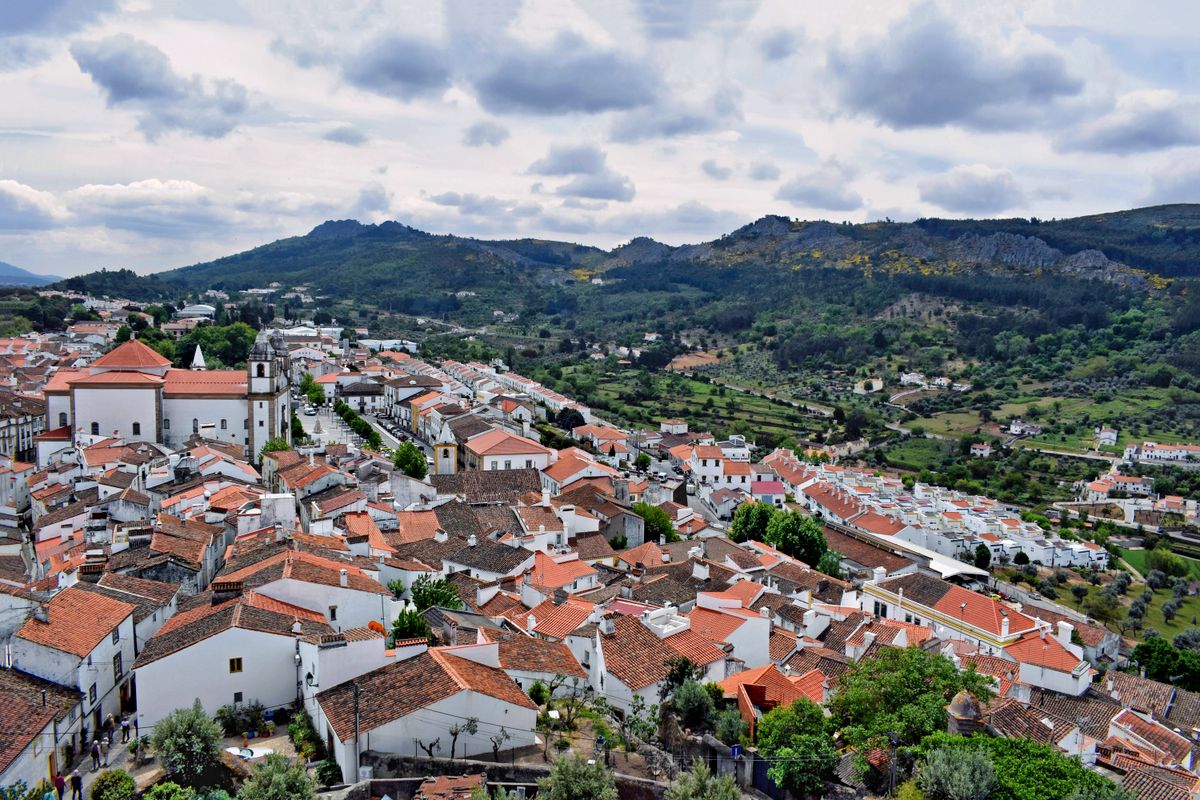
Monsanto belongs to a network of twelve historic villages in the Portuguese interior, most of them former fortified frontier posts. They are close enough together that you can link three or four into a two day route.
- Idanha-a-Velha: twelve kilometres away, a village built over the ruins of a Roman town, with an early Christian basilica and inscribed stones reused in the walls.
- Penha Garcia: with a gorge where trilobite fossils are visible in the rock face, on a waymarked trail.
- Sortelha: a walled village on a rocky spur, with intact ramparts and as many granite blocks as Monsanto.
- Castelo Novo and Belmonte: the second with a Jewish community that survived in hiding for centuries.
- The Alqueva Dark Sky reserve to the south, one of the first areas in the world certified for night sky viewing.
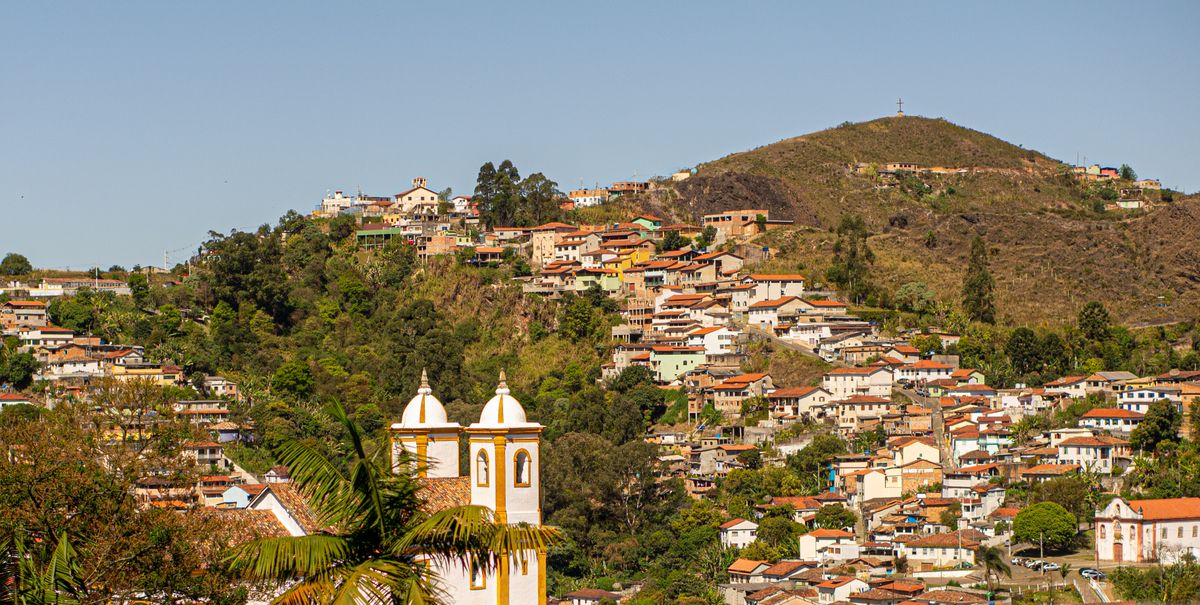
This is one of the most depopulated regions in Portugal. That means empty roads and quiet, but also that services are thin: fill the tank when you can and do not count on a restaurant being open after ten at night.
How the visit actually works
Cars do not go up into the upper village. You park at the entrance and walk, on streets that are really stone steps, climbing continuously. It is a physically tiring village, and in wet weather it turns slippery.
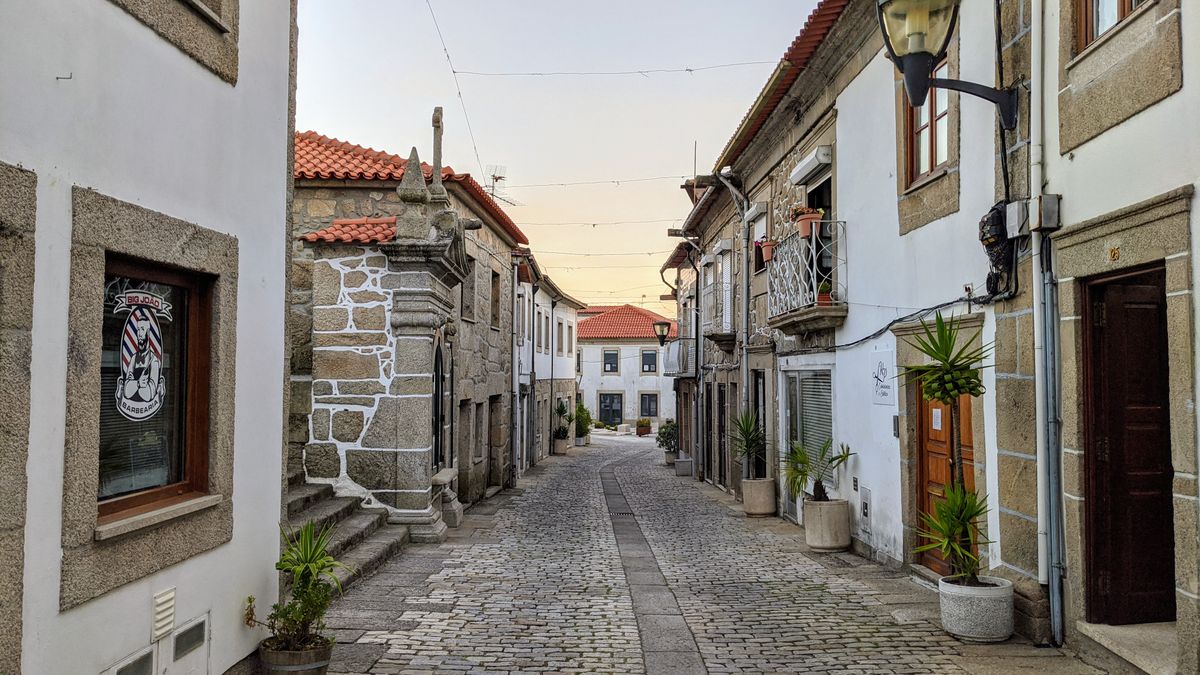
In summer, temperatures in the Portuguese interior regularly pass forty degrees, and the granite holds the heat into the night. Visit early in the morning or towards evening, never at midday in July or August.
The village was used as a location for a hugely successful television series, which brought a wave of visitors and visibly changed the weekends. Midweek and out of season, though, it remains a very quiet village of a few hundred people.
Getting there, where to sleep and how long to stay
| Item | Detail |
|---|---|
| From Castelo Branco | about 45 minutes by car |
| From Lisbon | around 3 hours |
| From Porto | about 3 hours 30 |
| Time needed | half a day for the village, 2 days with the surroundings |
| Best months | April to June and September to October |
| Avoid | midday in July and August, when the granite radiates heat |
| Accommodation | small guest houses in the village and in Idanha-a-Nova |
Public transport here is infrequent and awkward, so a car is the realistic answer. The road from Castelo Branco is good, and the final stretch climbs in wide switchbacks. The car park at the village entrance fills up on summer weekends.
Sleeping in the village changes the visit entirely: once the day trips leave, it empties, and in the evening you can see all the way into Spain. The historic village network is described by the association that runs it, and general travel information by the national tourist board.
Frequently asked questions (FAQ)
Conclusion
Monsanto is not a prettified village but the answer a group of people found when they had to build on a hill covered in boulders they could not shift.
Come in spring or autumn, climb to the castle in the morning, bring footwear with grip, and stay the night if you can, because in the evening the village goes back to its residents.
