
 By

This Warsaw guide is about a city that had a choice after 1945 and made an unusual one. With eighty-five per cent of its buildings destroyed, it could have started again in concrete. Instead it rebuilt the old town brick by brick, from photographs, architectural plans and, famously, the paintings of an eighteenth century Venetian artist.
What was destroyed and why, how the reconstruction worked, the sights of the rebuilt centre, the two great history museums, the district that survived, and how to spend three days here.
What this Warsaw guide has to start with
Warsaw came out of the Second World War with roughly eighty-five per cent of its buildings destroyed, and the old town with over ninety. It was not merely the effect of fighting. Much of the destruction was systematic and deliberate, carried out by German units after the 1944 uprising was suppressed, with demolition squads working through the city street by street.
Two events are frequently confused. The Ghetto Uprising, in April 1943, was the rising of the remaining Jewish inhabitants of the largest ghetto in occupied Europe. The Warsaw Uprising, in August 1944, was the rising of the Polish resistance across the whole city. They are different events, a year apart, with different participants.
The human losses were enormous: tens of thousands of insurgents and, by current estimates, between a hundred and fifty and two hundred thousand civilians killed during the 1944 uprising alone. These are not numbers you can walk around while visiting the city, because everything you look at is a consequence of them.
How the old town was rebuilt
Reconstruction began almost immediately after 1945 and, for the old town, continued to the end of the fifties. It was not an approximate restoration but a documented restitution, based on three sources: pre war photographs and surveys, architectural drawings held by the Warsaw University of Technology, and the cityscapes painted by Bernardo Bellotto in the eighteenth century, which were accurate enough to work from.
UNESCO listed the ensemble in 1980 with an unusual justification: not its age, but the reconstruction itself, considered a remarkable example of the restoration of a deliberately destroyed heritage. It is almost the only case of its kind on the list.
The market square, the Barbican and the walls
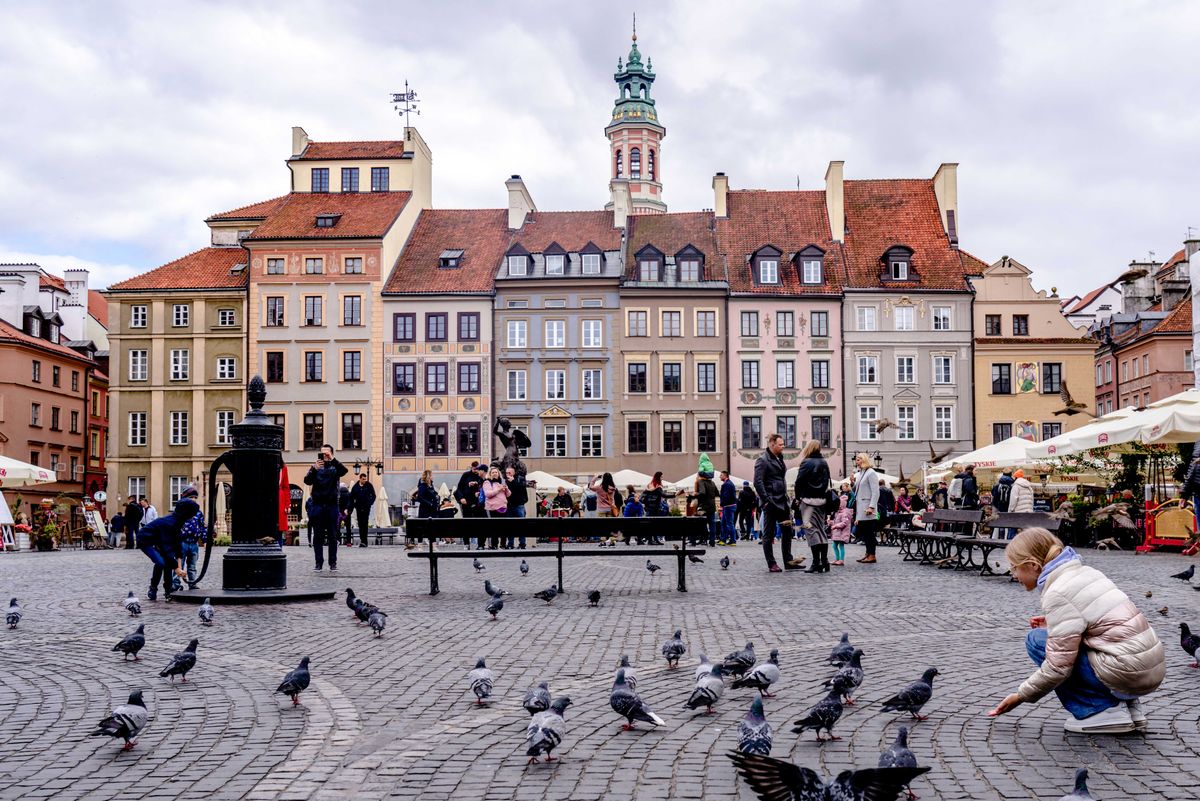
The central square of the old town is smaller than you expect and the better for it. The facades were rebuilt with their painted decoration, and in the middle stands the mermaid, the symbol of the city and the figure on its coat of arms.
Legend says a mermaid came out of the Vistula, was caught by a merchant and freed by a fisherman son, promising in return to defend the city when needed. That is why she is armed with a sword and shield, which distinguishes her from the decorative mermaids of other cities.
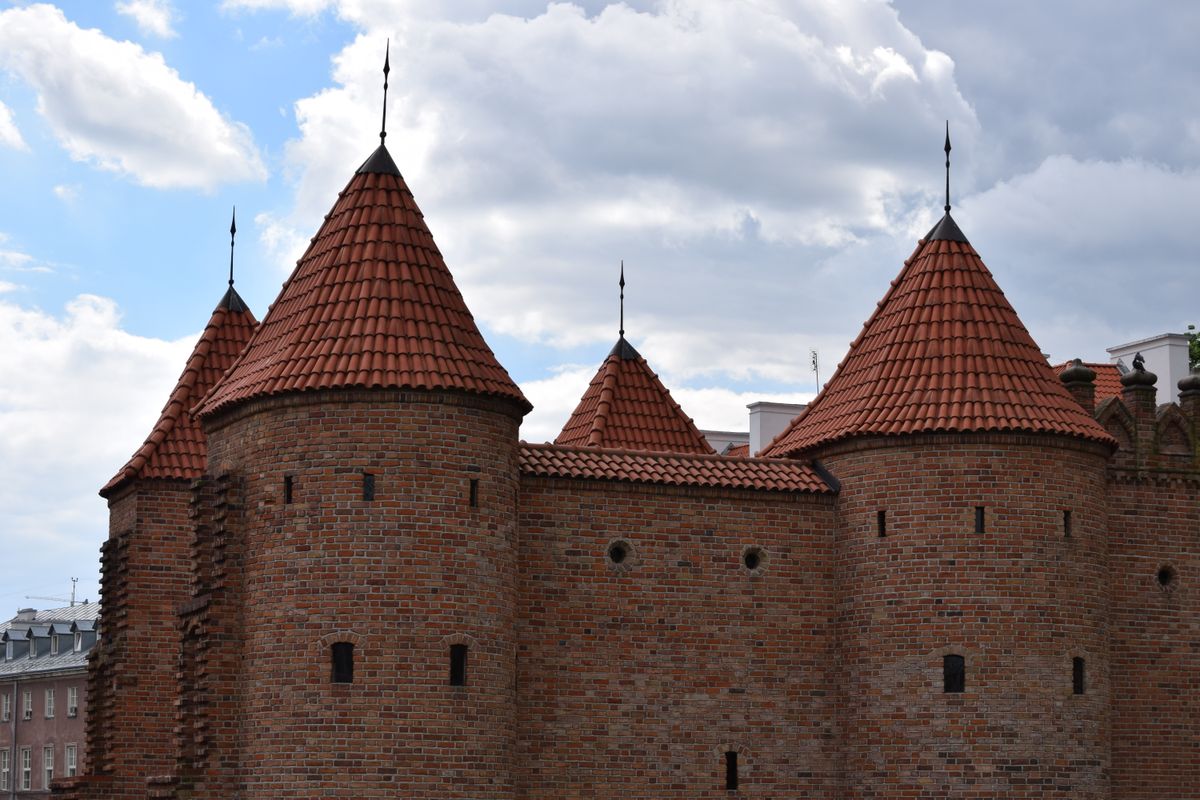
At the northern edge of the old town is the Barbican, the semicircular brick fortification built in the sixteenth century. It too was destroyed and was partly rebuilt using brick recovered from other Polish towns. Today it is where the street artists set up.
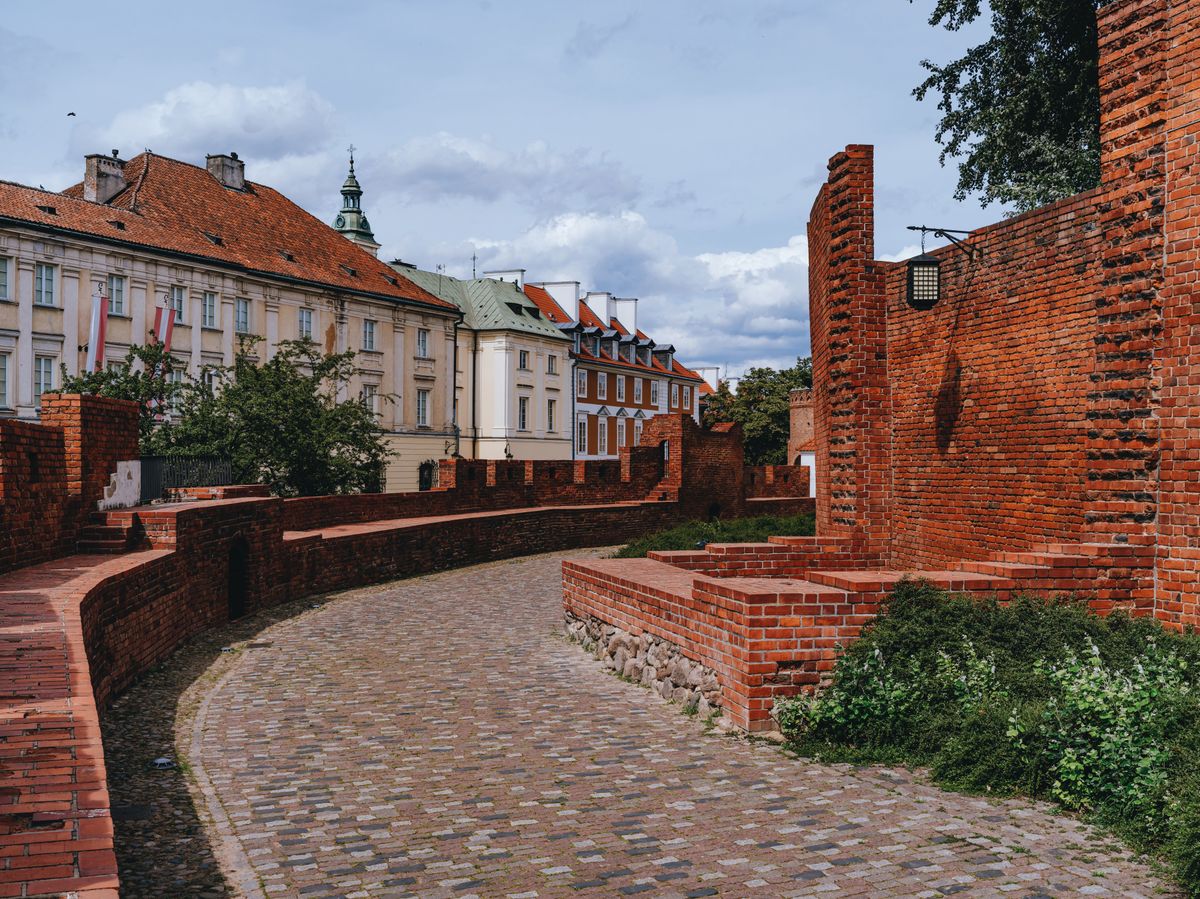
On either side of the Barbican run the rebuilt medieval walls, with a walkway at their base. It is one of the quietest areas in the whole centre, even in season. Beyond the walls begins the New Town, which despite its name is medieval in origin and far emptier of visitors.
The Royal Castle and the Sigismund Column
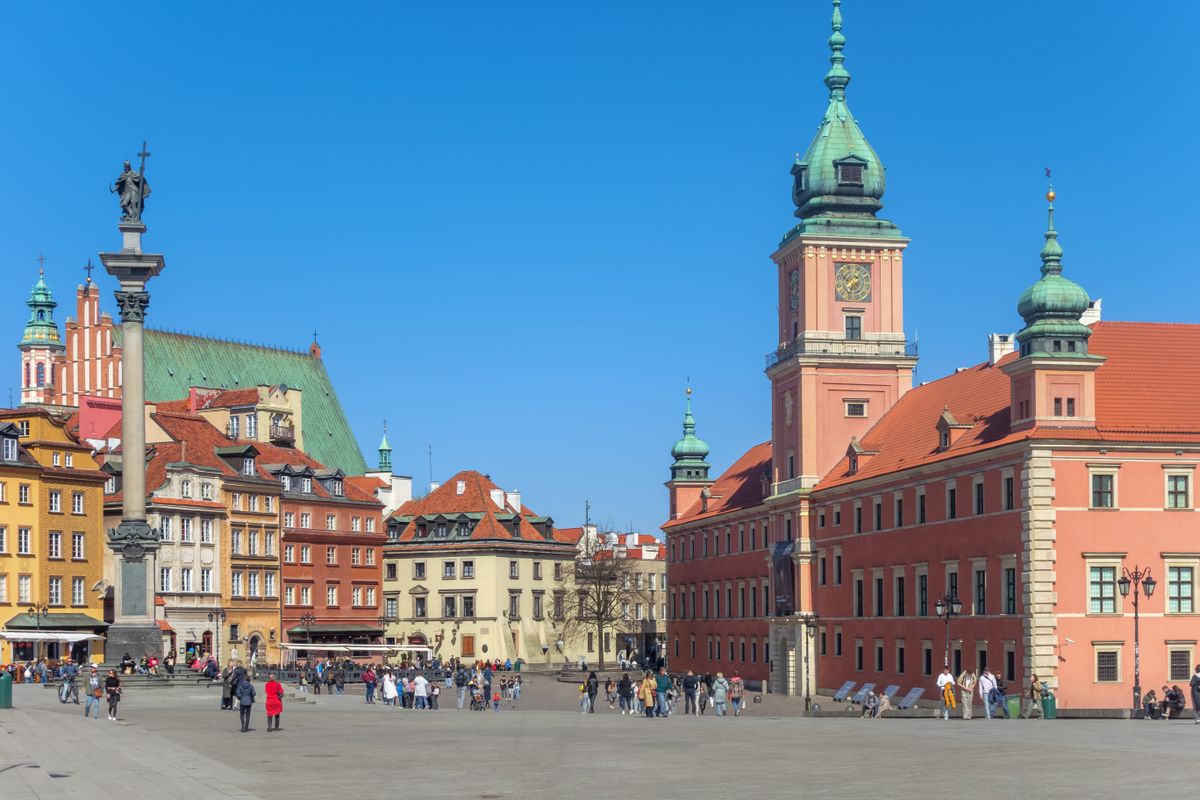
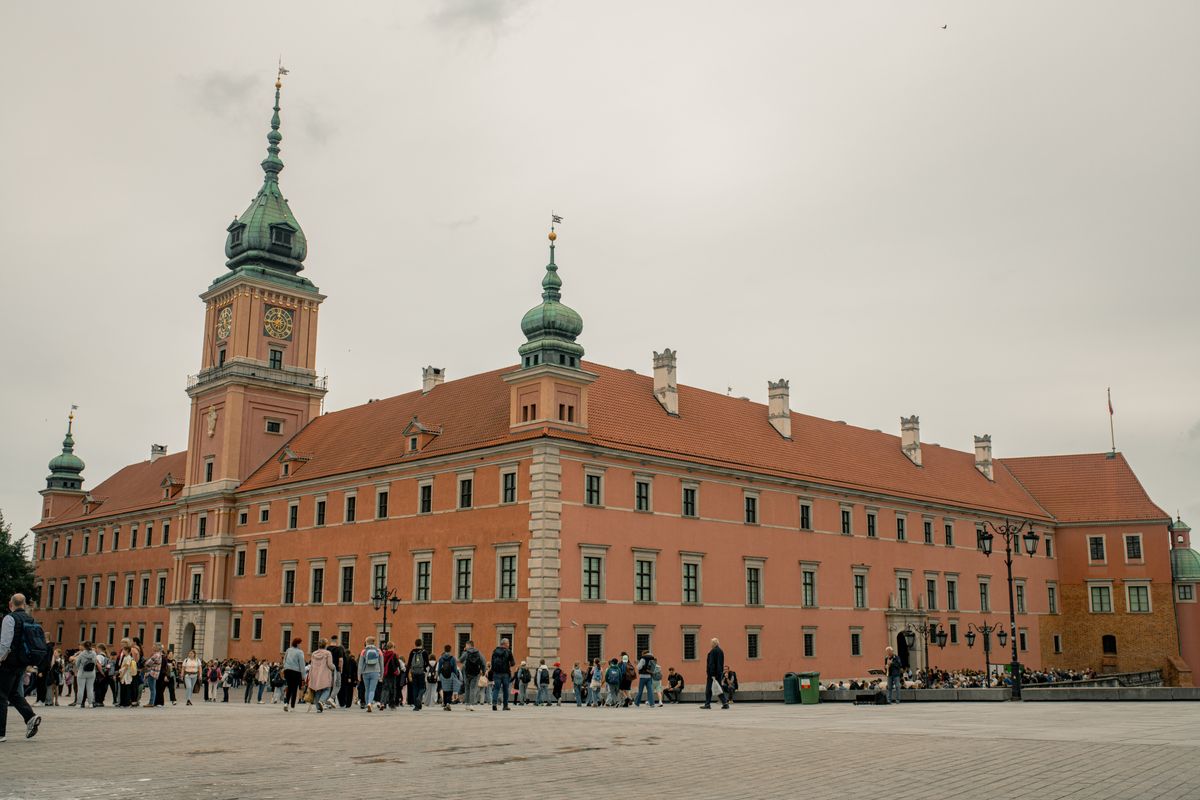
The castle at the southern end of the old town has the longest reconstruction story of all. Blown up in 1944, it stayed a hole for nearly three decades, because the communist authorities long refused to rebuild a symbol of the monarchy. Work finally ran from 1971 to 1984 and was funded largely by public donations, including from Poles abroad.
Inside you visit the royal apartments, the throne room and the ballroom, rebuilt with pieces saved and hidden during the war. The most valuable objects are two paintings by Rembrandt and the room displaying the Bellotto cityscapes, which is to say the very paintings used as the blueprint for the reconstruction outside.
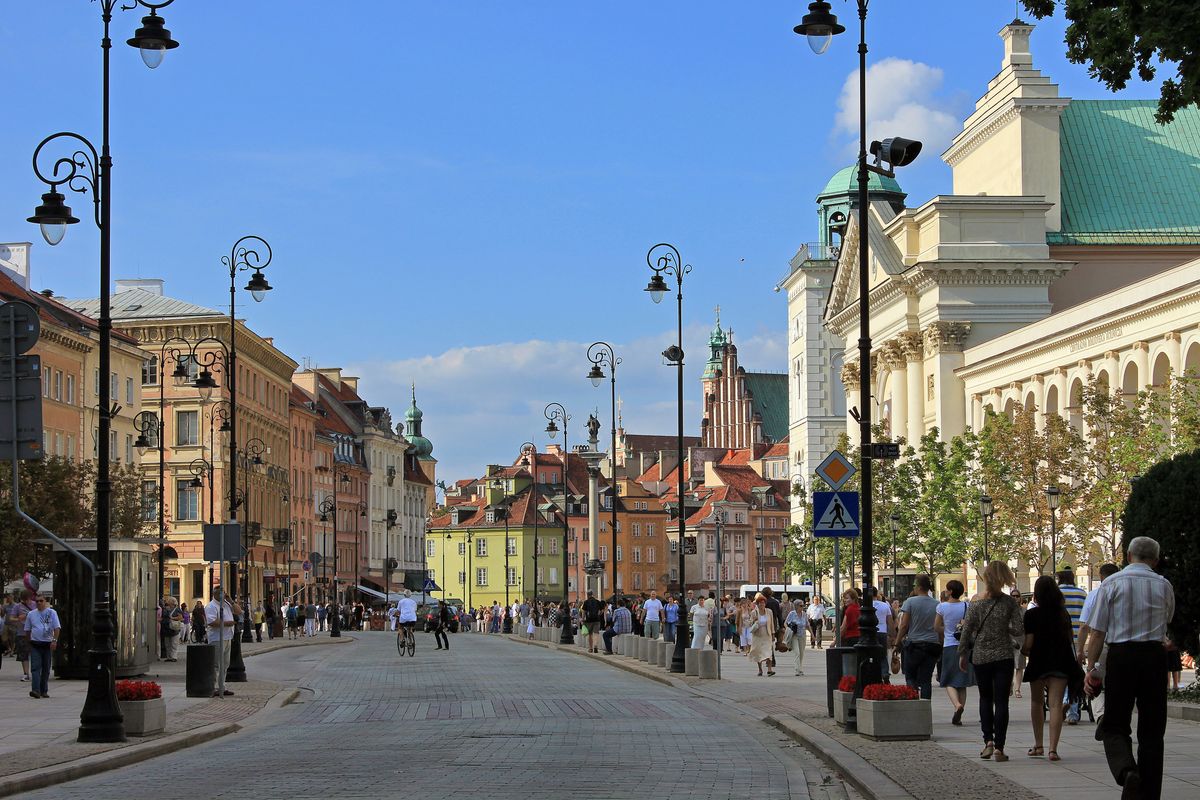
The Sigismund Column, from 1644, is the oldest secular monument in the city. The original stone shaft was destroyed in 1944, and the damaged statue of the king was recovered and placed on a new column in 1949. Fragments of the old column still lie beside the castle wall, deliberately left there.
The Palace of Culture, the awkward gift
The 237 metre tower that dominates the centre was finished in 1955 and formally presented to Poland by the Soviet Union, built by workers brought from there. For decades it was the tallest building in the country.
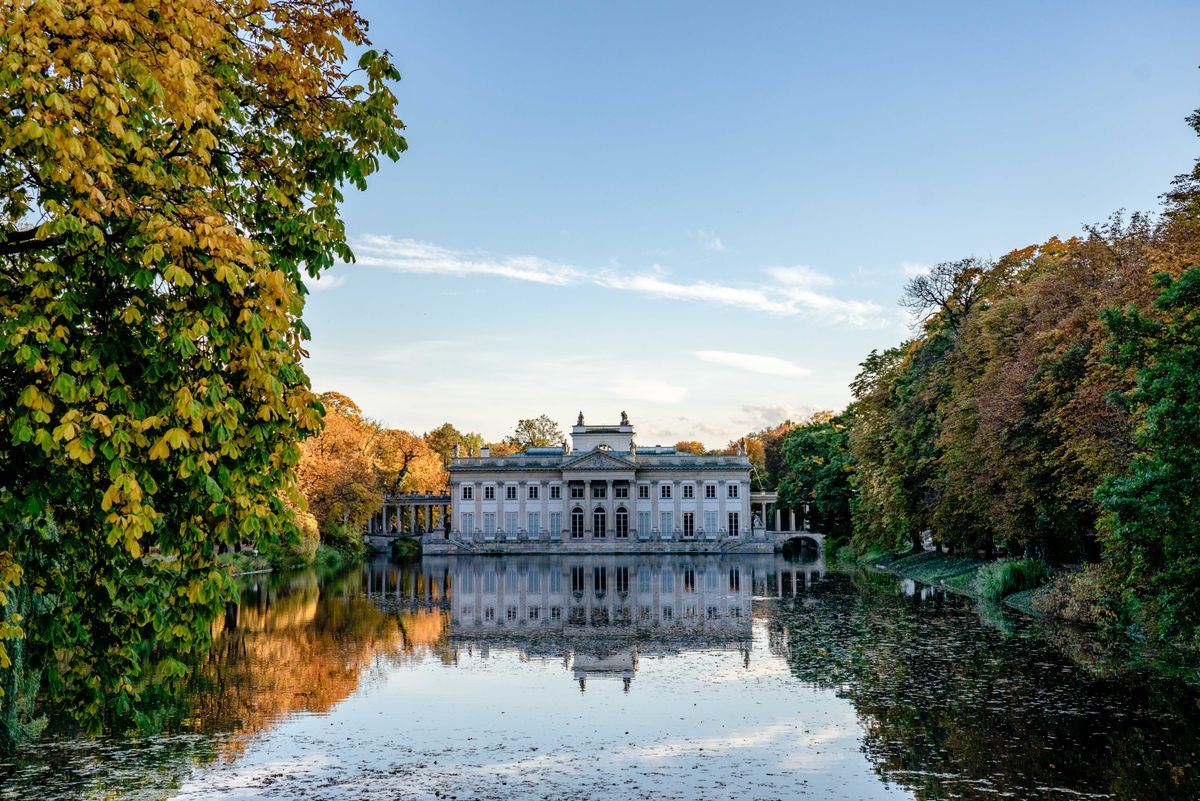
The relationship Varsovians have with it remains complicated. For decades it was seen as a symbol of Soviet domination, and proposals to demolish it have recurred. The local joke is that the finest view in Warsaw is from the top floor, because it is the only place in the city from which you cannot see the Palace of Culture.
Practically: there is an observation terrace on the thirtieth floor with a view in every direction, and the building houses theatres, cinemas, museums and a congress centre. It is worth going up, particularly towards sunset.
In recent years it has been surrounded by glass towers, one of which has now overtaken it in height, which has changed the skyline completely. The contrast between the Stalinist style and the reflective facades around it is, in itself, a visual summary of the last seventy years.
The Royal Route and traces of Chopin
From Castle Square a long boulevard runs south, changing name along the way, connecting the castle in the centre with the palace on the edge of the city. It is called the Royal Route and it is the most pleasant walk in Warsaw.
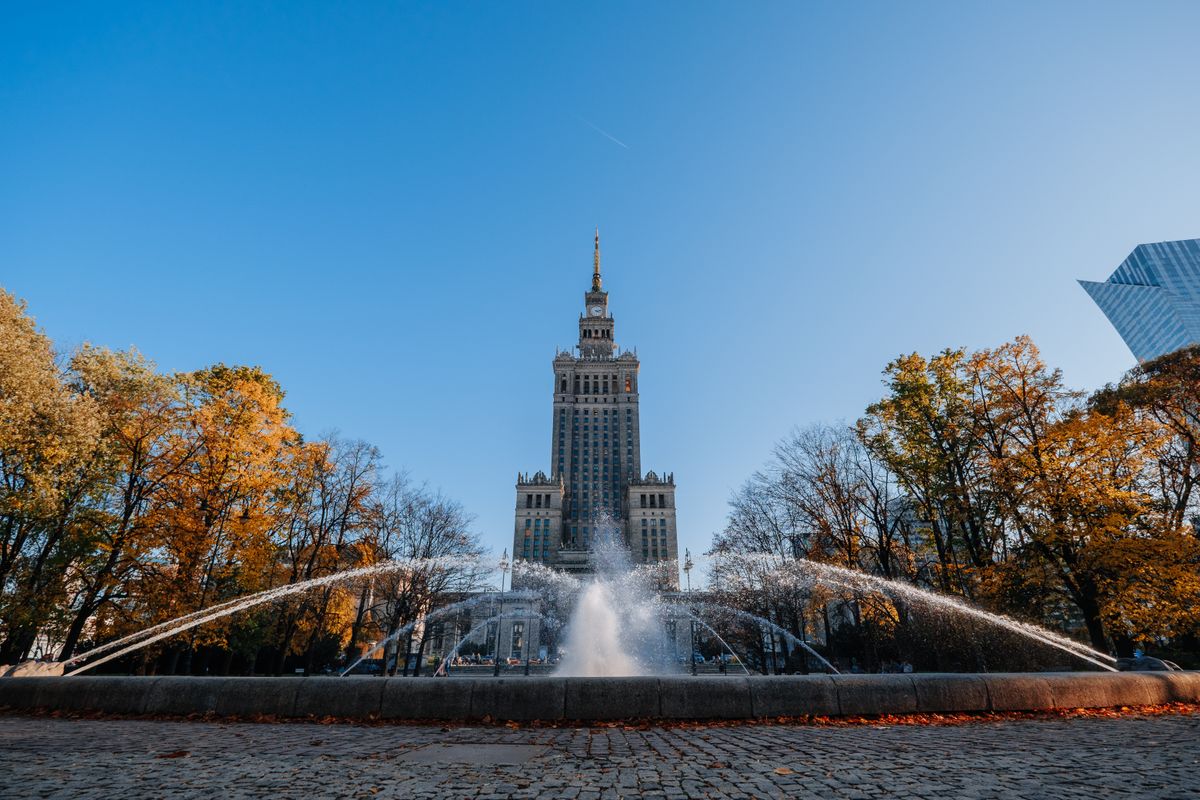
On the first section are the university, the Presidential Palace, the Academy of Sciences and several baroque churches. On the second the atmosphere changes to cafes, shops and terraces. Both were reconstructed after the war.
Here also is the most unusual relic in the city. The heart of Chopin is kept in a pillar of the Holy Cross church on Krakowskie Przedmiescie, with an inscription above it. The composer died in Paris, where he is buried, but asked for his heart to be returned to Poland, and his sister brought it back.
Scattered around the city are black stone benches that play a fragment of his music at the press of a button, placed at locations connected to his life. And in Lazienki park, on summer Sunday afternoons, there are free piano concerts beside the Chopin monument.
Lazienki and Wilanow
The two park and palace complexes south of the centre are, for many visitors, the favourite part of the trip, and they are completely different from each other.
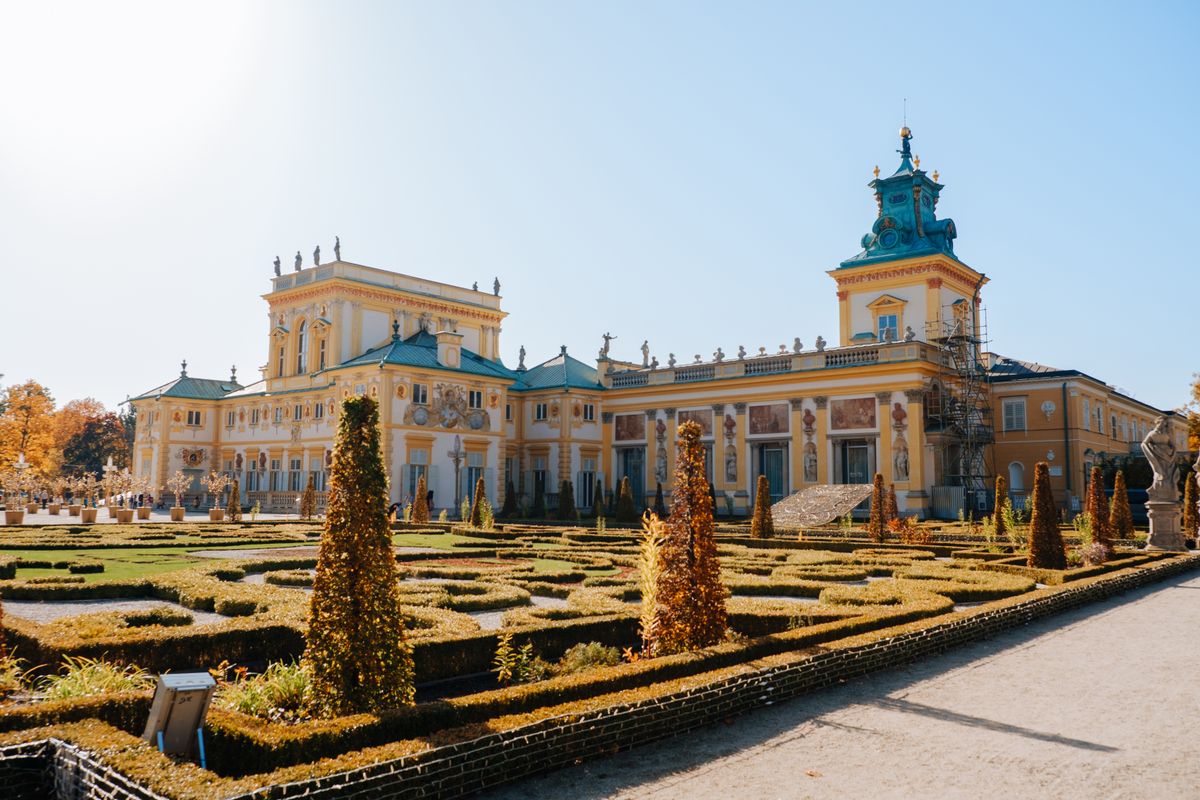
Lazienki covers dozens of hectares and was laid out in the eighteenth century by the last king of Poland as a summer residence. The Palace on the Isle sits literally on the water, joined to the banks by two bridges and reflected in the lake. There are also an amphitheatre on an island, an orangery and peacocks. Entry to the park is free, and only the palaces are ticketed, with some free on certain weekdays.
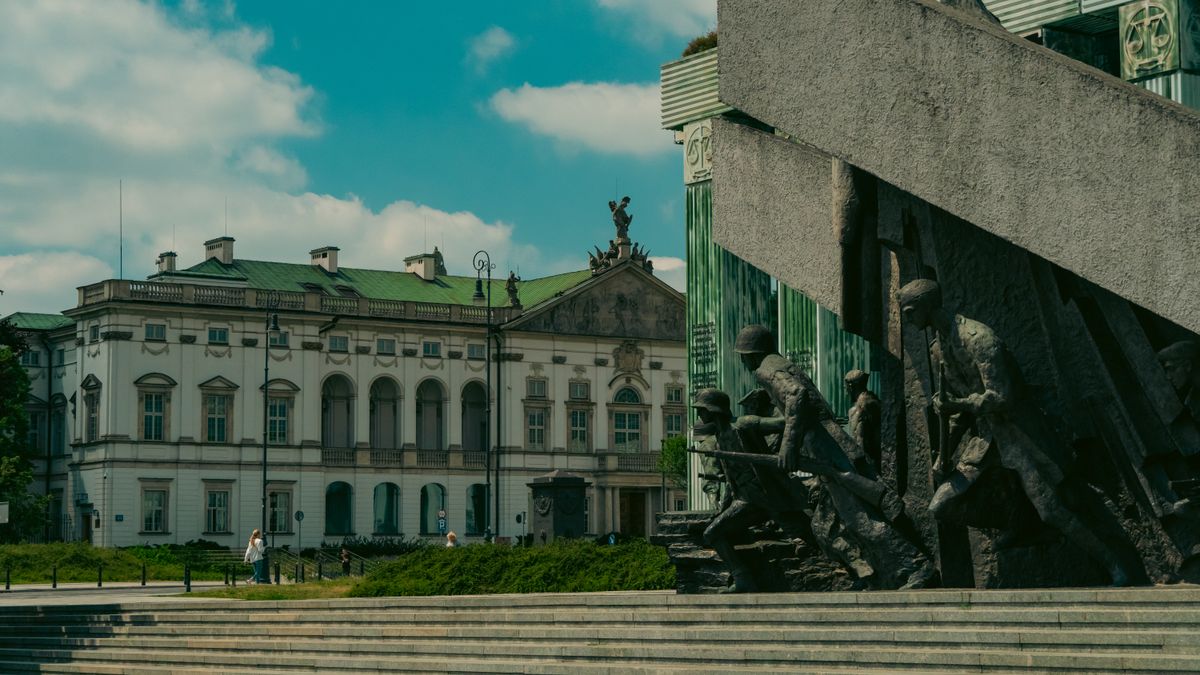
Wilanow, ten kilometres south of the centre, is the summer palace of King Jan III Sobieski, built at the end of the seventeenth century. It matters enormously for understanding the city: Wilanow survived the war almost untouched, because it lay outside the zone of destruction, so its interiors are genuinely original rather than reconstructed. The baroque garden descends in terraces towards a lake, and in winter the palace hosts a light installation that fills the whole park.
The memory museums
Warsaw has some of the best made history museums in Central Europe, and if you have time for only one, the choice depends on what you want to understand.
- POLIN, the Museum of the History of Polish Jews, covers a thousand years of Jewish life in Poland rather than only the Holocaust, and is built on the site of the former ghetto. It is the better choice for most visitors.
- The Warsaw Uprising Museum covers the 1944 rising in immersive detail, with a reconstructed sewer passage and a film of the destroyed city shot from a plane in 1945.
- The Museum of Warsaw, on the market square, tells the story of the city through objects, in a series of restored houses.
The line of the former ghetto wall is marked in the pavement with bronze plaques and inset lines running between ordinary apartment blocks. It is not a laid out tourist route but a discreet marking, and it is worth following for exactly that reason.
You will notice a symbol painted in white or red on buildings, a kind of anchor formed from the letters P and W overlapping. It is the sign of Fighting Poland, used by the resistance in 1944. Today it appears on walls all over the city, and it is not graffiti.
Praga, the bank that survived
The district on the eastern bank of the Vistula, which shares a name with the Czech capital by coincidence, is the most authentic place in the city, and for the saddest of reasons: the Soviet army halted there in 1944 and waited, so the destruction was concentrated on the western bank.
The result is that Praga has what the rest of the city does not: genuine nineteenth century brick buildings, courtyards with improvised shrines built by residents during the occupation, staircases with original railings, and the air of a city that was never rebuilt.
Worth seeking out there: the former vodka factory turned into a complex of markets and restaurants, the museum of communist era neon signs, the Orthodox cathedral with its onion domes, the old bazaar, and the zoo, whose director and his wife hid Jewish families in the animal enclosures during the occupation.
The Vistula and the glass city
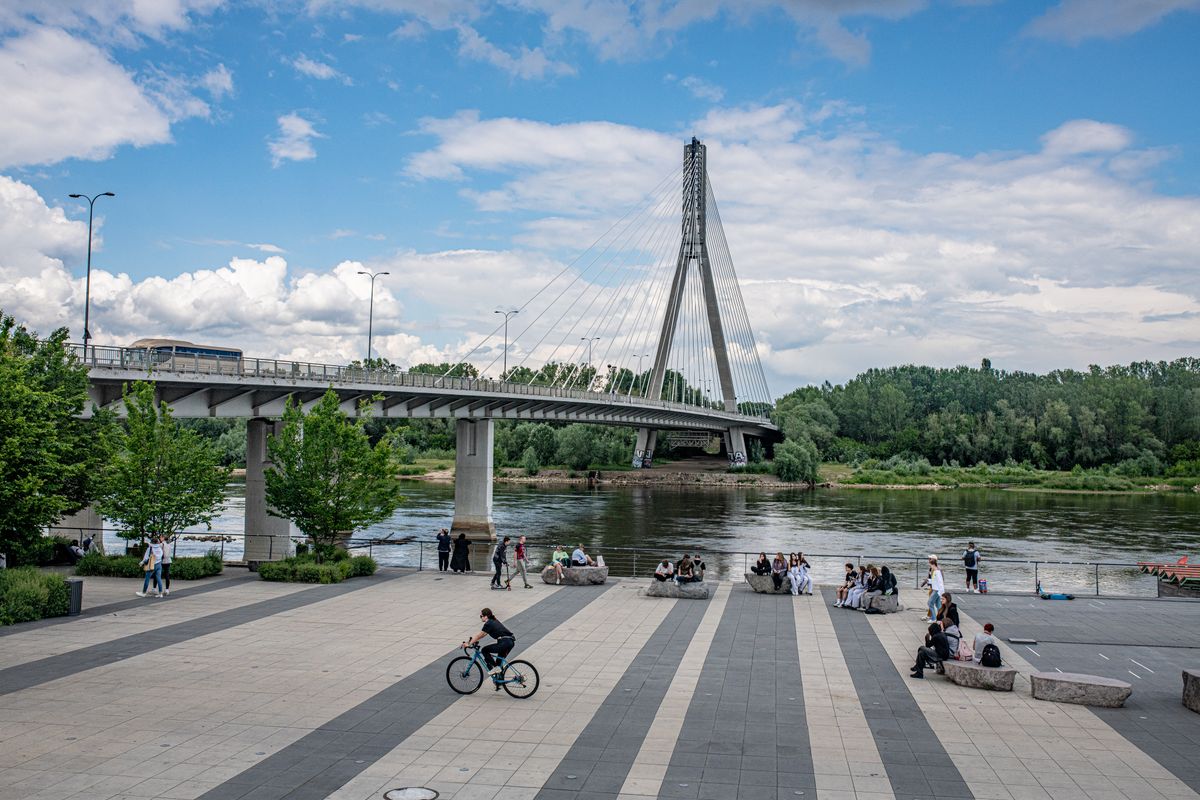
The river that cuts through the city has a rarity in Europe: its two banks are completely different. The western one was redeveloped over the last decade into a wide promenade with steps to the water, cycle paths and summer bars. The eastern one has stayed practically wild, with sandy beaches, willows and no development at all.
In summer the eastern bank fills with people who cross on the ferry, and the western becomes the liveliest evening area in the city. It is the part of Warsaw that almost no guidebook writes about and that people who stay longer like most.
Also on the western bank is the science centre with its interactive exhibits, very good for children, and above it the university library, which has one of the largest roof gardens in Europe. It is free to climb and looks out over the river and the skyline.
Food, prices and three days
Polish cooking is substantial, cheap and far more varied than its reputation. Look for pierogi in their many fillings, zurek, the sour rye soup served in a bread bowl, and bigos, the hunter stew.
These are subsidised canteens dating from the communist period and still operating, where a full lunch costs very little. You order at a hatch, often from a menu only in Polish, and you clear your own tray. They are not a tourist experience, they are how a great many Varsovians eat, and they are excellent value.
Three days covers the city comfortably: day one the old town, the Royal Castle and the Royal Route; day two the two great museums and the Palace of Culture at sunset; day three Lazienki, Wilanow and Praga. With two days, skip Wilanow and one of the museums. With four, add a full day in Praga and on the wild bank of the river.
Warsaw is noticeably cheaper than western Europe and the value in restaurants is among the best in the region. The currency is the zloty, not the euro. Official information is on the Royal Castle site and the Lazienki park site.
Every year on 1 August at five in the afternoon, sirens sound across the city and for one minute everybody stops where they are: cars pull over, pedestrians stand still, trams halt. If you are in Warsaw on that day, stop as well.
Frequently asked questions (FAQ)
Conclusion
Warsaw is the only city on the UNESCO list for having been rebuilt rather than for having survived, and once you know that, every facade in the old town changes meaning. The paintings that were used as the blueprint hang in the castle at the end of the same square.
Give it three days, walk the Royal Route to Lazienki, cross the river to Praga to see what the rest of the city looked like before, and eat at least one lunch in a milk bar.
