

 By
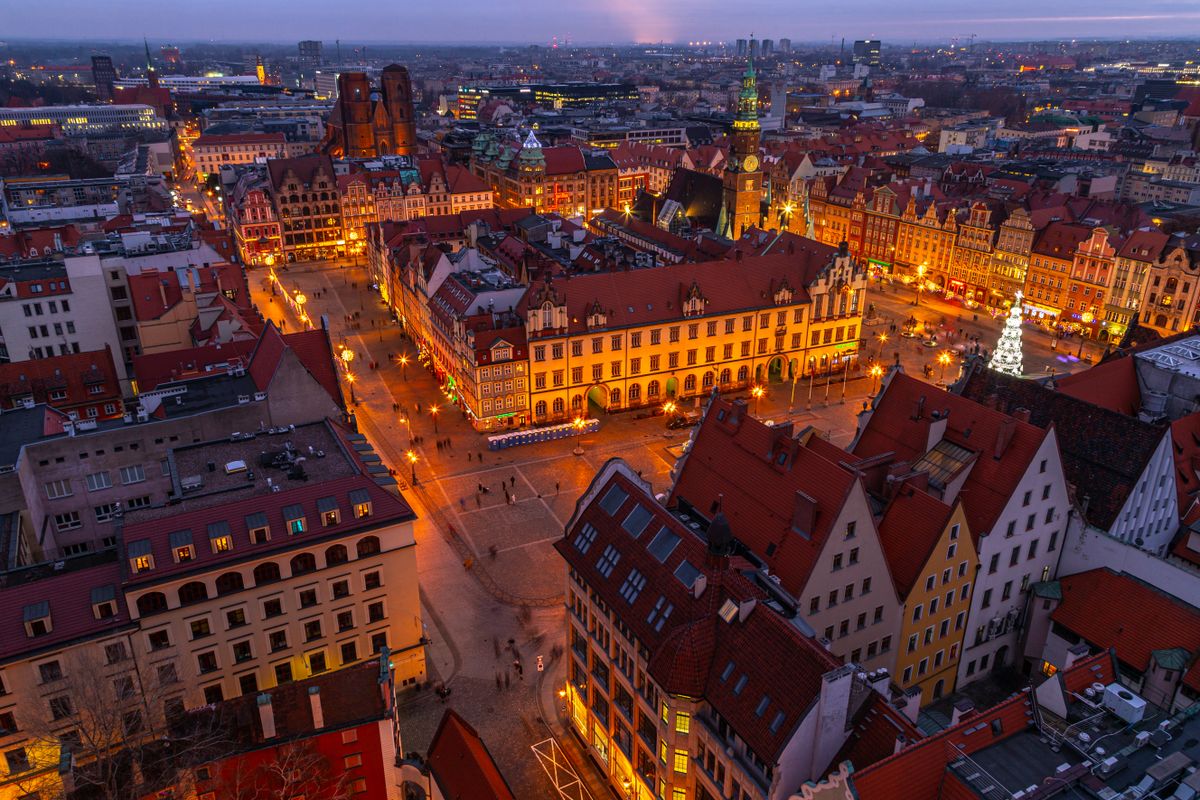
Wroclaw is the fourth largest city in Poland, has one of the finest medieval squares in Central Europe, more bridges than Venice, and roughly a tenth of the visitors that Krakow gets. It also has more than eight hundred bronze dwarfs hidden across its pavements, which sounds like a marketing gimmick and is in fact the residue of a genuine anti-communist protest movement.
This is the practical guide: what to see and in what order, where the dwarfs came from and how to find them, what is worth the trip beyond the centre, what two days cost, and why the city feels different from the rest of Poland.
Wroclaw: why it is worth it and why so few people know it
The city has six hundred thousand residents and a hundred thousand students, which makes it one of the youngest big cities in Poland. It has a compact medieval centre, rebuilt after the war, and a river that splits into a dozen channels through the middle of town.
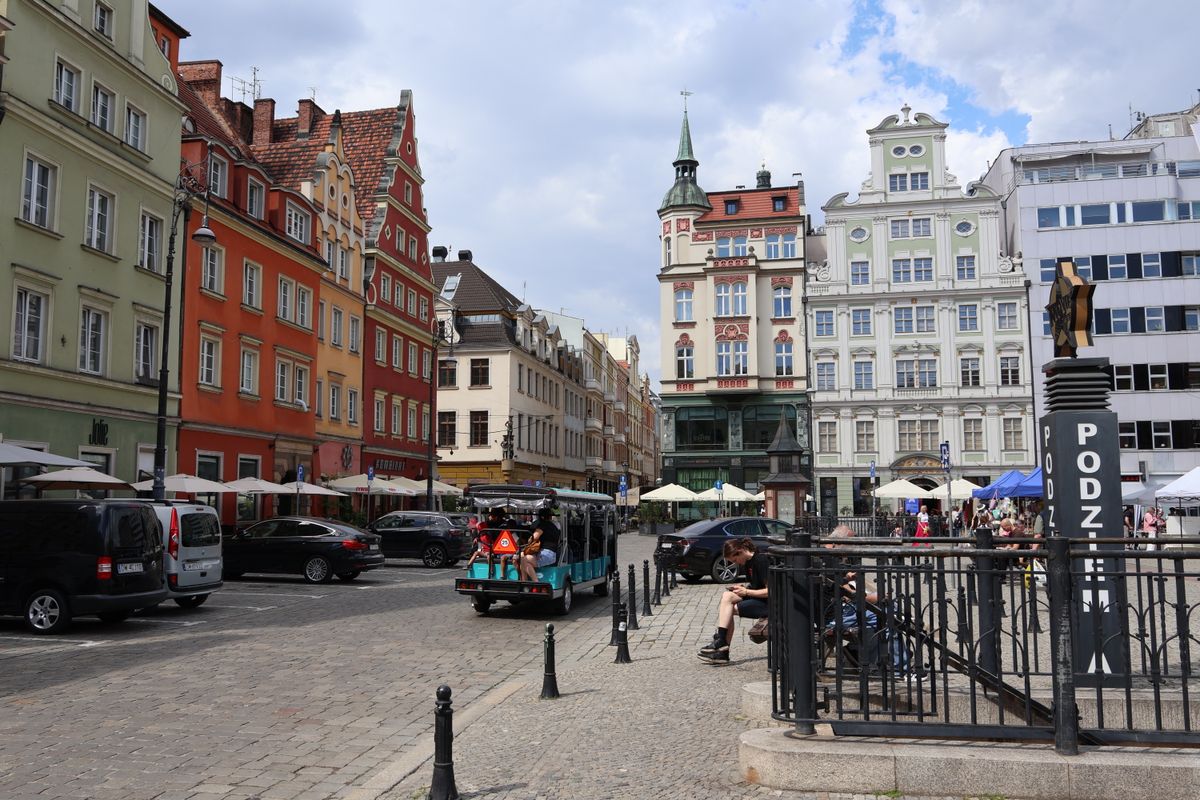
The reason it is less known is historical. Until 1945 it was called Breslau and had been German for two centuries, and before that Bohemian and Austrian. After the war the borders moved, the German population left, and the city was resettled with Poles displaced from what is now Ukraine.
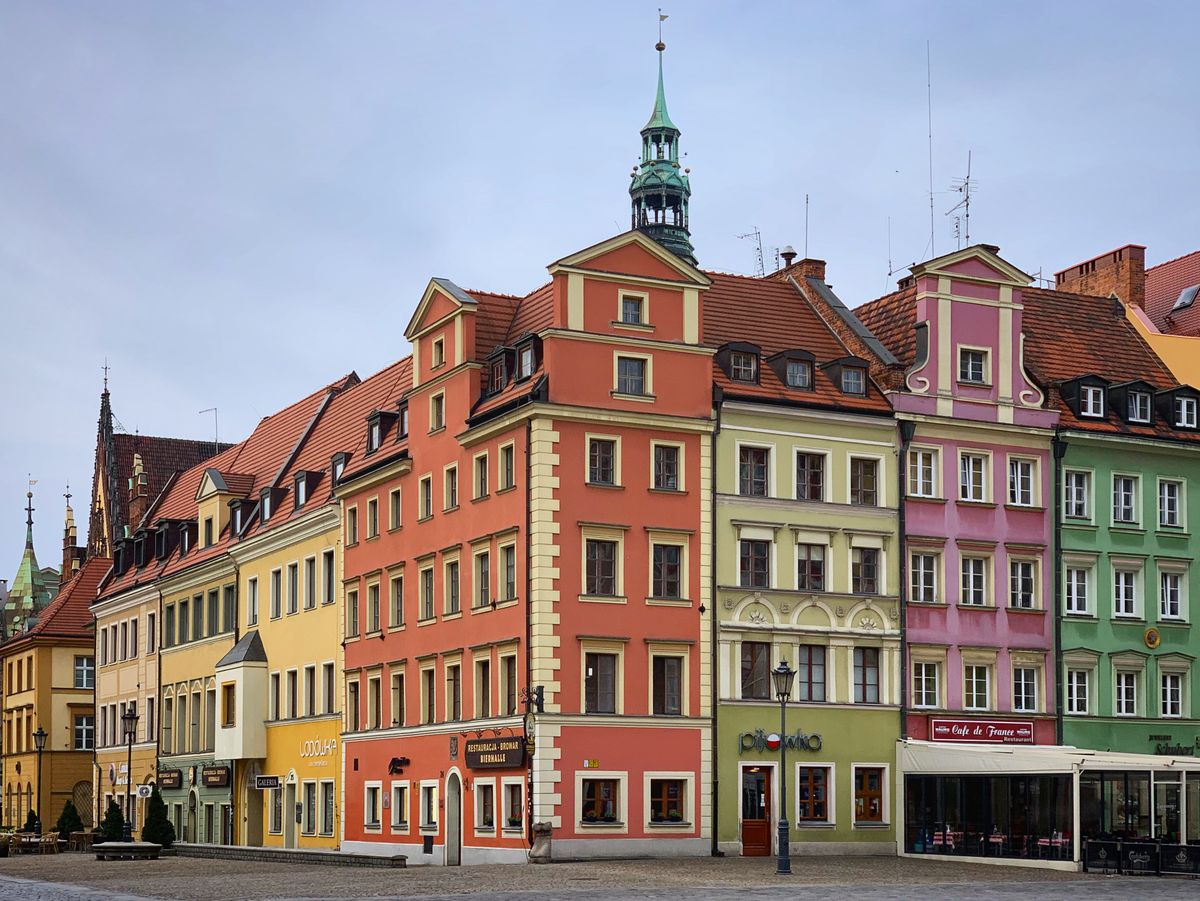
The consequence is that Wroclaw has no continuity of inhabitants. Almost nobody living here today has grandparents born in the city, and you can feel it: this is a place that had to build an identity from scratch, and did it deliberately, with a great deal of humour.
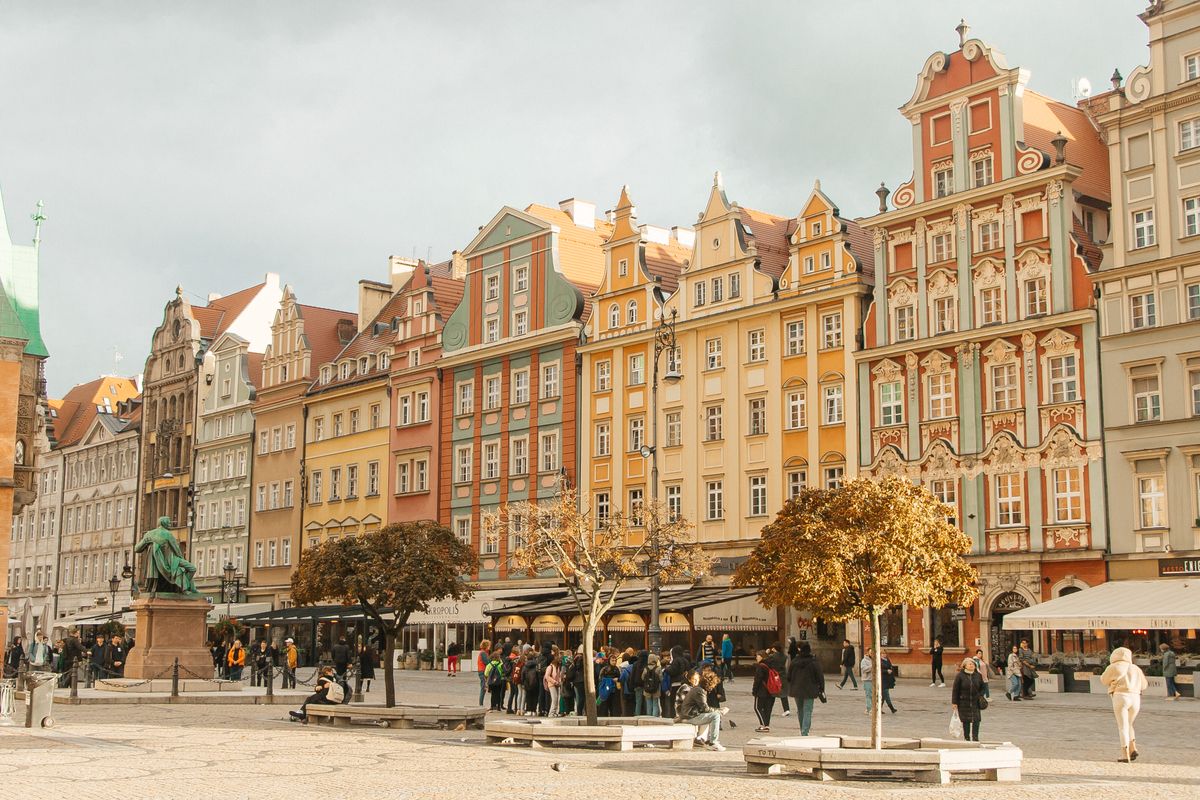
The market square and the old town
Rynek is the second largest medieval square in Poland after Krakow, and it has one peculiarity: it is not empty in the middle. An entire block of buildings stands in the centre, so the square works as a ring rather than an open space.
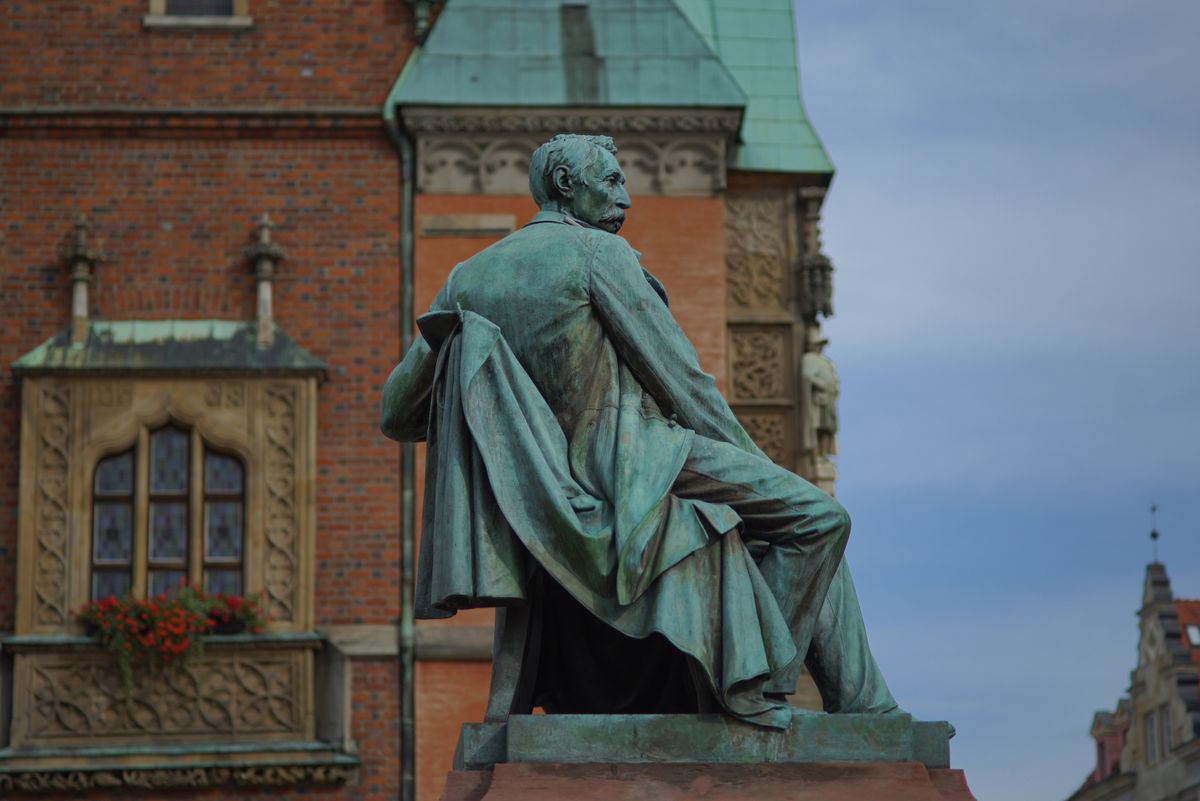
The town hall, with its brick Gothic facade, was built in stages over more than two hundred years, and it shows: each section is in a different style. In the cellar, a beer hall has been operating since 1275, which makes it one of the oldest restaurants in Europe still in business.
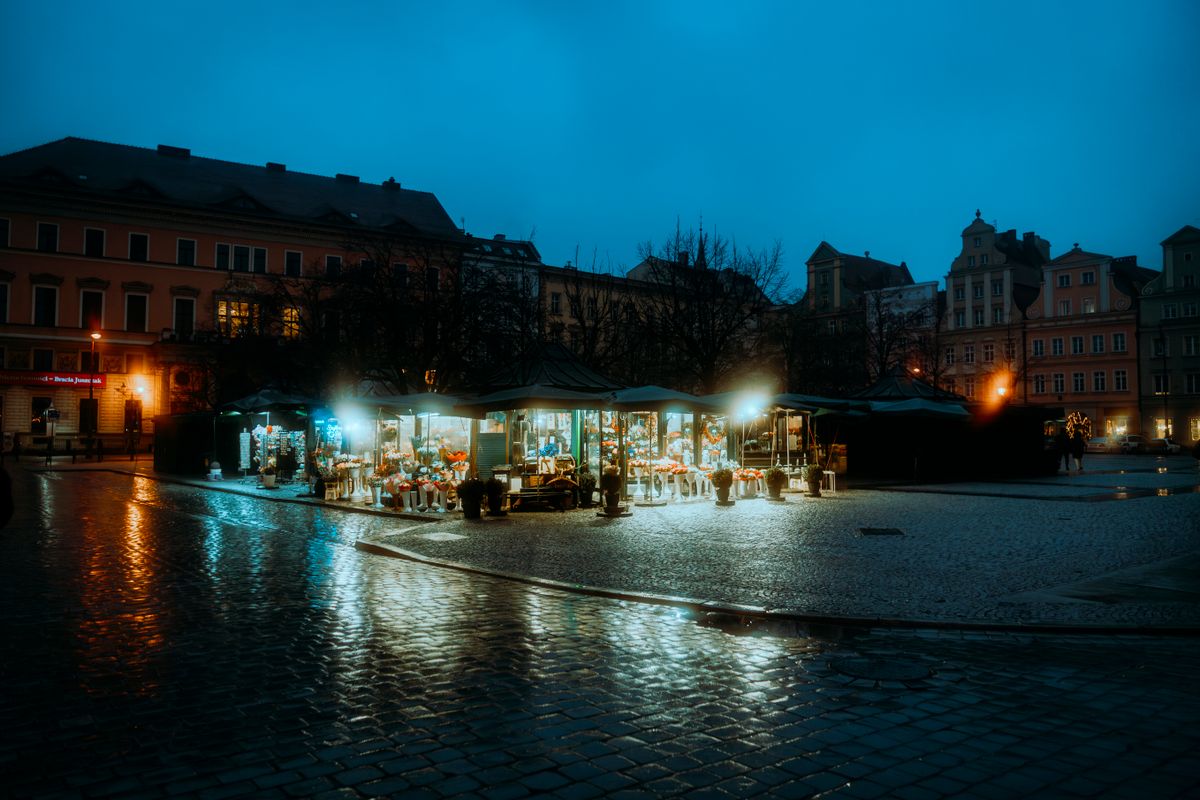
Next to it is Plac Solny, the former salt market, now a flower market that never closes. At night, with the stalls lit up on wet cobbles, it is one of the most photogenic corners in the city.
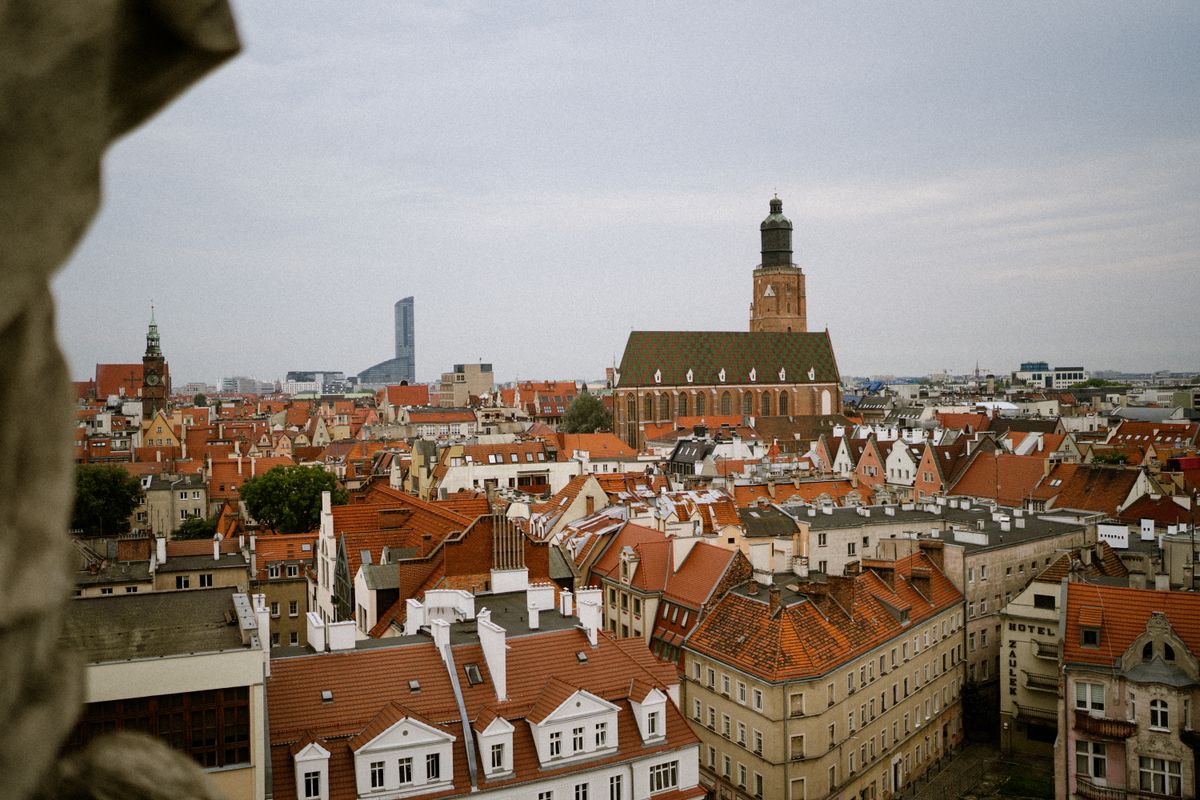
A few streets away, the ninety-one metre tower of St Elizabeth church can be climbed for the best panorama of the centre. There is no lift and the stairs are narrow, but the view covers the whole old town.
The bronze dwarfs: where they actually come from
There are more than eight hundred of them, between twenty and thirty centimetres tall, scattered across the entire city: on pavements, on window ledges, at the foot of buildings, beside shop doors. New ones appear every year.
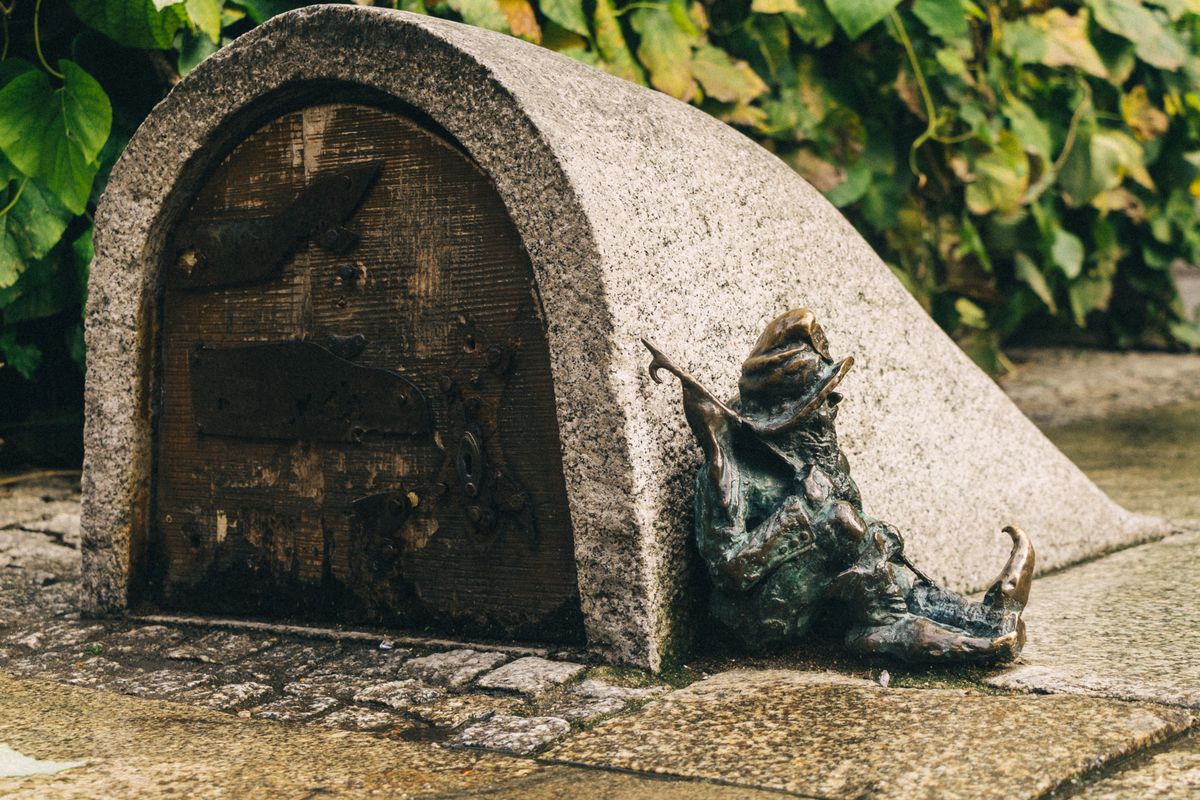
They are not a tourist invention. They come from an anti-communist protest movement of the nineteen-eighties called the Orange Alternative, which staged deliberately absurd happenings as a form of resistance, on the reasoning that the authorities could not arrest people for dressing as gnomes without looking ridiculous.
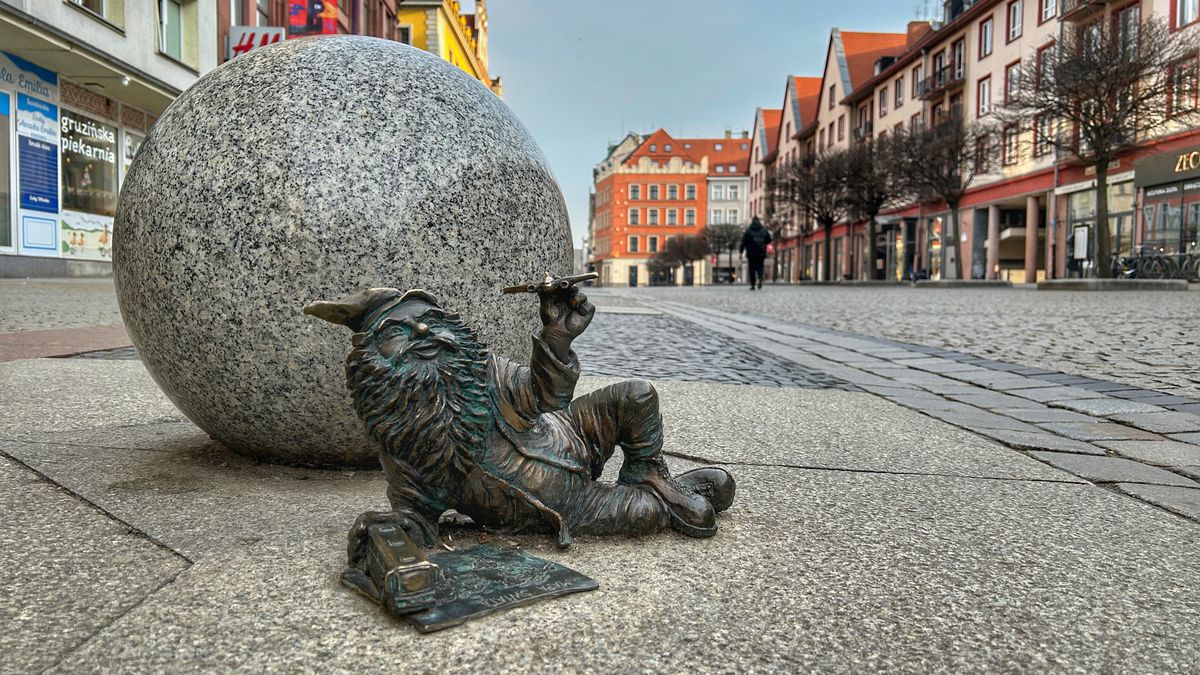
The idea started from a concrete detail. The authorities painted over anti-government graffiti with blotches of paint, and the activists began painting dwarfs on top of the blotches. The first bronze dwarf was installed in 2001 as a memorial to that movement, and the rest followed.
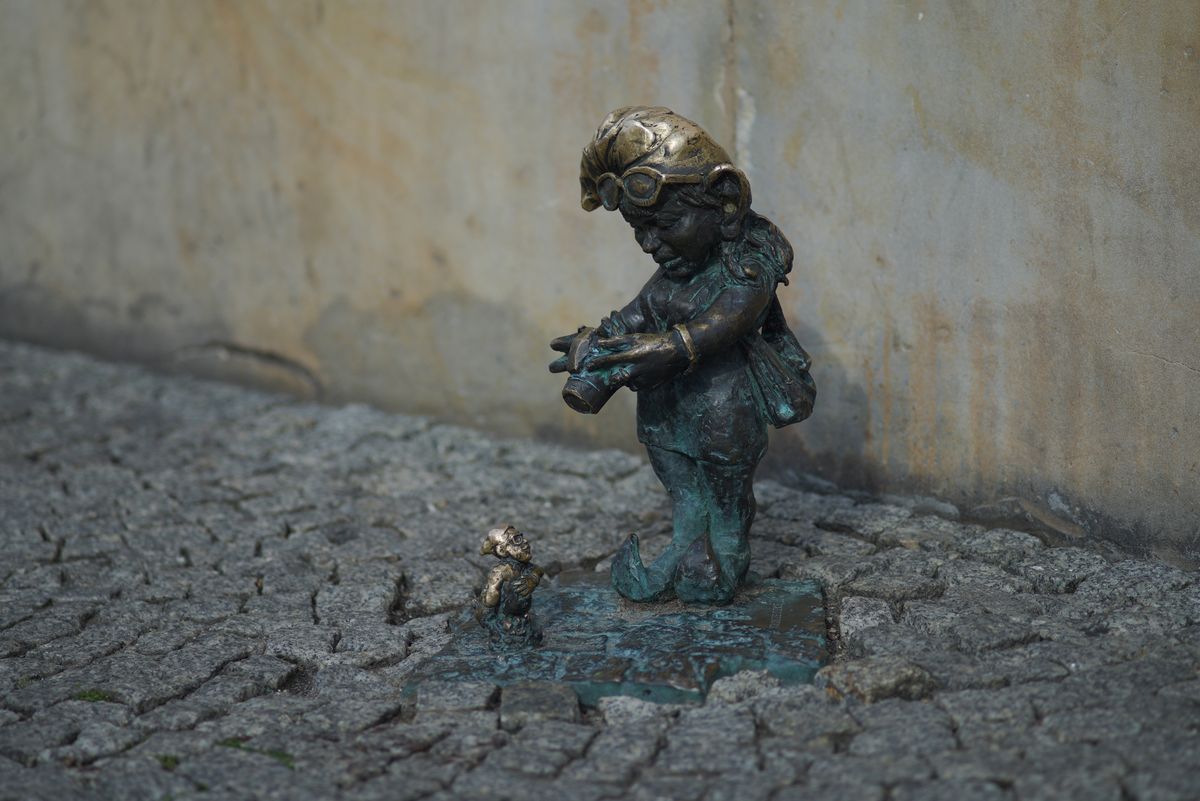
Maps are sold at any souvenir kiosk for a few zloty, and there are free apps that track them. With children this is the single best activity in the city: it turns an ordinary walk into a treasure hunt, and it costs nothing. Do not try to find all of them. Nobody has.
Cathedral Island and the bridges
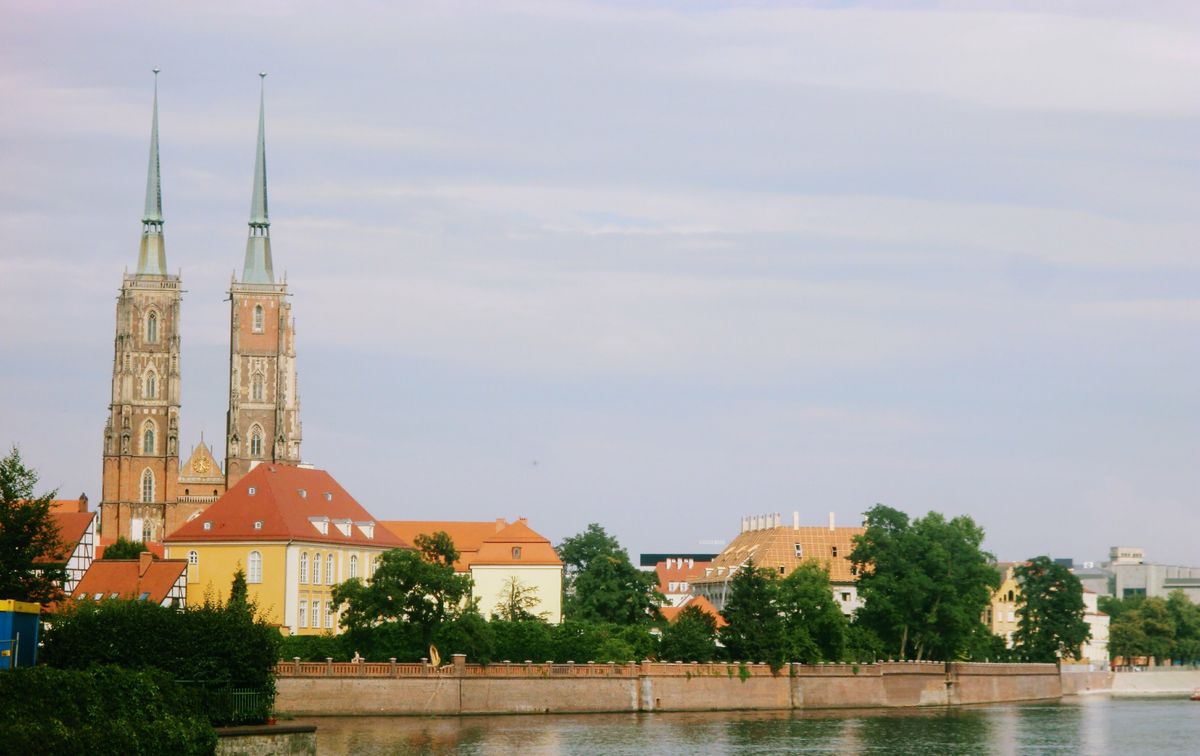
Ostrow Tumski is the oldest part of the city, settled since the tenth century, and the part that looks least Polish: quiet, full of brick churches and ecclesiastical buildings, with almost no shops.
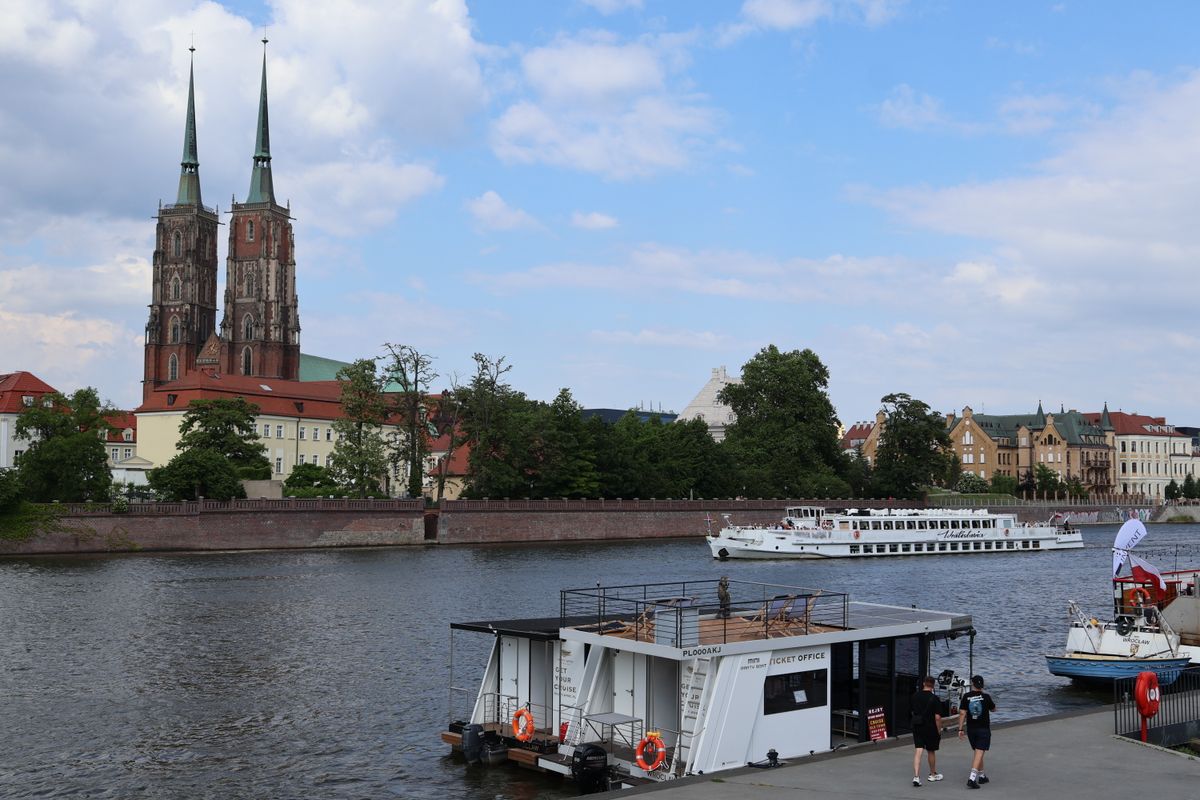
Technically it is no longer an island. The branch of the river that separated it was filled in during the nineteenth century. The name and the atmosphere survived.
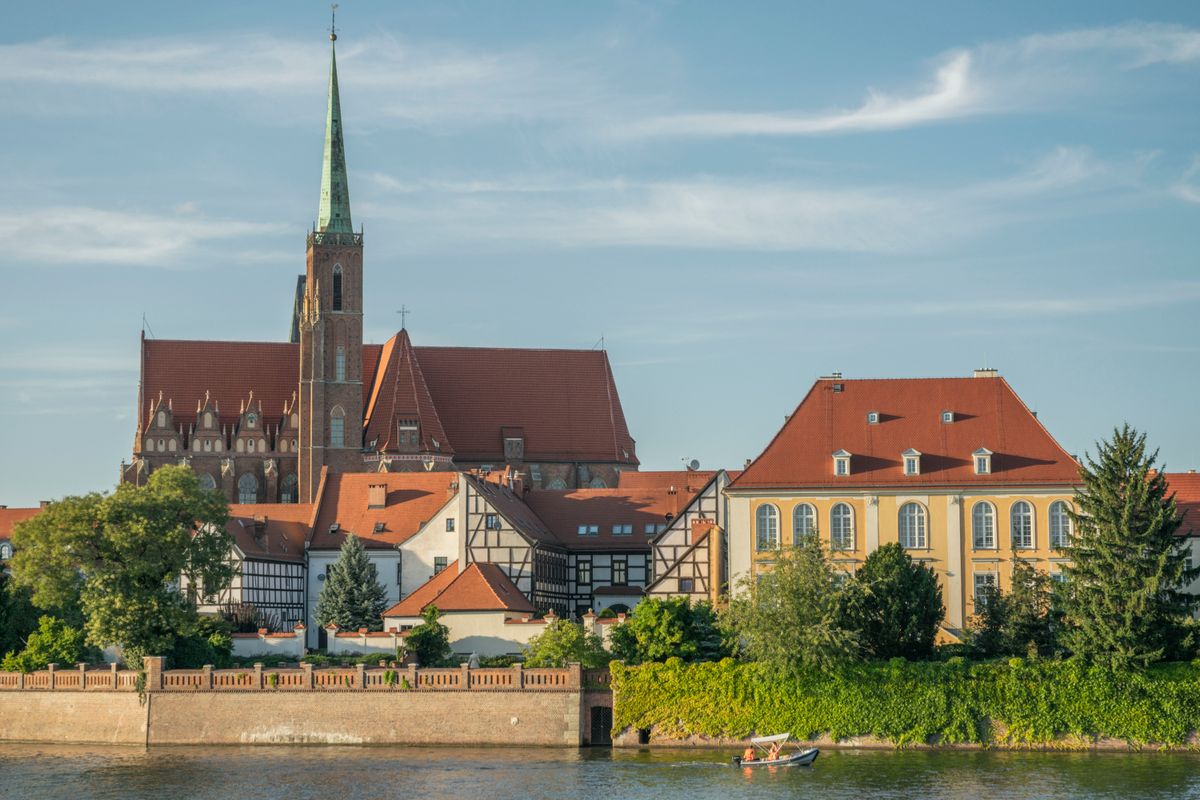
It also preserves a custom that has almost vanished everywhere else: the hundred and thirty gas lamps on the island are lit by hand, every evening, by a lamplighter in a long coat and top hat. He starts at dusk and takes about an hour.
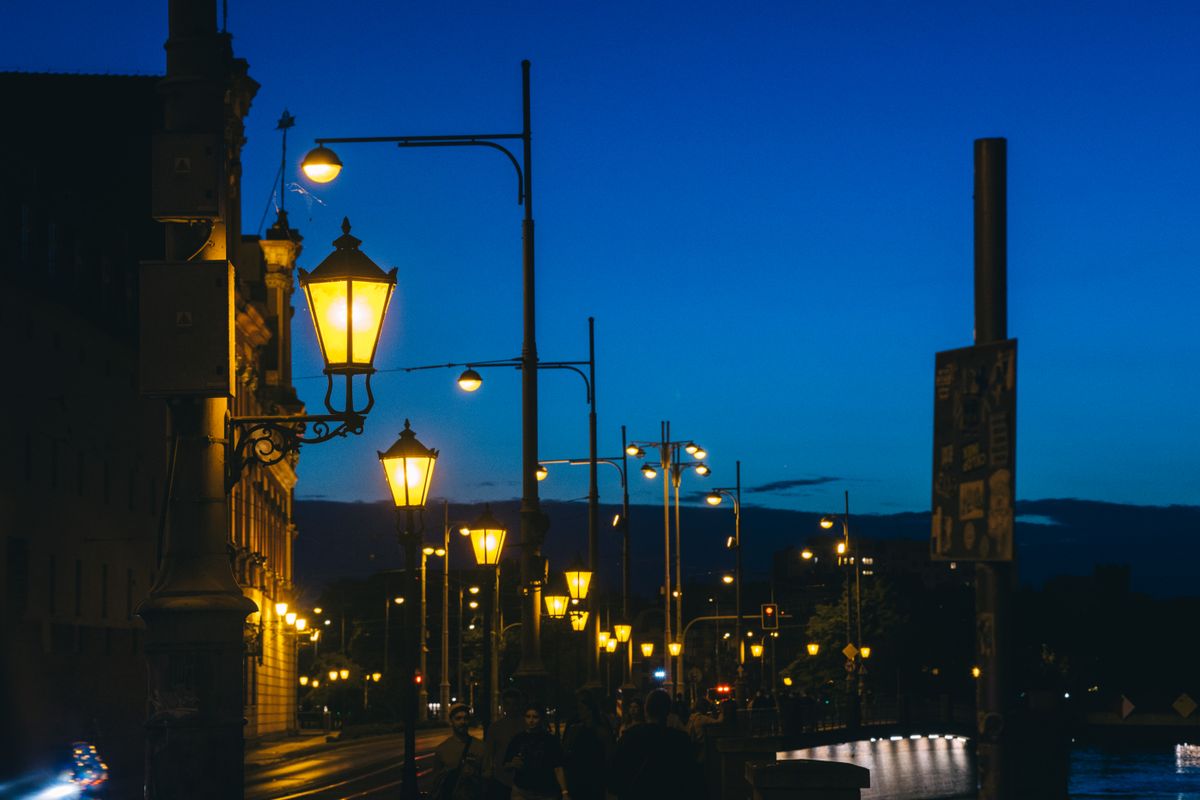
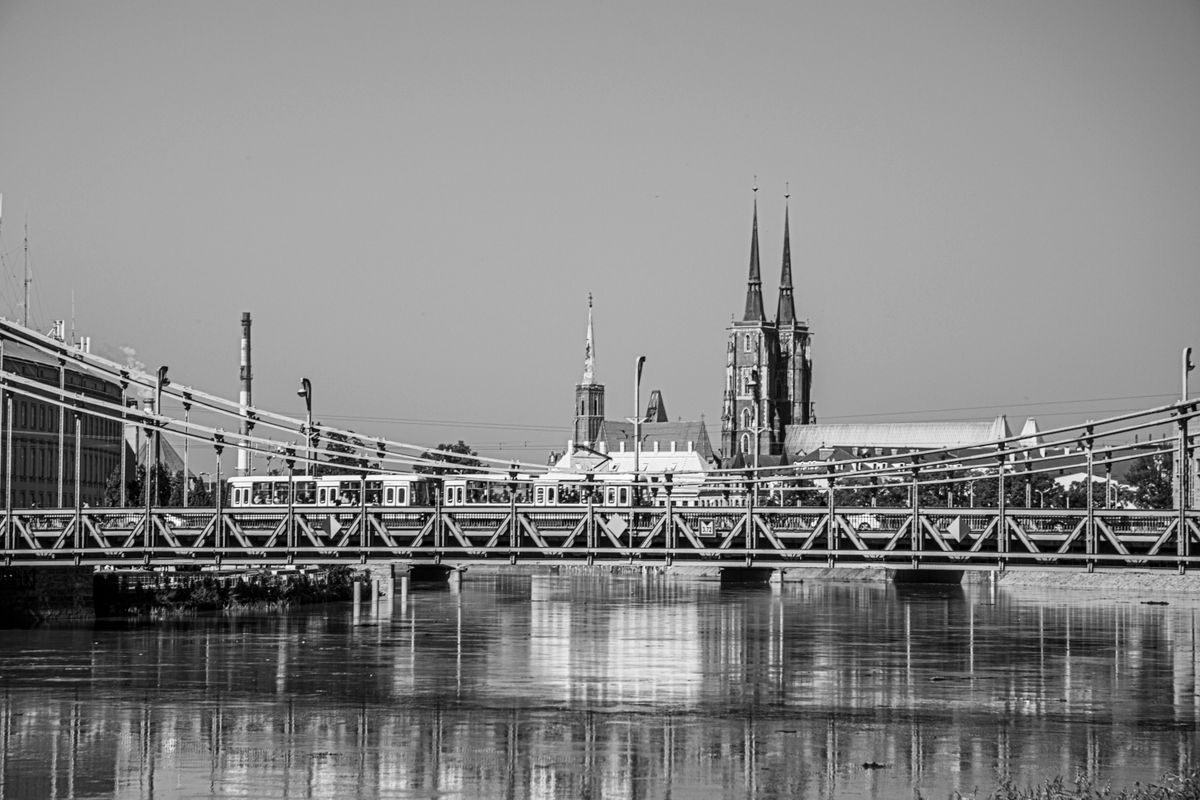
Tumski bridge, which links the island to the bank, is the lovers bridge, its railings buried under padlocks. The city has more than a hundred bridges and footbridges, more than Venice, though the comparison flatters Wroclaw slightly since many of them are small.
Centennial Hall and the modern side
Three kilometres from the centre stands a building on the UNESCO World Heritage list that most visitors miss entirely: Centennial Hall, completed in 1913, with the largest reinforced concrete dome built anywhere up to that point.
The span is sixty-five metres, and the ribbed concrete structure was, at the time, an engineering demonstration without precedent. The building is still in use for events and concerts, which means the interior is not always open.
In front of it is a large multimedia fountain with free water, light and music shows through the warm season. It is where local families spend their evenings, and it is a good corrective to the idea that Wroclaw is only its old town.
The same area holds the Japanese garden, laid out for the 1913 exhibition, and the zoo, which has a large aquarium dedicated to the Amazon basin.
The university and the baroque interiors
The main university building, a baroque facade more than a hundred and seventy metres long on the bank of the Oder, houses Aula Leopoldina, one of the most spectacular baroque halls in Central Europe, with frescoes and stucco across the entire ceiling.
It is open with a small ticket that also includes the mathematical tower above, from which you can see the whole old town. In value for money it is the best visit in the city.
Also in the less obvious category is the Raclawice Panorama, a circular painting a hundred and twenty metres long and fifteen high, displayed in a purpose-built rotunda. It depicts an eighteenth-century battle and was, for decades under communism, kept out of public view for political reasons.
What to eat and where
Polish food is filling and very cheap by Western European standards. The centrepiece is pierogi, dumplings filled with cheese and potato, with meat, or with cabbage and mushrooms, boiled or fried.
Other dishes worth trying: zurek, a sour soup made from fermented rye flour, served with sausage and egg; bigos, a hunter stew of sauerkraut and meat cooked over several days; and placki ziemniaczane, potato pancakes served either savoury or with sour cream.
In Poland pierogi are ordered by the portion, eight or ten pieces, not by weight, and the price on the menu is usually for the whole portion. One portion is a full meal for one person. The fried version, called ruskie when filled with cheese and potato, is the classic order.
The local institution is the bar mleczny, a milk bar: a state canteen left over from the communist era and still subsidised today. You can eat a complete meal there for a few euros, at the same tables where pensioners and students eat. The food is plain, the queue moves fast, and it is the most honest value in the city.
Practical: getting there, costs, when to go
Wroclaw has its own airport with low-cost connections across Europe. From the airport, the bus into the centre takes thirty minutes. The main railway station is a neo-Gothic building worth a look in its own right, with fast connections to Krakow, Warsaw, Poznan and Berlin.
| Item | Economy | Comfortable |
|---|---|---|
| Accommodation, 2 nights | 40 – 70 euros | 110 – 170 euros |
| Food and drink | 30 – 45 euros | 70 – 110 euros |
| Tickets and entries | 12 – 20 euros | 25 – 40 euros |
| Local transport | 5 – 8 euros | 10 – 15 euros |
| Total, excluding flights | about 100 euros | about 240 euros |
Poland is not in the euro zone. You pay in zloty, and it is worth withdrawing cash from a bank machine rather than changing money at the airport, where the rates are visibly worse. Cards work almost everywhere, including in milk bars.
The best window is May to September, with May and September as the optimal choices for weather and crowds. December has a good Christmas market on the main square, but the cold is serious, well below freezing, and the days are short. Official visitor information is on the city tourism portal, and general country information on the Polish national tourism site.
The city is walkable end to end, with the exception of Centennial Hall, which is twenty minutes away by tram.
A note about the photographs
Wroclaw is unusually well covered. The market square, the town hall, Cathedral Island, the bridges, the gas lamps and several of the bronze dwarfs all exist in free, properly located photographs, which is rare for a city this size.
Three gaps are worth stating. Aula Leopoldina, the baroque hall described above, has no free photograph at all. Neither does the interior of Centennial Hall with its concrete ribs. And the Raclawice Panorama, being a copyrighted painting in a controlled space, cannot be shown here. For those three, the text stands on its own.
Frequently asked questions (FAQ)
Conclusion
Wroclaw is the rare big European city that has everything a visitor wants, a great square, a river, a UNESCO building, cheap and serious food, and still has not been discovered by the crowds that fill Krakow and Prague.
Give it two days, climb the church tower, cross to the island at dusk to watch the lamplighter, and let the dwarfs give the walk a purpose. It is a city that decided to be likeable, and it worked.
