

 By
Flight delay compensation in Europe is one of the strongest consumer protections anywhere in the world, and most passengers who are entitled to it never claim. The rules are not complicated, the sums are fixed rather than negotiable, and you do not need a lawyer or an agency to get them.
This guide separates the two things people constantly confuse: the care the airline owes you on the spot regardless of fault, and the cash compensation that depends on why the flight went wrong.
Flight delay compensation: when the European rules apply
The European air passenger rights regulation applies in three situations, and if you fall into any of them you are covered regardless of your nationality or where you bought the ticket.
- Any flight departing from an airport in the European Union, Iceland, Norway or Switzerland, on any airline
- Any flight arriving in the EU, if it is operated by an EU airline
- Flights within the EU on any carrier
In practice, almost any flight you take from a European airport falls under these rules. It makes no difference whether the ticket was cheap, whether the airline is low-cost, or whether you bought through an agency.
What you are owed immediately, whatever the cause
This is the part most people miss. The right to care does not depend on who is at fault. Even if the flight is cancelled because of a storm, the airline still has to look after you while you wait.
| Situation | What you are owed |
|---|---|
| 2 hours or more, short flights | food and drink, two calls or messages |
| 3 hours, medium flights | food and drink, communication |
| 4 hours, long flights | food and drink, communication |
| Departure pushed to the next day | hotel and transport to it, at the airline expense |
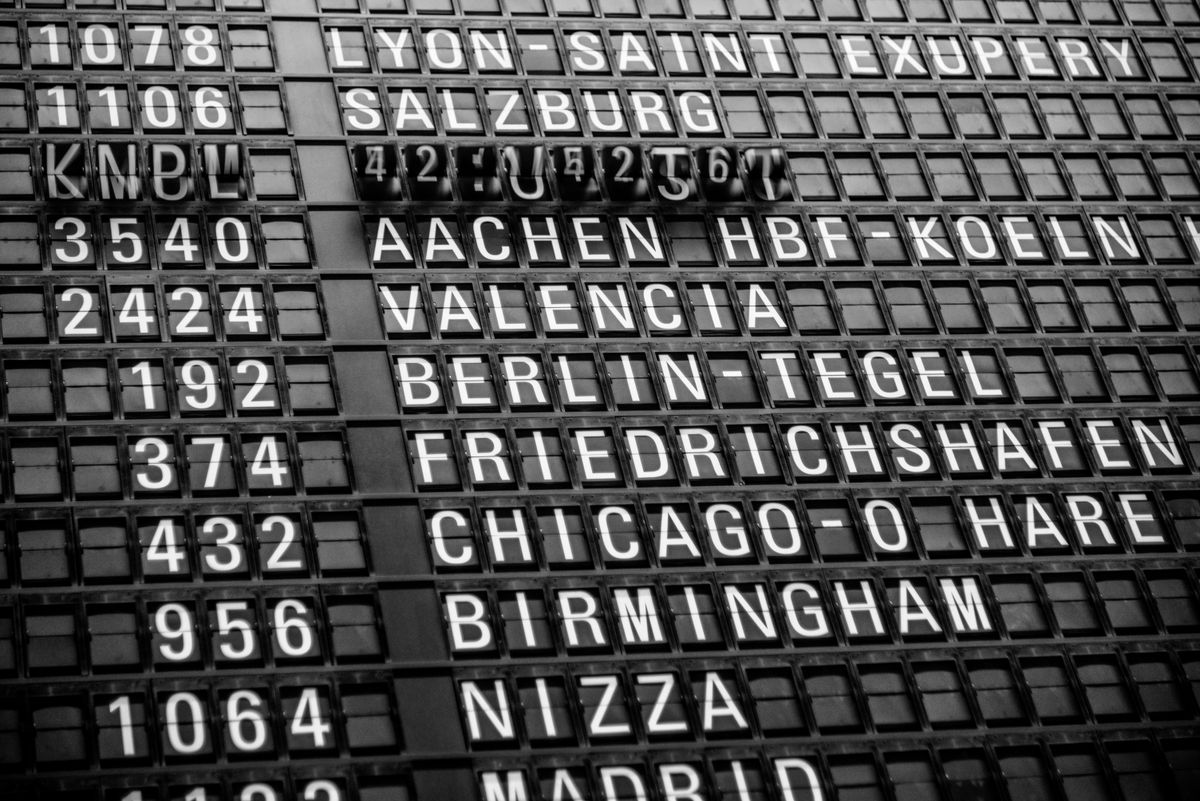
Do not sit in the terminal waiting for someone to hand you a voucher. You have the right to buy yourself a reasonable meal or a hotel room and claim the money back afterwards. Keep every receipt, photograph the departure board showing the delay, and keep your boarding pass. Reasonable means a normal meal, not a celebration dinner, and a mid-range hotel, not a suite.
The cash compensation: the exact amounts
This is the fixed compensation, paid on top of any refund and on top of the care above. It does not depend on what you paid for the ticket, only on the distance of the flight.
| Flight distance | Compensation per person |
|---|---|
| Up to 1,500 km | 250 euros |
| 1,500 to 3,500 km, or any intra-EU flight over 1,500 km | 400 euros |
| Over 3,500 km, outside the EU | 600 euros |
| Paid per person, including children with their own ticket |
For a couple flying from Bucharest to Rome, a cancelled flight means eight hundred euros in compensation, plus the ticket price back if you abandon the trip. That is frequently more than the holiday cost.
For delays, the threshold that matters is when you actually arrive at your destination, not when you departed. If you left four hours late but arrived only two and a half hours late because the pilot made up time, there is no compensation. If you left one hour late and arrived three and a half hours late, there is. Airlines know this and passengers usually do not.
When the airline does not have to pay
There is one category of exception, called extraordinary circumstances in the regulation. These are events the airline could not have avoided even with all reasonable measures.
- Severe weather that makes the flight unsafe
- Closure of airspace, whether political or from volcanic ash
- Air traffic control strikes, as opposed to airline staff strikes
- Security threats and medical emergencies on board
- Bird strikes and similar unforeseeable events
What does not count as extraordinary, although airlines routinely claim it does: ordinary technical faults in the aircraft, a strike by the airline own staff, crew scheduling problems, and the knock-on effects of the airline own earlier delays. European courts have repeatedly confirmed this.
One thing to remember: even in genuinely extraordinary circumstances, when no cash compensation is due, the duty of care remains. The airline still owes you food, communication and a hotel if you are stuck overnight.
Overbooking: the clearest case you can win
Airlines systematically sell more seats than the aircraft has, betting that some passengers will not show up. When everyone does show up, someone is left behind.

The correct procedure is for staff to look first for volunteers willing to fly later in exchange for negotiated benefits. If not enough volunteers come forward, the airline can deny boarding involuntarily, and then the compensation is owed automatically, at the same amounts as for a cancellation.
This is the case where passengers win most easily, because there is no extraordinary circumstance defence: overbooking is a commercial decision by the airline, not an act of God.
If you volunteer, negotiate. The airline has an interest in resolving it at the desk, and what is offered first is rarely what is available.
How to claim, step by step
The process is deliberately made to look harder than it is. In practice it is five steps.

- Collect the evidence at the airport: boarding pass, a photograph of the board showing the delay, and every receipt
- Write to the airline directly, through its own claim form, stating the flight number, the date, the delay on arrival and the amount you are claiming
- Cite the regulation by name and give a deadline, usually fourteen or thirty days
- If the airline refuses or ignores you, escalate to the national enforcement body in the country where the flight departed
- For cross-border disputes, the European Consumer Centre network handles complaints free of charge
The official rules and the European complaint form are on the Your Europe portal, and cross-border help is available through the European Consumer Centres network.
There are companies that will handle the claim in your place and keep between twenty and fifty per cent of the money. They are genuinely useful if you have no time, if the airline has already refused you, or if the case needs a court. For a straightforward delay where the facts are not in dispute, writing the letter yourself takes twenty minutes and you keep the whole amount.
How long you have to claim
The deadline is not a few days, as most people assume. It is set by the national law of the country where you would sue, and it is measured in years.
In Romania the general limitation period is three years. In the United Kingdom it is six. In Germany three, in France five, in Spain five. The airline will not remind you of this.
Concretely, if a flight was cancelled on you two years ago and you never claimed, you probably still can. It is worth checking, particularly for long-haul flights where the sum is six hundred euros per person.

A note about the photographs
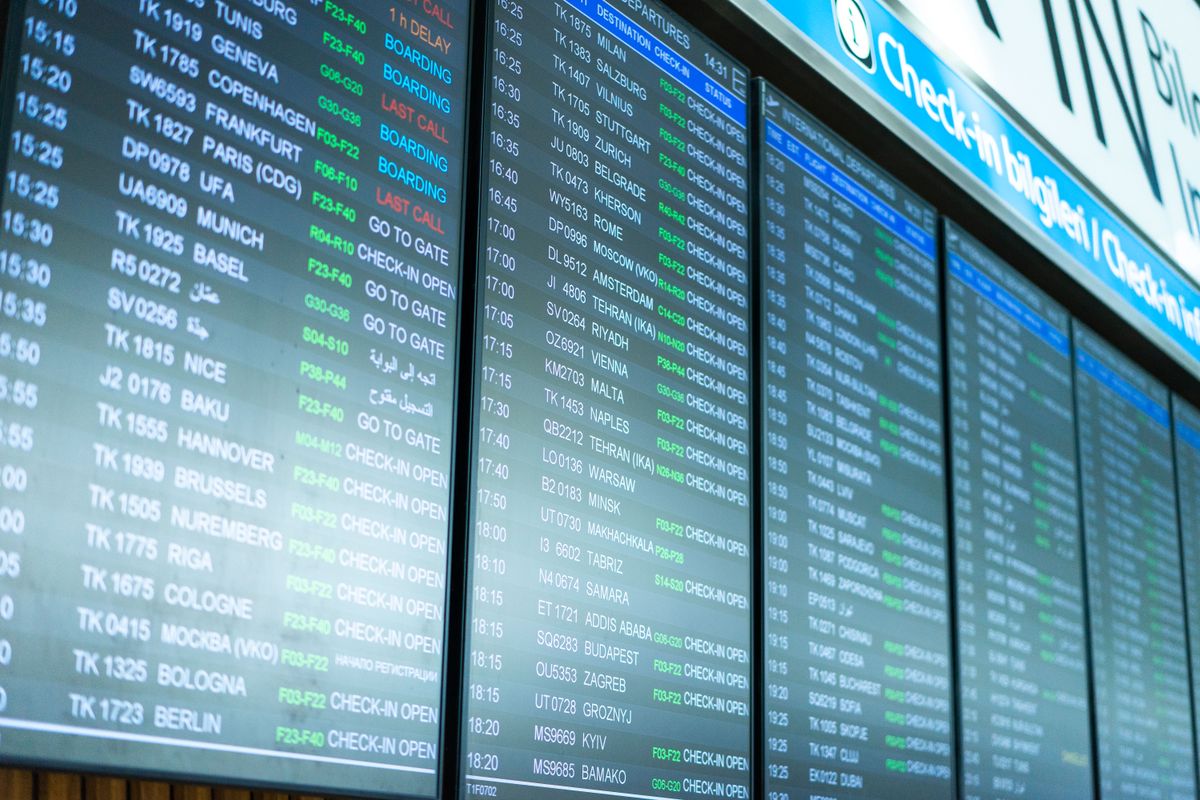
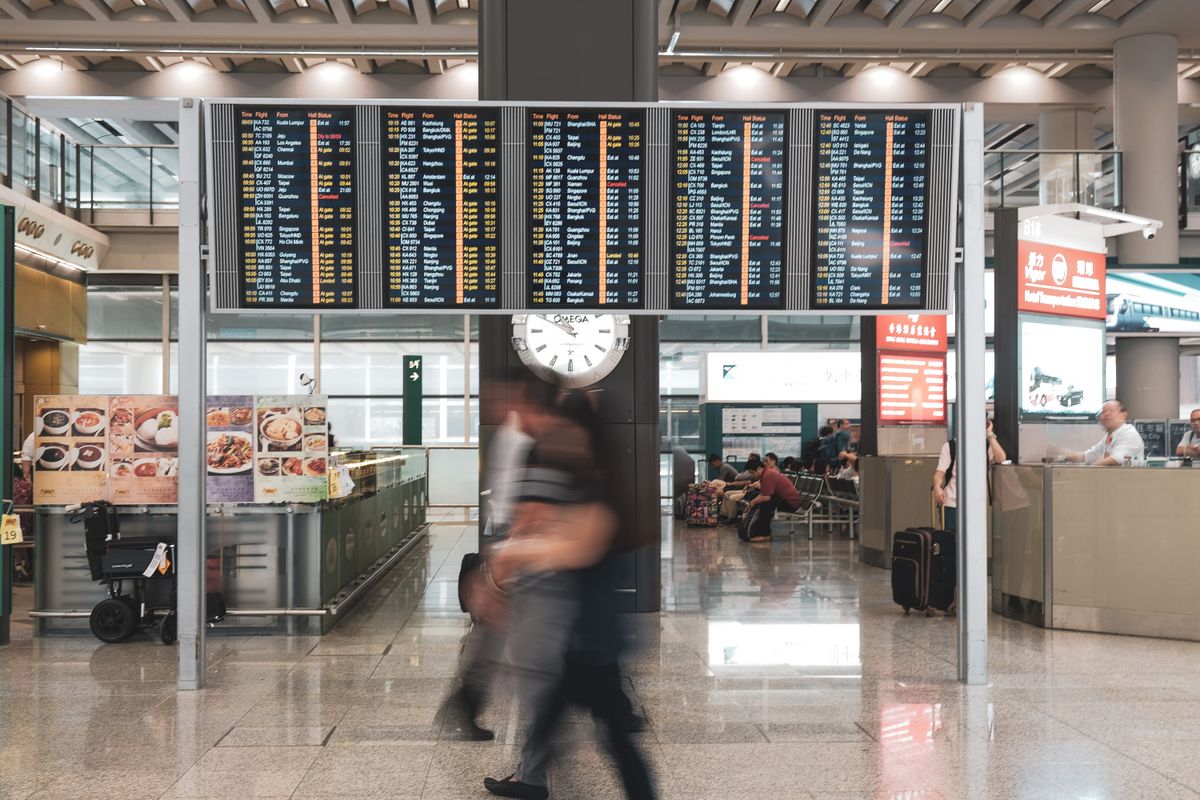
The images in this article were chosen deliberately without airline logos, even though the most expressive shots of departure boards usually carry them. An article about claiming money from airlines should not appear to single out any particular one, and none of the carriers shown would be the one your claim is against.
Frequently asked questions (FAQ)
Conclusion
Flight compensation in Europe is unusually generous and unusually ignored. The sums are fixed, the criteria are objective, and the burden of proving an extraordinary circumstance falls on the airline, not on you.
Photograph the board, keep the receipts, write the letter yourself, and remember that the clock runs in years rather than days. Most of the money that goes unclaimed does so because nobody asked.
