
 By

Strasbourg has been French and German in turn five times in less than a century, and the result shows on every street. It has a Gothic cathedral of pink sandstone that was the tallest building in the world for over two hundred years, an entire historic centre on an island, and, twenty minutes away on foot, the institutions of the European Union. All of it fits into a weekend.
What you see in two days, what makes the cathedral unusual, how to walk Petite France, what it costs and when it is worth coming.
The Grande Ile, an old town on the water
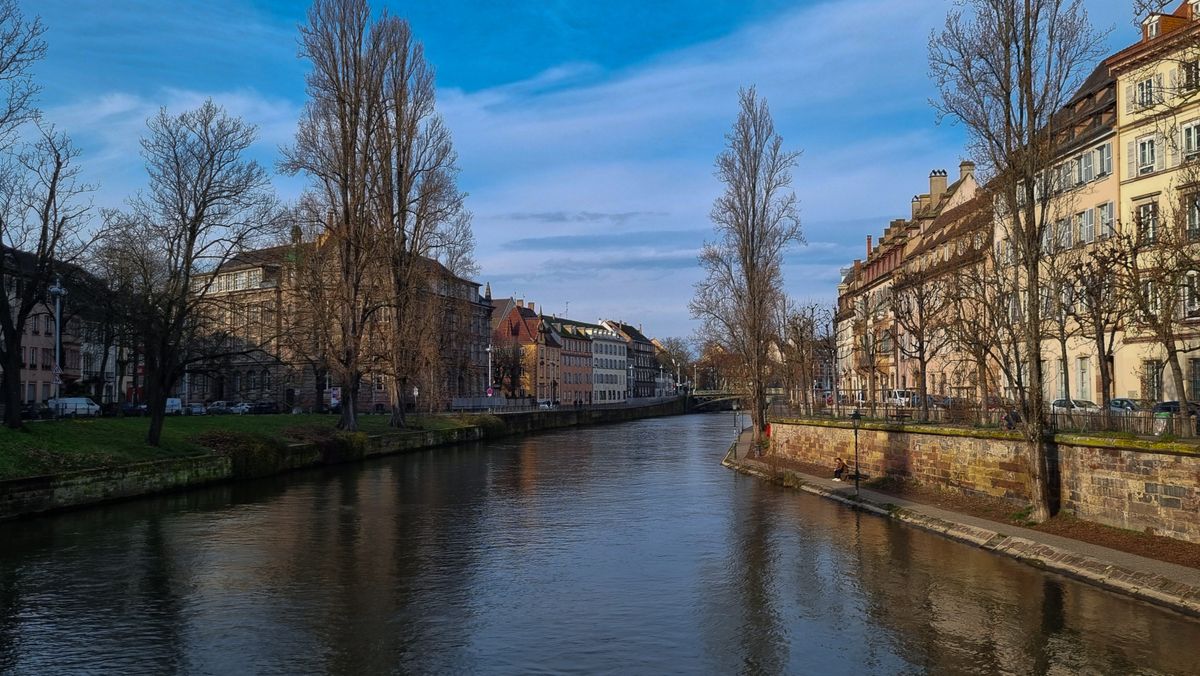
The historic centre of Strasbourg is an island, ringed by arms of the river Ill. It is called the Grande Ile and, since 1988, the whole of it has been UNESCO listed, which is unusual: normally individual monuments are listed, not entire quarters.
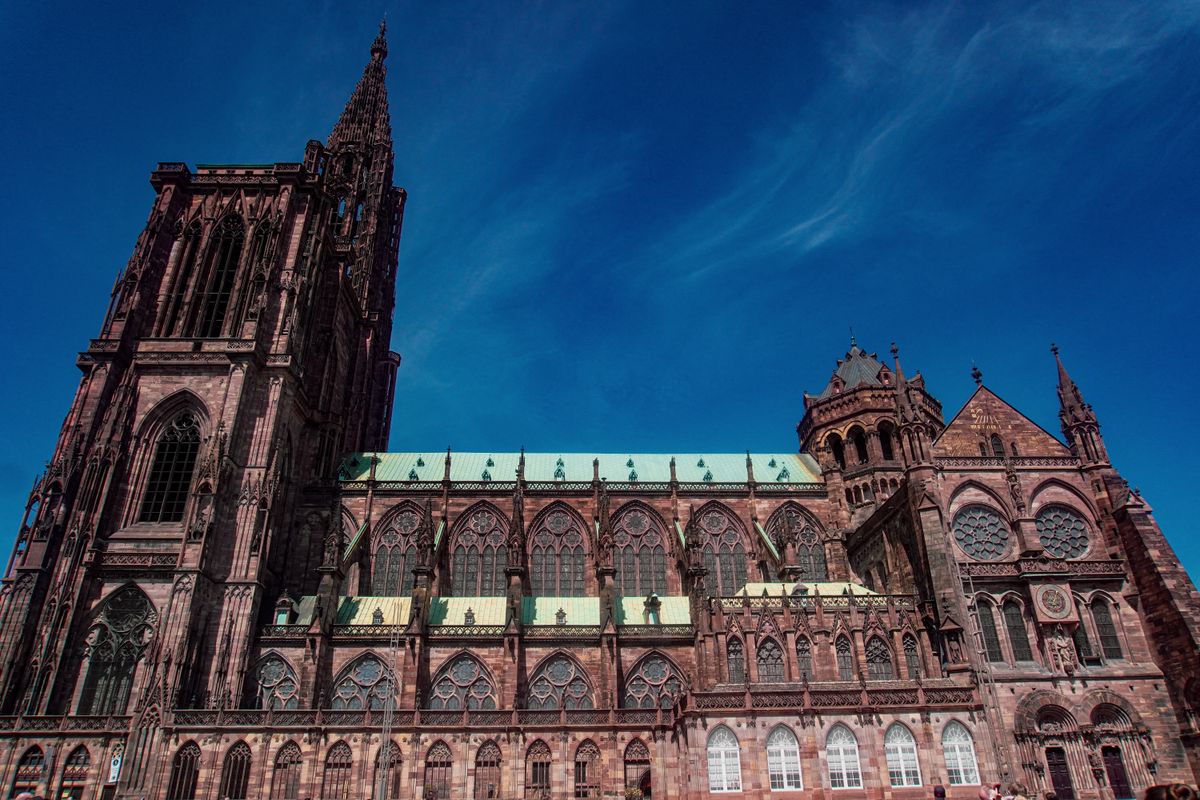
The island is crossed on foot in twenty minutes and walked completely in a day. All the main sights are there, and a car has no place: the centre is largely pedestrian, and the city is one of the most cycle-friendly in France.
Strasbourg runs a park and ride system on the outskirts. You pay a small fee for the whole day and the tram tickets, out and back, are included for every passenger in the car. It is far cheaper than any central car park and saves you hunting for a space.
Strasbourg cathedral and the astronomical clock
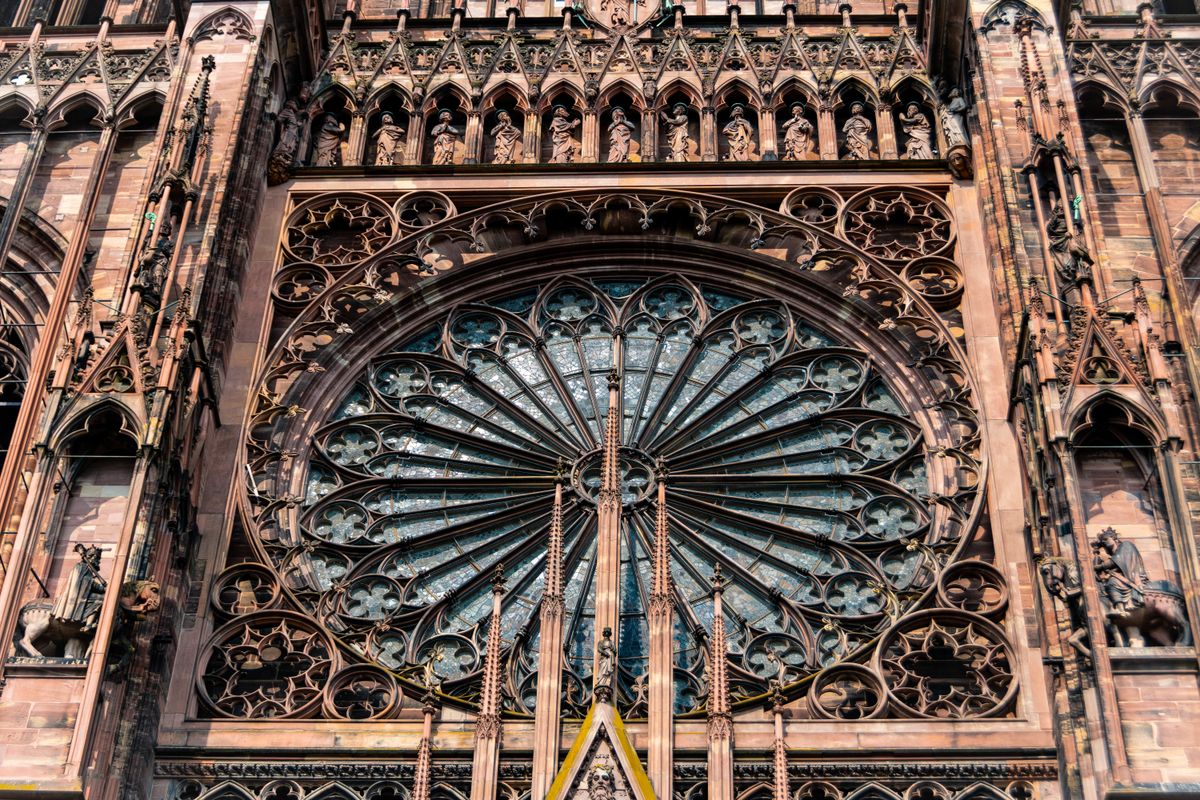
Strasbourg cathedral is built of pink sandstone from the Vosges, which gives it a colour no other major Gothic cathedral has. The tower stands a hundred and forty two metres high, and between 1647 and 1874 it was the tallest building in the world.
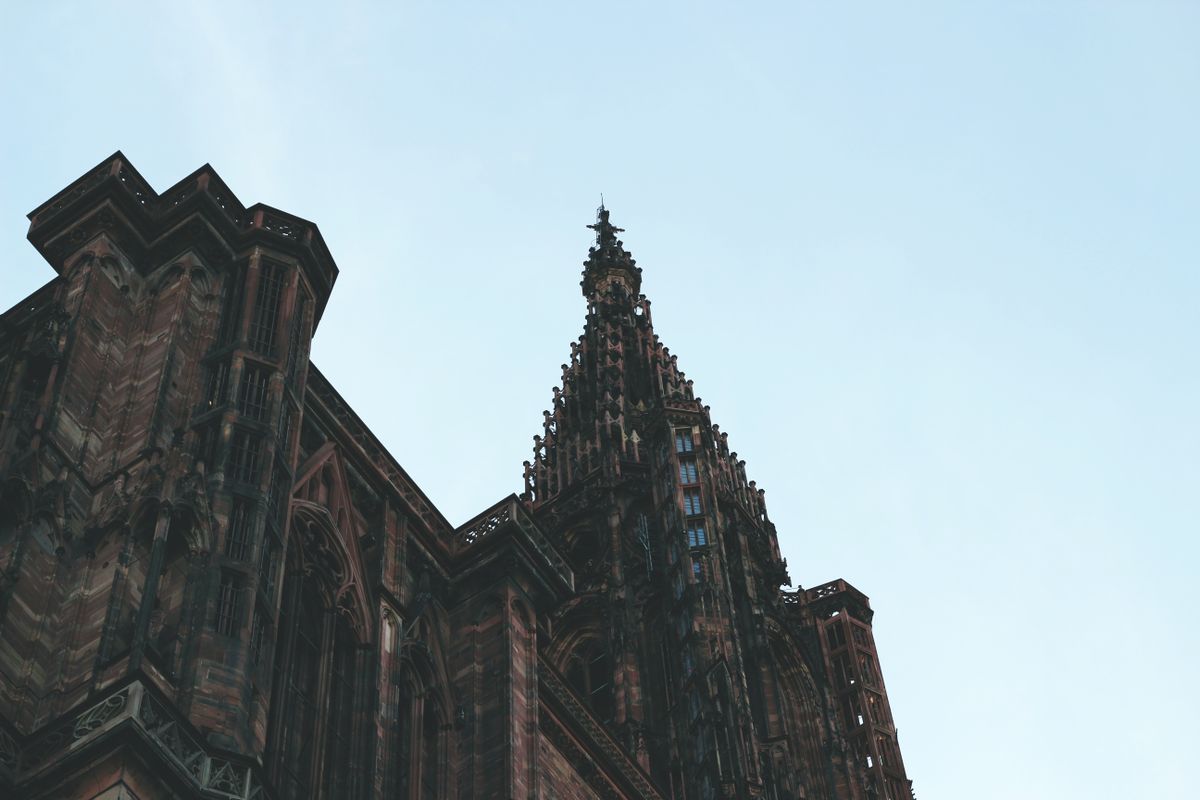
The west front carries hundreds of sculptures and is worth studying from a distance, out in the square, before you go in. The symmetry is incomplete: the north tower exists, the south one was never built, which gives the building its odd and unmistakable silhouette.
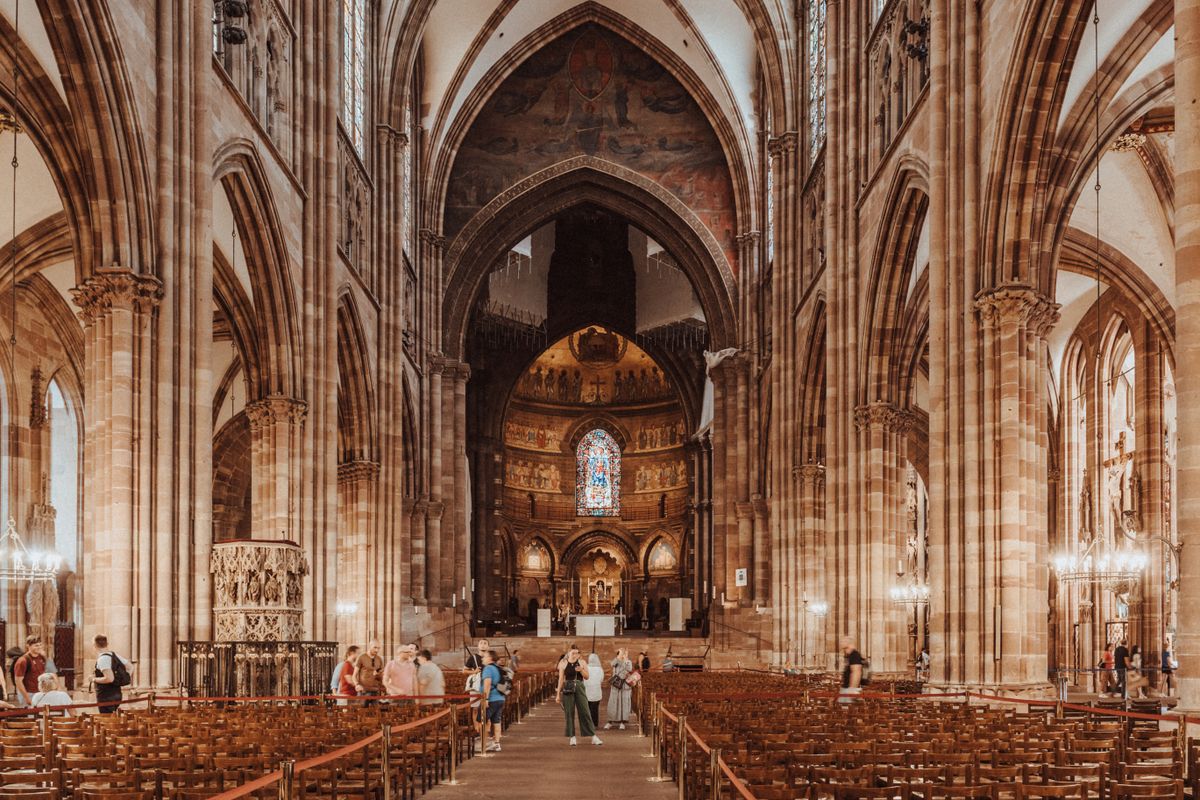
Inside, the main draw is the astronomical clock, a Renaissance construction showing the positions of the planets, the phases of the moon and the church calendar. The main mechanism, with its procession of apostles, runs only once a day, around midday, and access during that window needs a separate ticket.
The climb to the tower platform, at about sixty six metres, is up steps and charged. From there you see the rooftops of the city and, on clear days, the Black Forest across the German border.
Petite France and the Covered Bridges
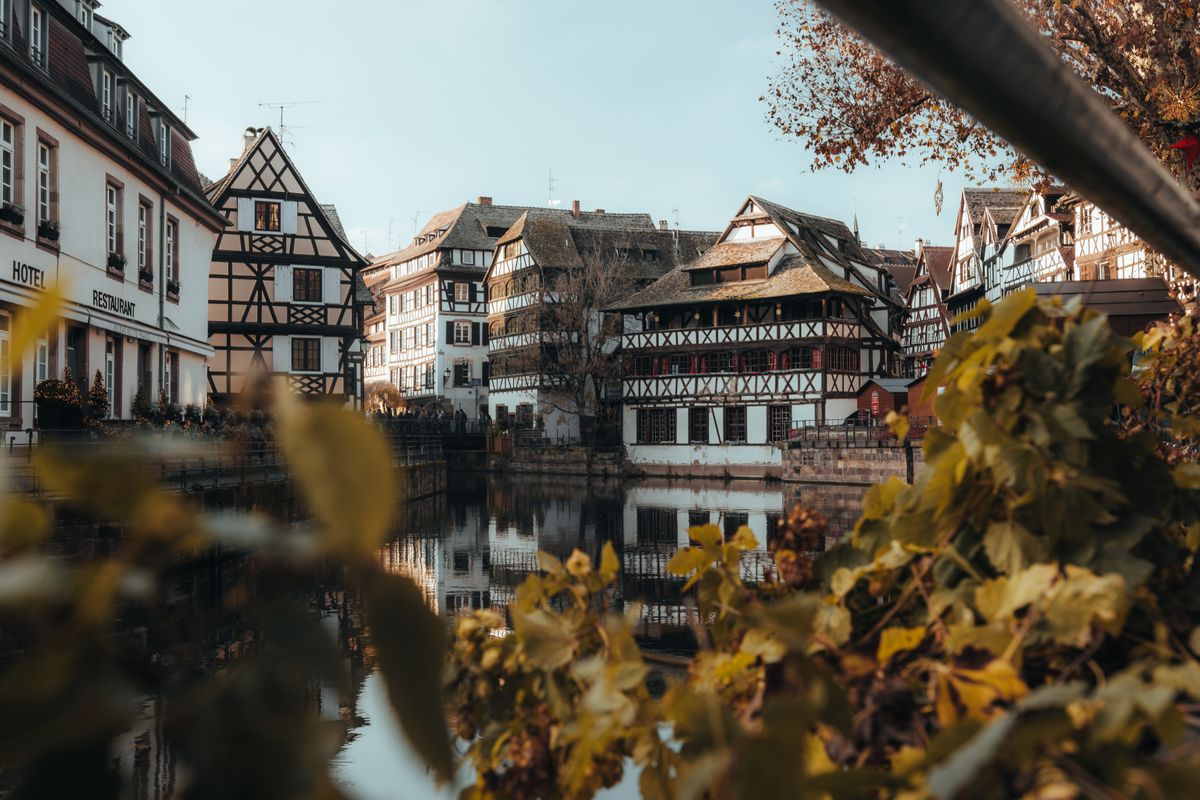
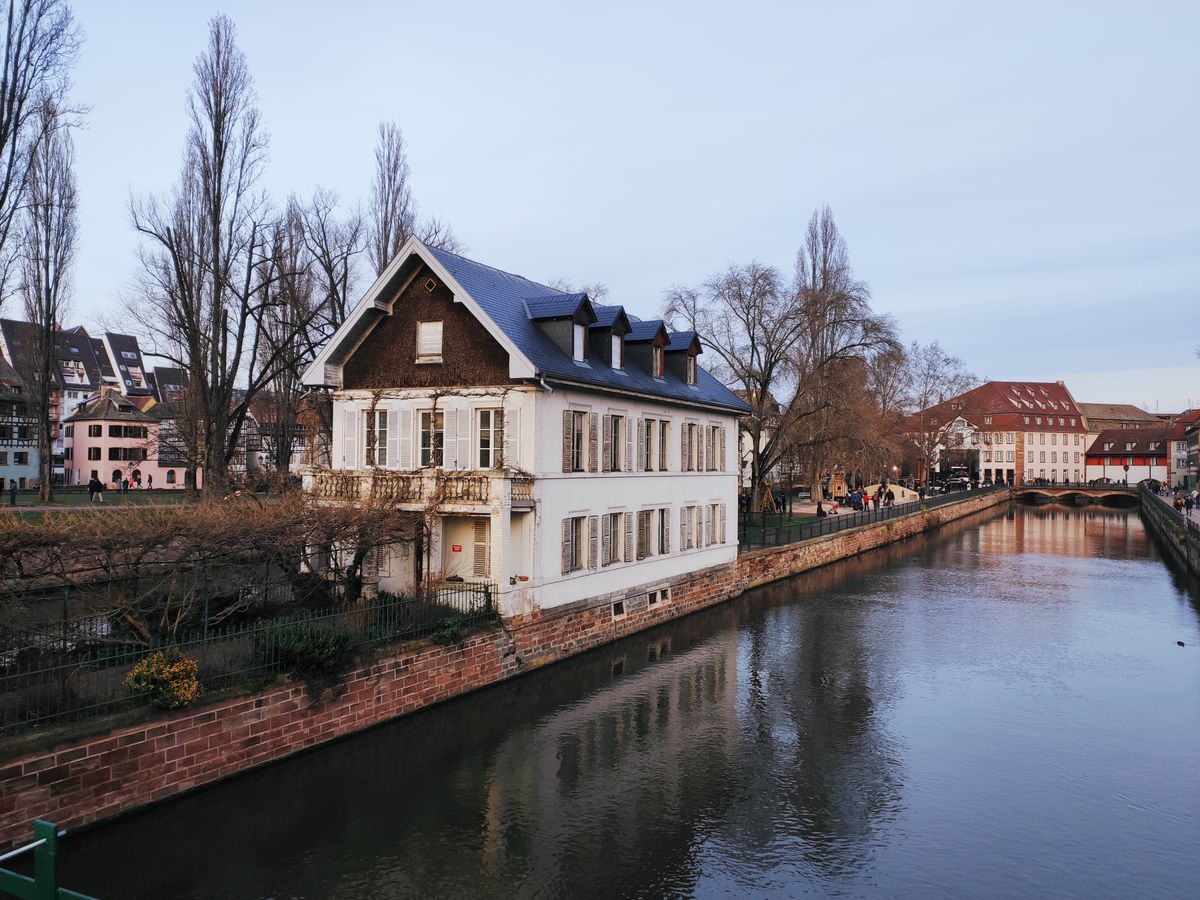
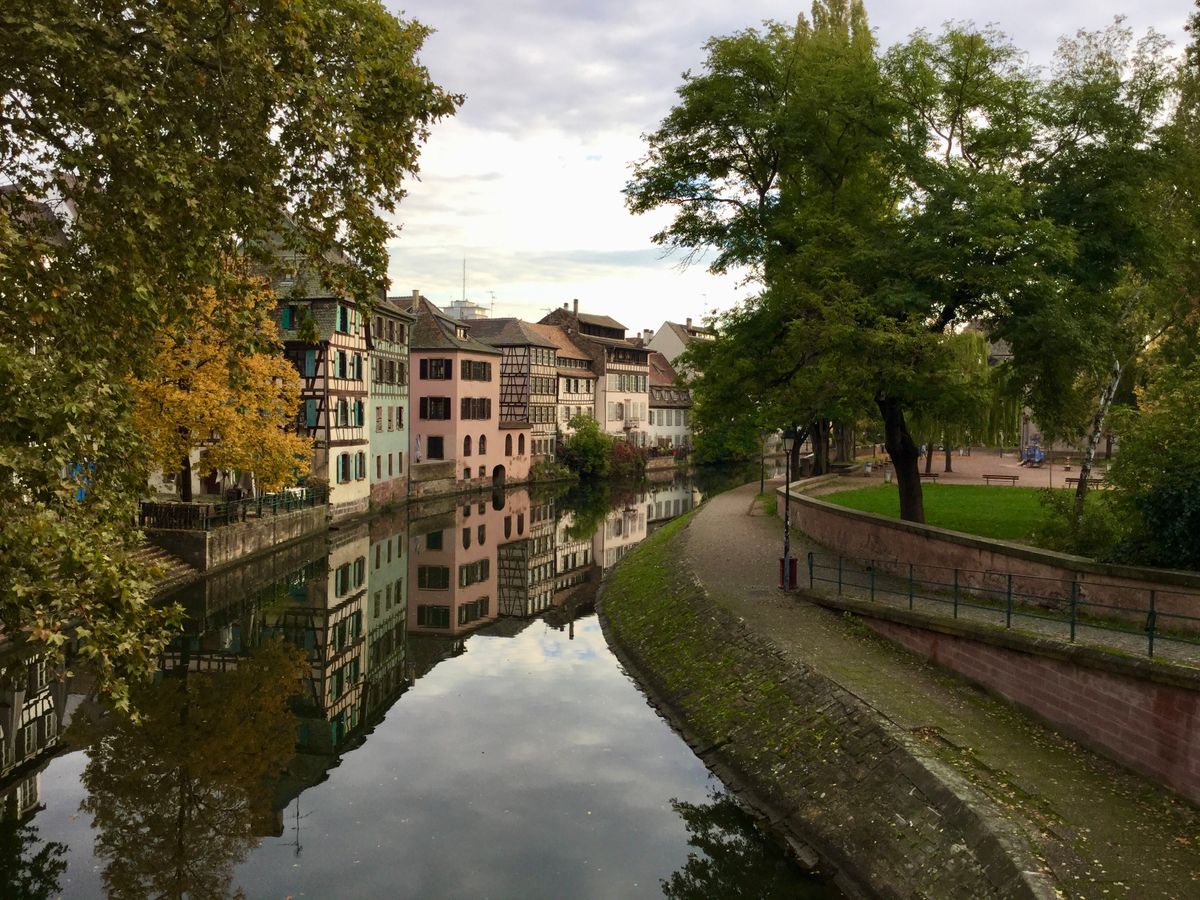
Petite France is the quarter at the western end of the island, the most photographed in the city. The name has nothing to do with France: it comes from a hospital that operated here in the sixteenth century.
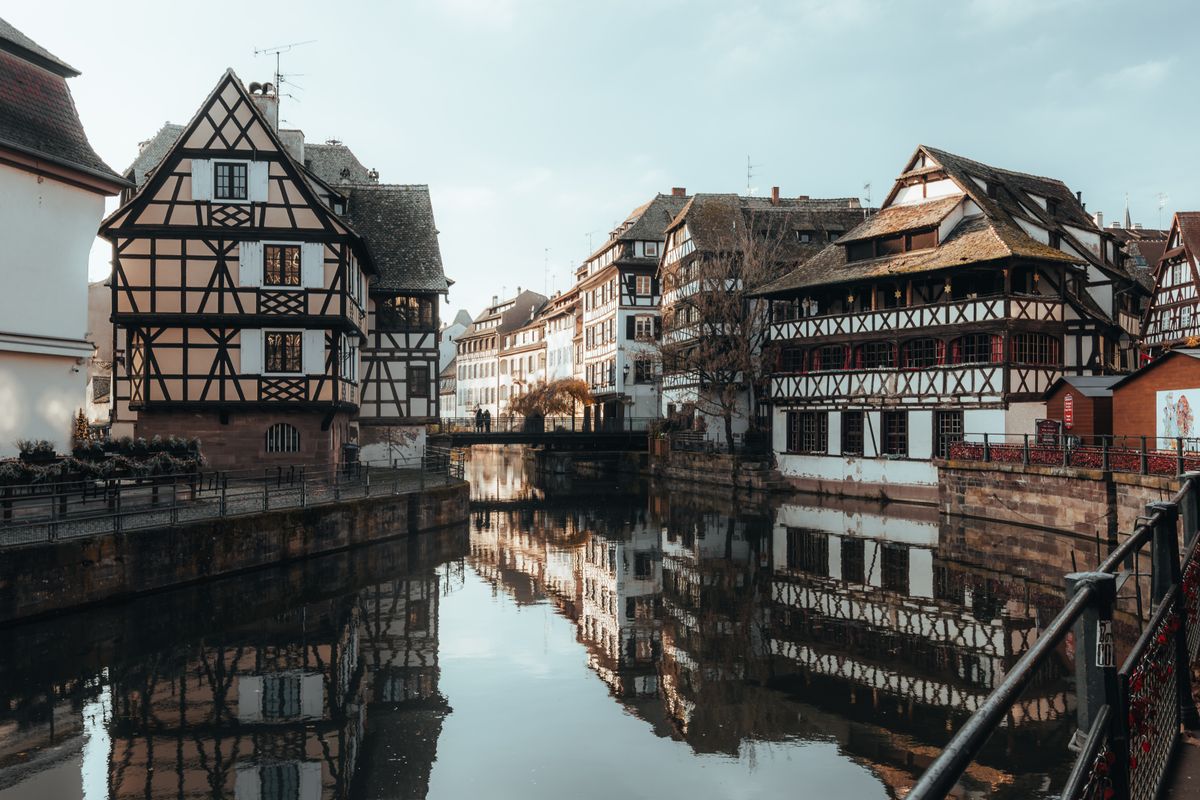
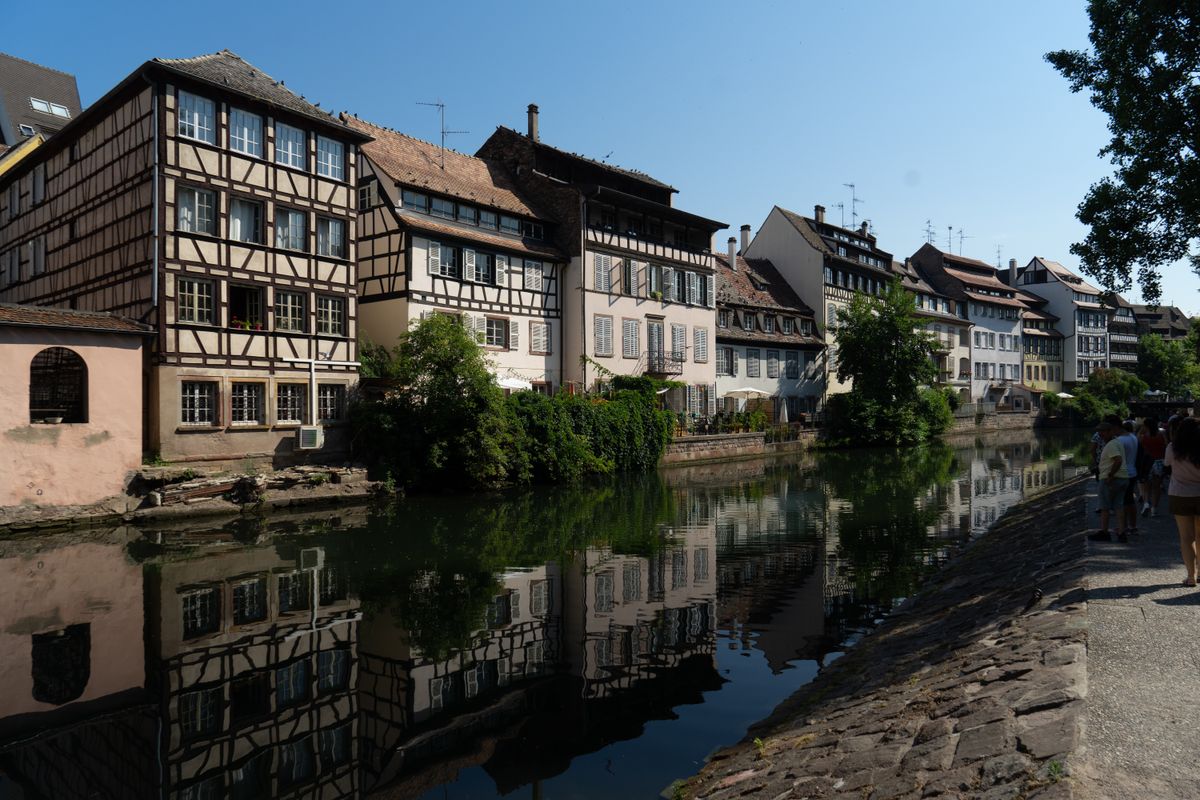
This was the district of craftsmen who worked with water: tanners, millers, fishermen. The half-timbered houses have unusually steep roofs, because the open lofts beneath them were used for drying hides. That detail explains the whole silhouette of the quarter.
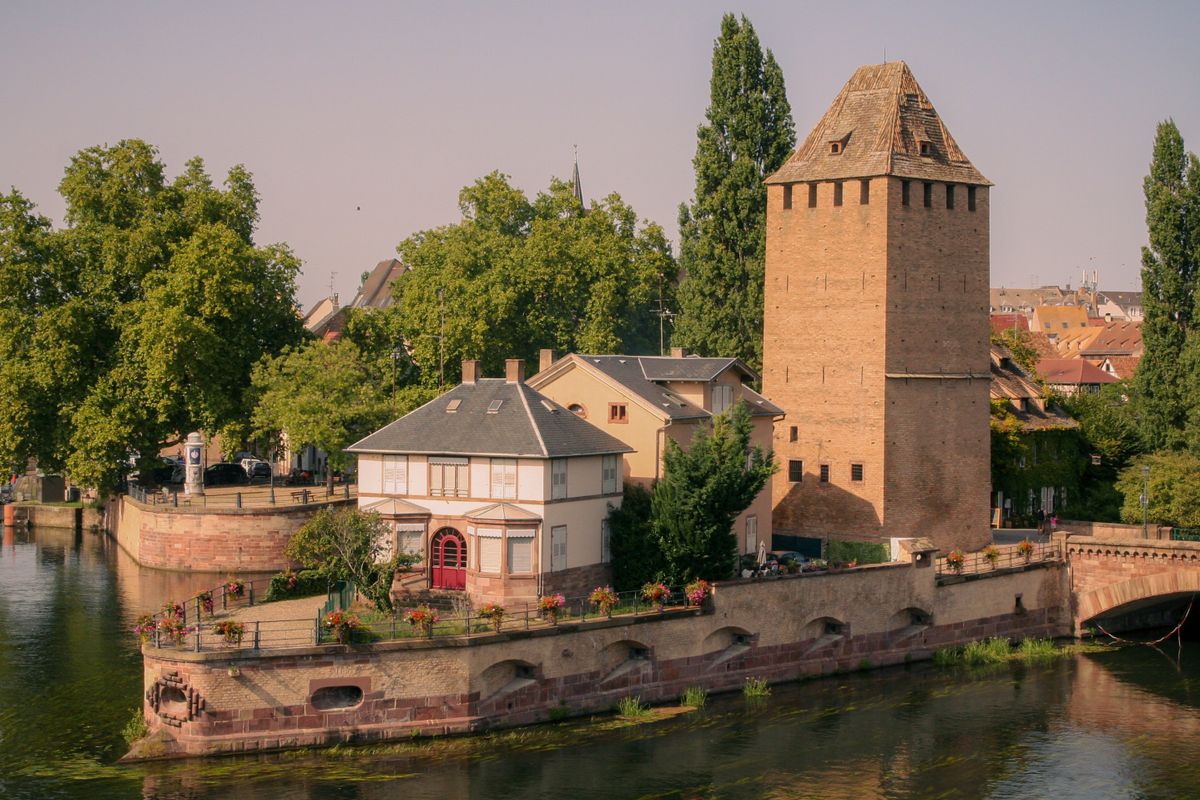
At the western tip stand the Ponts Couverts, the Covered Bridges, with the three defensive towers left from the medieval fortifications. The roofs that gave them their name disappeared in the eighteenth century, but the name stuck.
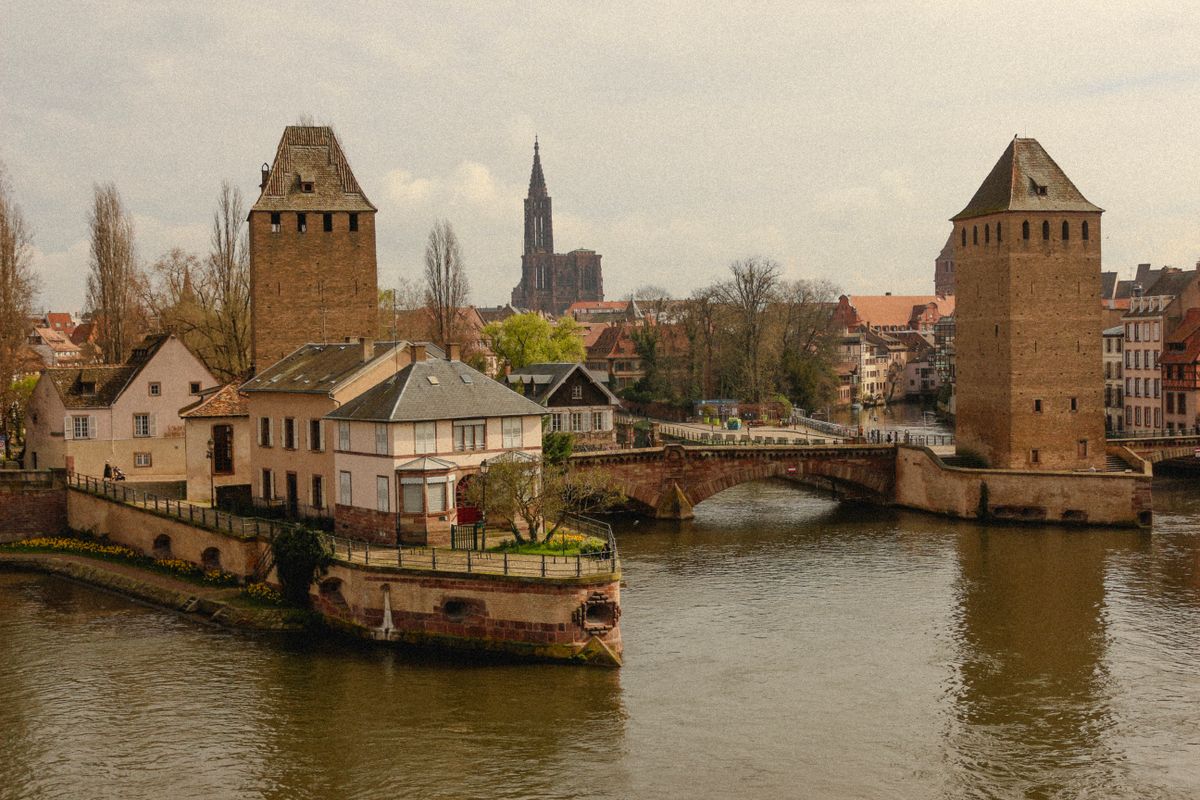
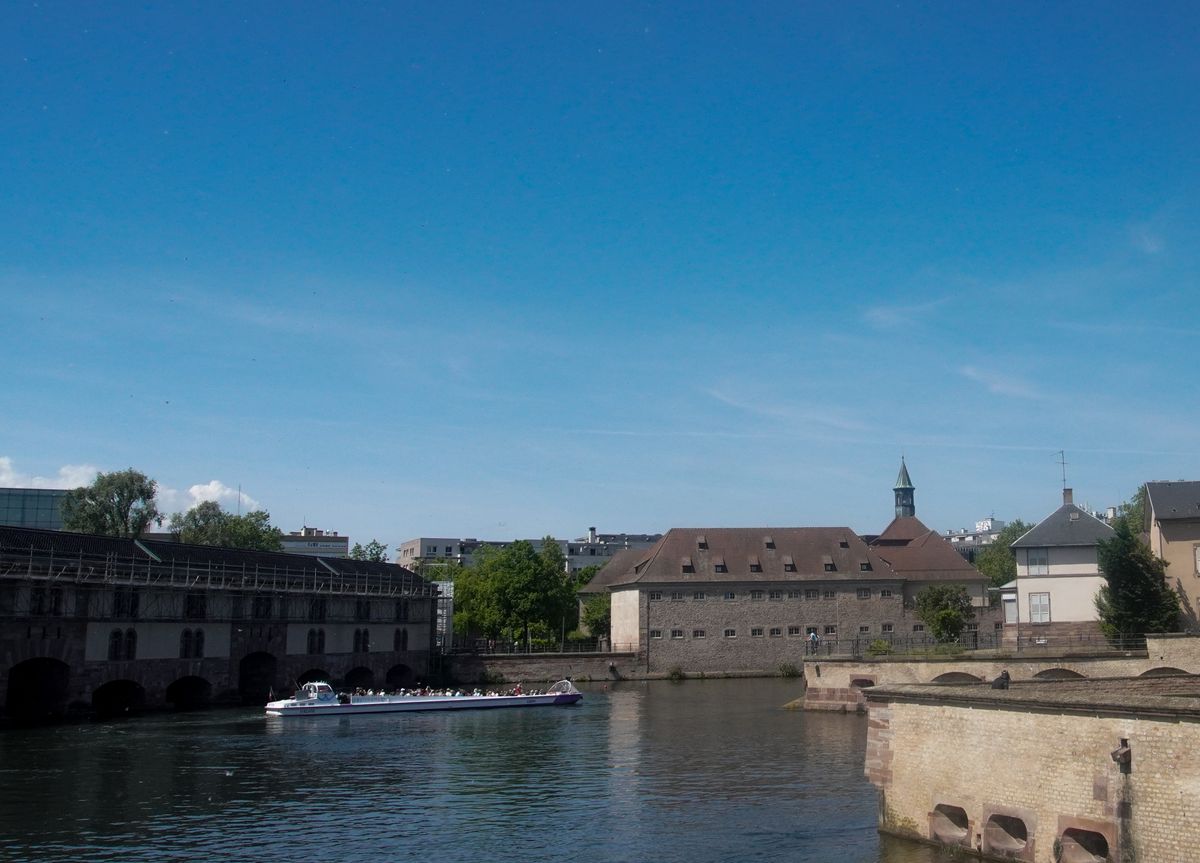
Directly behind them is the Vauban dam, with a panoramic terrace on its roof. Access is free, and it gives the best frame in the city: the towers in the foreground, the cathedral behind.
What else to see and how to get there
Beyond the island, the city has a few areas worth the second half of a day.
- Neustadt, the new town built by the Germans after 1871, with broad avenues and monumental buildings. It is UNESCO listed too, since 2017.
- The European quarter, with the European Parliament and the Council of Europe, twenty minutes from the centre by tram. The Parliament can be visited free, by appointment through the official visitor service.
- A boat trip on the Ill, about seventy minutes, circling the island and passing through locks.
- The Alsatian Museum, on the traditional life of the region, in an old house in the centre.
- Place Kleber and Place Gutenberg, the two main squares of the island.
Alsatian cooking deserves as much attention as the monuments: choucroute, tarte flambee and the local white wines. The traditional taverns are called winstub and are easy to recognise.
| Item | Detail |
|---|---|
| From Paris by train | around 1 hour 50 minutes |
| From Frankfurt by car | about 2 hours 30 minutes |
| Time needed | a weekend, 2 days |
| Cathedral | free entry, platform and clock charged |
| Parking | park and ride at the edge, tram included |
| Best season | May-June, September, December |
Official information about the city and the institutions is on the municipal portal. Strasbourg links naturally with the rest of the region, and the Alsace wine route starts effectively at the edge of the city.
December, when the city becomes another place
The Christmas market in Strasbourg has run since 1570 and is the oldest in France. The city calls itself the Capital of Christmas, and in December it changes so much that it effectively becomes a different destination.
There are several markets at once, spread through the centre, and the great tree in Place Kleber is among the tallest in Europe. Crowds are heavy, accommodation prices rise sharply and rooms must be booked months ahead.
The rest of the year the city is far quieter and cheaper. If you want the sights without the crowd, come in May, June or September. If you want the atmosphere, December has no substitute, but you pay for it.
The two Alsatian towns are often compared, and the answer depends on what you want: Strasbourg has the cathedral, the scale and the European institutions, Colmar has a smaller and prettier centre. Ideally you see both, since they are thirty minutes apart by train.
Frequently asked questions (FAQ)
Conclusion
Strasbourg visibly carries the mark of having belonged alternately to France and Germany: French Gothic beside German boulevards, choucroute beside croissants, an entire island on the UNESCO list.
A weekend covers everything that matters. Leave the car at the park and ride, climb to the Vauban dam terrace for the best frame in the city, and book far ahead if you come in December.
