

 By
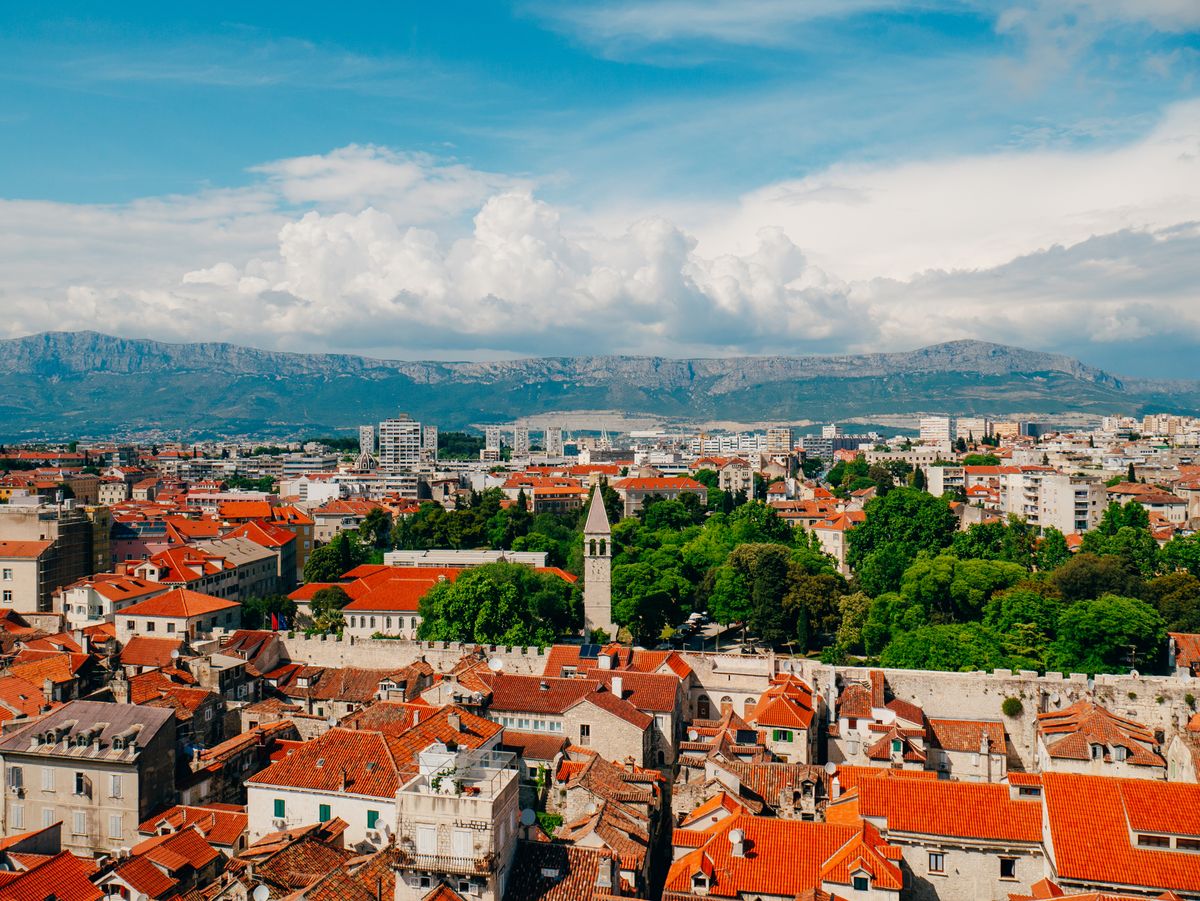
Diocletian Palace is the best preserved Roman palace in the world and, at the same time, the living centre of a modern city. There is no entrance gate, no ticket office for the complex and no closing time, because roughly three thousand people live inside the walls and the streets are simply streets.
This guide covers the emperor who built it, why it survived when everything comparable did not, what to see inside, and the timing that decides whether the visit is a pleasure or a scrum.
The emperor who resigned
Diocletian is the only Roman emperor who voluntarily gave up power. After twenty years of rule he abdicated in 305 and retired to the coast where he had been born, in a palace he had spent a decade building.
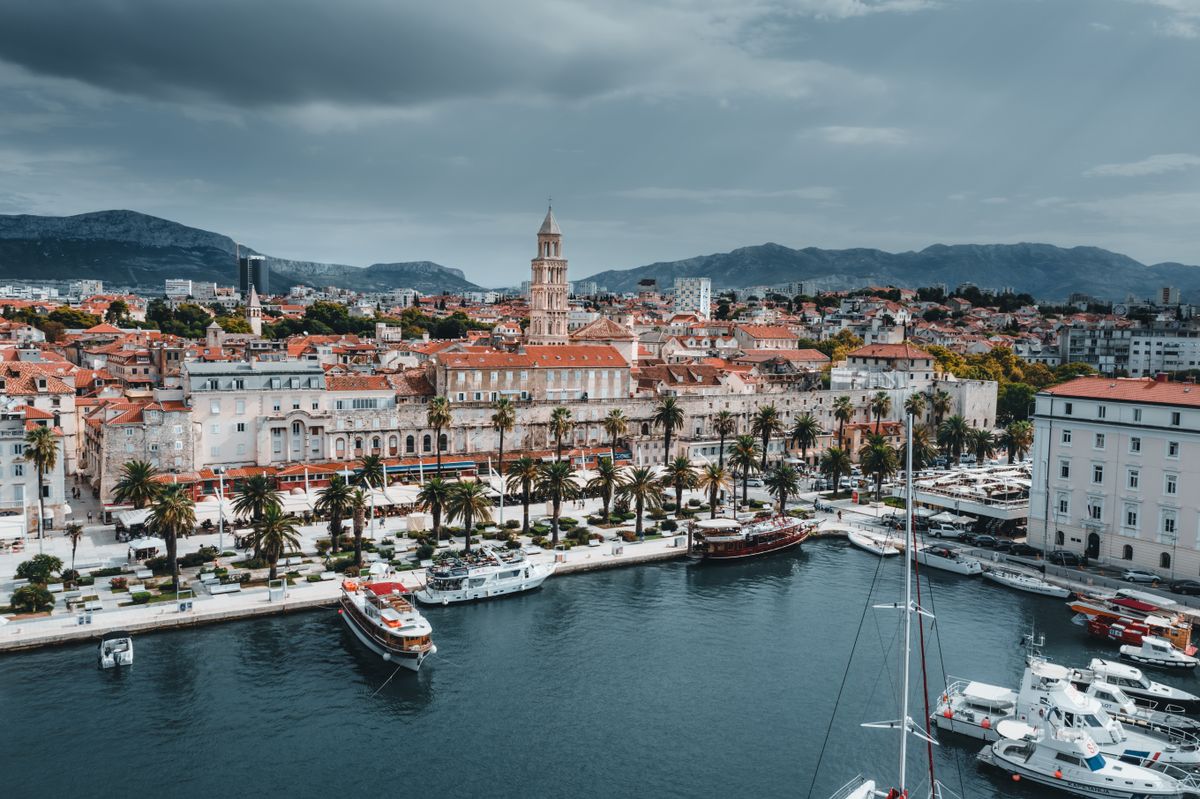
The structure was neither purely a palace nor purely a fortress but both: a rectangle of about two hundred and fifteen by one hundred and eighty metres, with walls up to twenty-six metres high, four gates and sixteen towers. The southern half was the imperial residence, the northern half housed the garrison and the servants.
When asked to return to power to settle a political crisis, he reportedly replied that if his correspondent could see the cabbages he had grown with his own hands, he would not ask.
Why Diocletian Palace is alive, not a museum
After the fall of the empire the palace stood empty until the seventh century, when the inhabitants of nearby Salona fled Avar and Slavic raids and moved inside the walls, which were the strongest defence available.
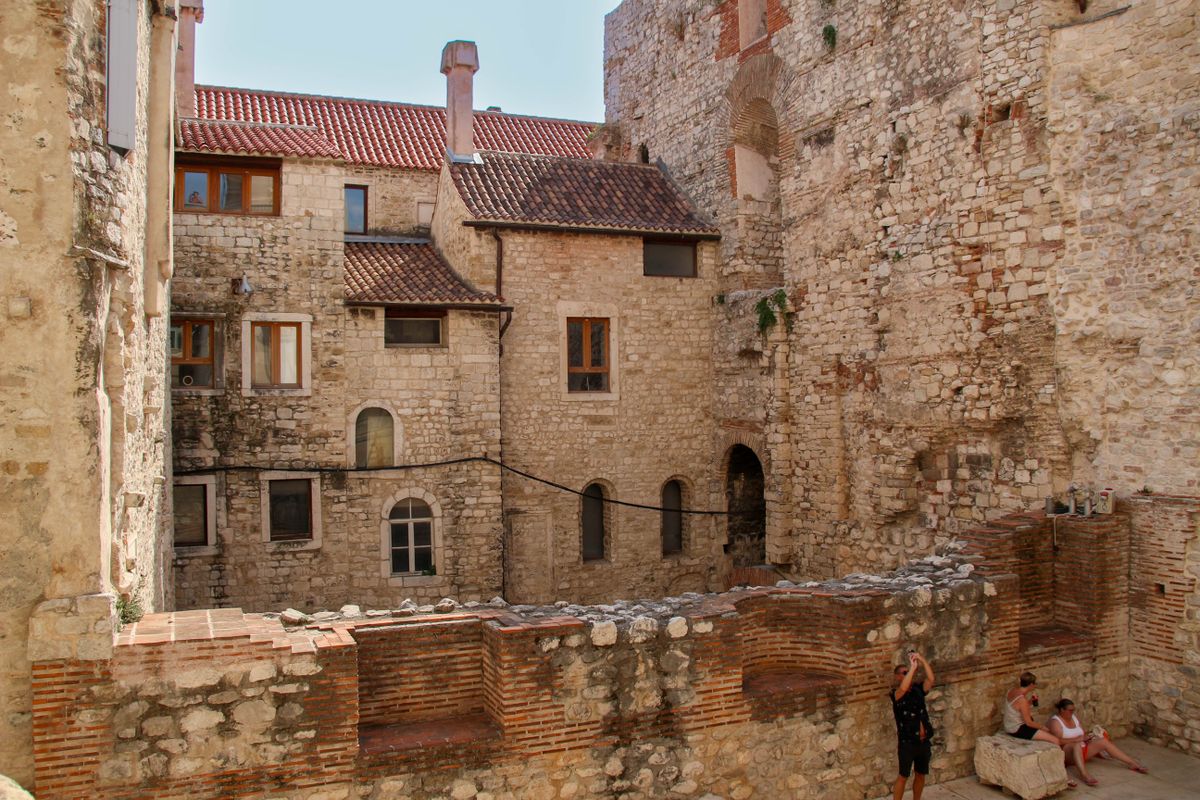
They never left. They built houses into the Roman structure, cut windows into imperial walls, subdivided halls and added floors, and their descendants are still there. This is the difference that surprises everyone: you do not enter the palace, you walk into it, past a bakery and a bar.
The complex is UNESCO listed precisely for that continuity: sixteen unbroken centuries of habitation inside a Roman imperial residence, which does not exist anywhere else.
The Peristyle, the heart of the palace
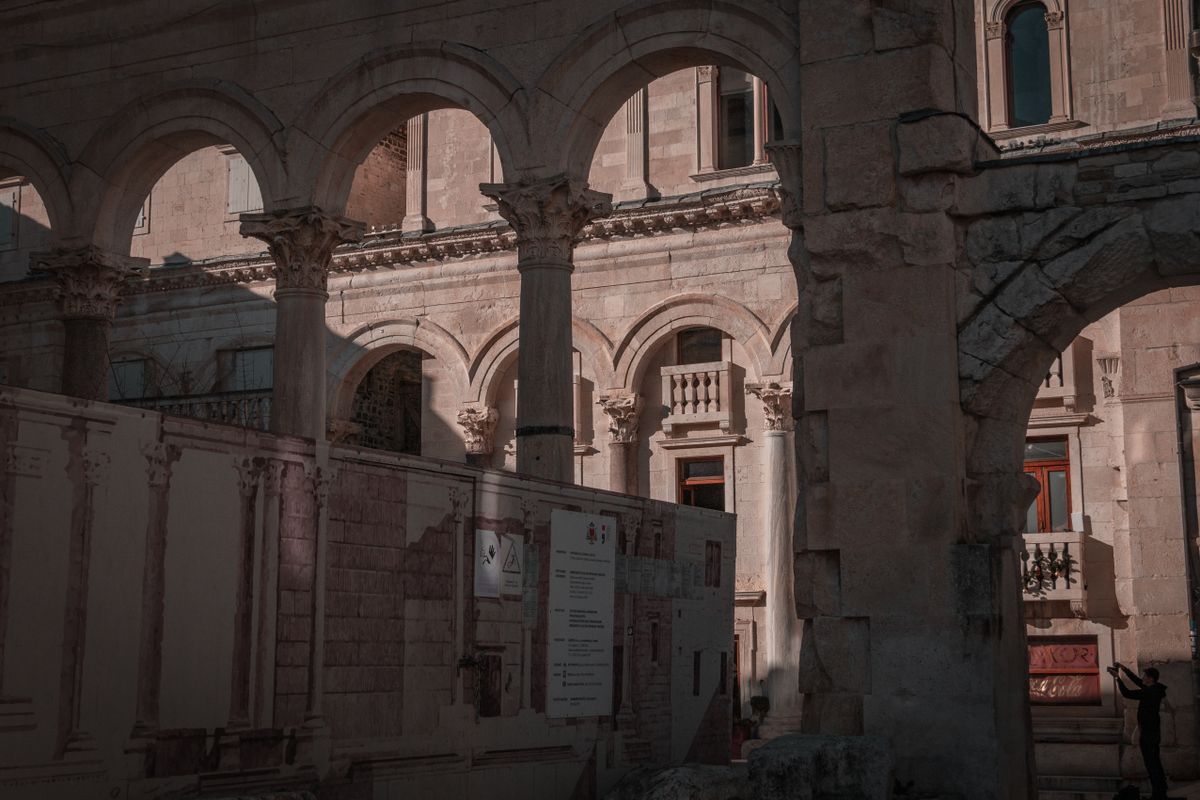
If the palace has a centre it is the Peristyle: a rectangular courtyard surrounded by granite columns brought from Egypt, where the emperor appeared to those who came to see him.
On the eastern side sits a genuine Egyptian sphinx, more than three and a half thousand years old, brought here by Diocletian. Of the dozen or so he imported, this is the only one still intact and in place.
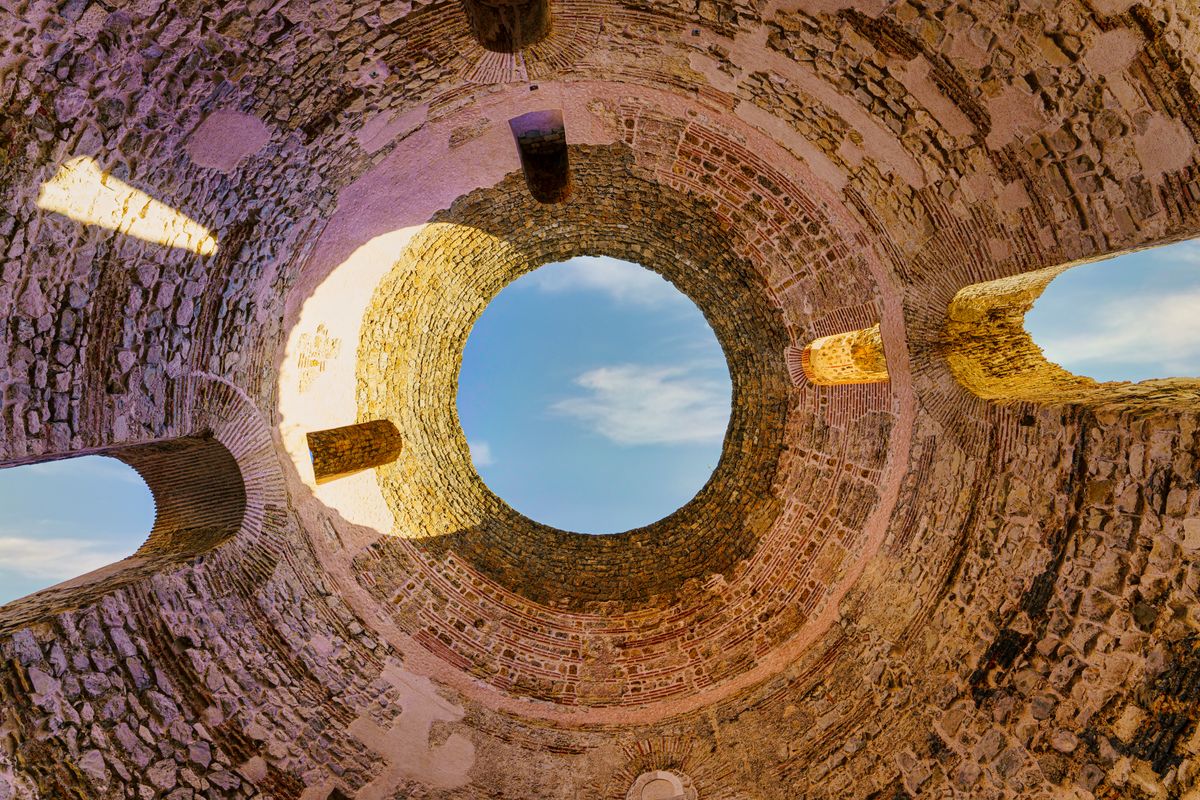
To the south, beyond a row of columns, opens the Vestibule: a domed rotunda, once covered in mosaic, now open to the sky. Its acoustics are remarkable and klapa singers, performing the local unaccompanied harmony style, use it daily.
The cathedral and its paradox
Beside the Peristyle stands one of the great ironies in European history. The octagonal building that served as Diocletian mausoleum is today the cathedral of Saint Domnius.
Diocletian conducted the last and most severe persecution of Christians in Roman history. Domnius was a bishop executed during it. The tomb of the persecutor became the church of his victim, the emperor sarcophagus vanished entirely, and the cathedral is now among the oldest buildings in the world in continuous use as a church.
The Romanesque bell tower, added in the Middle Ages, is climbed by steep open stairs to a panorama over the whole city. It is not for anyone uncomfortable with heights.
The cellars: the palace underneath
The best lesson in Roman architecture in Split is downstairs. The ground floor halls on the southern side were never living space; they existed to raise the imperial apartments to the level of the sea view.
Because they were structural, their plan mirrors exactly the rooms that stood above, which means the cellars are a full scale floor plan of an imperial residence that no longer exists upstairs.
For centuries they were used as storage and, less helpfully, as the city rubbish dump, which sealed and preserved them. Excavation began seriously only in the twentieth century, and parts are still not cleared.
The cellars appeared in Game of Thrones as the vaults where the dragons were kept, which brings a certain number of visitors who do not know they are standing in a genuine Roman substructure. The main corridor is free and full of souvenir stalls; the ticketed halls on either side are the ones actually worth the money.
The four gates and the walls
The palace had four entrances, each facing a cardinal point and each now named after a metal.
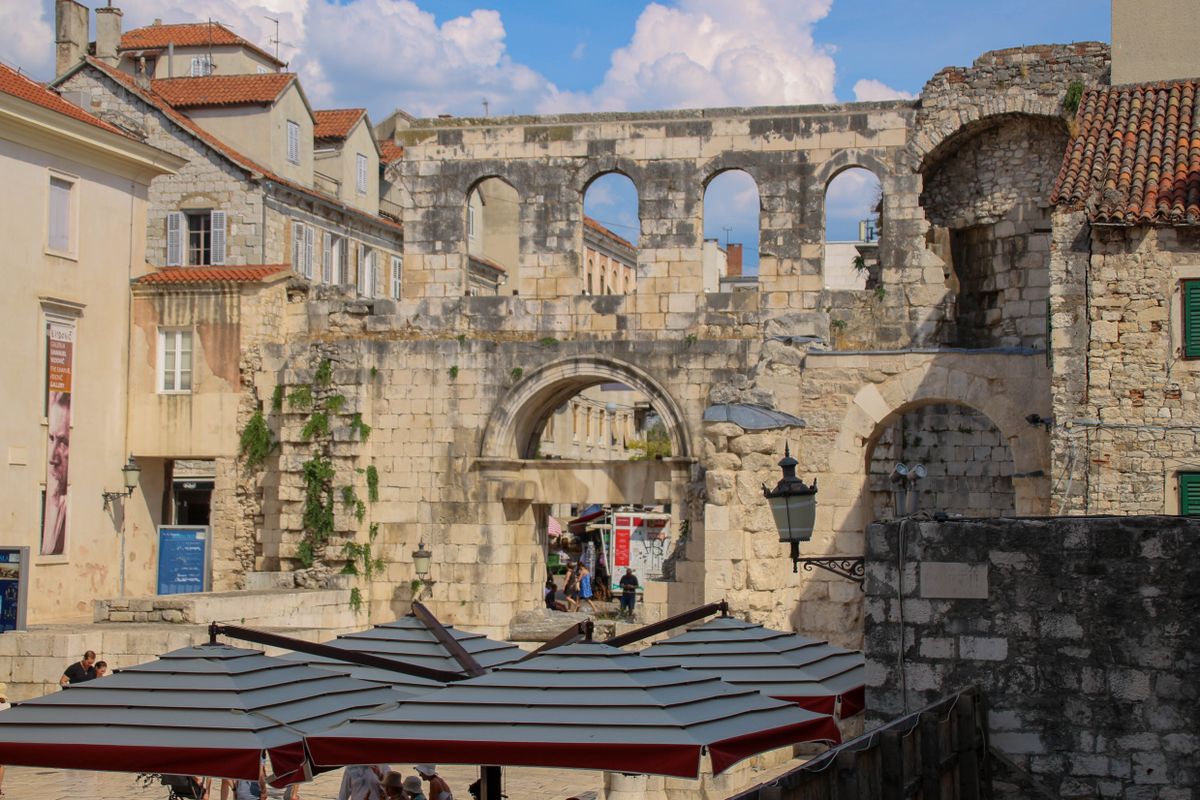
The Golden Gate, to the north, was the emperor own entrance and is the most impressive, with the enormous modern statue of Bishop Gregory of Nin outside it, whose toe is polished bright by people rubbing it for luck.
The Silver Gate, to the east, opens onto the green market and was only reopened last century after being walled up for hundreds of years. The Iron Gate, west, leads to the medieval square, and the Bronze Gate, south, opened directly onto the sea so supplies could be brought in by boat.
The streets inside and daily life
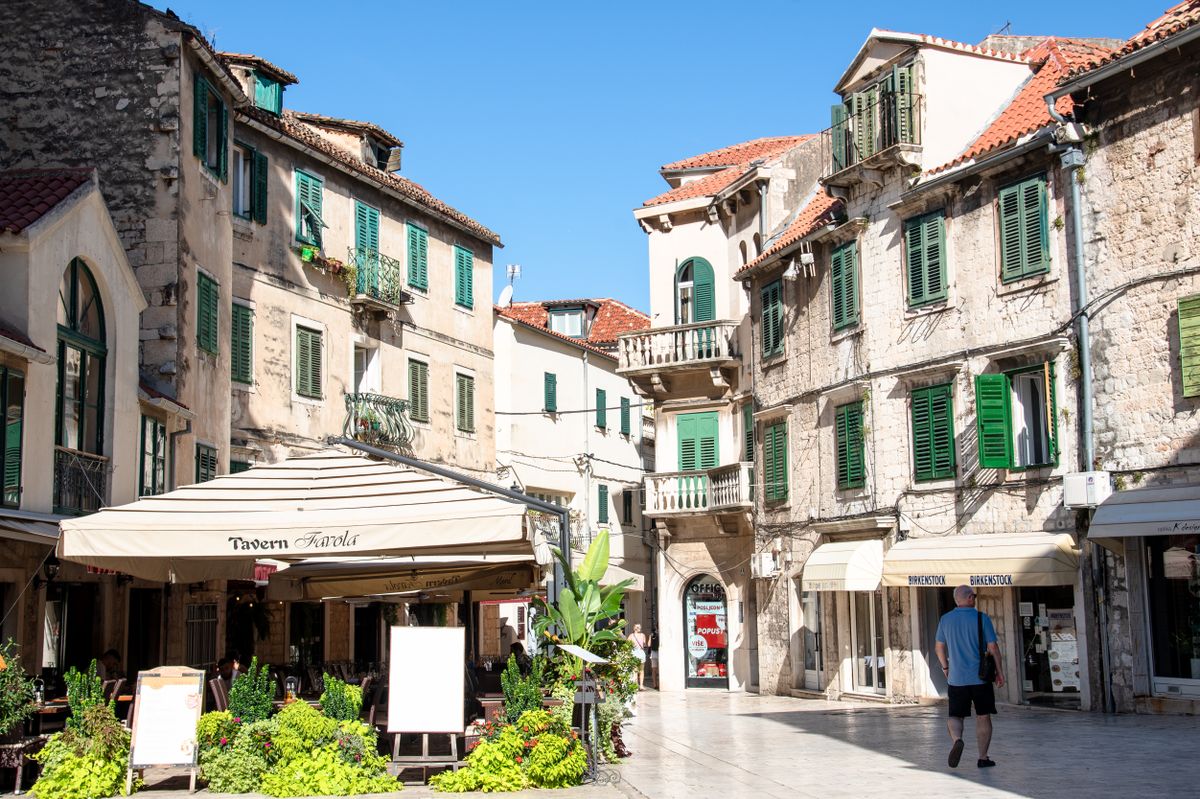
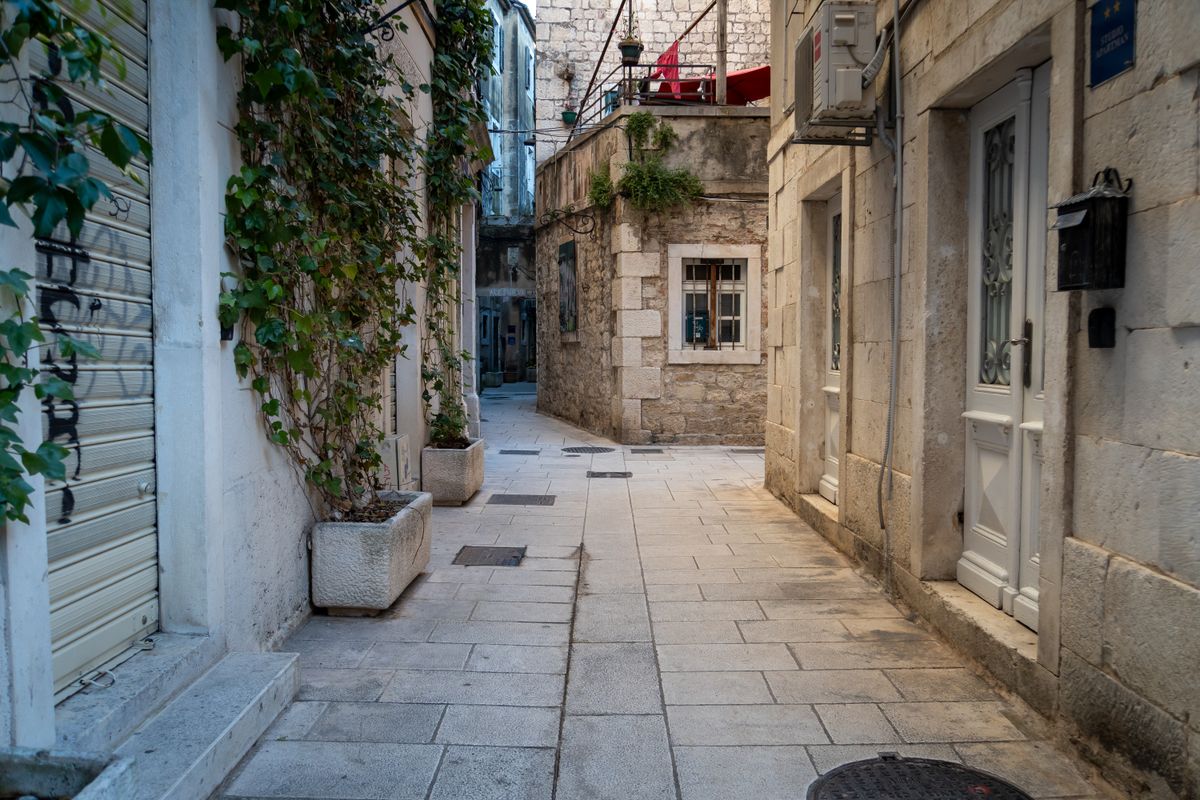
Between the gates lies a maze it is a pleasure to get lost in. The two Roman axes still structure it, but everything between them is medieval and later infill.
The details are the charm: washing strung across the street, plant pots on Roman window ledges, cats asleep on second-century stone, and a bar in what was an imperial corridor. This is a residential neighbourhood that happens to be a World Heritage site.
Beyond the walls: the Riva and Marjan
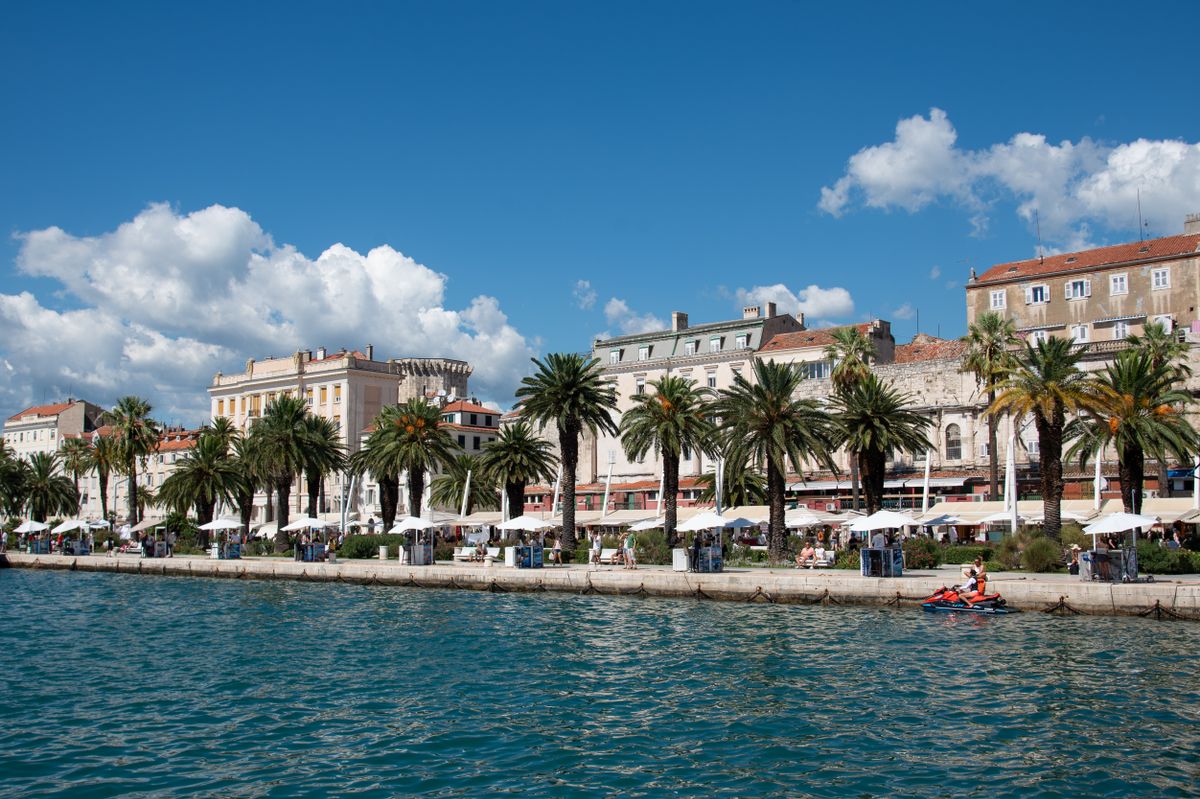
Directly below the southern wall runs the Riva, the palm-lined promenade of cafes that functions as the city living room, especially in the hours before dinner.
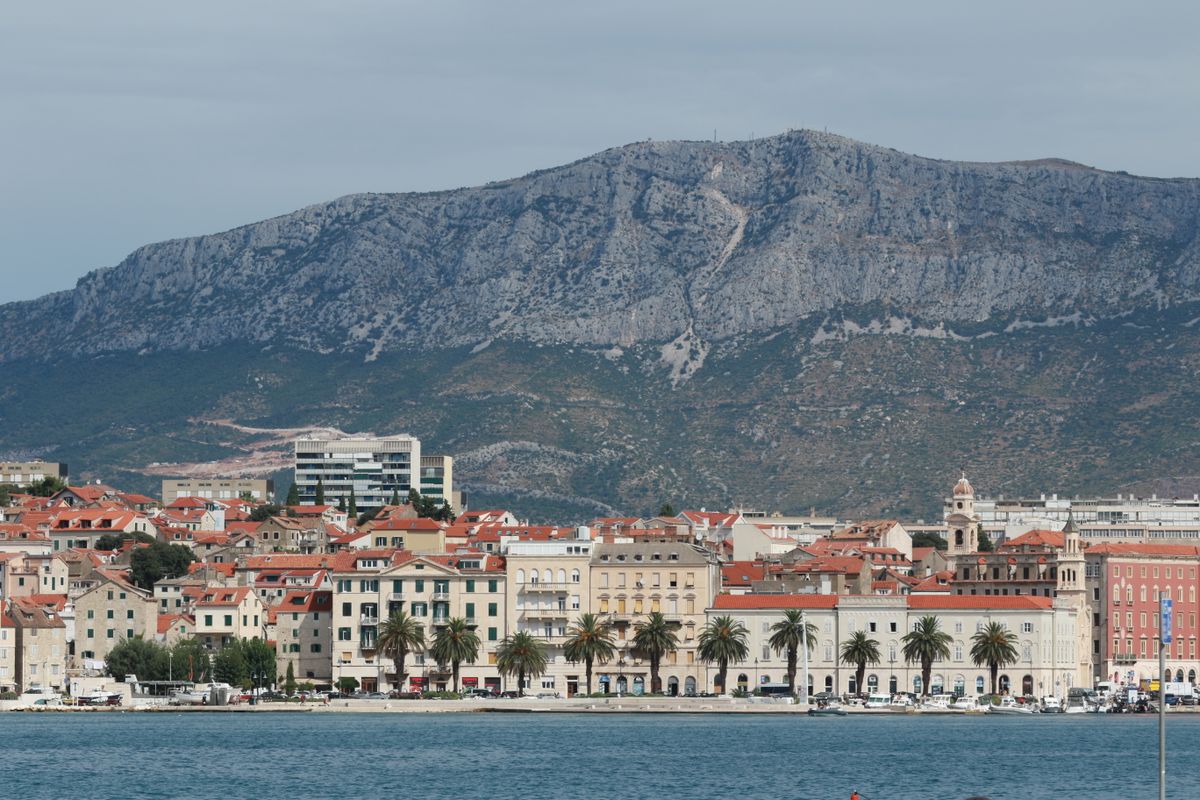
For the full perspective, climb Marjan, the forested hill that closes the peninsula to the west. A staircase from the old town leads to a series of terraces with the whole city, the palace and the islands laid out below.
Practical advice
The palace is at its best early in the morning, before nine, and in the evening after eight. Between those hours in summer, particularly when cruise ships are docked, the Peristyle and the main lanes are shoulder to shoulder.
Half a day covers the essentials: the Peristyle, the cathedral, the cellars, the gates and a wander through the lanes. A full day lets you add the bell tower, Marjan and the archaeological museum.
Staying inside the palace sounds romantic and largely is, with one significant caveat: the streets are stone, they amplify every sound, and the bars run late. If you are a light sleeper, book on the edge of the old town or across on the Varos side rather than in the middle of it. Also note that no vehicle can reach most addresses inside, so you will be carrying luggage over cobbles.
Background is on the UNESCO listing and visitor information on the Split tourist board site.
Frequently asked questions (FAQ)
Conclusion
Diocletian Palace is not a ruin you visit but a neighbourhood you walk into, and that is precisely what makes it unique: sixteen centuries of continuous life inside the walls a Roman emperor built for his retirement.
Go at eight in the morning, stand in the Vestibule while someone is singing in it, walk down into the cellars to see the floor plan of the palace above, and climb Marjan in the evening for the whole picture.
