
 By

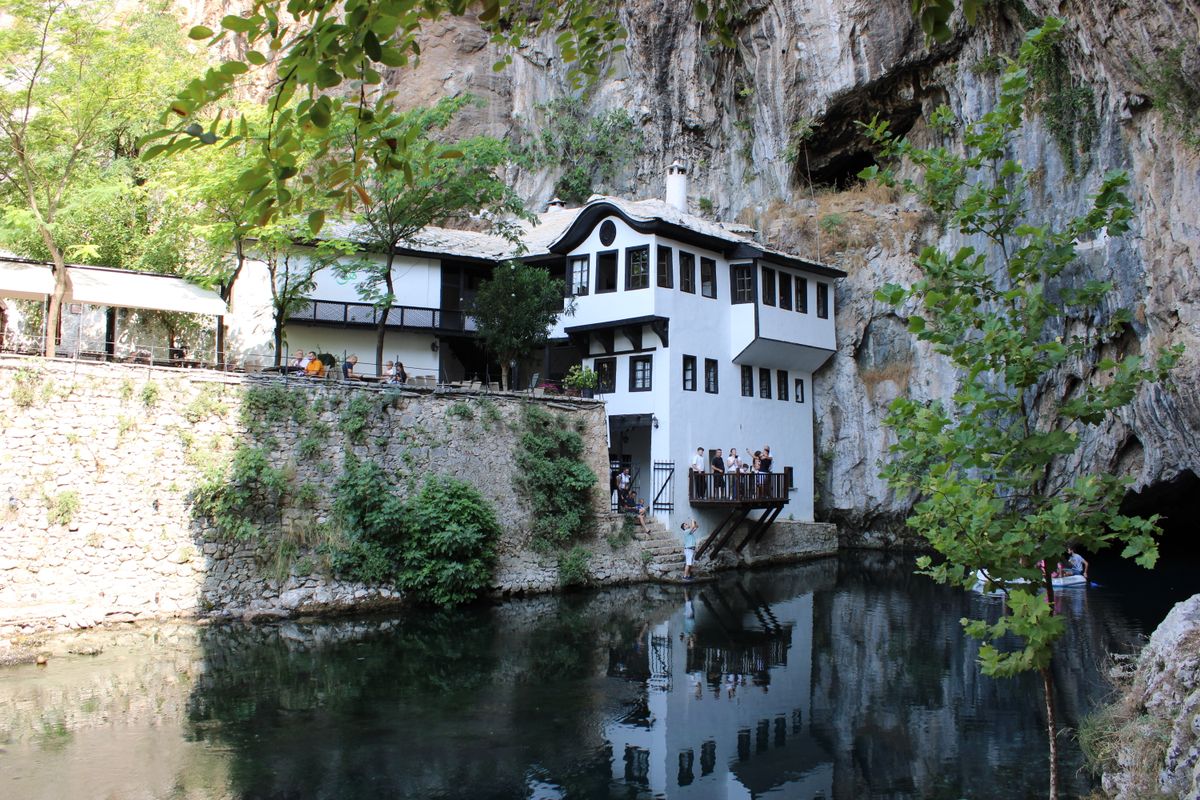
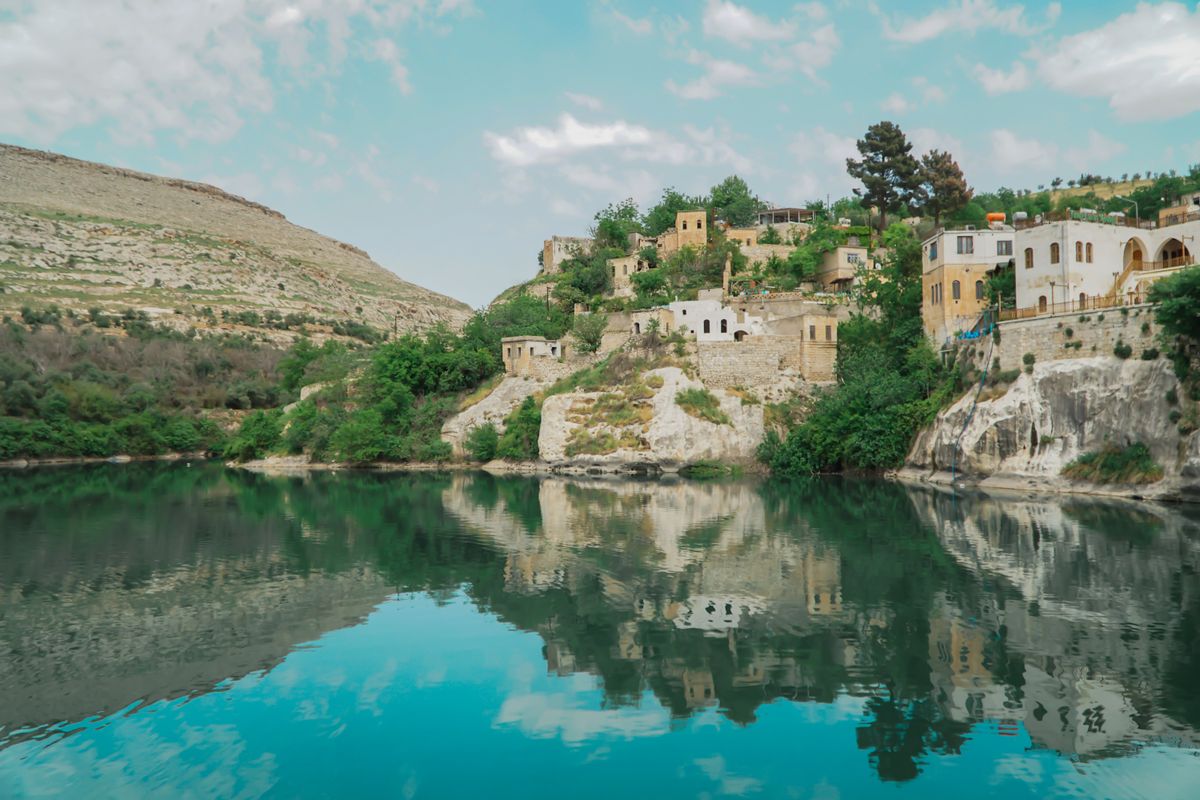
Blagaj is a village twelve kilometres from Mostar, built around a spring unlike any other in Europe. The water emerges straight from a cave at the foot of a two hundred metre limestone wall, at a volume so great that it forms a navigable river immediately. Pressed against the rock, exactly where the water comes out, stands a dervish monastery built around the year 1520.
What the tekke is, how to visit it, what the rules are, what else there is in the village and what time it is worth arriving.
The Buna spring, the reason everything here exists
Vrelo Bune is one of the most powerful karst springs in Europe. The water gathers in an underground system in the mountains behind and surfaces through a cave mouth at the base of a vertical wall, with an average discharge measured in tens of cubic metres per second.
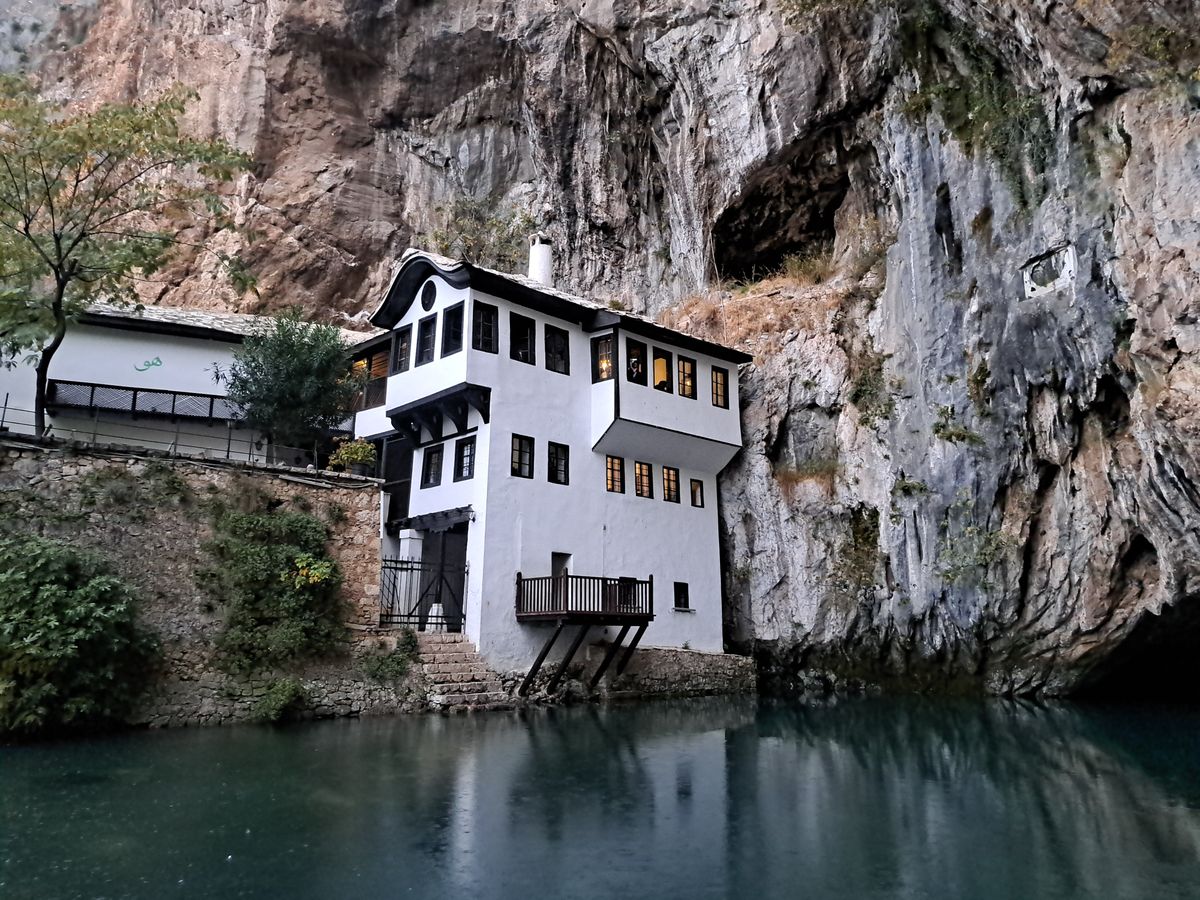
The visual effect is abrupt: not a trickle that grows gradually, but a wide, green turquoise, cold river appearing within metres of the rock. Short boat trips run to the cave mouth, and the water sits at around ten degrees all year.
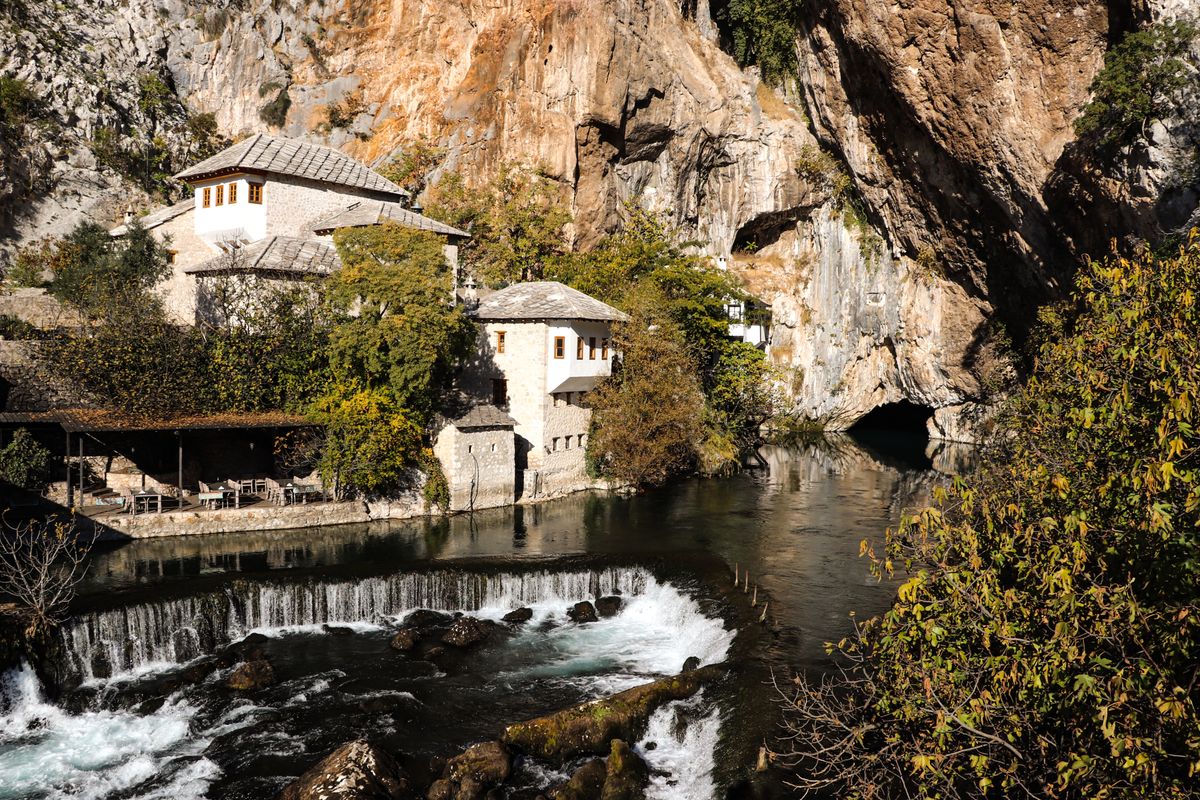
The place was sacred long before the monastery. The combination of water rising out of stone and a wall closing off the valley was read as a special site by every culture that passed through.
What the Blagaj tekke is and how it got here
A tekke is the house of a dervish order, a place of Islamic mysticism used for prayer, retreat and hospitality. The one at Blagaj was raised around 1520, in the first decades of Ottoman rule in the region, and is associated with the Bektashi order.
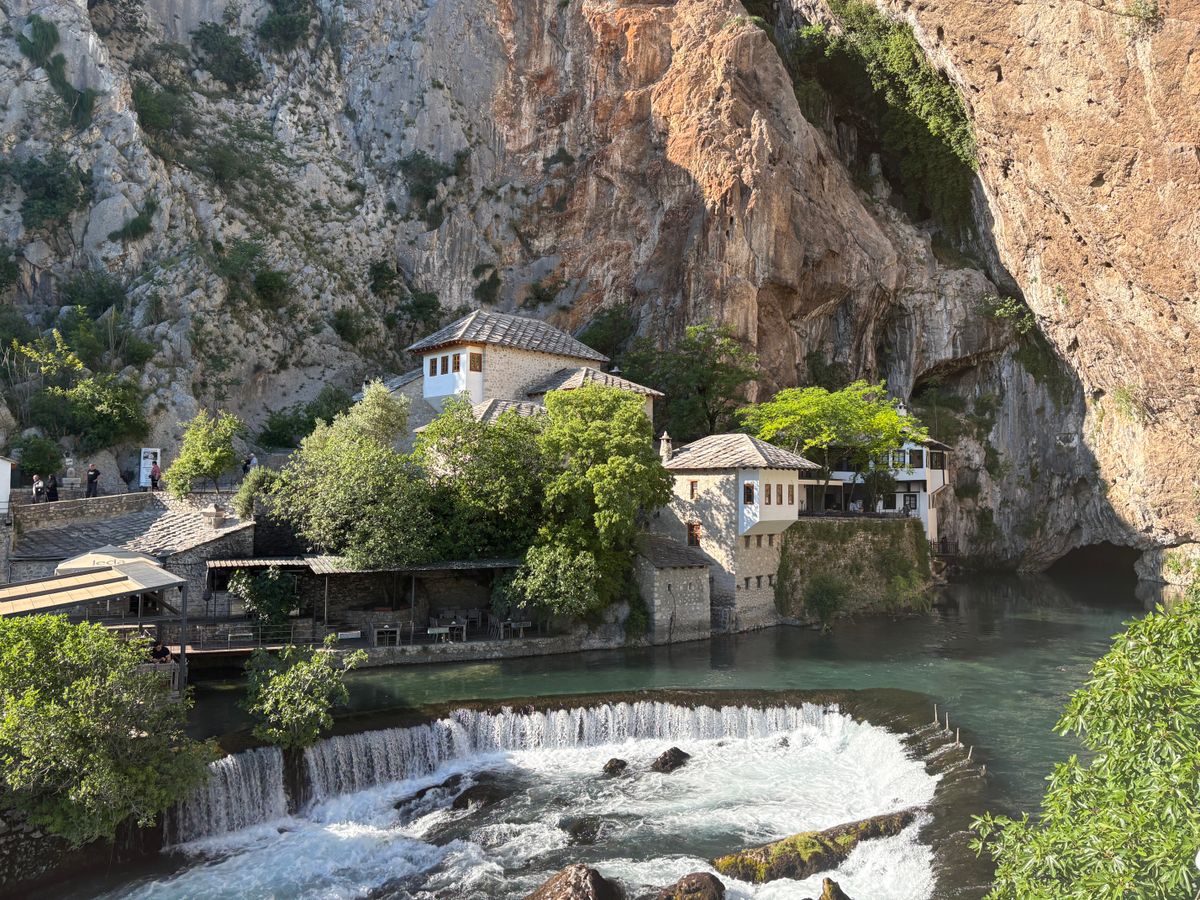
The architecture is Ottoman with Mediterranean adaptations: a stone ground floor, a timber framed upper storey, large windows facing the water and a shallow pitched roof. The building has been restored several times, most recently about a decade ago, and that restoration drew local criticism for altering details of the earlier form.
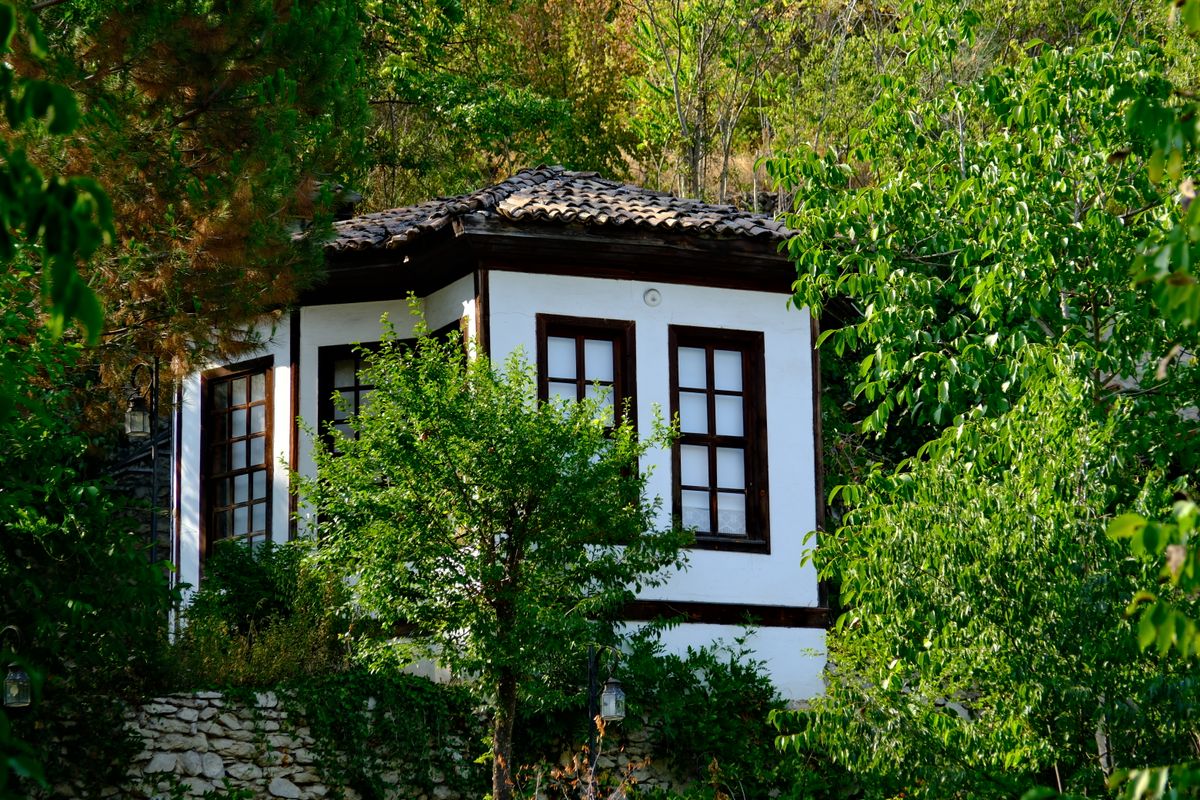
Inside there are several small rooms with carpets and woodwork, and the one that matters is the divanhana, the room with windows directly above the water. The noise of the river fills it. In an adjoining structure lie the tombs of two dervishes, who local tradition says came from Central Asia.
How to visit: rules, hours and dress
This is a working place of worship, not a museum, and the rules are observed without exception.
- A small ticket is charged at the entrance.
- Shoes come off before entering the building.
- Dress modestly, no shorts and no bare shoulders.
- Women cover their heads, and scarves and wrap skirts are lent at the entrance.
- Photography is generally allowed, but not during prayer and not of people without their consent.
- Hours are shorter in winter and change during Ramadan.
This is the one recommendation that genuinely changes the visit. Between ten and four the village receives coaches from Mostar, from Dubrovnik and from the Croatian coast, and the access path and the terraces become hard to move through. Come before nine in the morning or after five in the afternoon. The difference is between a crowded building where you queue and a place where you can hear the water. If you can, avoid summer weekends entirely.
The fortress above the village, which almost everyone misses
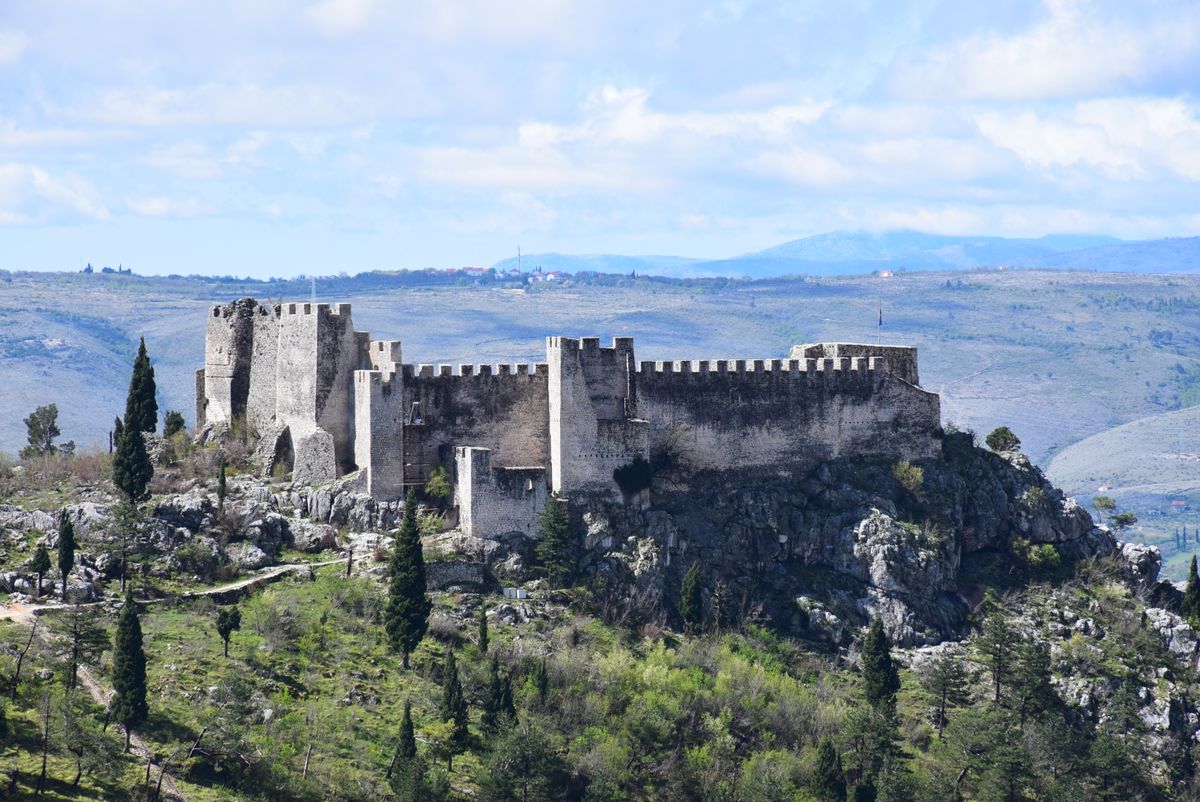
On the rock above the village stand the ruins of Stjepan-grad, the stronghold of Stjepan Vukčić Kosača, the fifteenth century noble who took the title of herzog and from whom the region takes the name Herzegovina.
The climb takes thirty to forty minutes up a steep, stony path with no shade. Entry is free. From the top you see the whole Buna valley, the village, the tekke from above and, on a clear day, as far as Mostar.
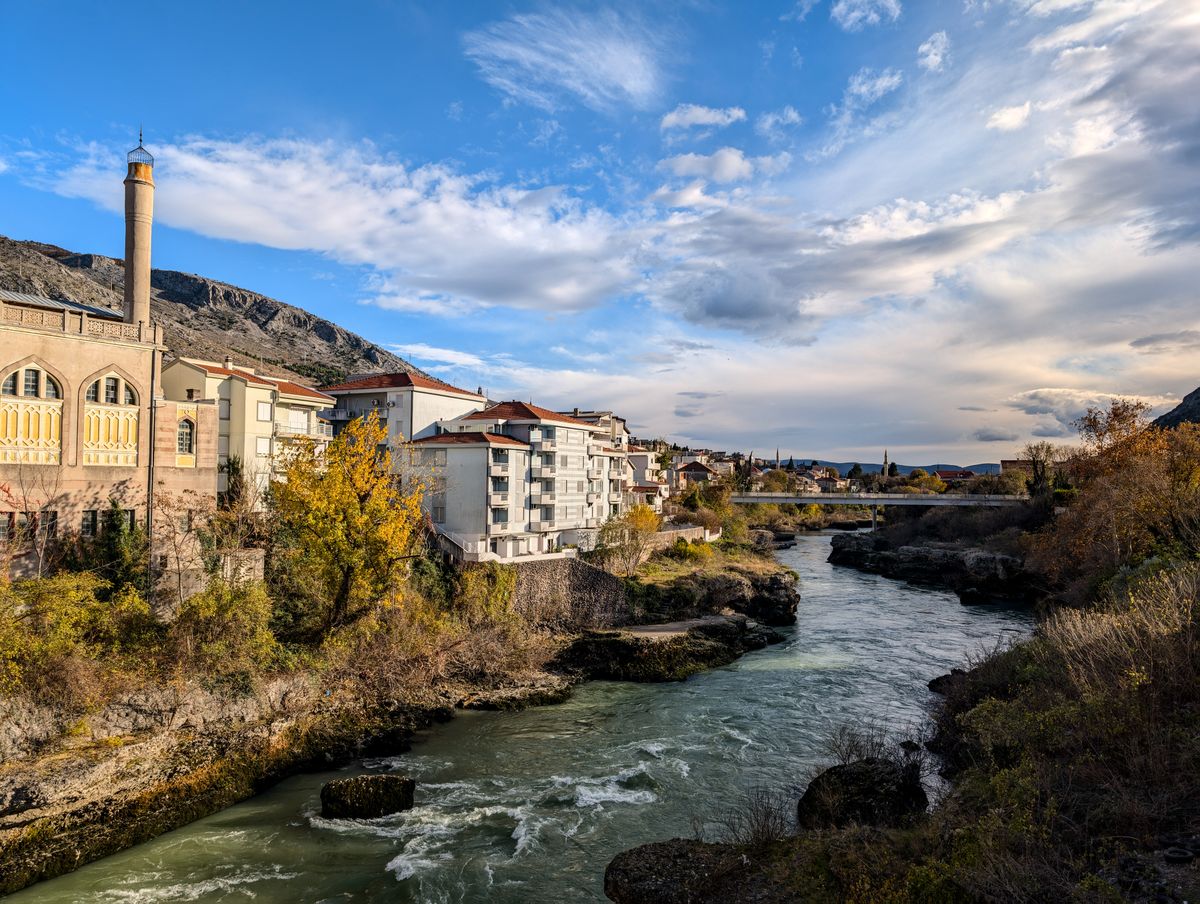
The contrast is the most interesting thing about Blagaj: below, dozens of coaches and full terraces; above, forty minutes away, an entire fortress where you are often alone. Take water, because nothing is sold along the way.
What else is nearby
Blagaj takes two or three hours, so it has to be combined with something else. Fortunately everything worth seeing is under an hour away.
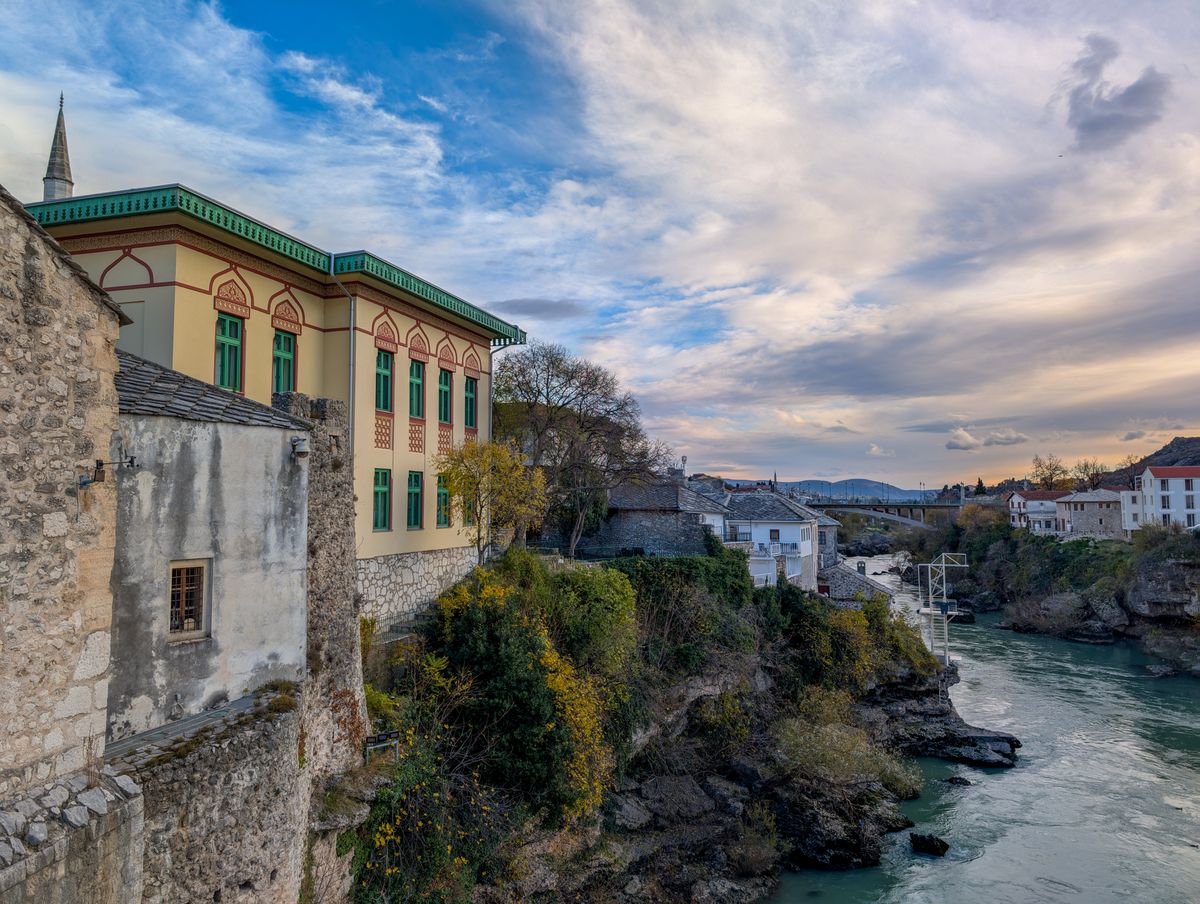
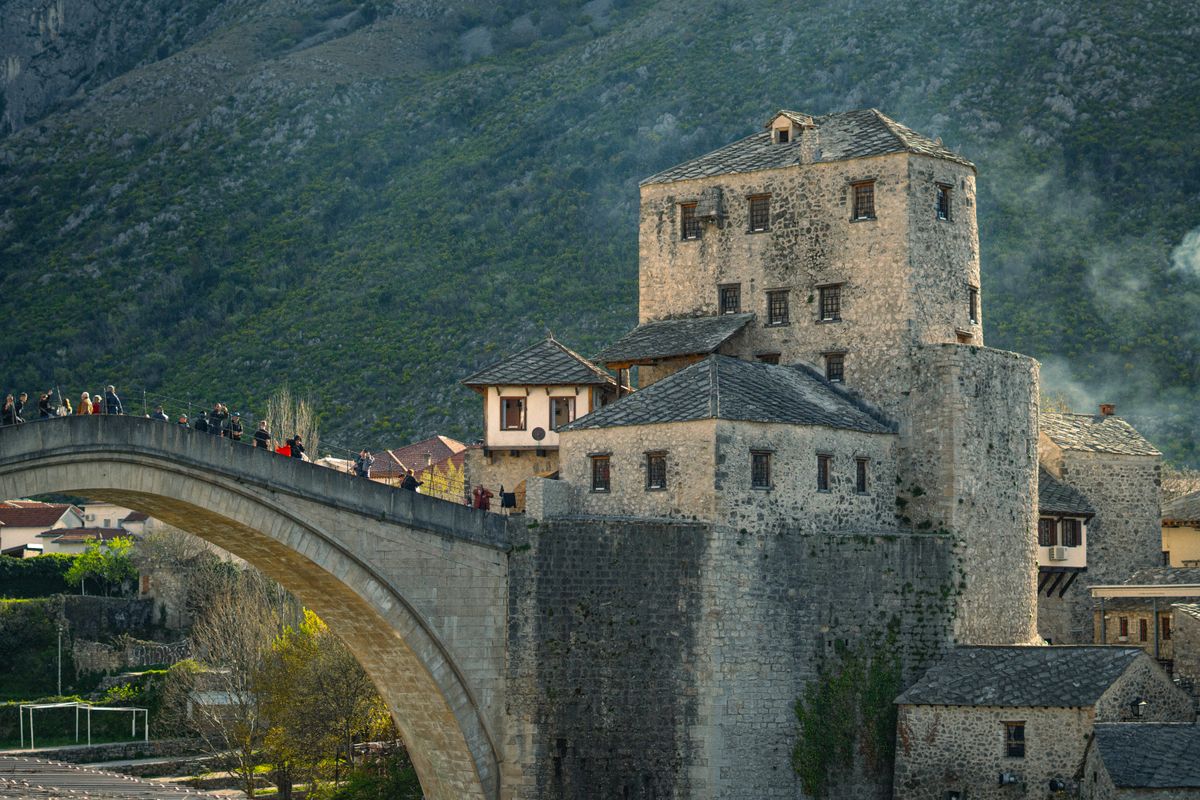
- Mostar, twelve kilometres away: the Old Bridge, rebuilt after its destruction in 1993 and relisted as World Heritage, plus the old town.
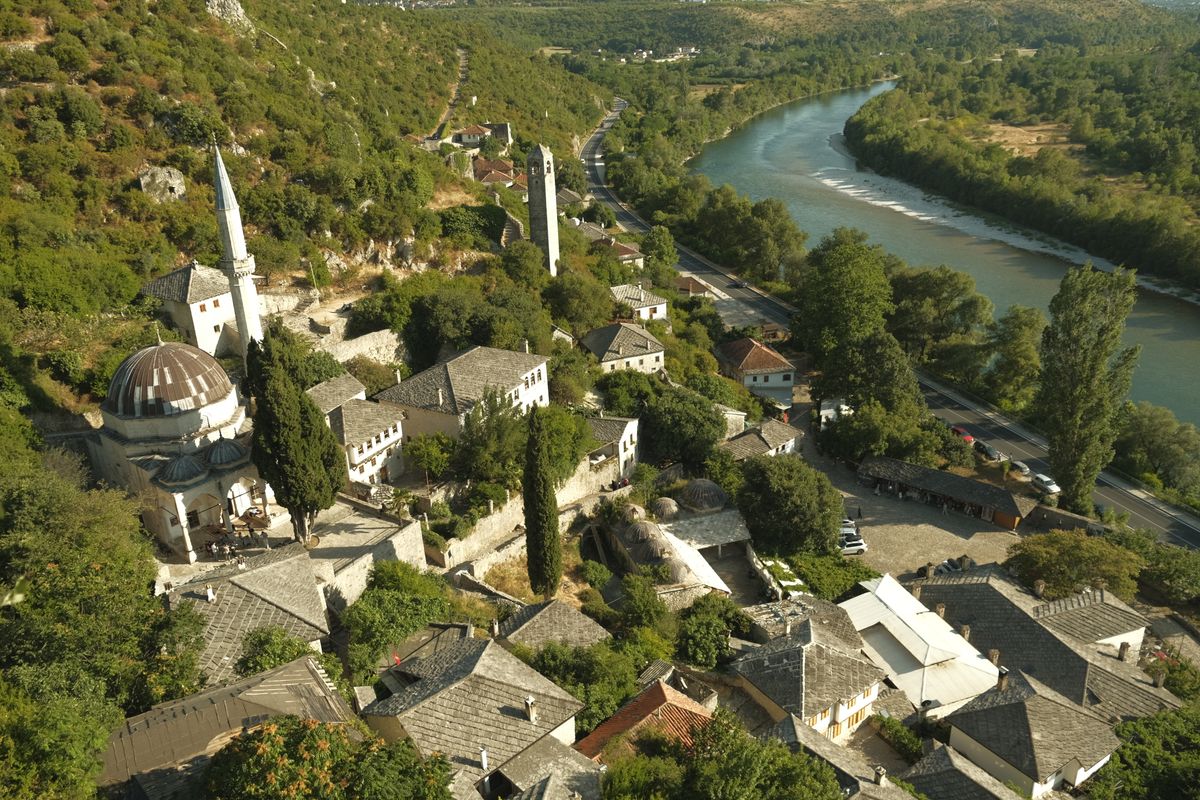
- Počitelj, about thirty kilometres: an Ottoman village in an amphitheatre above the Neretva, with a fortress and a mosque.
- The Kravice waterfalls, about forty kilometres: a semicircle of falls on the Trebižat, with a bathing area.
- Žitomislić monastery and the Neretva valley heading south.
- Trebinje, about two hours away, for wine and for sun.
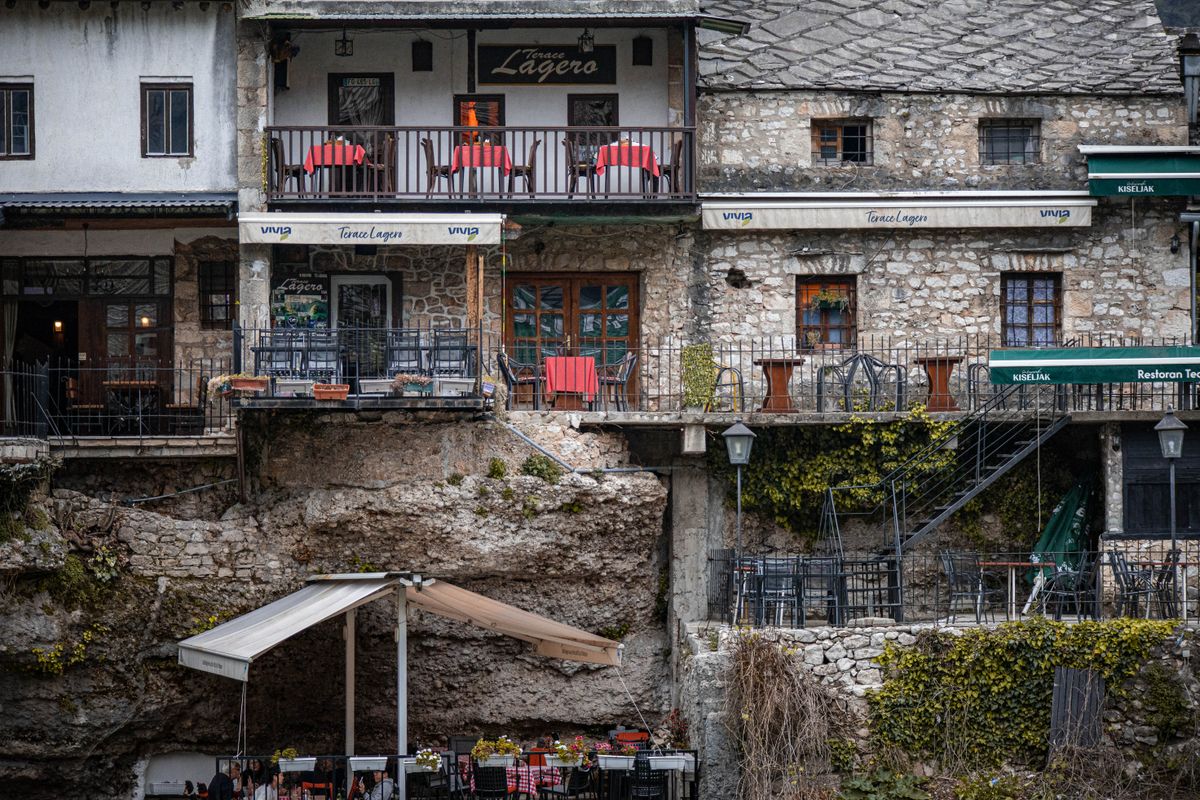
The village has restaurants directly on the water, serving trout from the farms alongside. They are good, but they are also the most expensive thing in the area and they fill up in exactly the hours I have suggested you avoid.
Getting there, how long to stay and when to go
| Item | Detail |
|---|---|
| From Mostar | 12 km, about 20 minutes |
| Local bus | from Mostar, infrequent |
| Taxi from Mostar | around 15 to 20 euros each way |
| From Sarajevo | about 2 hours 30 |
| Time needed | 2 to 3 hours for the village, plus 1 hour 30 for the fortress |
| Best hour | before 9 in the morning or after 5 |
| Best months | April to June and September to October |
Most people come on a half day trip from Mostar, which works. If you want the village empty, the better option is to sleep in Blagaj, where there are cheap guest houses, and walk down to the spring early in the morning.
The World Heritage status of the bridge in neighbouring Mostar is described by UNESCO, and general visitor information by the Bosnia and Herzegovina tourism board.
Frequently asked questions (FAQ)
Conclusion
Blagaj is a place built around a single geological fact: an entire river emerging from a cave at the foot of a two hundred metre wall, with a dervish monastery pressed against it for five centuries.
Come early in the morning or towards evening, respect the rules of the house, climb the forty minutes to the fortress, and combine the visit with Mostar or Počitelj.
