
 By

Trebinje is a town of thirty thousand people at the southern tip of Herzegovina, less than thirty kilometres from Dubrovnik and an hour from the sea. It has a Mediterranean climate, old plane trees in the main square, an Ottoman old town the size of a neighbourhood, and the most important wine region in the country. It is where Bosnia stops resembling what people expect of Bosnia.
What to see in town, the story of the bridge moved stone by stone, where to drink the local wine and how it pairs with Dubrovnik.
What Trebinje is and why it feels Mediterranean
The town sits on the Trebišnjica river, in a karst plain ringed by bare hills. It is close enough to the Adriatic to share its climate: long dry summers, mild winters and a number of sunny days a year comparable with the Dalmatian coast. Hence the local name, the town of sun.
The main square, with old plane trees casting complete shade in summer, works exactly as a Mediterranean square works: people sit over coffee for hours. On Saturdays a local produce market runs under the same trees, with cheese, honey, dried figs and rakija.
Administratively Trebinje lies in Republika Srpska, one of the two entities that make up Bosnia and Herzegovina. For a visitor that changes nothing practical: the same currency, the same entry rules, the same country at the border. It shows in the alphabet, though, because the signs are also in Cyrillic.
What there is to see in town
It is a small town and covers on foot in half a day. These are the points that genuinely repay the time.
- The old town, Stari Grad: a rectangle of lanes inside the Ottoman walls, with cafes and a few workshops. Crossed in ten minutes.
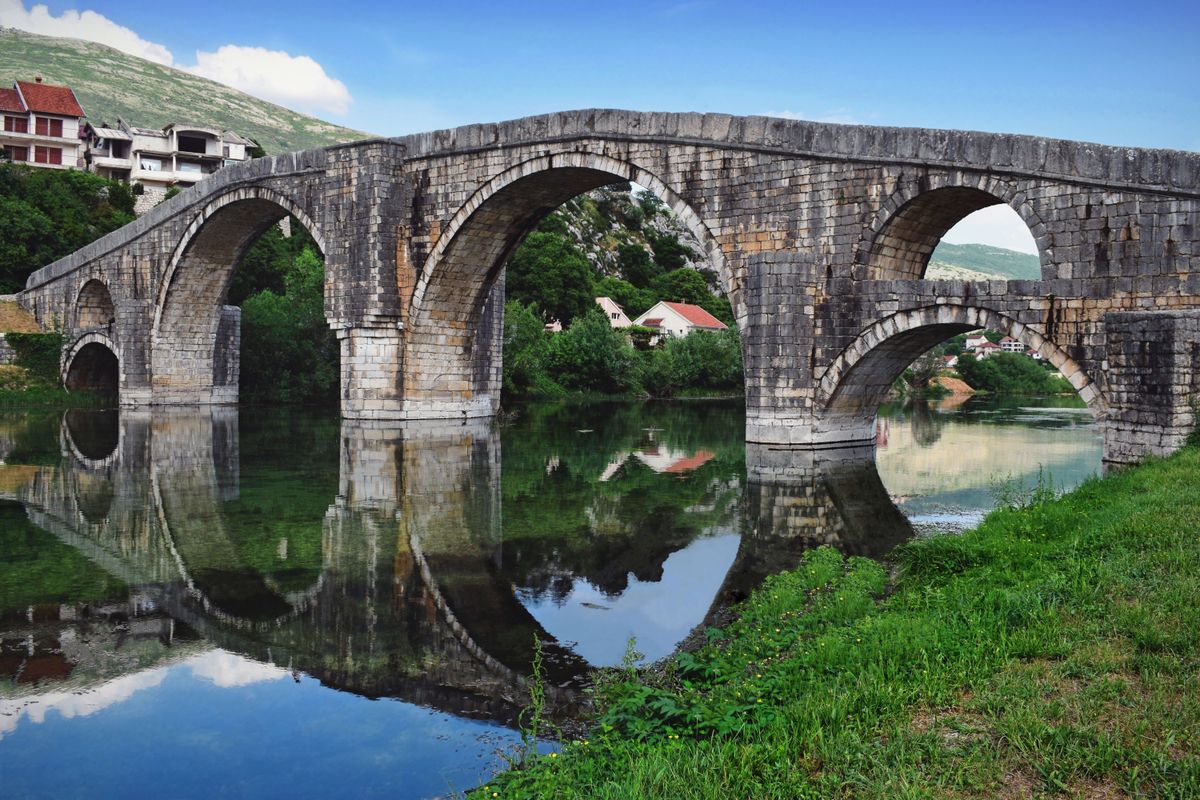
- The Arslanagić bridge: a sixteenth century Ottoman bridge with two large arches and two small ones. The important detail comes below.
- Hercegovačka Gračanica: an Orthodox church on Crkvina hill above town, with the best panorama. It is a replica of the Gračanica monastery in Kosovo, built in the year 2000.
- The Museum of Herzegovina, in the former Austro-Hungarian barracks.
- The water mills on the Trebišnjica, outside town, left from when the river still ran free.
- The Saturday market under the plane trees, if you catch the day.
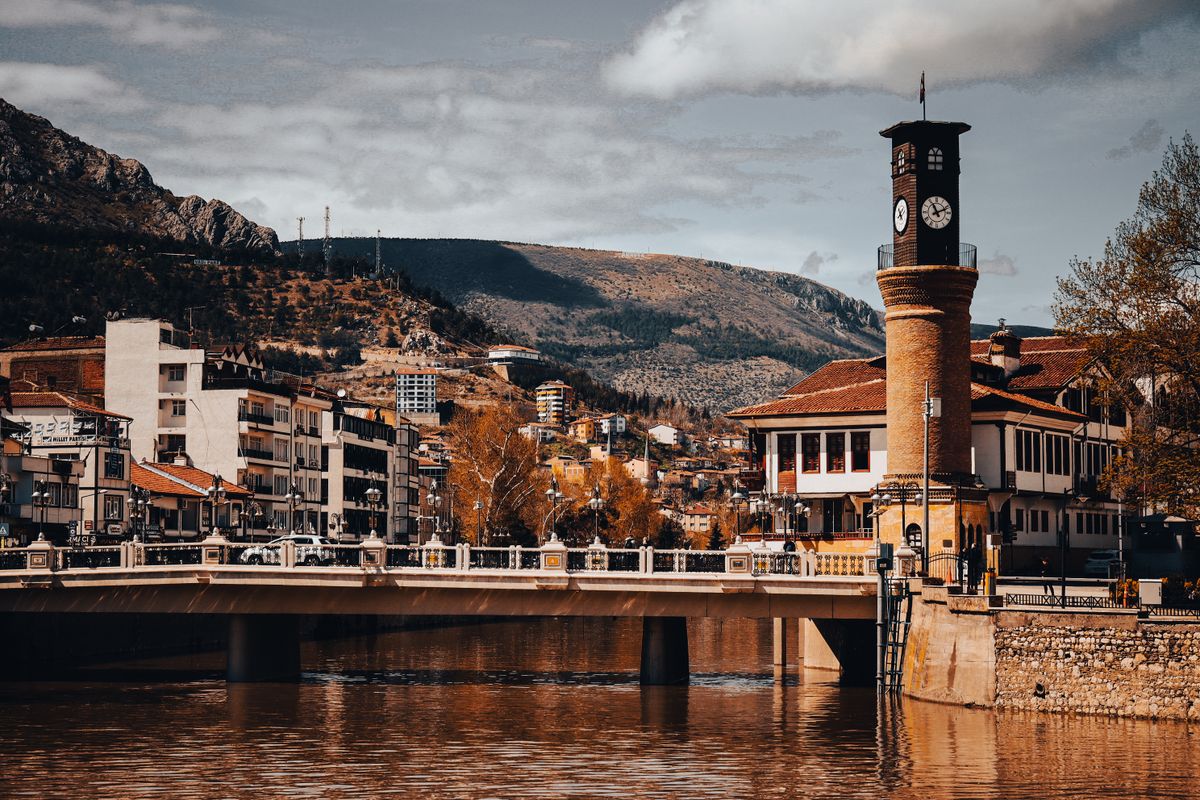
The bridge deserves an explanation. It was built in the sixteenth century somewhere else, and in the nineteen sixties, when the Trebišnjica was dammed for hydroelectricity, it was going to end up underwater. It was taken apart stone by stone, numbered and rebuilt upstream, where it stands today. It is not on its original site, and that is rarely mentioned.
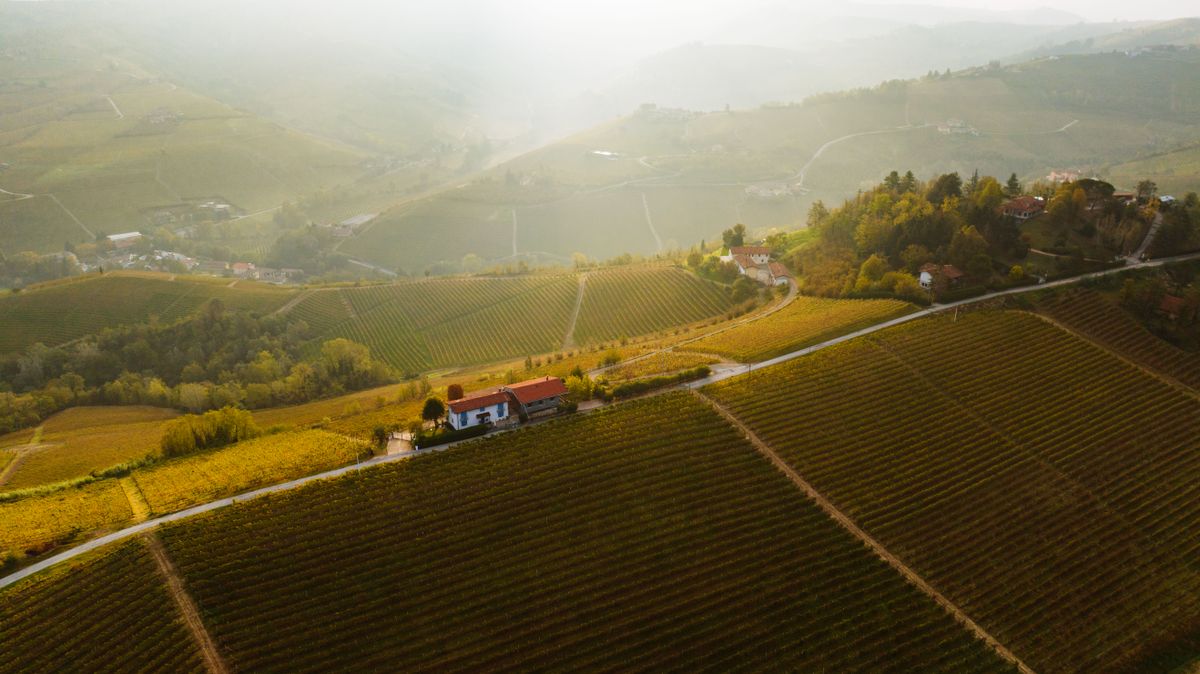
The wine: žilavka, blatina and the monastery cellar
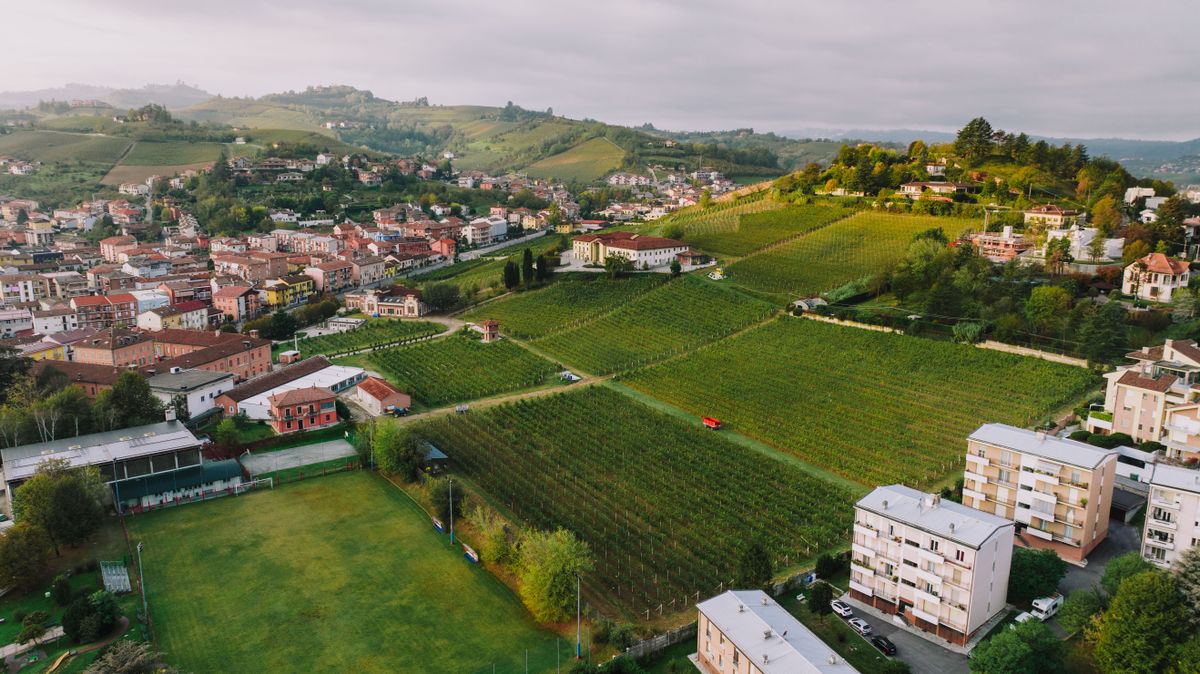
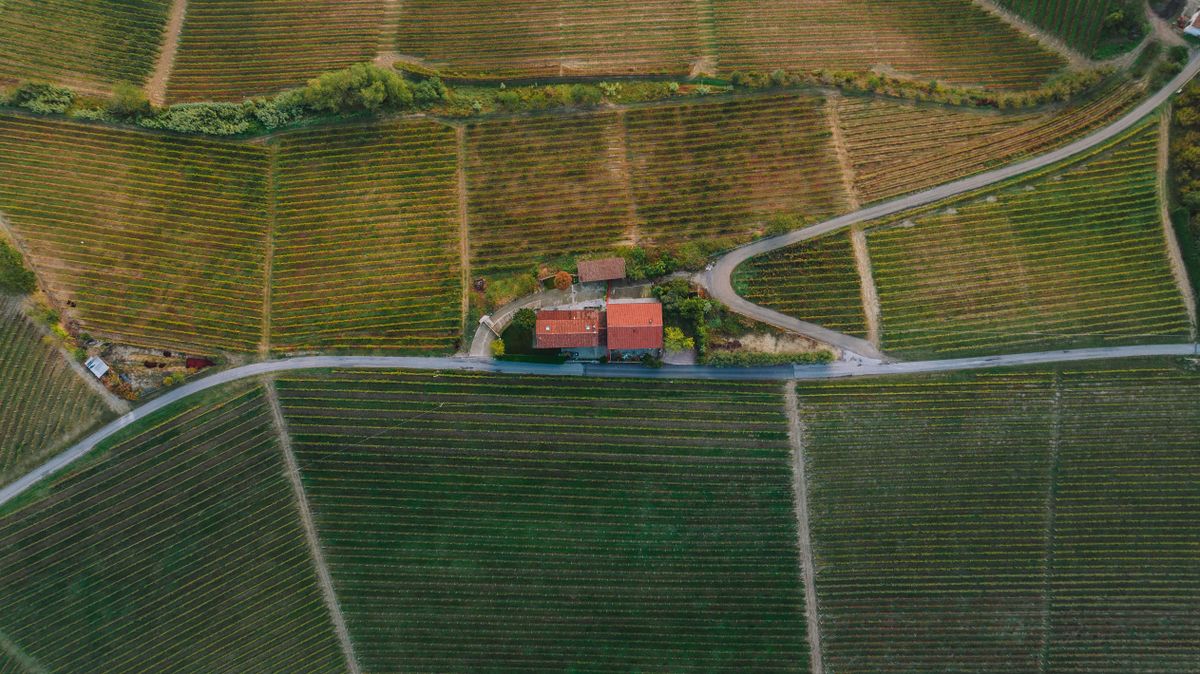
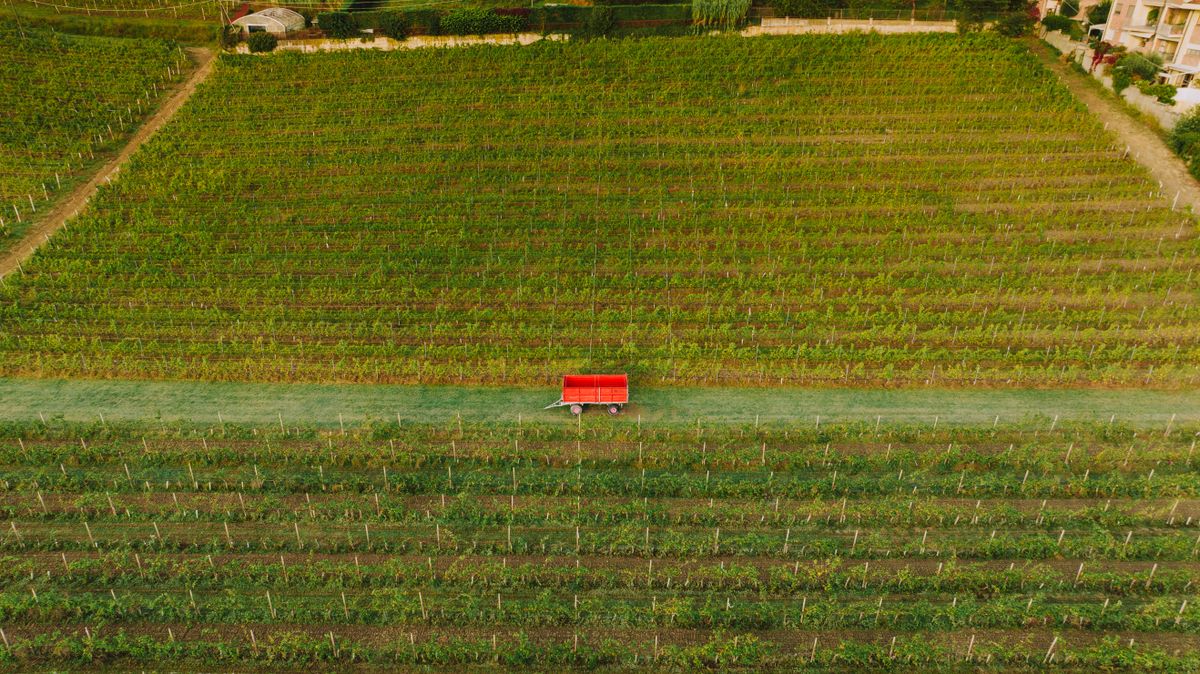
Herzegovina has two native grape varieties found practically nowhere else, and the Trebinje area is their centre.
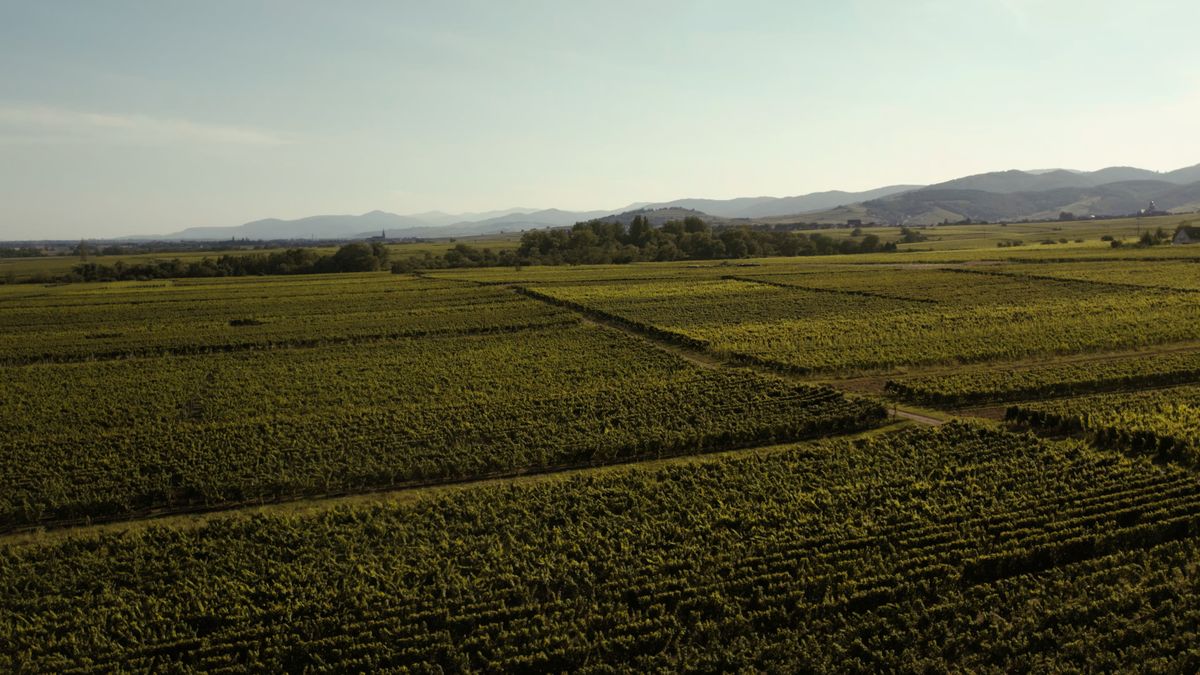
- Žilavka: a white grape with good acidity and mineral notes, which copes with the poor karst soil. The standard white wine of the country.
- Blatina: a red grape with a rare botanical quirk. Its flowers are functionally female, so it cannot self pollinate and must be planted alongside another variety that fertilises it.
- Vranac and other Balkan varieties appear too, usually in blends.
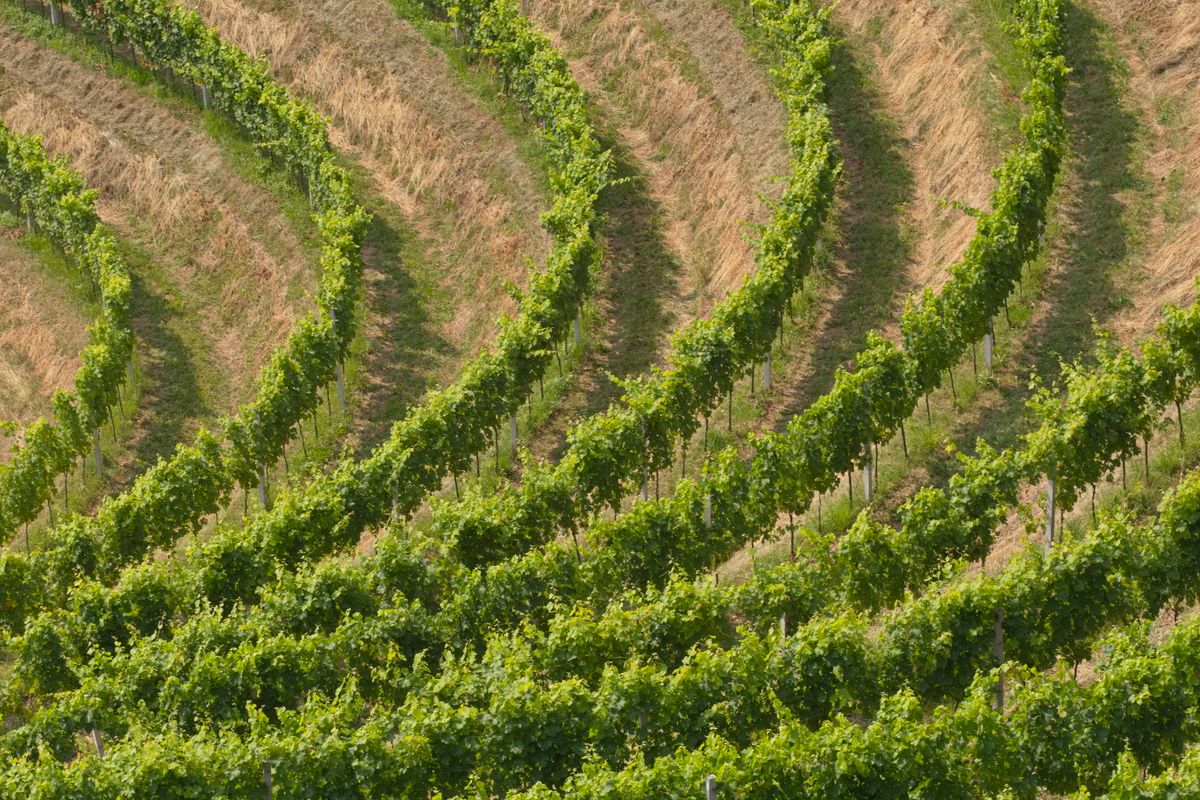

Tvrdoš monastery, a few kilometres from town, is the most interesting stop. It is Orthodox, raised on Roman foundations, and the monks have made wine in its cellars for centuries. You can visit, taste and buy directly. It is not a tourist set piece, it is a working production.
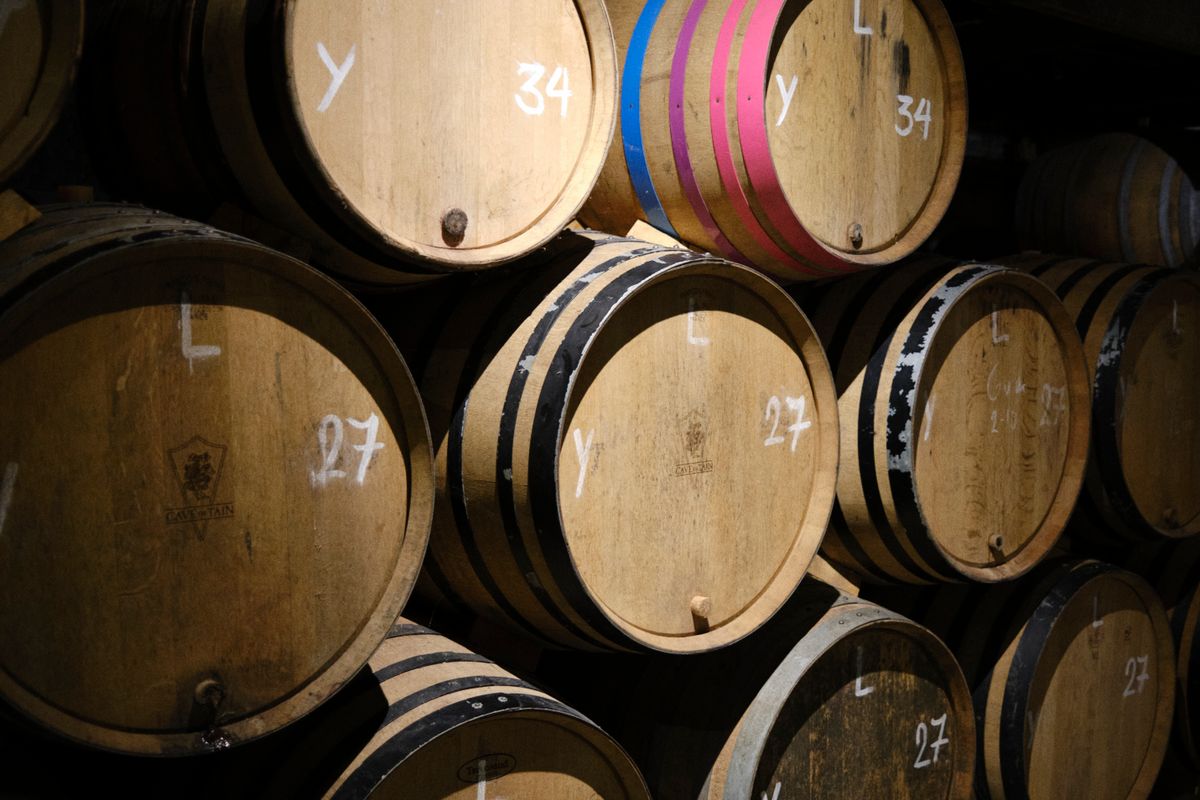
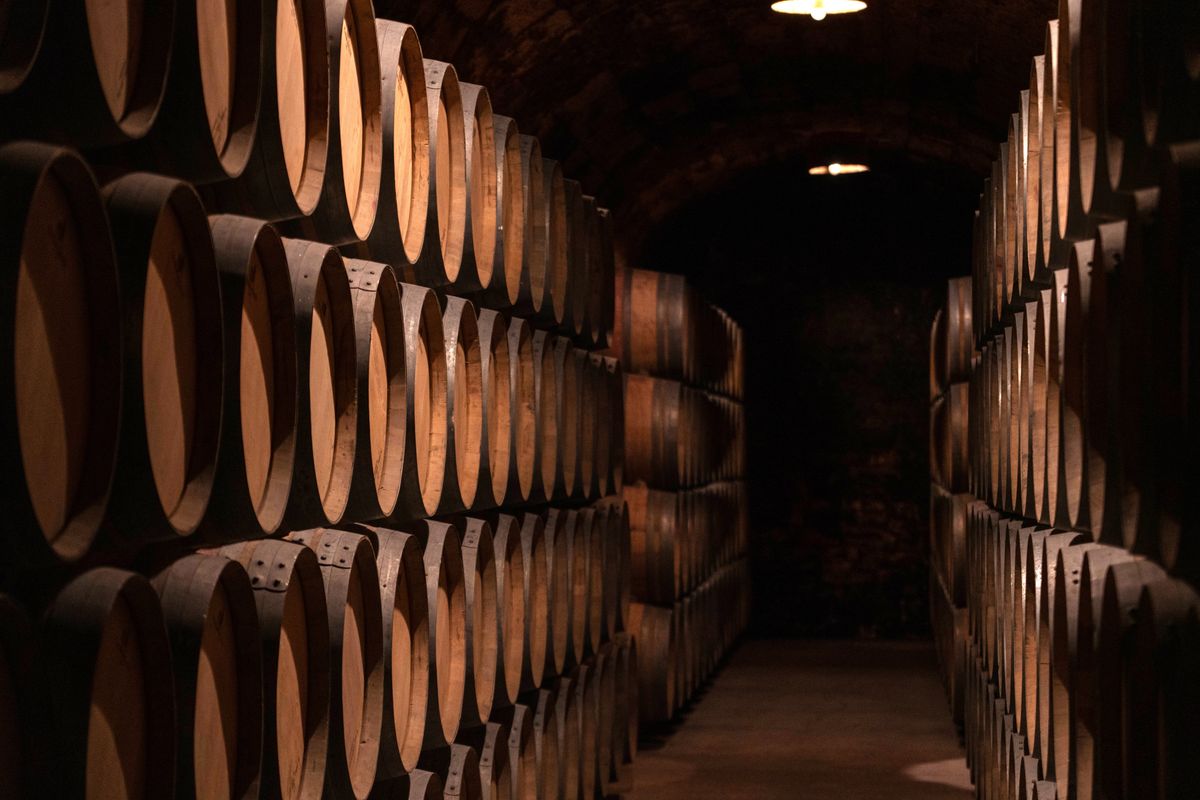
The area does not yet have a signposted wine route as in France or Italy. The larger wineries, such as Vukoje, take visitors by appointment, and the small ones expect a phone call first. The simplest approach is to ask your accommodation to arrange two stops in an afternoon, with transport, because you do not drive after tasting. Prices are low: a good bottle of žilavka costs around eight to fifteen euros direct from the producer.
What is nearby, within the hour
The location is the town main advantage. You are thirty kilometres from Dubrovnik, an hour from the sea and two hours from Mostar.
- Dubrovnik: about forty minutes, with a border crossing. Many people sleep in Trebinje and visit Dubrovnik by day, because prices are several times lower.
- Vjetrenica cave: the longest cave system in the country, with remarkable subterranean fauna. About an hour away.
- Popovo polje: the karst plain where the Trebišnjica used to disappear underground before the dams.
- Mostar and Blagaj: about two hours north.
- The Montenegrin coast, through the border crossing to the east.

The price difference from Dubrovnik is real and large. Good accommodation in central Trebinje costs about what a coffee and lunch cost in the neighbouring city, and the drive between them takes less time than finding a parking space there.
Getting there, how long to stay and what it costs
| Item | Detail |
|---|---|
| From Dubrovnik | about 40 minutes, with a border crossing |
| From Mostar | about 2 hours |
| From Sarajevo | around 3 hours 30 |
| Airport | Dubrovnik, the nearest and most convenient |
| Days needed | 1 to 2 for the town, 3 with the surroundings |
| Best months | May to June and September to October |
| Currency | the convertible mark, pegged to the euro |
Summer is very hot, regularly passing thirty five degrees, and the bare hills around do not help. Spring and autumn are clearly better, and October catches the harvest as well.
Payment is in convertible marks, though euros are accepted in many places at a rate that is not always favourable. Cash machines work normally. Visitor information is published by the Bosnia and Herzegovina tourism board, and the monastery winery has its own presentation at Tvrdoš.
Frequently asked questions (FAQ)
Conclusion
Trebinje is the Mediterranean corner of Bosnia: plane trees in the square, an old town the size of a neighbourhood, an Ottoman bridge moved in its entirety and two grape varieties you will not find anywhere else.
Use it as a cheap base beside Dubrovnik, give it a full day, go to Tvrdoš for the wine, and come in spring or autumn, because summer burns.
