
 By

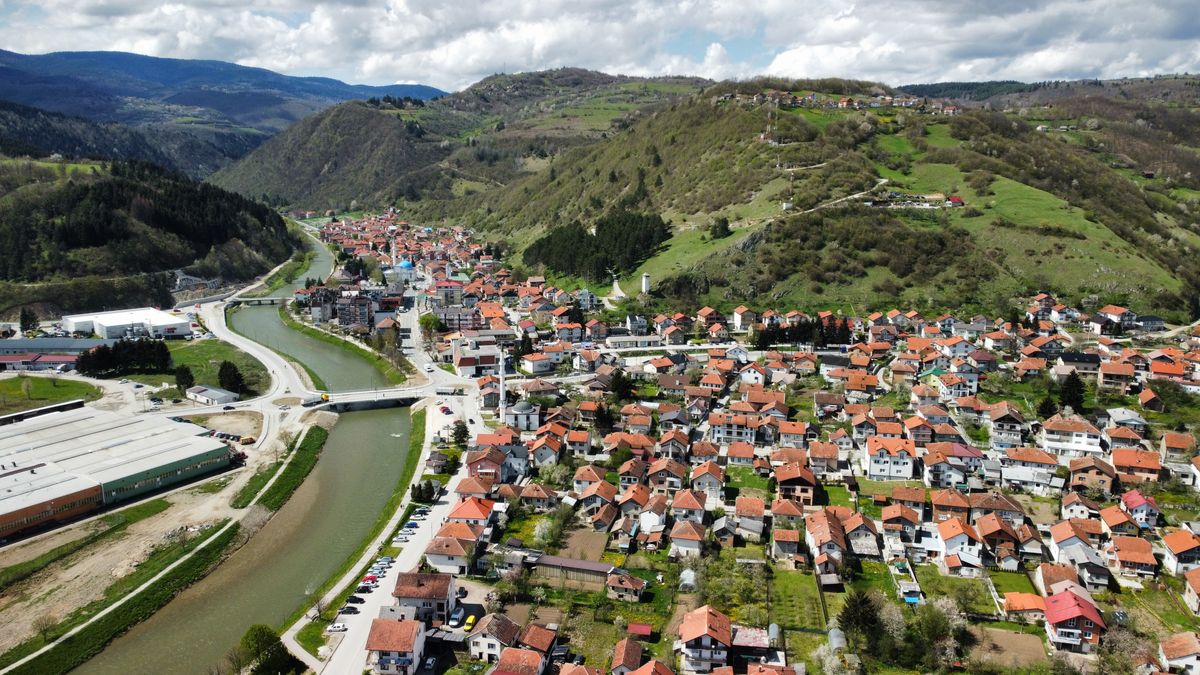
Jajce is a town of twenty seven thousand people in central Bosnia, built where the Pliva meets the Vrbas. It has a waterfall of over twenty metres dropping straight into the middle of town, a fortress where the last king of Bosnia was crowned and later beheaded, a Roman temple of Mithras and the building in which federal Yugoslavia was founded. All within one square kilometre.
The waterfall, the royal fortress, the catacombs, the Roman temple, the mills on the Pliva lakes and why it deserves a full day.
The waterfall in the middle of Jajce
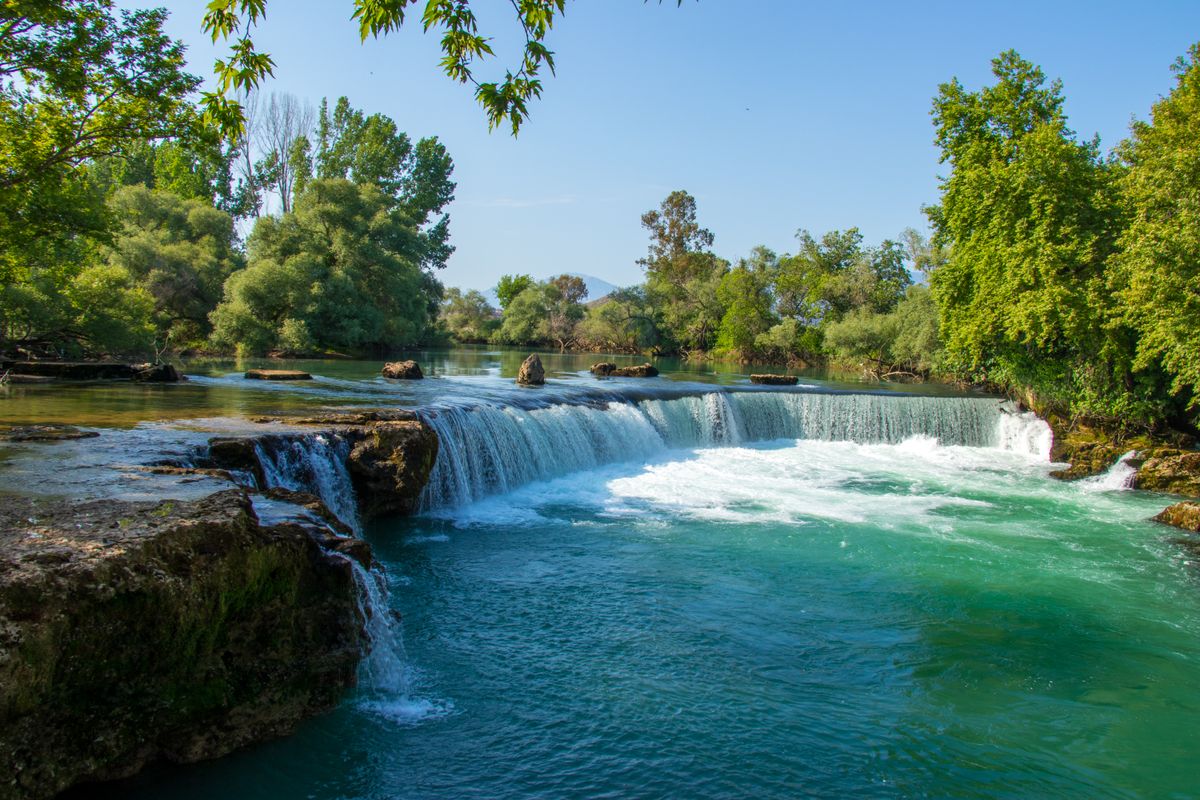
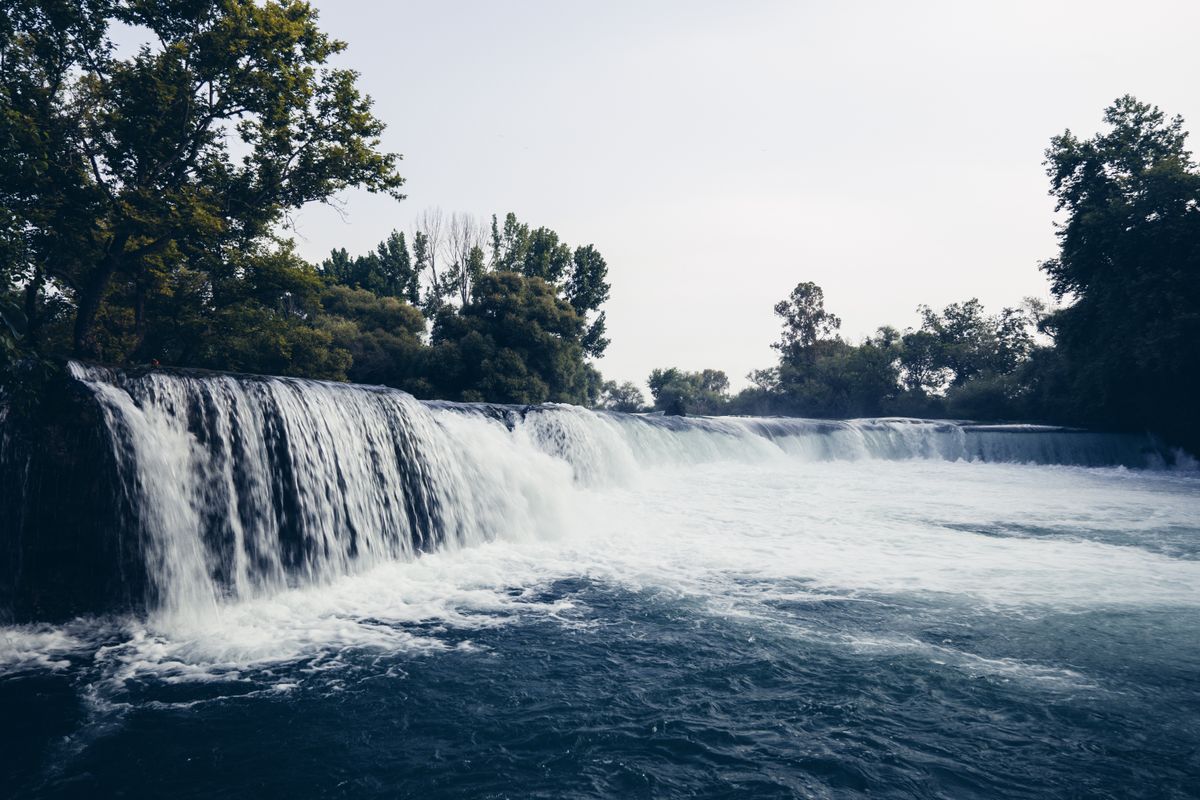
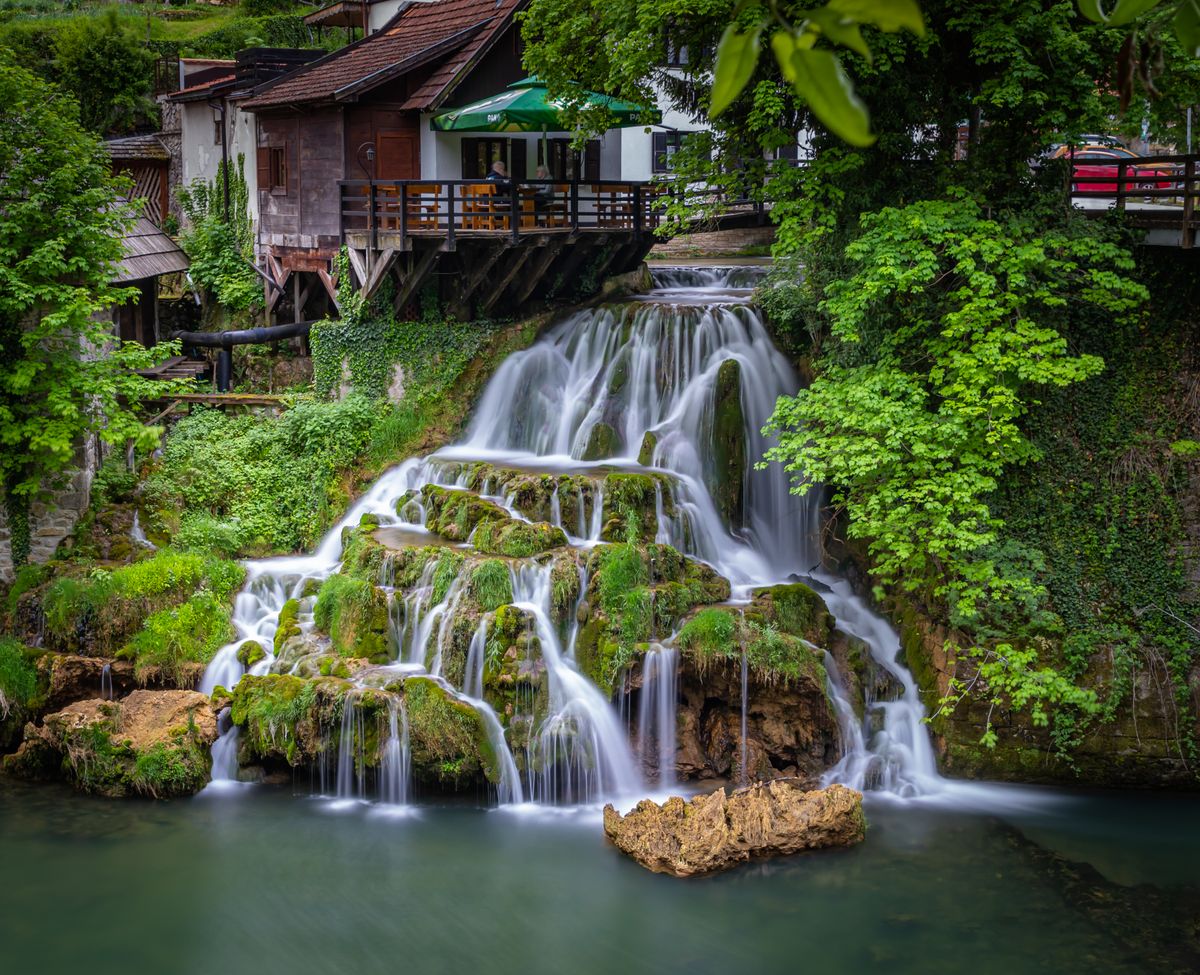
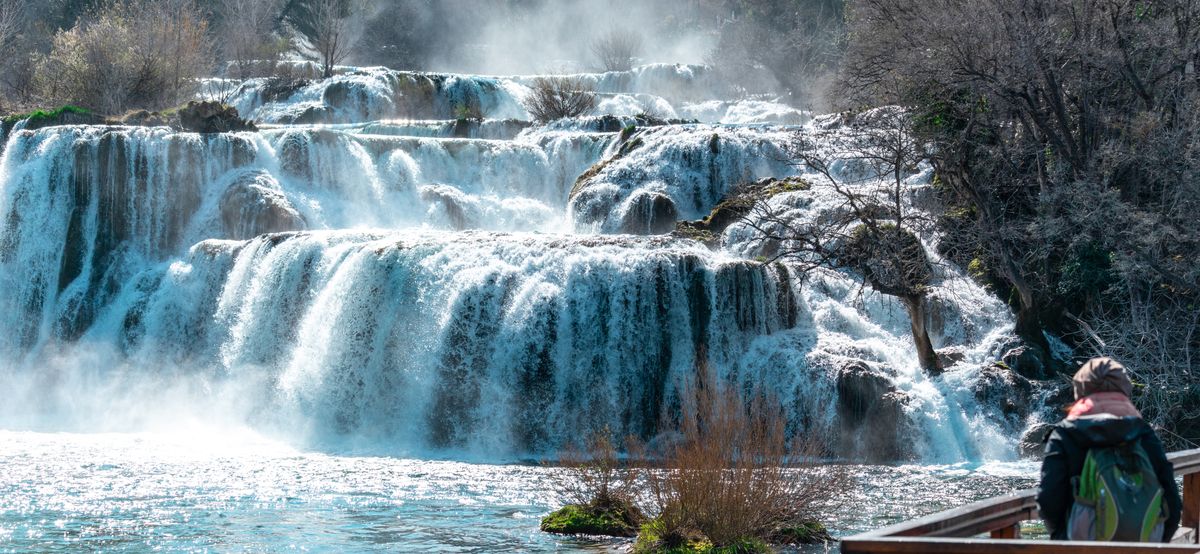
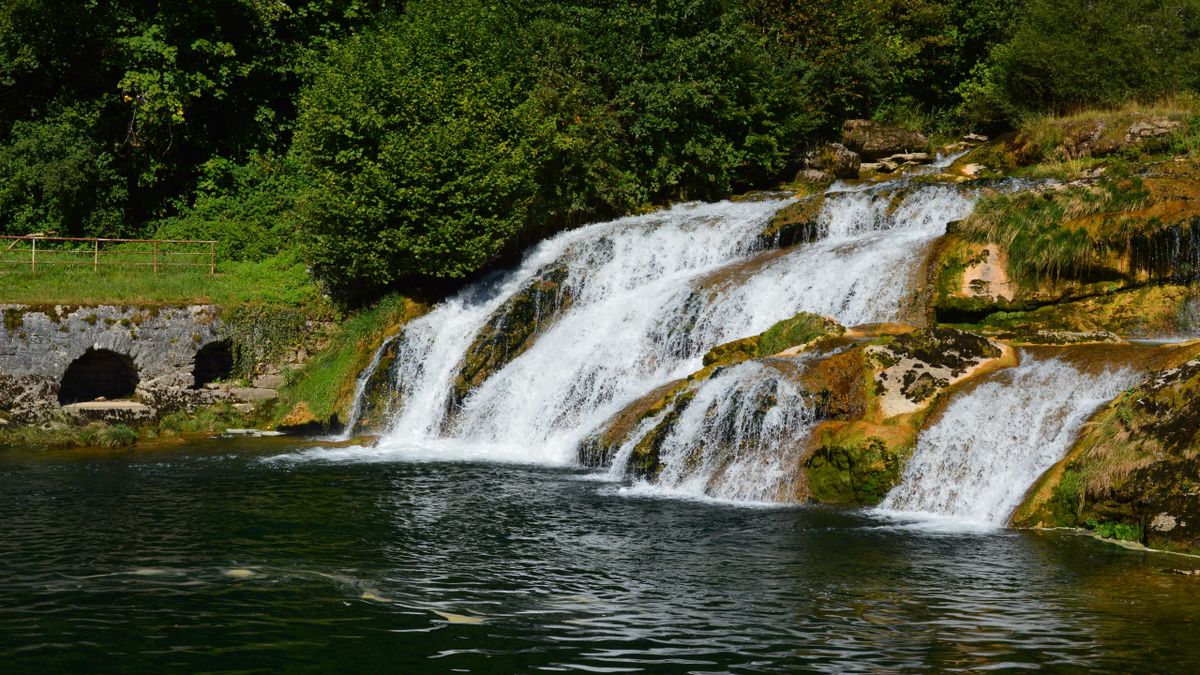
The Pliva empties into the Vrbas over a drop of about twenty two metres, right at the edge of the old centre. Very few towns in Europe have a fall of that size inside them, and here you reach it on foot, five minutes from the square.
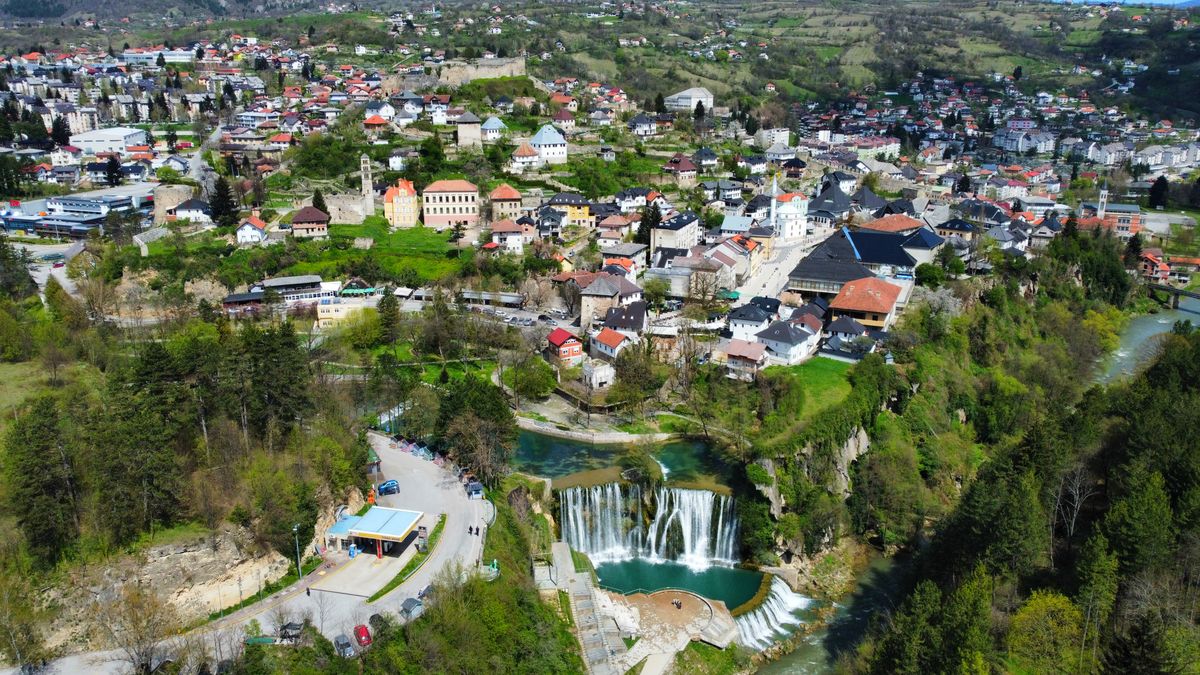
It used to be higher. In the nineteen nineties a landslip altered the lip and reduced the drop, and later works stabilised the banks. A small fee is charged for access to the lower platform, from which you see it head on.
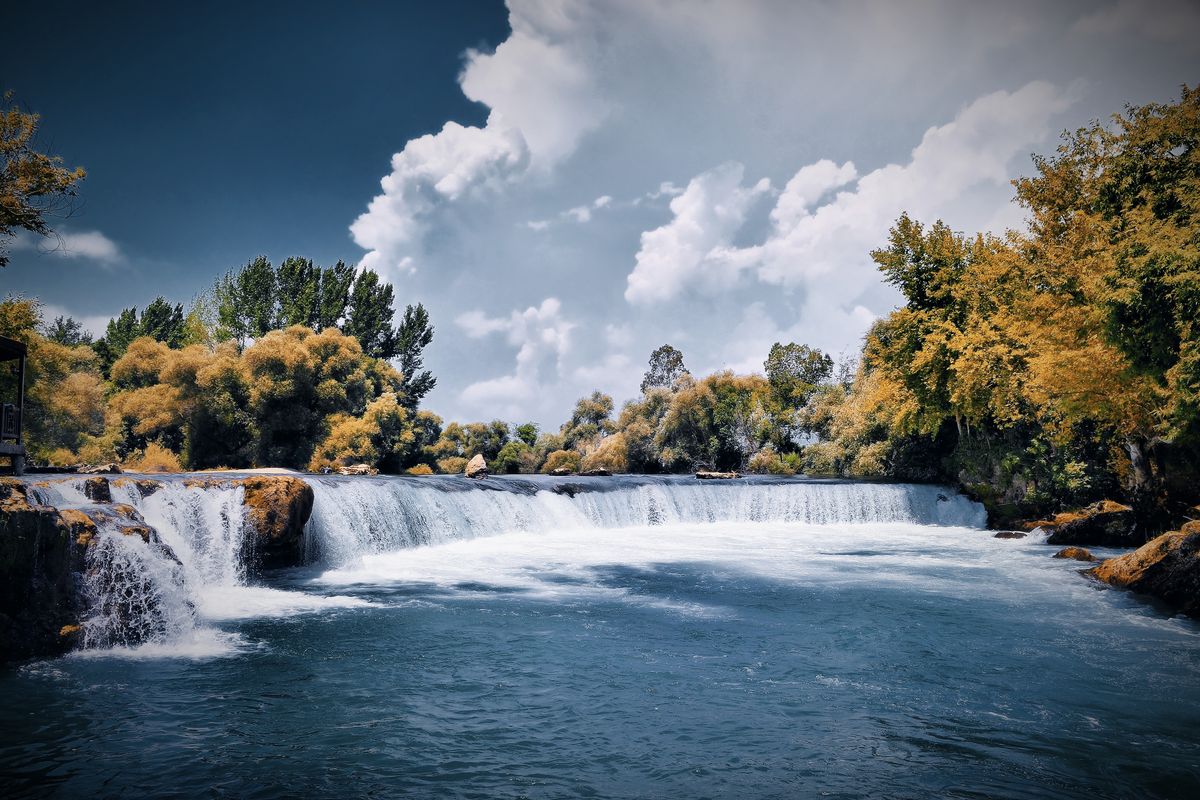
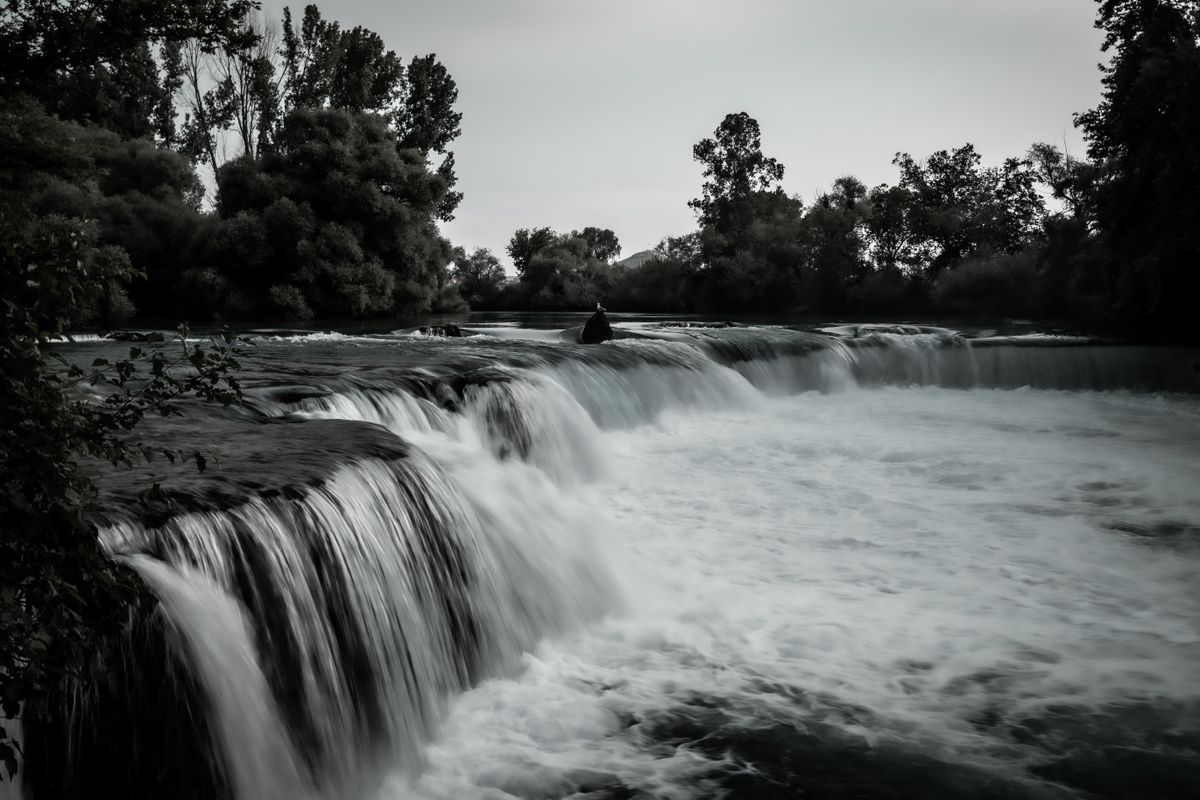
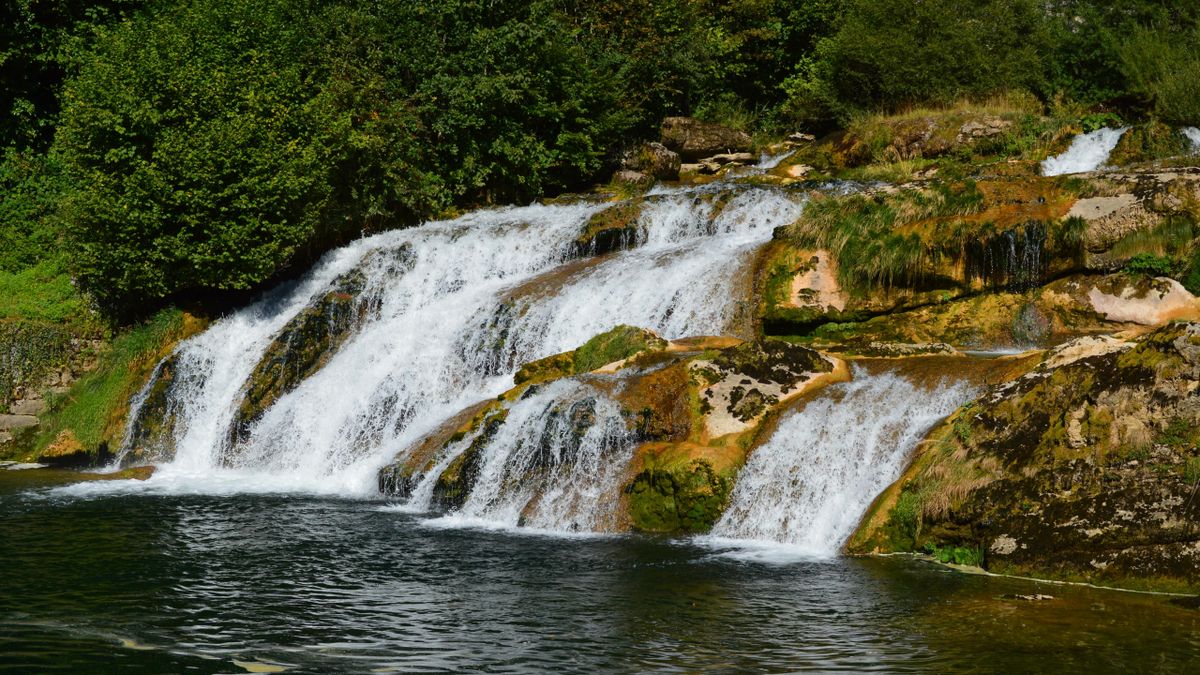
The flow matters a great deal. In spring and after rain the fall is powerful and soaks you from ten metres away. By late summer in dry years it thins visibly. If you are coming for it, ask your accommodation how the water is running.
The royal town and the end of the Bosnian kingdom
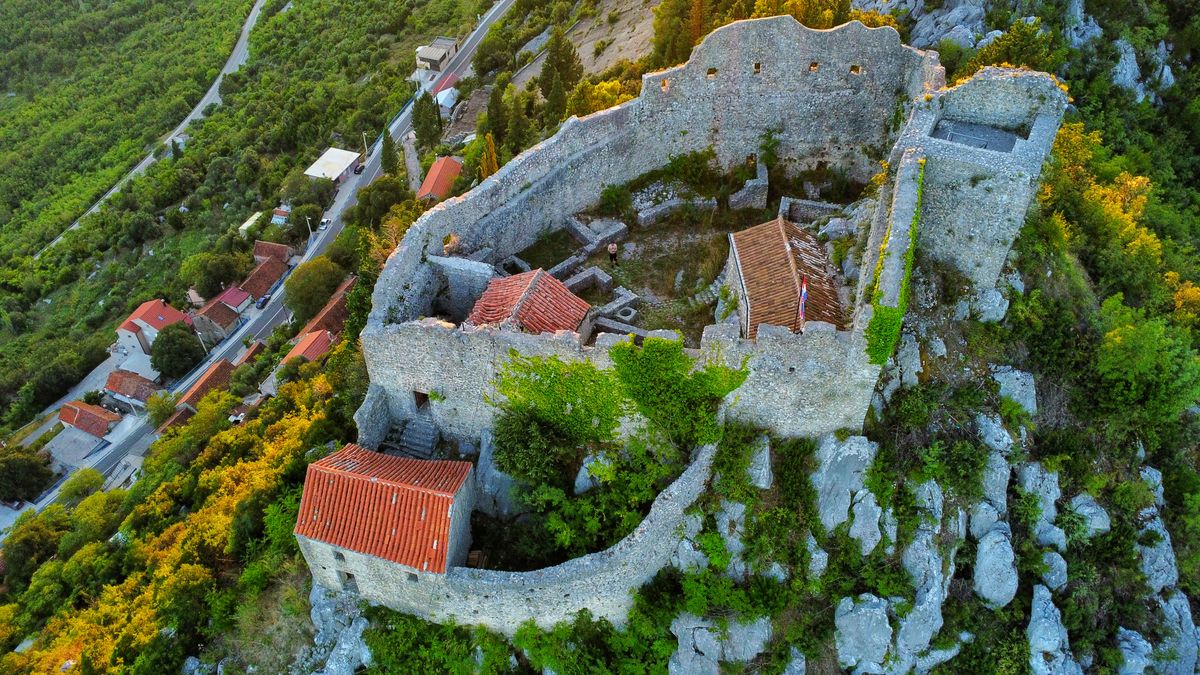
Jajce was the last capital of the medieval kingdom of Bosnia. The fortress on the hill behind the town is well preserved, takes twenty minutes to climb and carries the royal coat of arms over its gate.
Stjepan Tomašević, the last king of Bosnia, was crowned here in 1461. Two years later, after the Ottoman conquest, he was beheaded and the kingdom ceased to exist. The town then spent two decades under Hungarian rule before passing definitively to the Ottoman Empire.
In town you also find the clock tower, the Esma Sultanija mosque and the Tower of Saint Luke, tied to a story worth telling: the relics of the evangelist Luke are believed to have been kept here, brought as a dowry, until they were sold to Venice.
The catacombs and the Temple of Mithras
Beneath the town lie two entirely different things, both rare.
The catacombs are in fact an underground church cut into rock at the start of the fifteenth century by Duke Hrvoje Vukčić Hrvatinić, intended as a family mausoleum. It was never finished, and the interior carries carved symbols that have generated all manner of interpretations. It is cold, dark and impressive precisely because it is unfinished.
The Temple of Mithras is over a thousand years older, from the fourth century, and is one of very few mithraea surviving in Europe. It has a relief of Mithras slaying the bull, the central scene of this Roman cult that spread mainly among soldiers. It is visited with a guide, and the key comes from the museum.
The catacombs and the Mithraeum do not keep continuous hours and cannot be visited unaccompanied. Go first to the tourist information centre in town, which arranges access, sometimes by grouping several visitors together. The ticket is cheap, but there can be a half hour wait. Do not leave this to the last hour of the day, because access closes early, particularly out of season.
The building where federal Yugoslavia was founded
On 29 November 1943, in a former gymnasium in Jajce, the second session of the anti-fascist council of national liberation took place. There the federal structure of the future Yugoslavia was decided, with six equal republics, and a provisional government was formed.
The building is now a museum, with the hall preserved almost in its original form. The date was a national holiday across Yugoslavia for nearly fifty years, and for the history of the region it is a reference point, whatever anyone thinks of what followed.
The visit takes twenty minutes and costs very little. It is worth doing even if the period does not interest you, because it explains why Bosnia is administratively shaped the way it is.
The Pliva lakes and the watermills
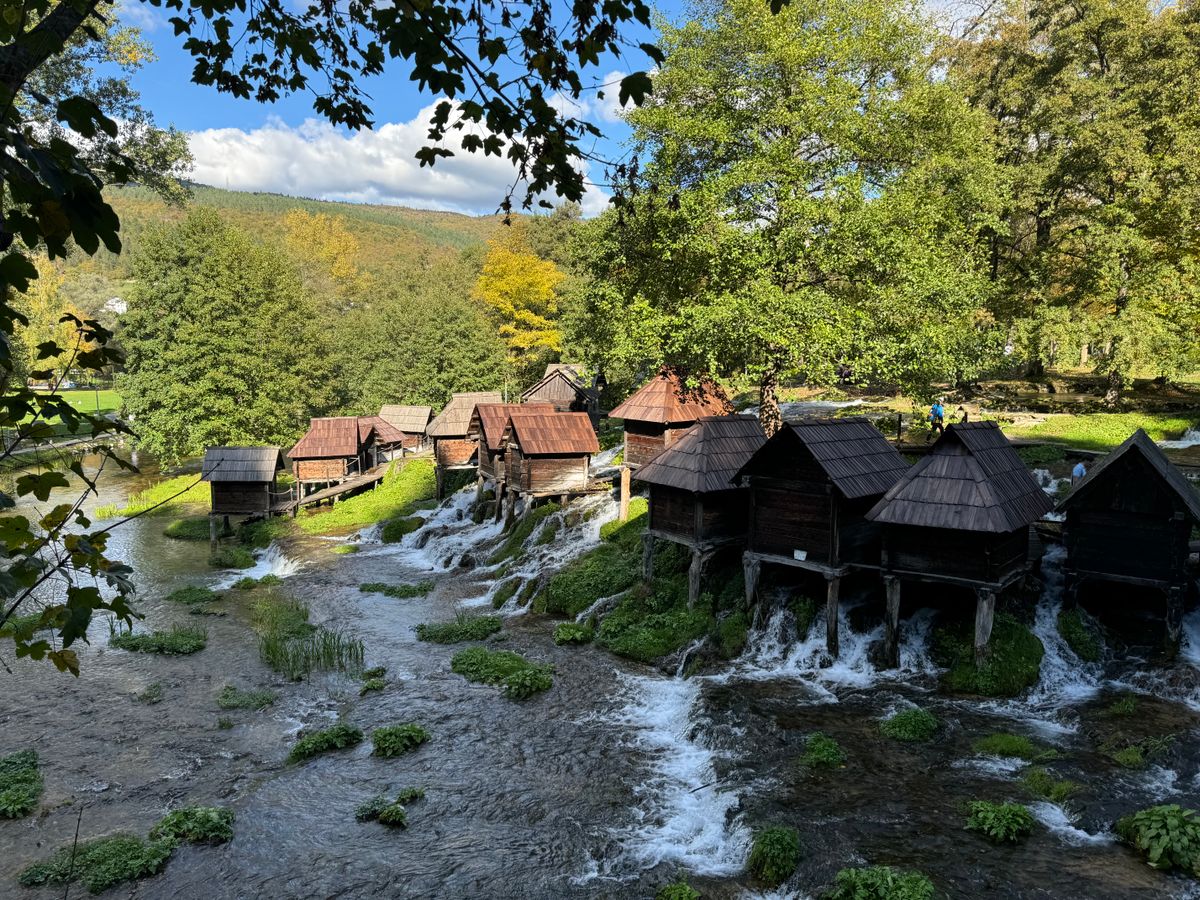
About five kilometres from town the Pliva forms two linked lakes. Between them stands the cluster of watermills, roughly twenty tiny wooden structures set on the sills, each with its own wheel.
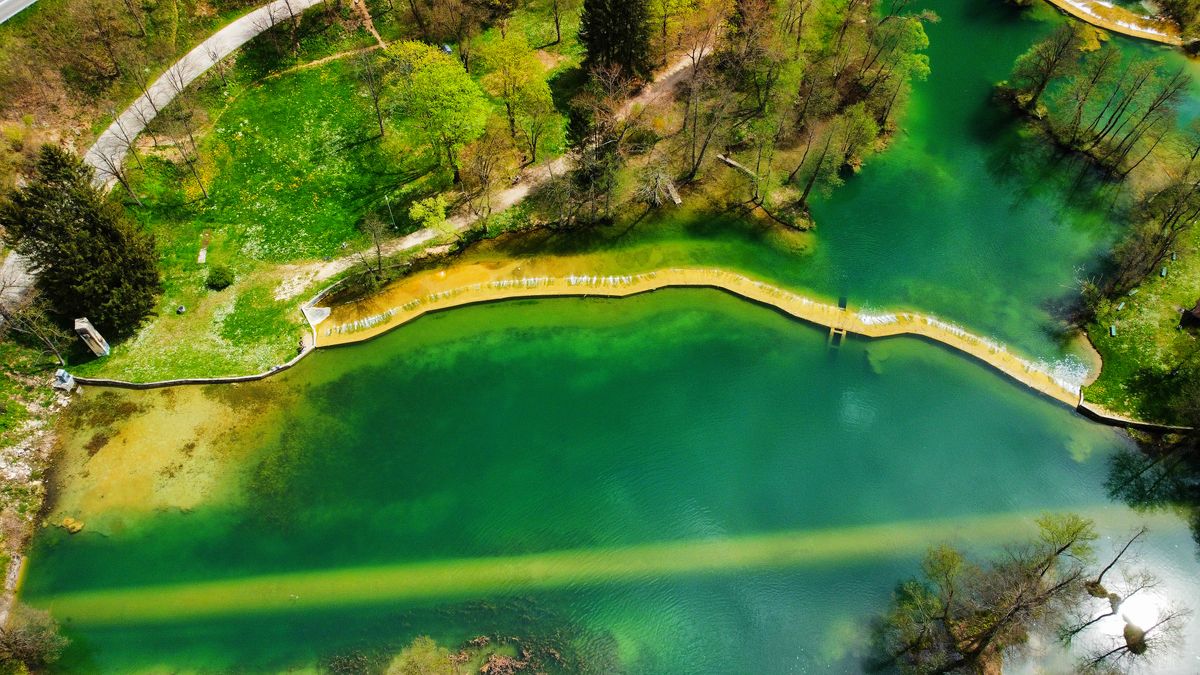
They were working mills, used communally by families from the surrounding villages, each with its allotted milling day. Today they are a monument and a backdrop, but the structures are genuine rather than rebuilt for photographs.
The lake area is where the town goes in summer: a laid out beach, kayaks, restaurants on the bank. It is the best way to end a day after the fortress and the underground sites.
Getting there, how long to stay and when to go
| Item | Detail |
|---|---|
| From Sarajevo | about 2 hours |
| From Banja Luka | about 1 hour 15 |
| From Mostar | around 3 hours |
| Days needed | 1 full day, 2 with the lakes and rafting |
| Waterfall flow | strongest in spring, low in late summer |
| Best months | April to June and September to October |
| Public transport | buses from Sarajevo and Banja Luka, a car is easier |
The town combines naturally with rafting on the Vrbas, in the stretch between Jajce and Banja Luka, where day descents run regularly. It is one of the best rafting areas in the Balkans and far less busy than the Tara or the Neretva.
Accommodation is cheap, with guest houses from twenty five to forty euros a night. Visitor information is published by the Bosnia and Herzegovina tourism board, and background on the medieval kingdom by Encyclopaedia Britannica.
Frequently asked questions (FAQ)
Conclusion
Jajce packs a twenty two metre waterfall, the fortress of a kingdom that ended in 1463, a Roman temple and the hall where the map of federal Yugoslavia was drawn into a single square kilometre.
Give it a full day, sort out the underground visits at the information centre in the morning, check the waterfall flow before you set off, and finish at the lakes with the mills.
