
 By

The Jurassic Coast is the only site in England inscribed on the World Heritage list for purely geological value. It runs for 154 kilometres, begins in Devon and ends in Dorset, and walking east takes you through 185 million years of the history of the planet in chronological order. It is also one of the few places in the world where you can pick a fossil off the beach and legally take it home.
What you actually see along the 154 kilometres, where the fossils are, what the rules are, and which stops are worth your time.
What the Jurassic Coast is and why UNESCO listed it
Under its official name, the Dorset and East Devon Coast, the site was inscribed on the World Heritage list in 2001. The reason has nothing to do with beauty, of which there is no shortage, and everything to do with the fact that the rock exposed here forms an almost unbroken sequence through the Triassic, Jurassic and Cretaceous.
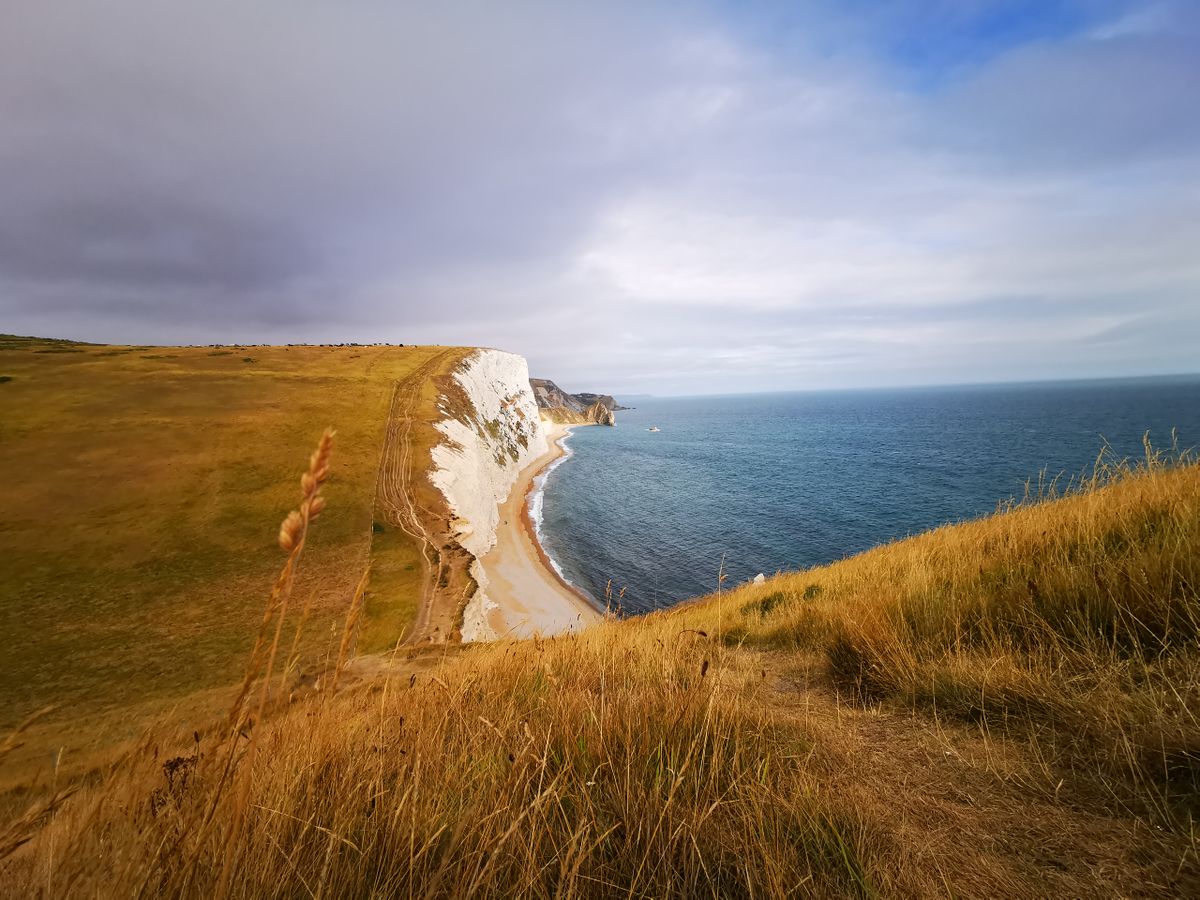
The stretch begins at Orcombe Point near Exmouth, in Devon, and ends at Old Harry Rocks near Studland, in Dorset. The name is partly misleading: only the middle third is properly Jurassic. The western end is Triassic and the eastern end Cretaceous.
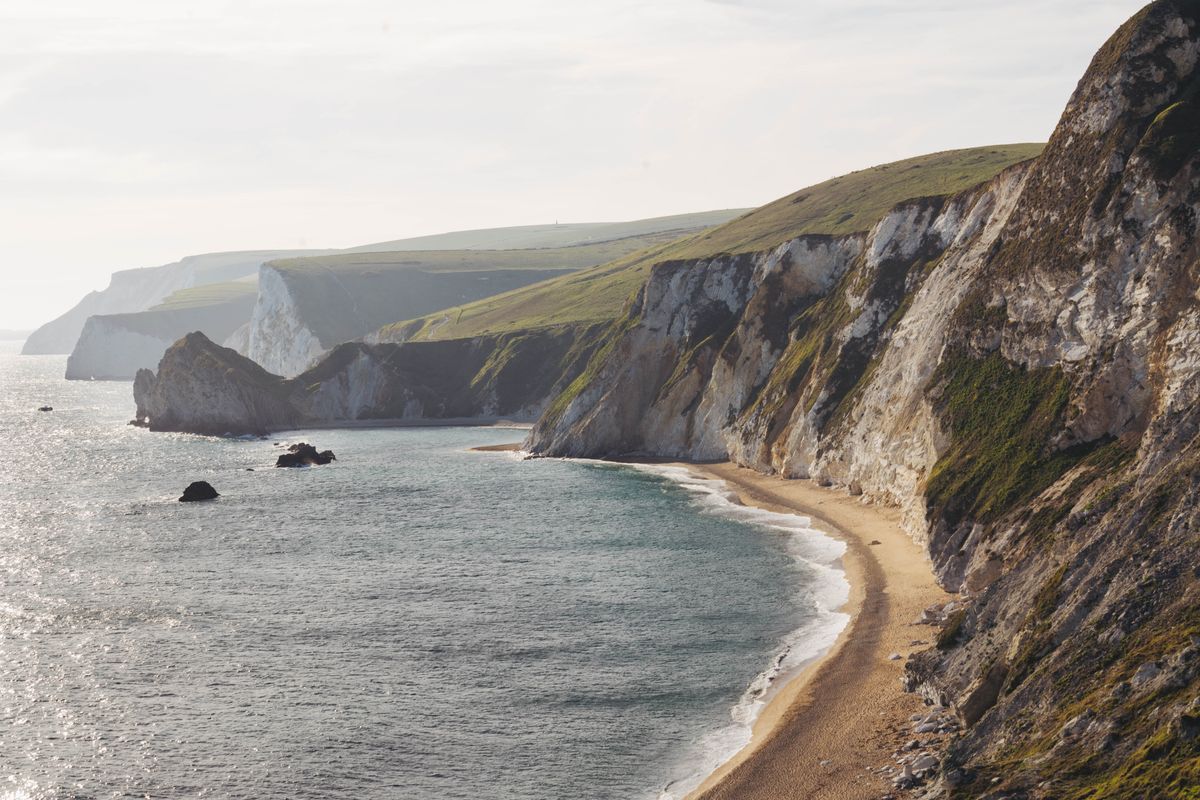
How to read 185 million years from west to east
The beds are tilted eastwards, which means that walking in that direction takes you from older rock to progressively younger rock. It is the simplest geology lesson you can take on foot.
- West, in Devon: red Triassic sandstone laid down in a desert. This is where the brick colour of the cliffs at Sidmouth and Budleigh Salterton comes from.
- Centre, around Lyme Regis: Jurassic clays and limestones deposited on the floor of a warm sea. This is the fossil bearing layer.
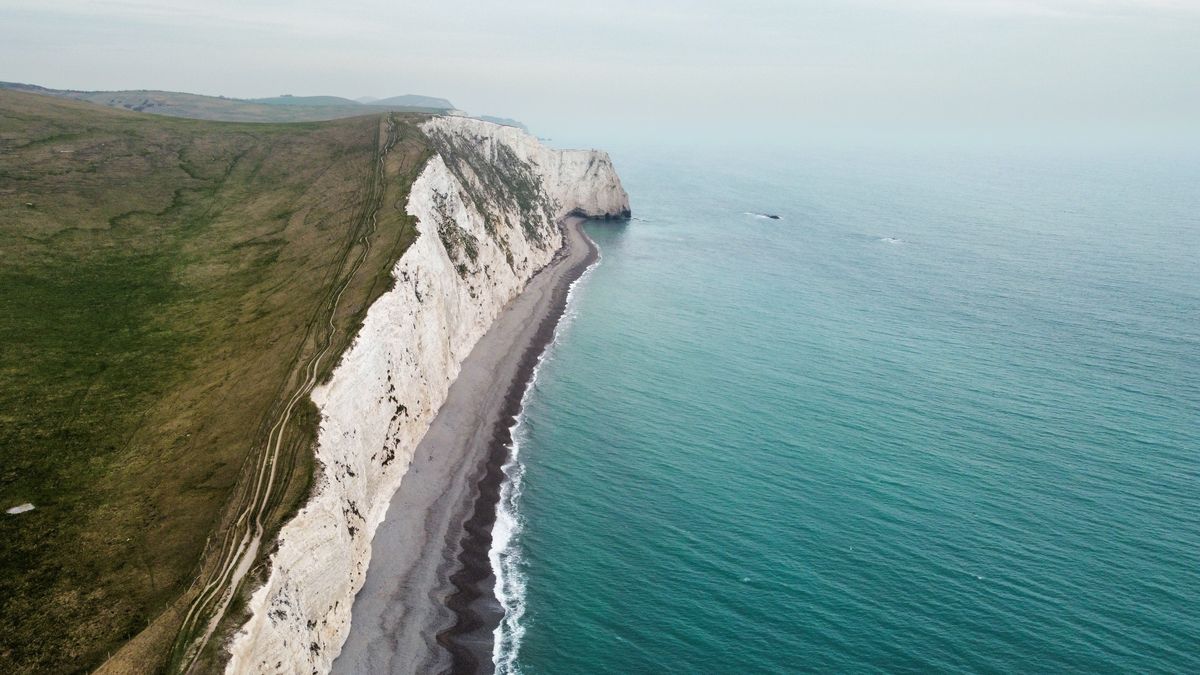
- East, towards Purbeck: Portland limestone and white Cretaceous chalk. St Paul cathedral in London is built of that Portland stone.
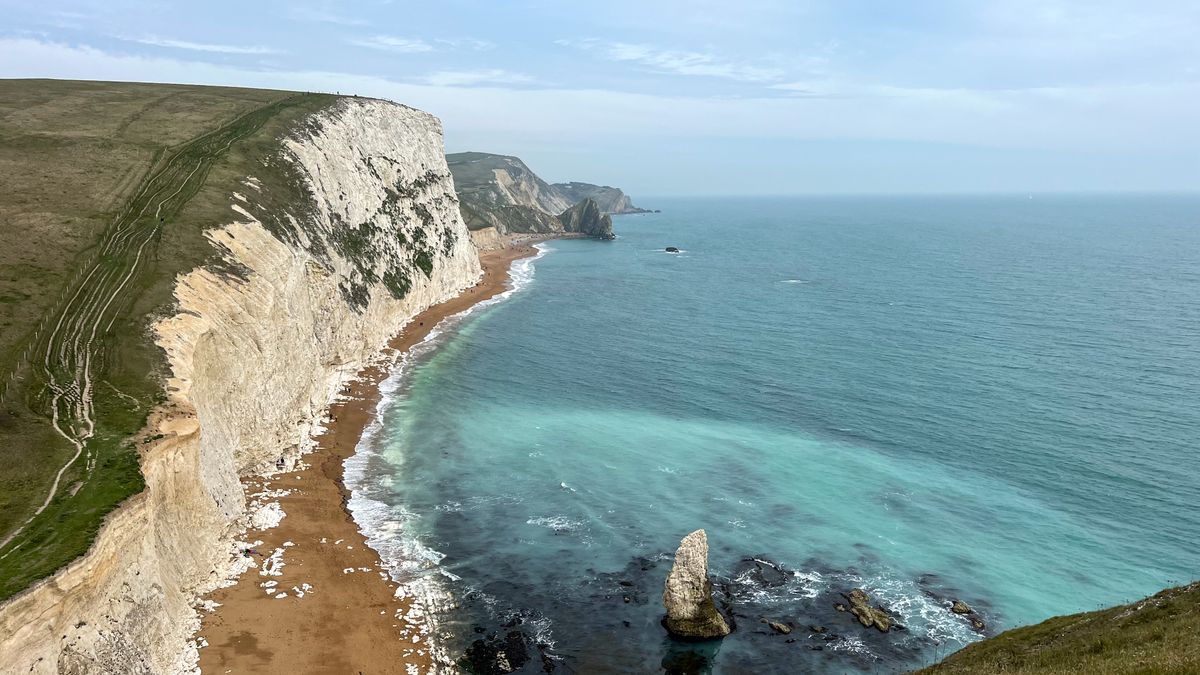
Every cliff colour corresponds to a different prehistoric environment: desert, tropical sea, lagoon. You do not need any geology to notice the transition, because it is visible from the beach with the naked eye.
Mary Anning, the woman who changed palaeontology
Mary Anning was born at Lyme Regis in 1799 into a poor family and collected fossils off the beach from childhood to sell to visitors. At twelve, with her brother, she recovered the first ichthyosaur skeleton to be correctly identified as such. The first complete plesiosaur and the first pterosaur found outside Germany followed.
Her discoveries went into scientific papers signed by men, and she could not become a member of the Geological Society because she was a woman. She died at forty seven, known within a narrow specialist circle and unknown to the public. A statue was finally raised to her at Lyme Regis after a campaign begun by a schoolgirl in the town.
The museum in Lyme Regis stands on the site of the house where she was born. The heritage centre at Charmouth, three kilometres away, runs guided fossil walks and explains exactly what may and may not be collected. Both suit children and both cost very little.
How to hunt fossils without doing harm or getting hurt
The basic rule is simple: collect from the beach, from material that has already come loose, and never from the cliff. Digging into the face is prohibited, it destroys the site, and it puts you in very concrete danger, because landslips are frequent and give no warning.
- The best season is winter and early spring, after storms, when the sea cuts into the cliff and brings fresh material down.
- The best beaches are Charmouth and Black Ven, between Charmouth and Lyme Regis. Ammonites and belemnites turn up regularly.
- Never stand at the foot of the cliff and never climb it, however solid it looks.
- Check the tide table. Several stretches close completely at high water and people are cut off every year.
- Significant finds are reported. There is a local code of conduct for collecting that museums and collectors respect.
Realistically you will find small ammonites, fragments of belemnite and shells. An ichthyosaur skeleton is unlikely, though it does happen, and it is normally reported immediately.
The stops worth making, from Exmouth to Studland
You cannot see all of it in a day and there is no reason to try. These are the points that give the most for the time, running west to east.
- Sidmouth and Branscombe: red Triassic cliffs and shingle beaches, the quiet and least visited end.
- Lyme Regis: the town of Mary Anning, with the curved harbour wall known as the Cobb and the best museum on the coast.
- Charmouth: the reference beach for fossil hunting, with an information centre on the spot.
- Golden Cap: the highest point on the south coast of England at 191 metres, about an hour up.
- Chesil Beach: a shingle barrier 29 kilometres long, with the pebbles naturally graded by size along its whole length.
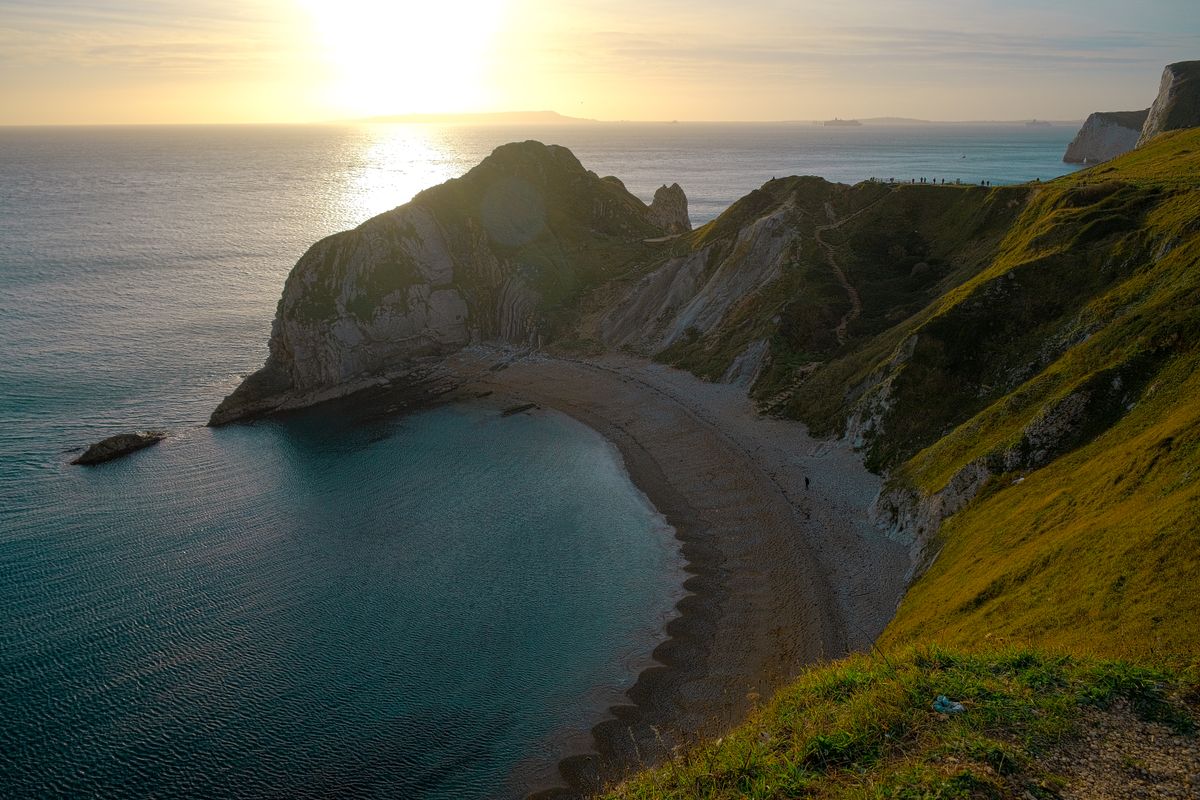
- Lulworth Cove: an almost circular bay, cut by the sea through a gap in the hard band.
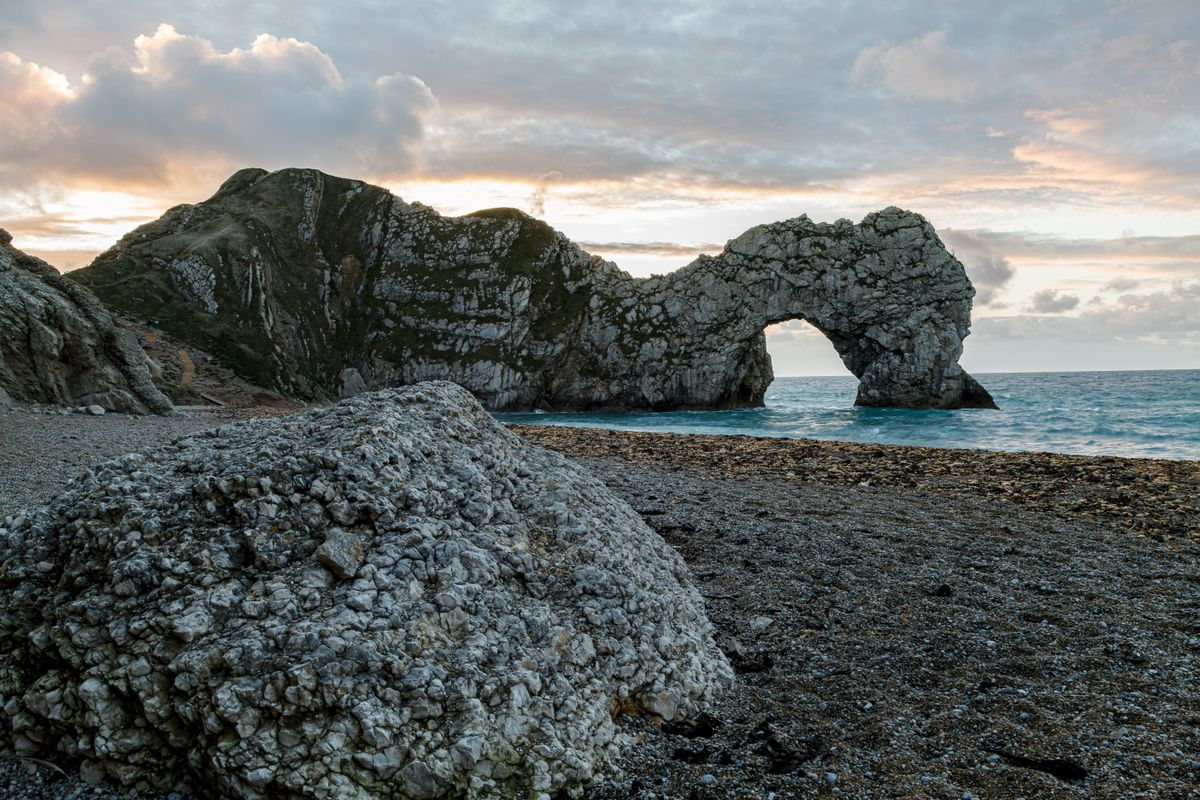
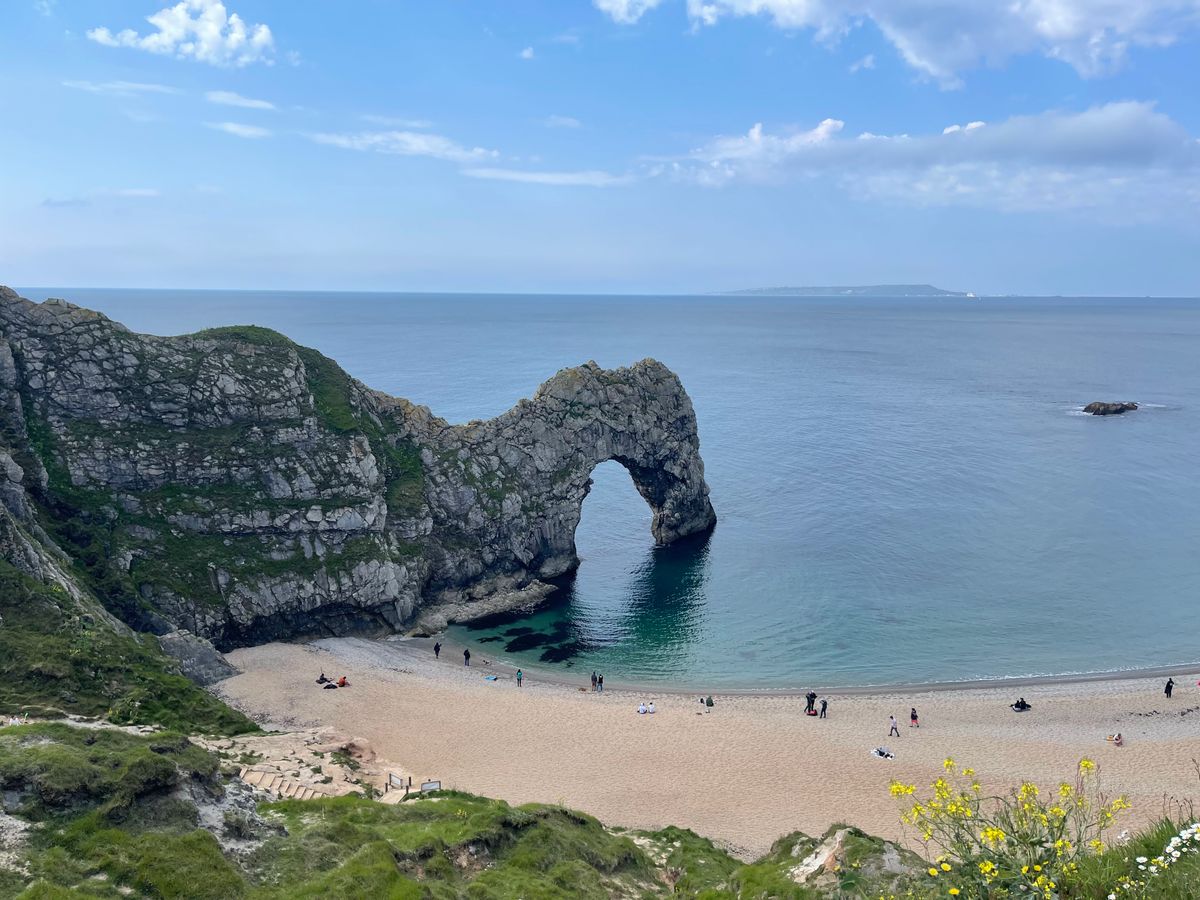
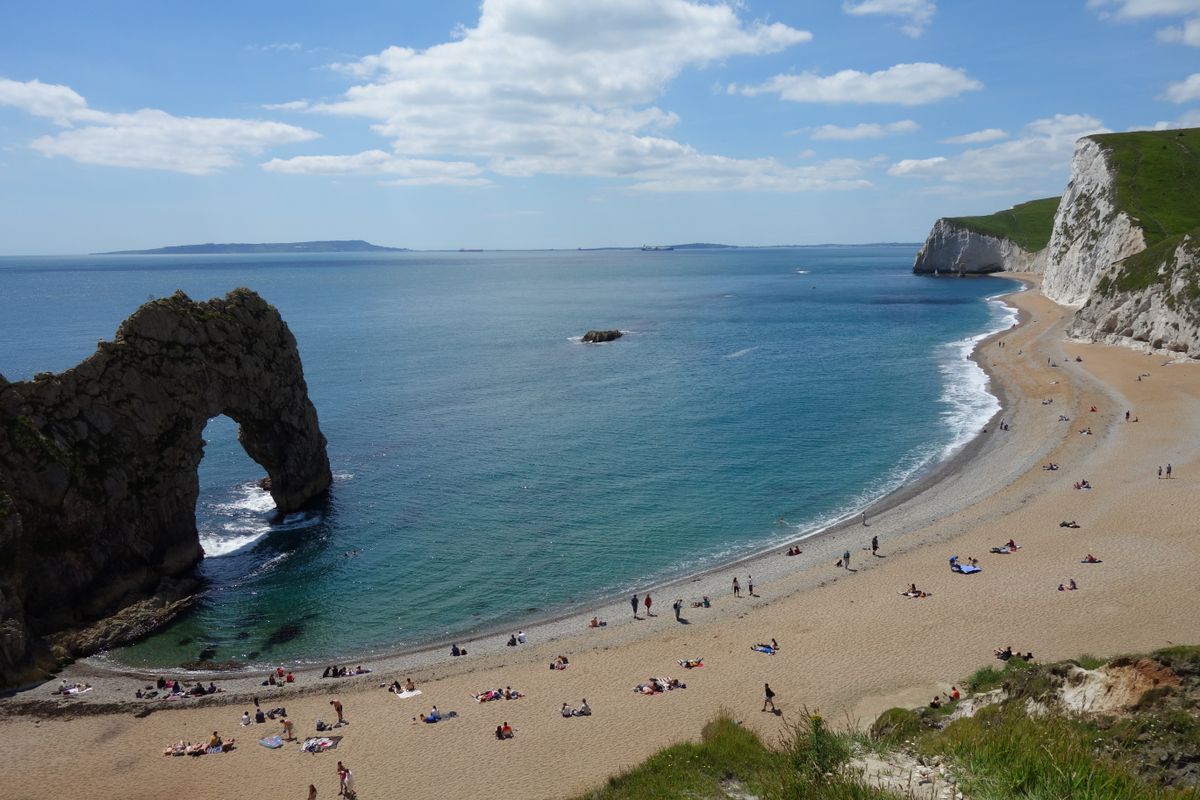
- Durdle Door: the limestone arch from every photograph, twenty minutes on foot from the car park.
- Old Harry Rocks: white chalk stacks at the eastern end, an easy walk from Studland.
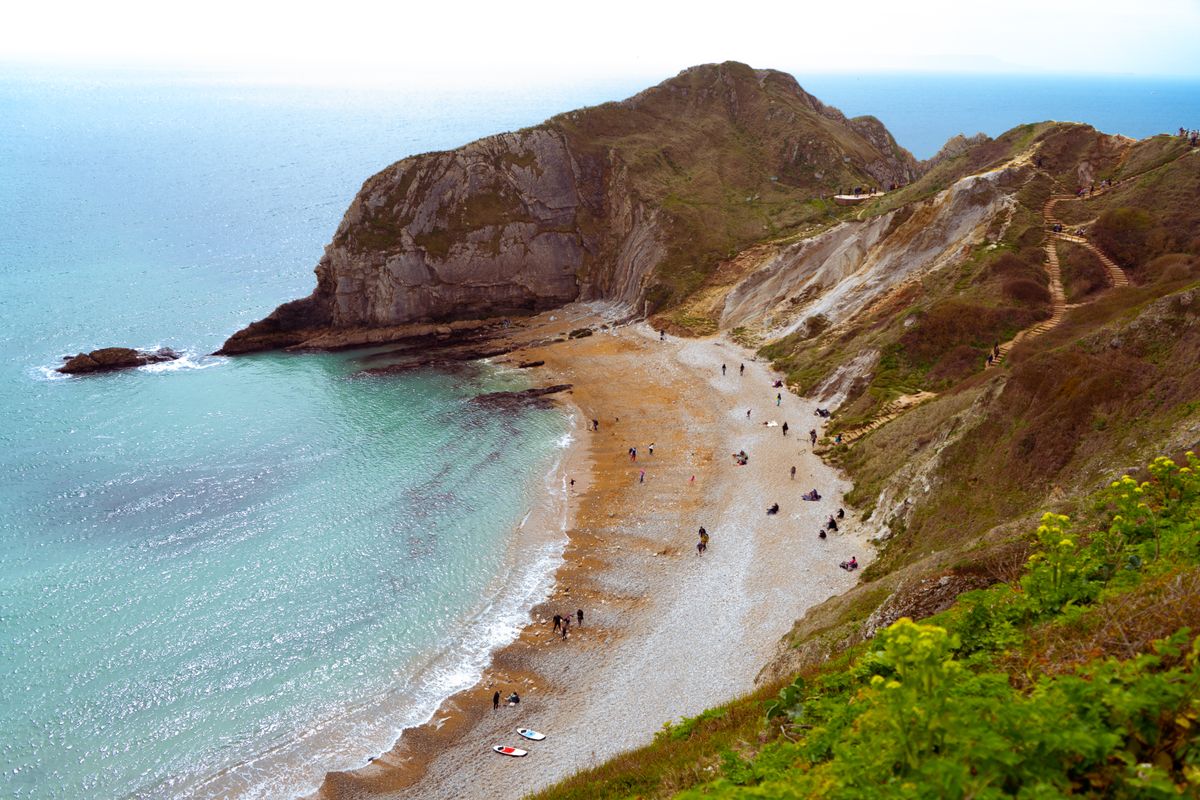
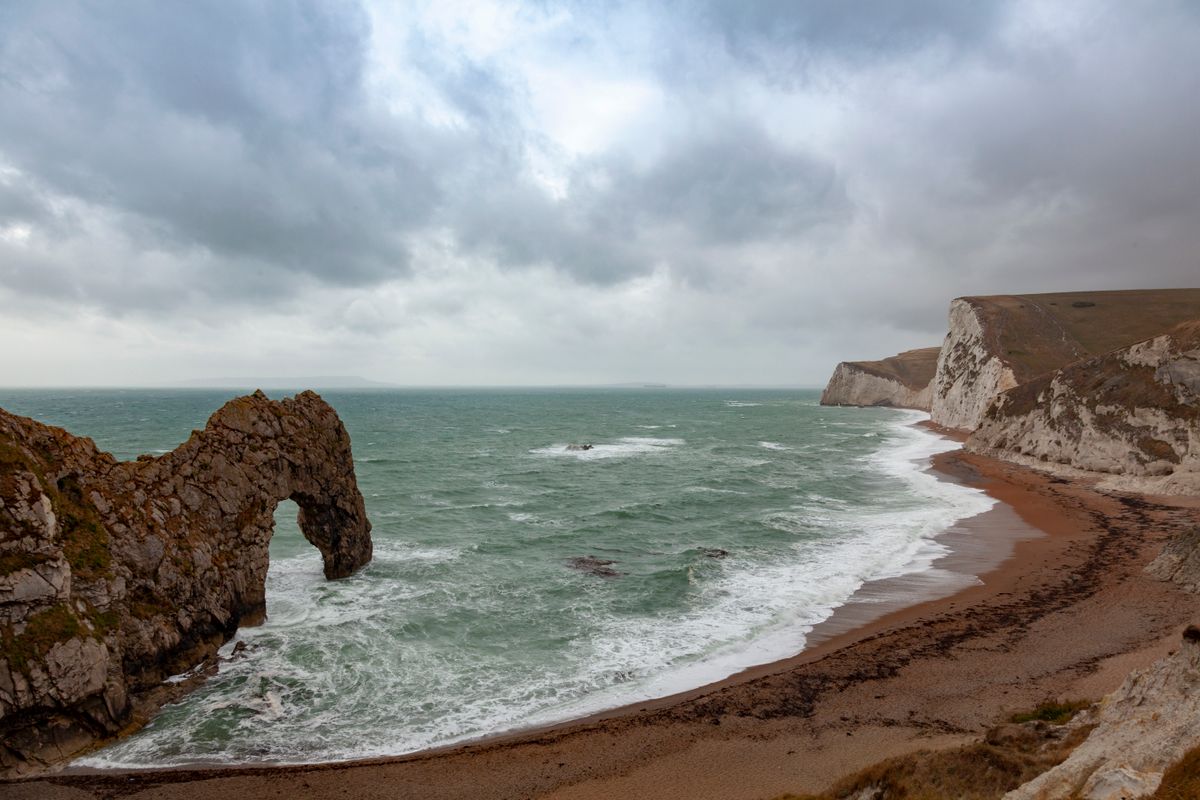
Durdle Door and Lulworth Cove sit on the same private estate and can be seen together in half a day. Parking is charged, full by ten in summer, and on fine weekends the access road blocks completely.

The coast path and how much of it makes sense
The South West Coast Path, the longest waymarked trail in England at over a thousand kilometres, covers the whole Jurassic Coast on its final stretch. It is not technically hard, but it climbs and drops without pause, and plenty of people underestimate that.
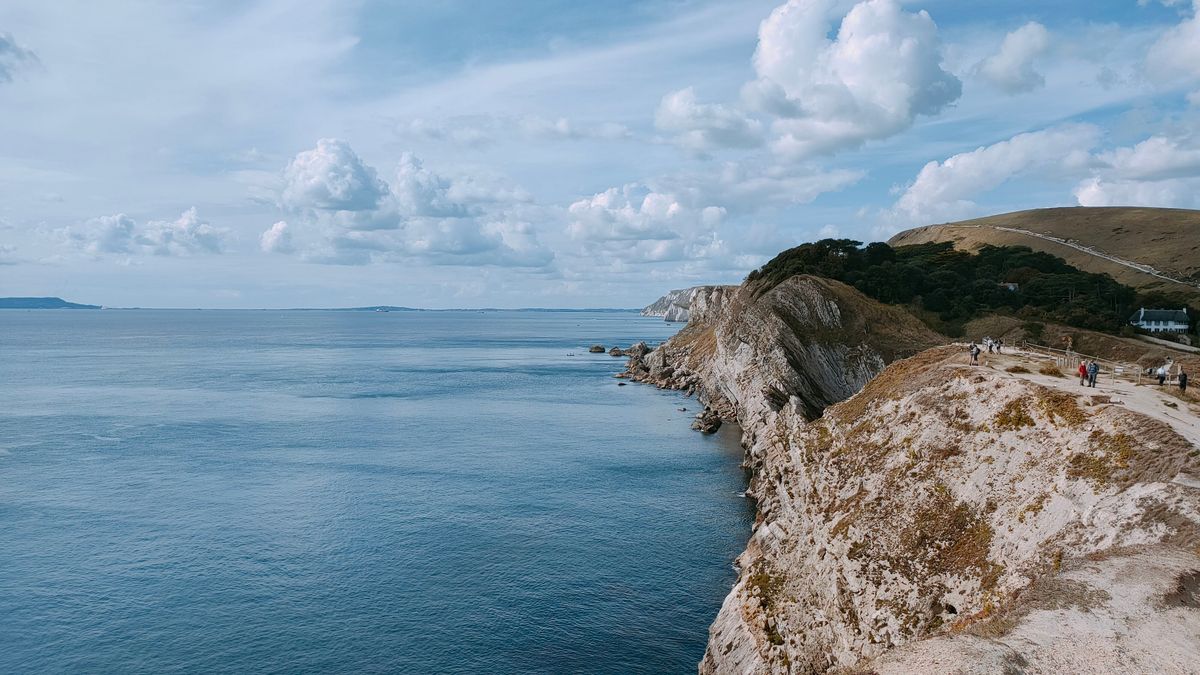
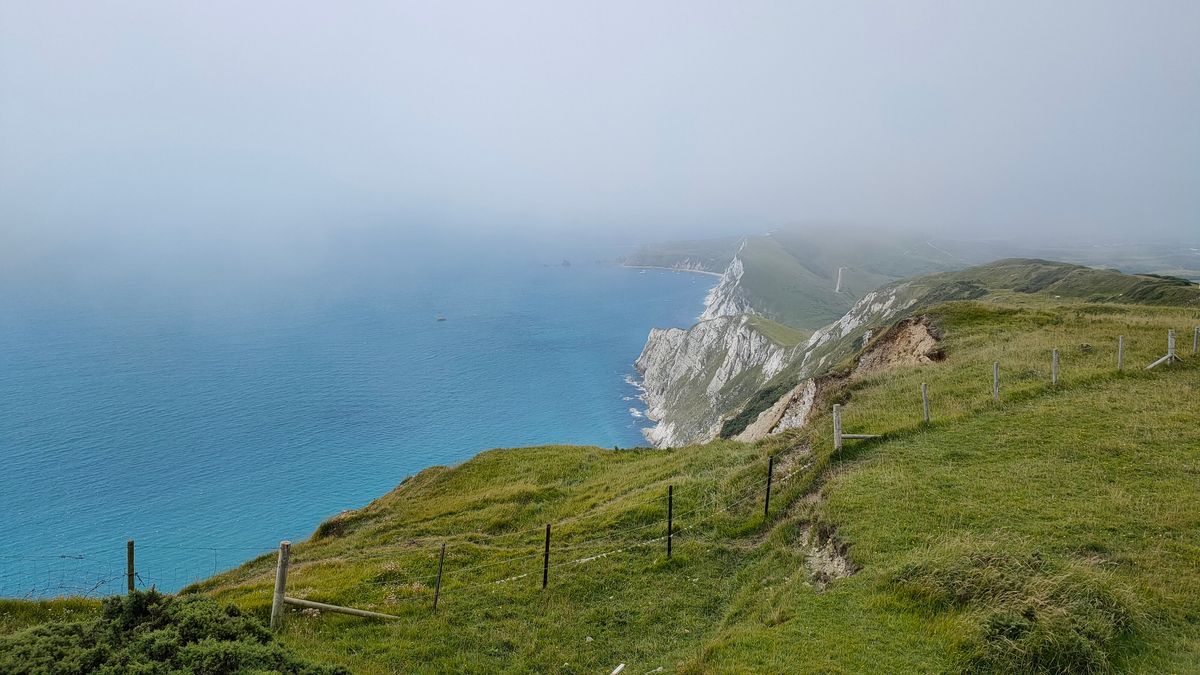
A good day is ten to fifteen kilometres with stops. The stage from Lulworth Cove past Durdle Door and on westwards is the most spectacular and, unfortunately, the steepest. The section between Lulworth and Kimmeridge crosses an army range and opens to the public only on certain weekends and during holidays.
The coastal bus runs seasonally and lets you walk one way only, which changes the planning entirely. Check the timetable first, because it vanishes in winter.
Getting there, where to stay and when to go
| Item | Detail |
|---|---|
| From London by train | Waterloo to Weymouth, about 3 hours |
| Western end | train to Exeter, then the local line to Exmouth |
| Good bases | Lyme Regis, Weymouth, Swanage, West Lulworth |
| Days needed | 3 for the essentials, 5 to 6 for the whole coast |
| Fossil season | winter and early spring, after storms |
| Walking season | May, June and September |
| Car parks | charged everywhere, full by 10am in summer |
Accommodation in Dorset in summer books a long way ahead, and Weymouth is the best base if you want public transport. With a car, West Lulworth puts you minutes from the arch and lets you get there before the crowd.
Maps, path conditions and events are published by the trust that manages the site, and the reasoning behind the World Heritage listing is set out by UNESCO.
Frequently asked questions (FAQ)
Conclusion
The Jurassic Coast is a World Heritage Site listed for geology rather than scenery, even if the arch at Durdle Door and the white stacks at Old Harry end up in all the photographs.
Come in winter or early spring for fossils and in summer for walking and beaches, check the tides before every descent, and never go near the foot of the cliff.
