

 By

The Game of Thrones filming locations that people actually travel for come down to two places at opposite ends of Europe: Dubrovnik, which supplied the walled capital, and Northern Ireland, which supplied everything cold, green and northern. This guide separates what was really shot on site from what was built in a studio in Belfast.
You will find what was filmed where, what you can genuinely see on the ground, what to skip, and how to link the locations into a route that works rather than a list of pins on a map.
Game of Thrones filming locations: why these two places
The production needed two things that rarely occur together: an intact fortified medieval city that could carry a Mediterranean capital, and a large supply of empty coast, forest and ruin within an hour of a single production base.
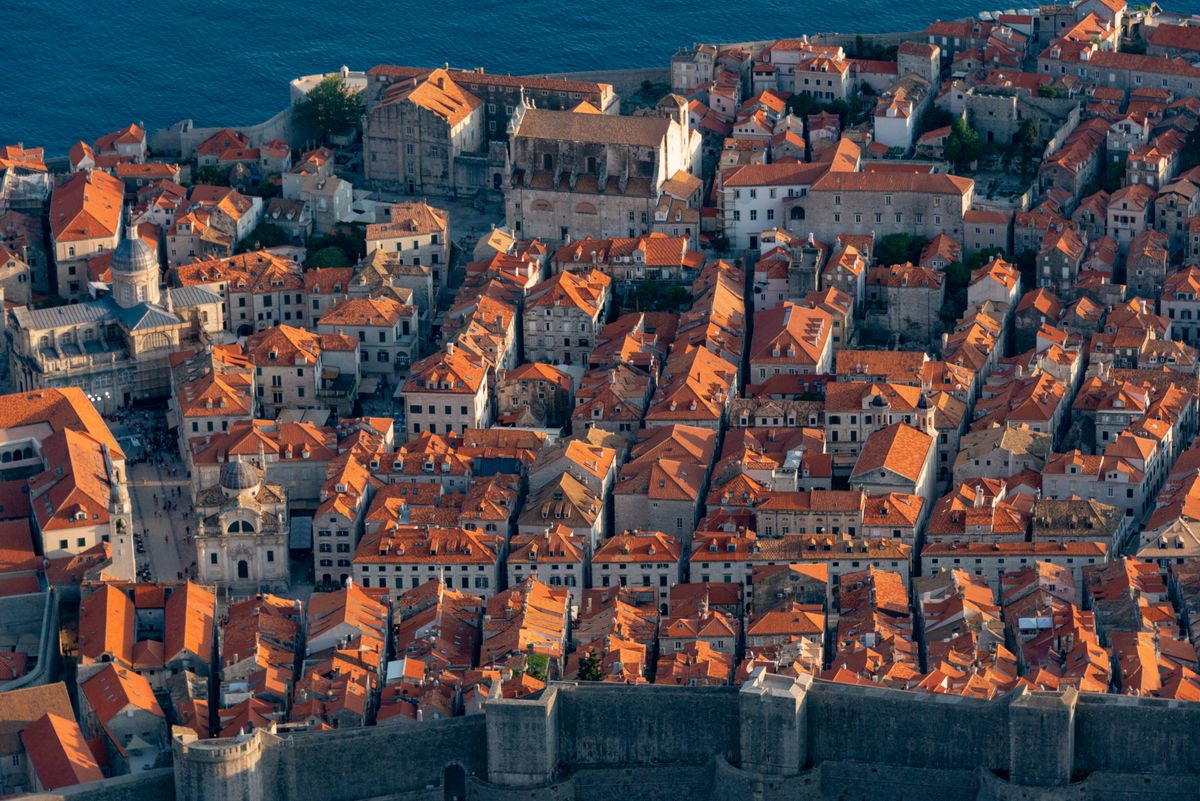
The first season was actually filmed in Malta. From the second season the capital moved to Dubrovnik and stayed there, while Northern Ireland served as the base for the whole ten-year run, with the interiors built in converted warehouses in Belfast.
The Dubrovnik walls: the complete circuit
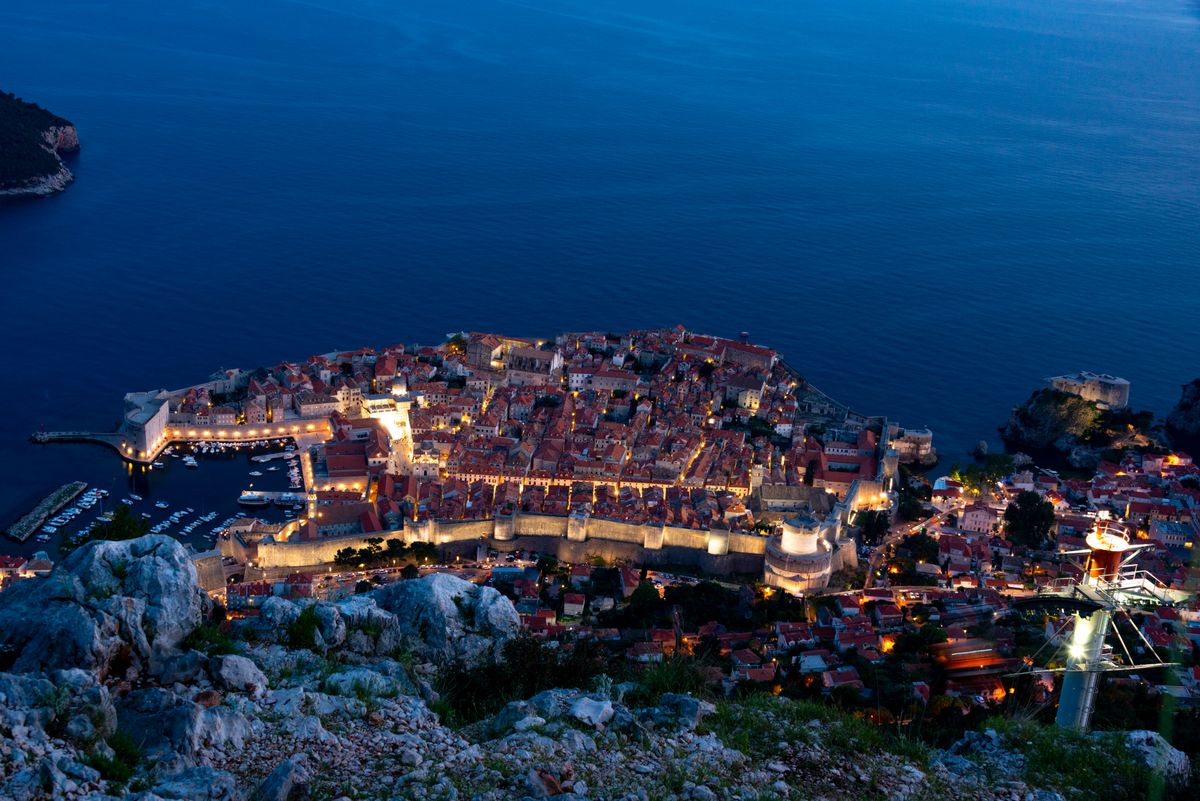
This is where most of what reads as the capital was filmed. The walls run almost two kilometres around the old town, and the circuit takes between one and two hours depending on how often you stop.

The route is one way, clockwise, with three entrances: near the Pile gate, near the Ploce gate and by the maritime museum. Starting at Ploce is the least crowded option and puts the best light behind you in the morning.
There is almost no shade on the walls and the stone radiates heat. In summer, between eleven and four, the circuit is genuinely unpleasant and occasionally dangerous for anyone who struggles in heat. Go at opening, around eight, or in the last two hours before closing. Take water: the few stalls on the walls charge what they like.
The city was already taking far more visitors than it could hold before the series, and the success of the show pushed it further. The authorities now cap the number of people inside the walls at any one time and limit cruise arrivals. If you come in July or August you will be one of a very large number of people doing exactly the same thing, and no guide can fix that. May, June, September and October are meaningfully better.
Lovrijenac fortress and the bay below
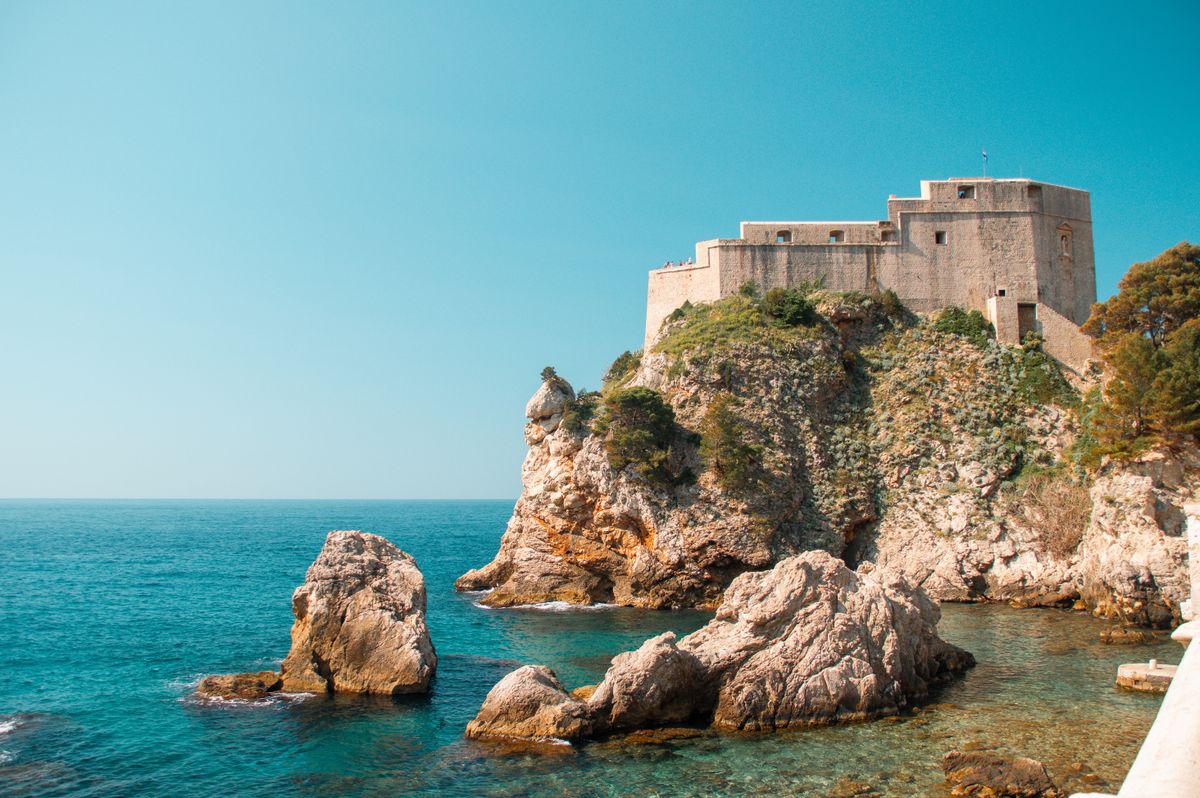
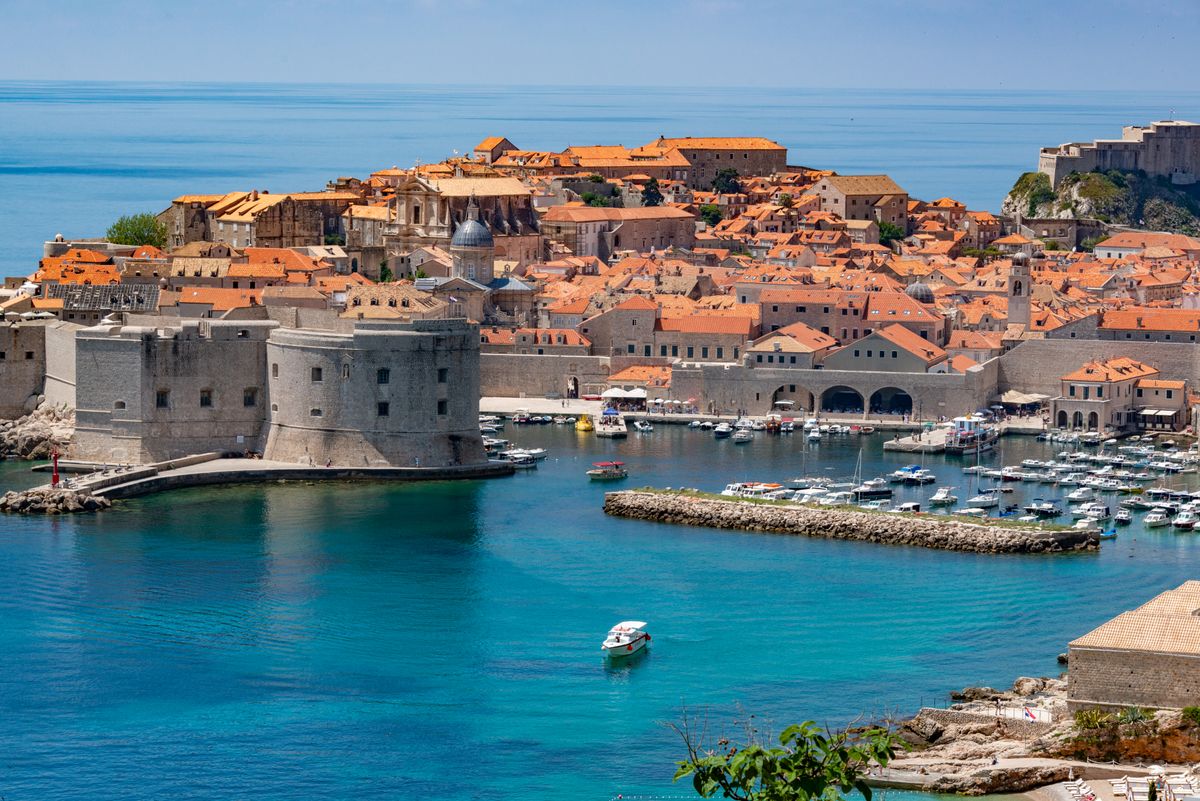
The fortress on a thirty-seven metre rock, just outside the western walls, served as the exterior of the royal keep. It is a separate structure from the wall circuit but the same ticket usually covers both.
Above the entrance is carved a Latin inscription saying, in essence, that liberty is not sold for all the gold in the world. It was there four centuries before any of this and remains the best thing about the building.
From the upper terrace you get one of the best views of the old town. The bay below, between the fortress and the walls, is where several sea-level scenes were shot, and it is a swimming spot for locals.
Through the city: the Stradun, stairs and parks
Inside the walls almost every street was used at some point. A few places are recognisable enough to be worth seeking out deliberately.
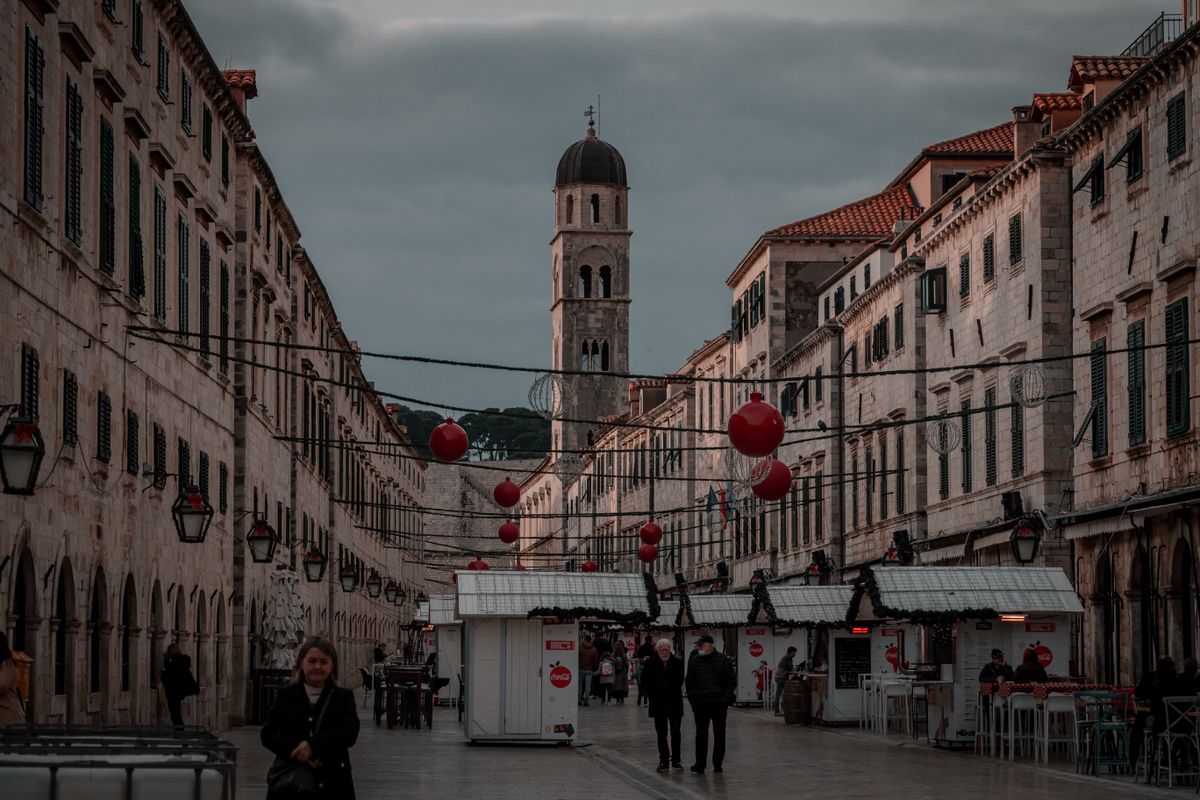
The Stradun, the main street paved in polished limestone, appears in the crowd scenes and processions. It is also the best place to understand how small the old town actually is: it takes four minutes to walk end to end.
The Jesuit stairs, eighty-odd baroque steps climbing to the church of St Ignatius, are where the walk of atonement began. They are free, always open, and busier with photographers than with worshippers.
Gradac park, outside the walls to the west, hosted a wedding that ended badly. It is an ordinary public park with pines and a view of the sea, and it is the quietest of the locations.
Trsteno arboretum, about eighteen kilometres north, founded around 1492 and one of the oldest in this part of Europe, played the palace gardens. It is a genuine botanical collection and worth the trip on its own merits.
Lokrum, the island that played the desert city
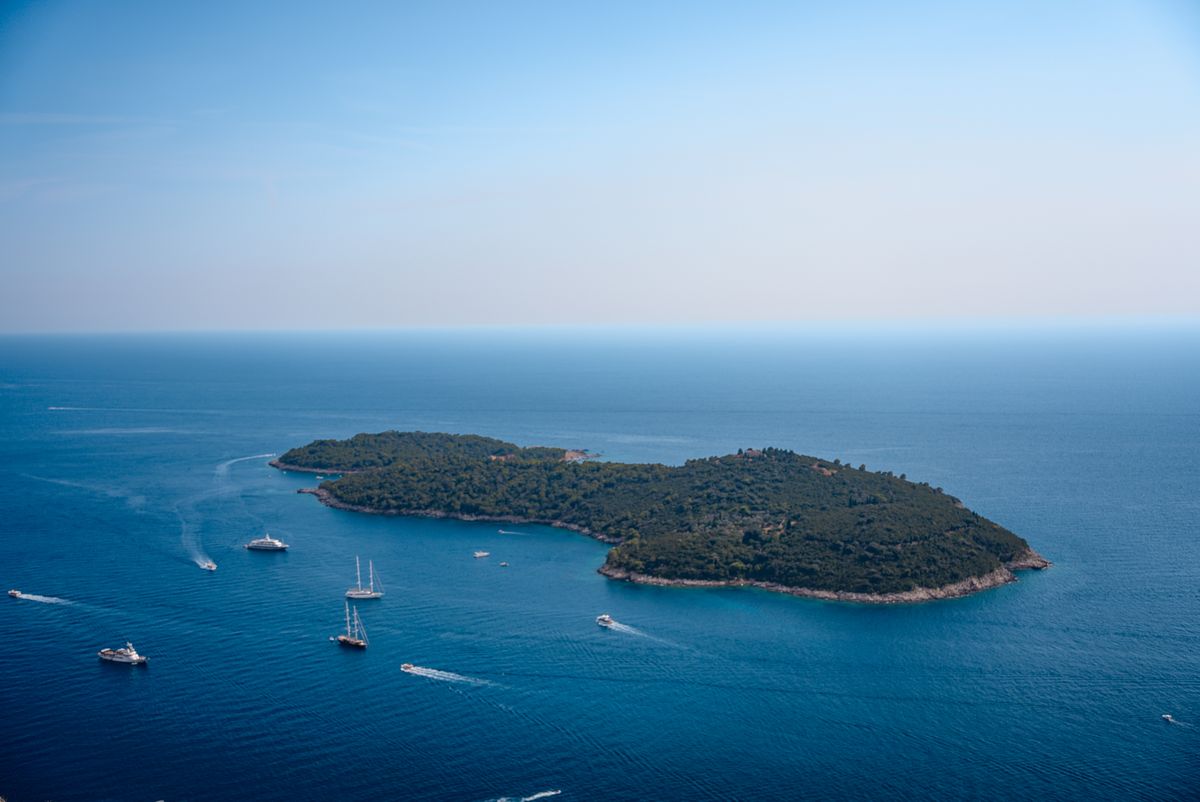
The green island in front of the port, fifteen minutes by boat, played the eastern trading city in the second season. It is a nature reserve with peacocks, a ruined Benedictine monastery and a small salt lake.
In the visitor centre there is a replica of the throne, given to the city by the producers when filming ended. It is free to sit on and there is usually a queue.
One important practical point: you cannot stay overnight on Lokrum. The last boat leaves in the evening and there is no accommodation, by law and by tradition, since the island carries a medieval curse that locals treat with more seriousness than you might expect.
The view from Srd hill
The cable car climbs the hill behind the city in four minutes, to over four hundred metres, and from the top you see everything at once: walls, roofs, Lokrum and the islands beyond.

The installation was built in 1969, destroyed during the 1991 siege and only rebuilt in 2010. In the fort at the top there is a museum about that siege, which is a useful and sobering correction to a day spent on television locations.
If you would rather not pay for the cable car, a switchback path climbs in about an hour, but it is completely exposed and should not be attempted in the middle of a summer day.
What is not in Dubrovnik: Split, Klis and Sibenik
A common confusion: several scenes people look for in Dubrovnik were filmed two or three hours up the coast.
The cellars of Diocletian palace in Split served as the dragon vaults. The fortress of Klis, above Split, was the eastern slave city. The cathedral at Sibenik played a bank interior. None of these are in Dubrovnik and no amount of walking around the old town will find them.
They do link naturally into a coastal drive, which is the sensible way to combine them: Dubrovnik for two or three days, then north along the coast with stops.
Northern Ireland: Winterfell at Castle Ward
The northern castle courtyard, where the archery is shot in the first episode, is the farmyard of an eighteenth-century estate on the shore of Strangford Lough.
The main house, run by the National Trust, is an architectural curiosity in its own right: one facade is classical and the other Gothic, because the couple who built it could not agree and simply did half each.
There is now a full visitor offer: you can shoot arrows in the actual courtyard, hire costumes, and cycle the estate trails. It is the most commercially developed of the locations and, for families, the most enjoyable.
Details and opening times are on the National Trust page for Castle Ward.
The Dark Hedges, the most photographed road
The beech avenue on Bregagh Road, near Stranocum, became the kingsroad. It was planted in the eighteenth century by a family who wanted an impressive approach to their house, and it has outlived the house.
Three things to know before going. First, the road is closed to traffic, precisely to protect the tree roots, so you park nearby and walk. Second, storms have brought down several of the trees and the avenue is thinner than it was in the early seasons. Third, it is small, and at midday in summer there are more people than trees.
The solution is simple and it works: come at sunrise. The light coming sideways through the trunks is far better anyway, and for the first hour of the day you will have it more or less to yourself.
The Antrim coast: Ballintoy, Larrybane, Cushendun
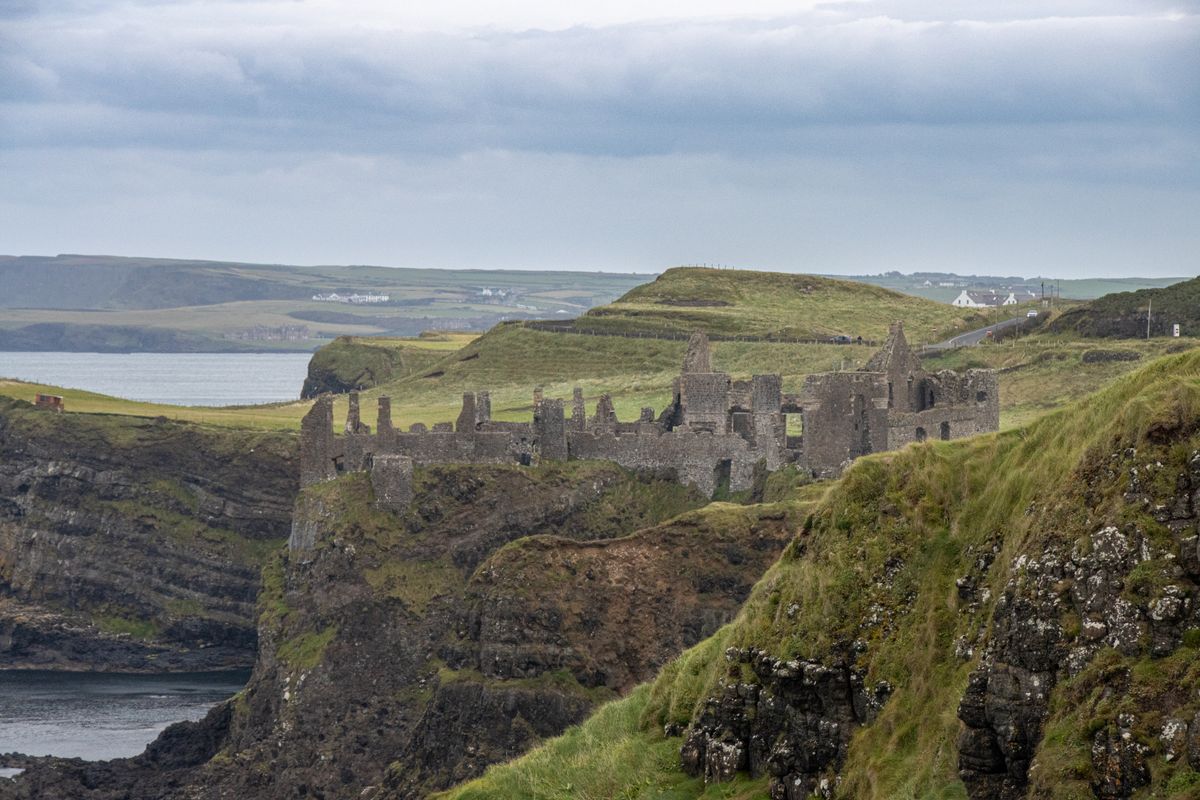
The densest concentration of locations sits on about thirty kilometres of coast between Ballycastle and Portrush, which is also one of the finest coastal drives in Europe independently of any television.
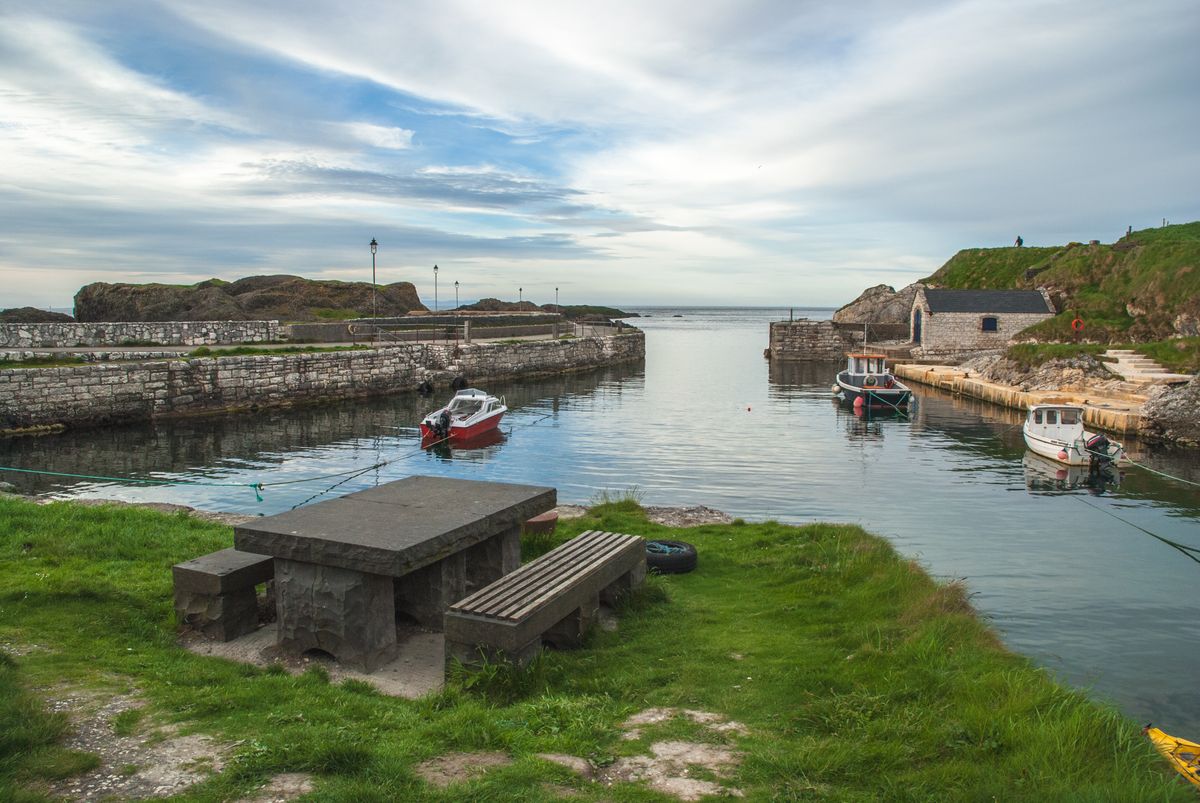
Ballintoy harbour is the most convincing of them all. A tiny fishing harbour at the end of a narrow, steep road, it played the iron islands and needed almost no set dressing.
Larrybane quarry, beside the car park for the Carrick-a-Rede rope bridge, hosted an army camp and a duel. The rope bridge itself, thirty metres long and thirty metres above the water, is not a location but is worth crossing anyway.

The Cushendun caves, cut by the sea into rock hundreds of millions of years old, are where a famously unpleasant birth scene was filmed. They are free, take ten minutes and are directly beside a car park.
Downhill beach, with the Mussenden temple perched on the cliff above, played a fortress island. And along the same road lies the Giants Causeway, sixty million years of hexagonal basalt, which appears in no episode and is the best thing on the coast.

Tollymore and the Mourne forests
The very first scene of the very first episode, the patrol beyond the wall, was filmed in Tollymore forest park, at the foot of the Mourne mountains.
Tollymore was, in 1955, the first place designated a forest park in Northern Ireland. It has marked trails along the river, stone bridges and gothic follies, and it is a genuinely good walk regardless of what was filmed there.
The Mourne mountains around it are said to have given C.S. Lewis the landscapes of Narnia. They rise straight out of the sea and are, for their modest height, unusually dramatic.
Belfast: windows, doors and studios
The city was the logistical base of the production for a decade, and the traces are in the urban landscape in unexpected forms.
Six large stained glass windows are installed along a route linking the Titanic quarter to the centre, each depicting a house or a storyline. They are free and permanently on view.
When a storm brought down several of the Dark Hedges beeches, the timber was recovered and carved into ten heavy doors, each installed in a pub somewhere in Northern Ireland, usually near a location. Collecting them is a pub crawl with a theme.
The throne room, the crypt, the ships and most of the interior sets were built in the Belfast studios, which are not open to the public as a working facility. There is a separate ticketed studio experience with original sets and costumes, which is well done, but it is not the same as walking onto the sound stage. Anyone expecting to visit the studios themselves will be disappointed.
While in Belfast, the Titanic quarter is worth the time on its own account: the ship was built here and the museum devoted to it is among the best of its kind in Europe.
Itinerary and logistics
The two destinations do not connect. They are at opposite ends of Europe with no direct flight, and they are treated as two separate trips.
| Destination | Days | Transport |
|---|---|---|
| Dubrovnik and the walls | 2 – 3 days | on foot, no car needed |
| Dubrovnik plus the Split coast | 5 – 6 days | hire car |
| Northern Ireland locations | 3 – 4 days | hire car essential |
| Belfast city | 1 – 2 days | on foot and bus |
Public transport does not reach most of the locations, and the few services that exist are infrequent. Distances are short, roads are good and driving is on the left. Without a car you are restricted to organised day tours, which work but fix your timing at exactly the hours when the sites are busiest.
Local information is on the Dubrovnik tourist board and on the Northern Ireland tourism site.
Frequently asked questions (FAQ)
Conclusion
The locations worth travelling for are the ones that needed no set dressing: the Dubrovnik walls, Lovrijenac on its rock, Ballintoy harbour and the Dark Hedges at first light. Everything with a throne in it was built in a warehouse in Belfast.
Treat them as two trips rather than one. Dubrovnik in the shoulder season, on foot, and Northern Ireland with a car and three days, starting each morning before the tour buses.
