
 By

Thessaloniki is the second city of Greece and the first for food, and that is not brochure copy but something Athenians concede. It has fifteen early Christian and Byzantine monuments on the UNESCO list, a waterfront promenade of nearly five kilometres, and the history of a multilingual city that ended abruptly in the last century.
What to eat and where, what to see across the Roman and Byzantine layers, what happened to the multi-ethnic city, and how to move around.
Why Thessaloniki is the food capital of Greece
The explanation is historical. After 1922 the population exchange with Turkey brought hundreds of thousands of Greek refugees from Asia Minor into the city, arriving with recipes, spices and techniques entirely unlike those of southern Greece. Layered on top of that are the Sephardic Jewish and Ottoman traditions.
- Bougatsa: filo pastry with custard, cheese or minced meat, eaten in the morning. The specialist shops have queues at eight.
- Koulouri: the sesame bread ring sold on every corner, the cheapest breakfast in Greece.
- Souvlaki and gyros: bigger portions and lower prices than Athens, with places open late into the night.
- Mezedopoleia: places where you order many small plates and drink tsipouro. This is the standard way to have dinner here.
- Trigona Panoramatos: pastry cones filled with custard, invented in the Panorama suburb.
- The Modiano and Kapani markets: food halls, the first recently renovated, both with tables where you eat on the spot.
Tsipouro is the drink of the city, a pomace spirit served cold in small bottles, always with food. It is drunk slowly over a couple of hours and the order arrives in waves. It is not a shot.
The layers: Roman, Byzantine, Ottoman
The city was founded in 315 BC by Cassander, who named it after his wife, the half sister of Alexander the Great. It has never been abandoned since, and the result is that digging for any underground car park turns into an archaeological site.
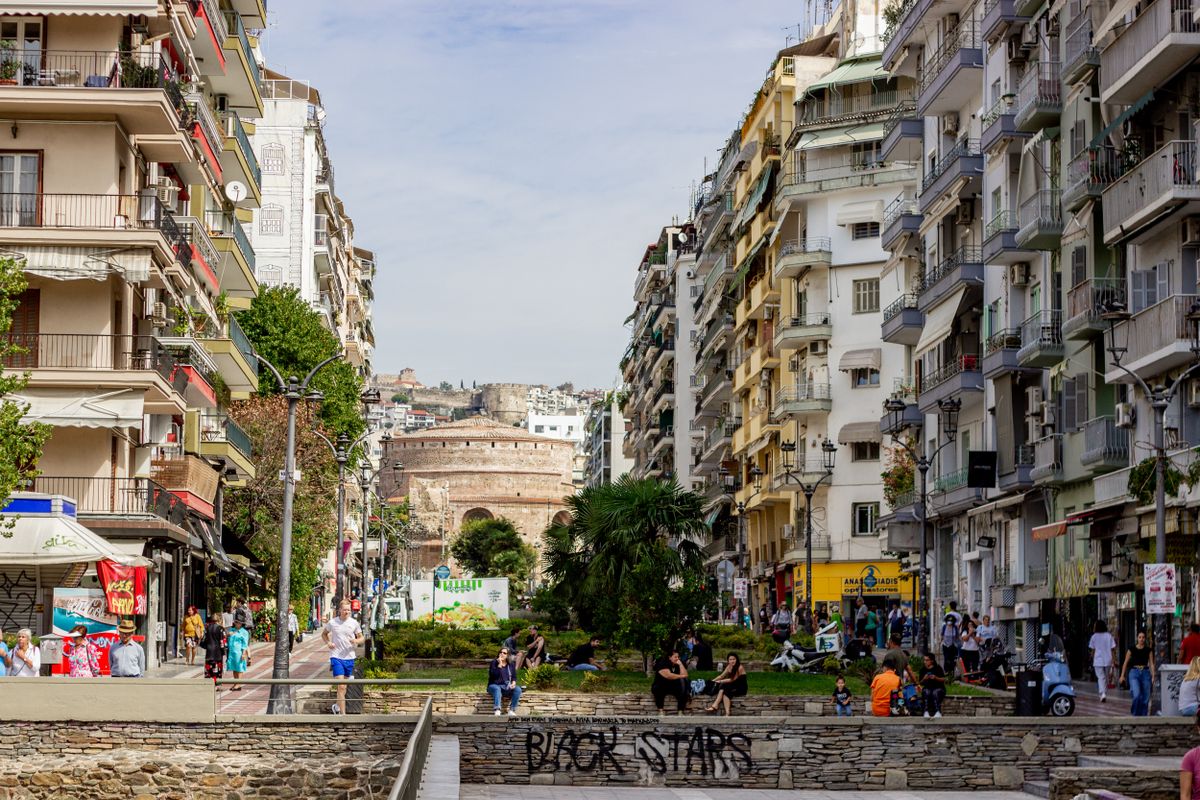
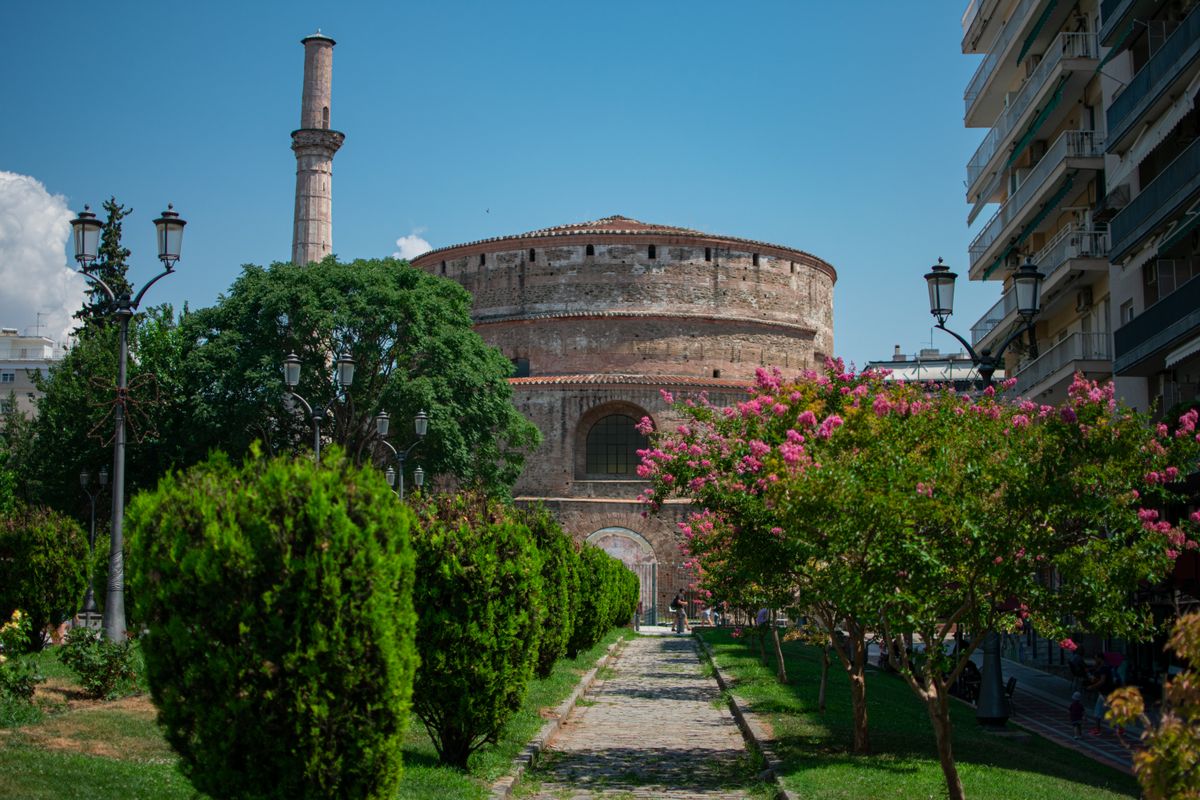
- The Rotunda of Galerius, fourth century: mausoleum, then church, then mosque. With mosaics surviving in the dome.
- The Arch of Galerius, known locally as Kamara: the meeting point of the city, with reliefs from the Persian campaign.
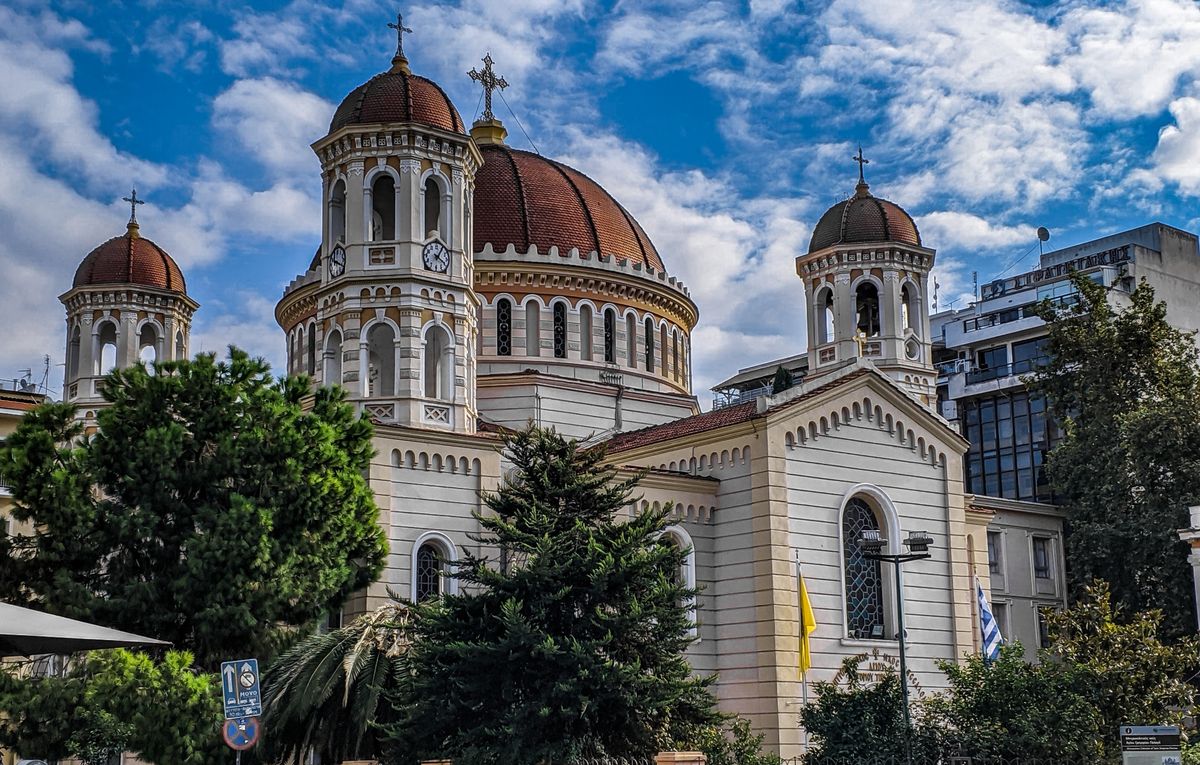
- The church of Saint Demetrios: the most important in the city, raised over a Roman bath where the saint is said to have been martyred, with a crypt you can visit.
- Hagia Sophia, eighth century: with mosaics and frescoes from different periods.
- Hosios David: tiny, with a fifth century mosaic that is among the finest anywhere.
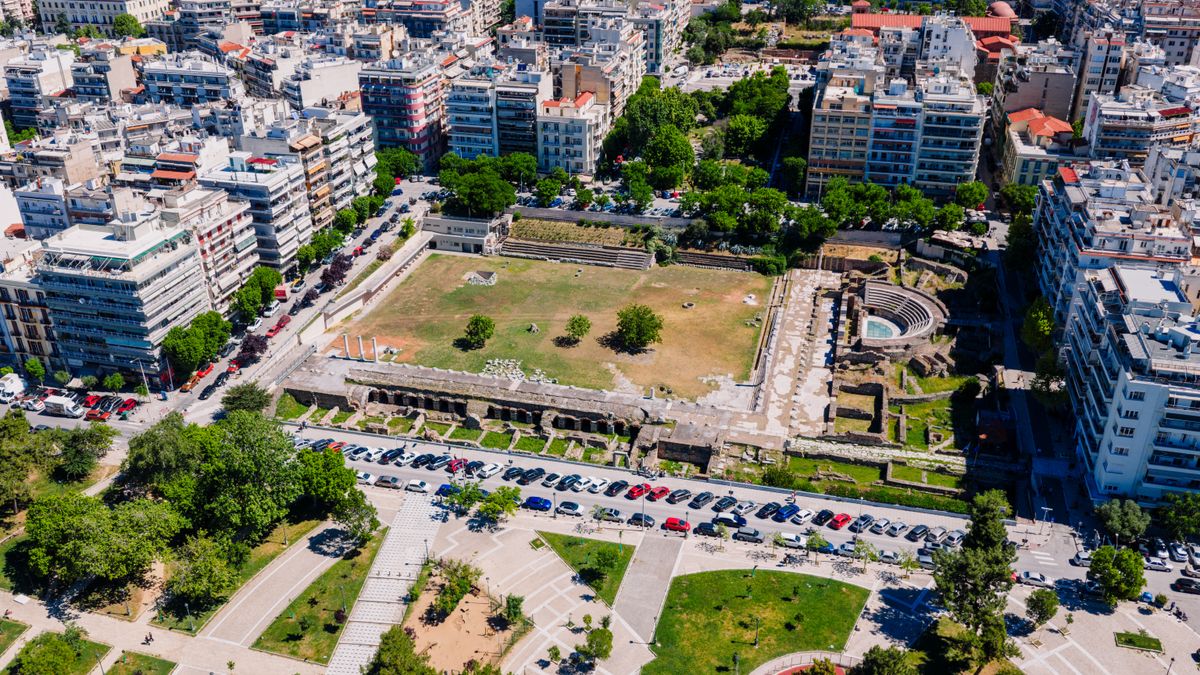
- The Roman forum: found by accident in the fifties, while a courthouse was being prepared.
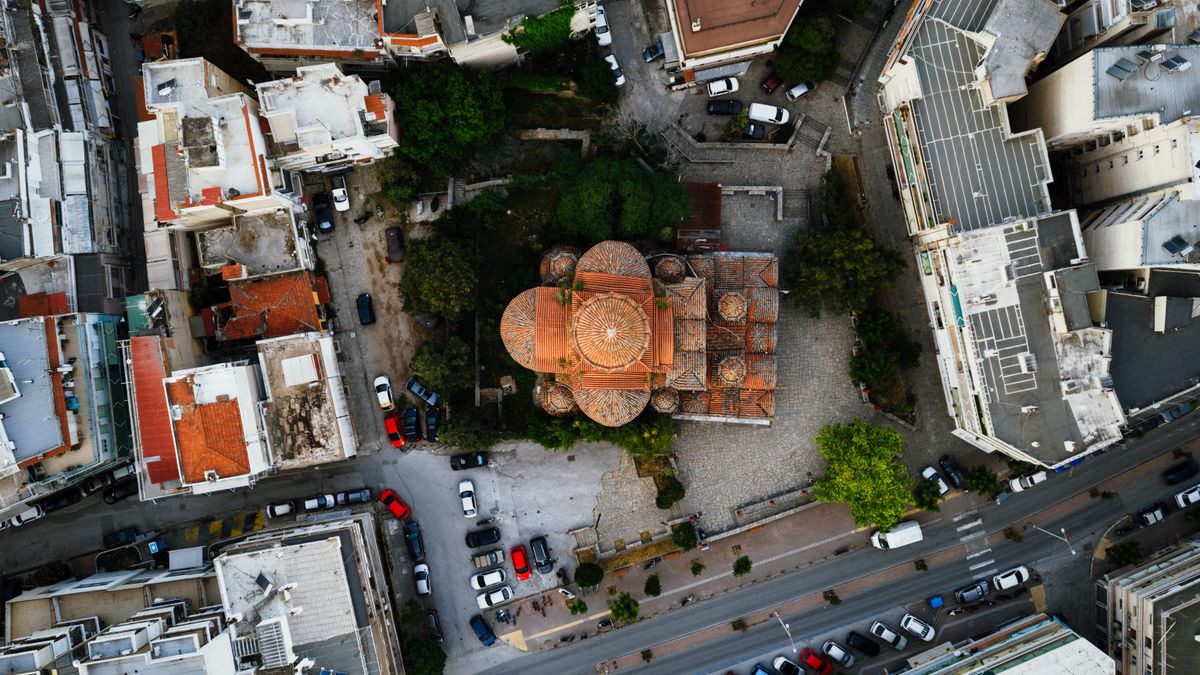
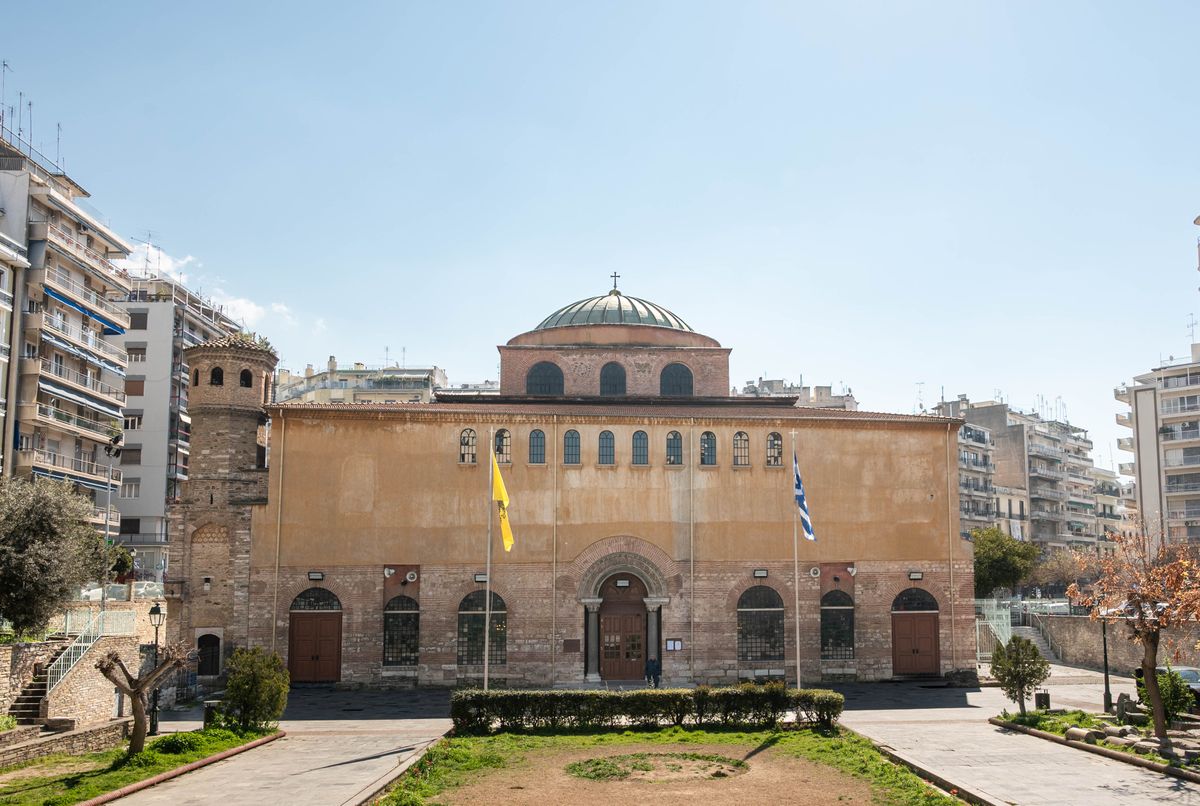
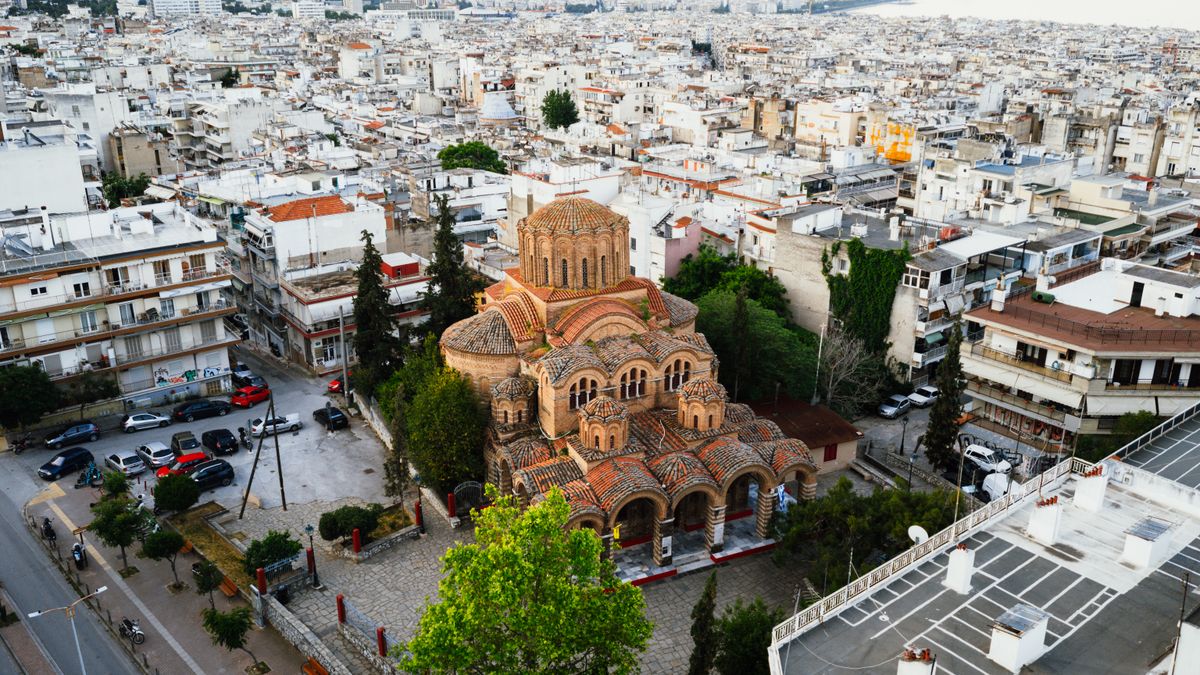
Fifteen of these monuments together form a UNESCO site inscribed in 1988. They are scattered through the city rather than grouped, and most are free or very cheap to enter.
The fire of 1917 and the city that vanished
In August 1917 a fire that started in a kitchen burned through the city centre for thirty two hours and destroyed roughly a third of the built area. Over seventy thousand people were left without homes, most of them from the Jewish community.
Reconstruction followed a modern plan of wide boulevards and squares, drawn up by the French architect Ernest Hébrard. Aristotelous Square, opening onto the sea, is the most visible part of that plan. The side effect was that the Ottoman city disappeared almost completely.

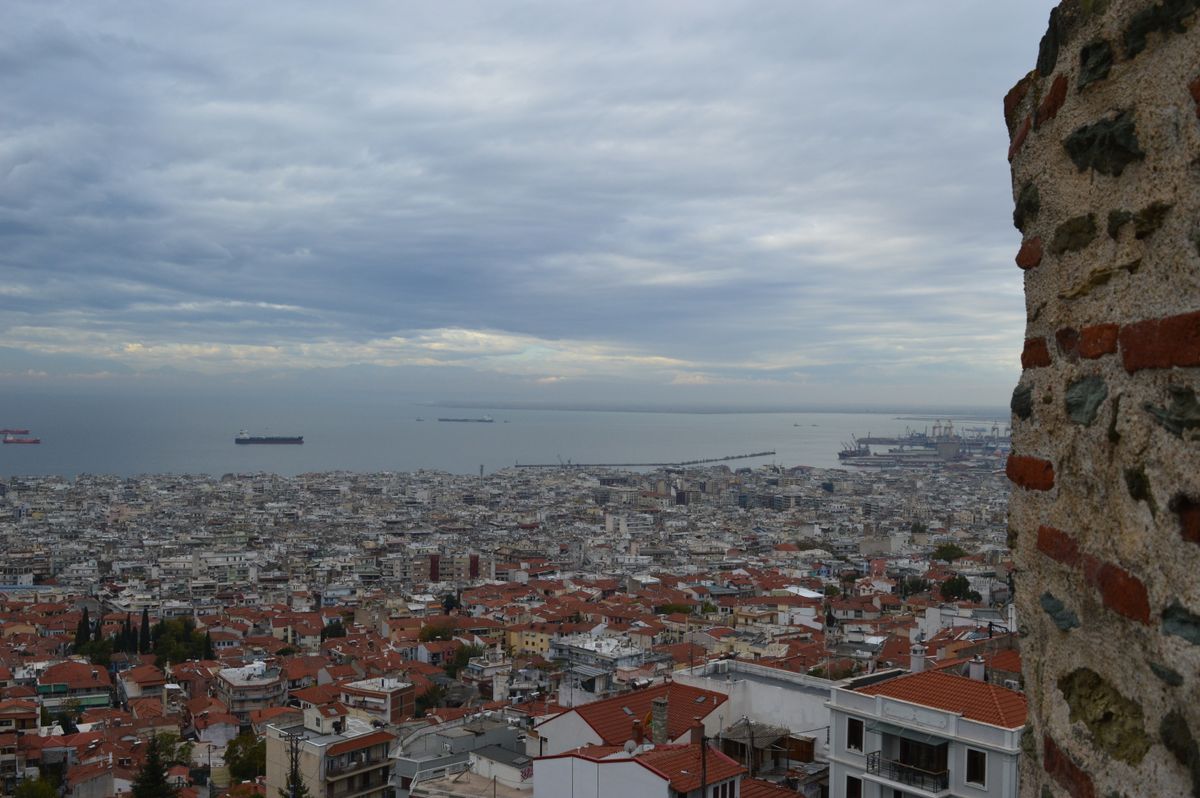
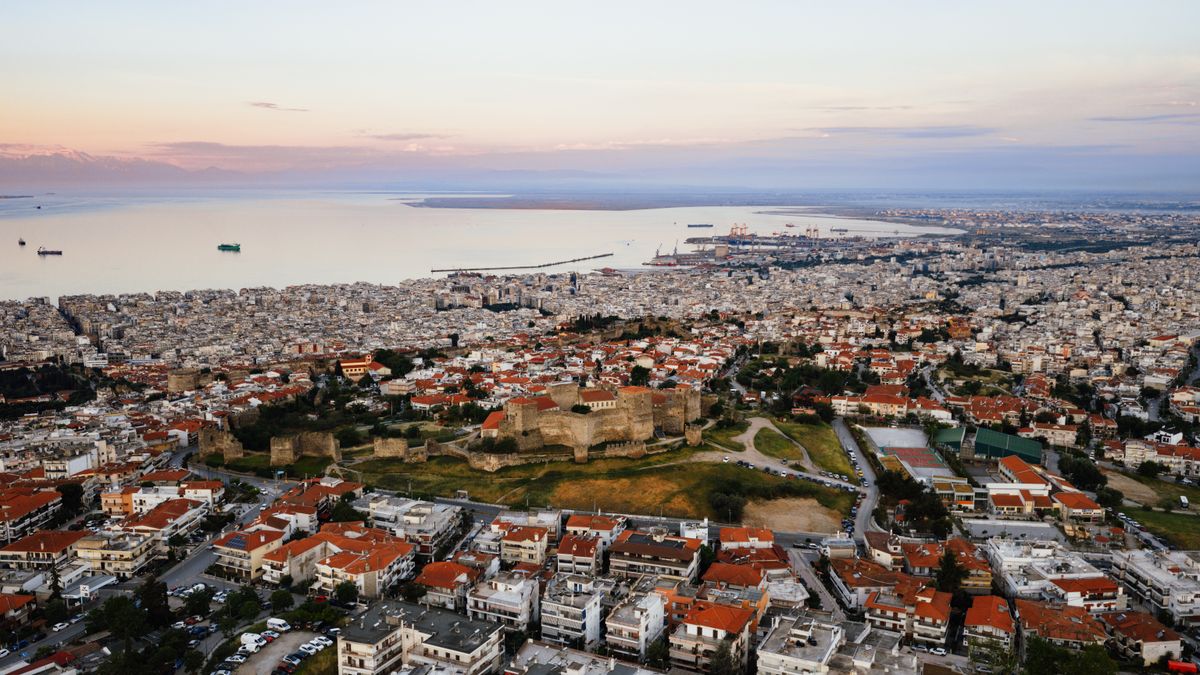
What survived is Ano Poli, the Upper Town, the hillside quarter of crooked lanes, Ottoman houses with overhanging upper storeys and the Byzantine walls. It is the only place where you can see what Thessaloniki looked like before, and the view from the Heptapyrgion fortress takes in the whole bay.
The city once called the Jerusalem of the Balkans
For nearly four centuries Thessaloniki had a Jewish majority. The community arrived after the expulsion from Spain in 1492, spoke Ladino, a language derived from medieval Spanish, and dominated the port to such an extent that it closed on Saturdays. The city was known as the Mother of Israel.
In 1943 the German occupation deported around fifty thousand Jews from the city to Auschwitz. Over ninety five per cent did not return. The community today numbers a few hundred people.
You can visit the Jewish Museum in the centre, housed in one of the few buildings that survived the fire, and the memorial in Eleftherias Square, from where the deportations departed. The old cemetery, with around three hundred thousand graves, was destroyed in 1942, and the university campus now stands on the site, with a memorial plaque.
The quarters and how to walk them
The city is organised in strips parallel to the sea, which makes orientation simple: the further up you go, the further back in time.
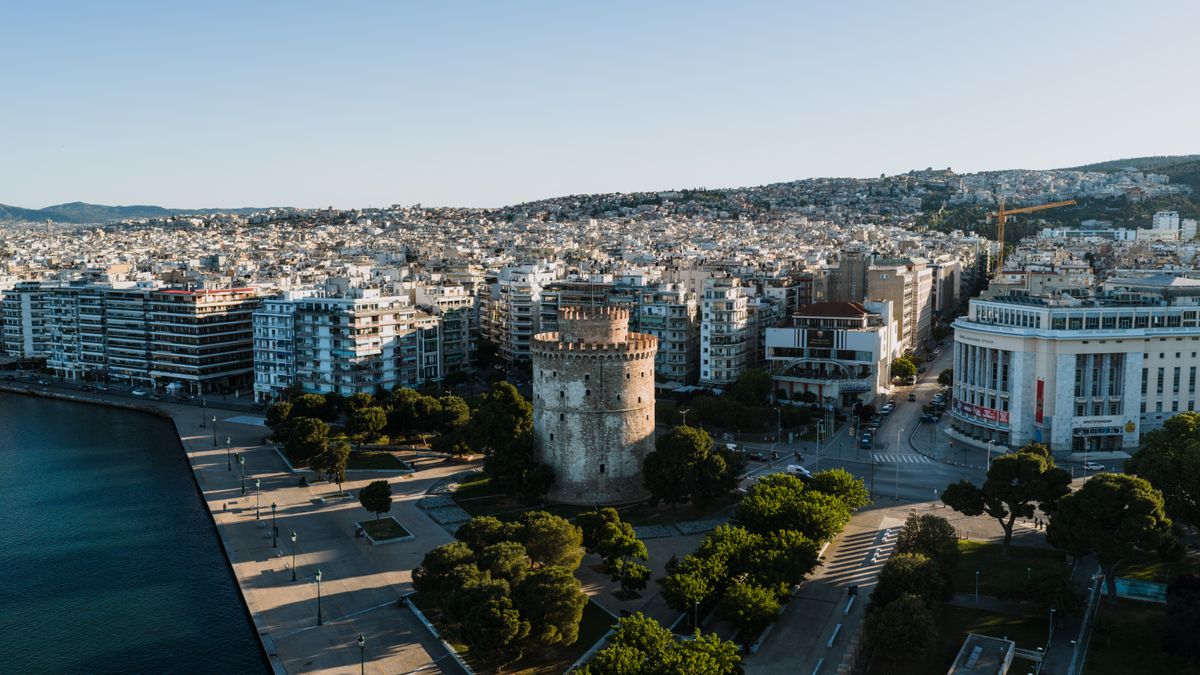
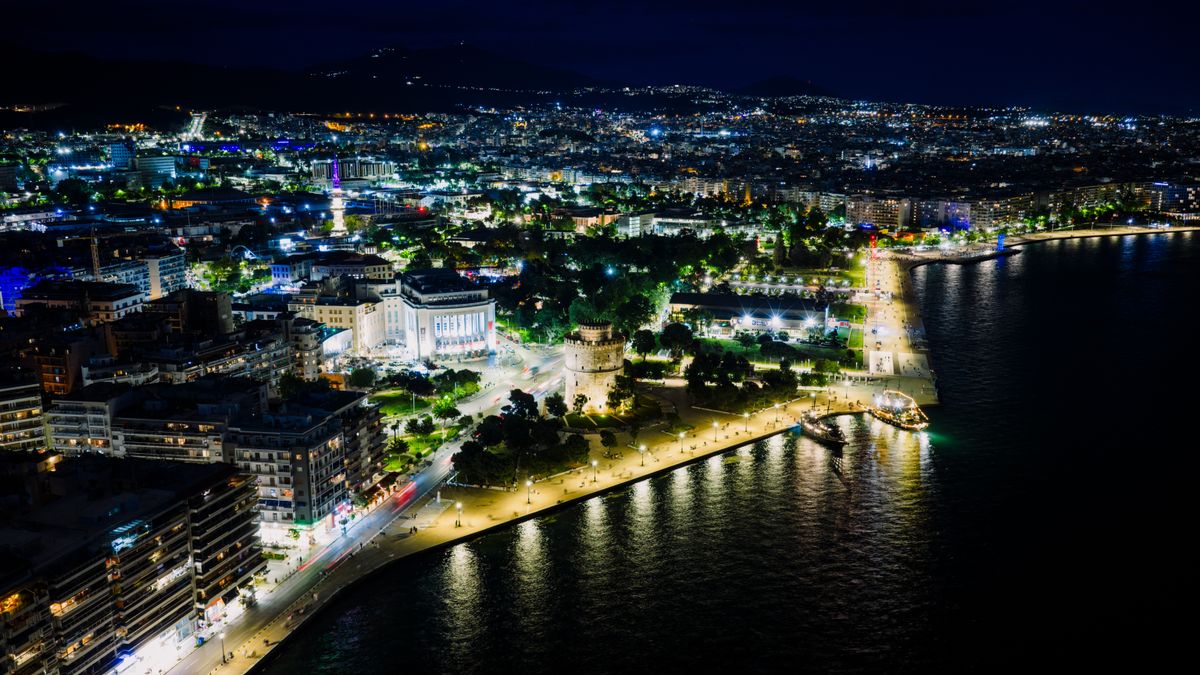
- The Nea Paralia waterfront: nearly five kilometres of redesigned promenade with themed gardens. The best evening walk in Greece.
- Ladadika: the former oil merchants quarter, now the restaurant and bar district, in low coloured buildings.
- Valaoritou: the younger bar quarter, in converted industrial buildings.
- Ano Poli: the Upper Town, with the Byzantine walls and the panorama. Forty minutes up on foot, or by bus.
- Aristotelous Square: the rebuilt centre, opening directly onto the sea.
- The port area: with the Photography Museum and the Contemporary Art Centre in converted warehouses.
Construction began in 1986 and only finished recently, because every station hit an archaeological layer. The result is unusual: some stations function as museums, with remains displayed in situ, exactly where they were found. Venizelou station is worth going down to even if you have nowhere to travel.
Getting there, how long to stay, what it costs
| Item | Detail |
|---|---|
| Airport | Macedonia, 15 km from the centre |
| From Athens | about 4 hours 30 by car, or 4 hours by train |
| Days needed | 2 to 3 for the city |
| Combinations | Meteora 2 hours 30 away, Halkidiki 1 hour |
| Best months | April to June and September to October |
| A full meal | 15 to 25 euros a head |
| Accommodation | from 50 to 60 euros a night in the centre |
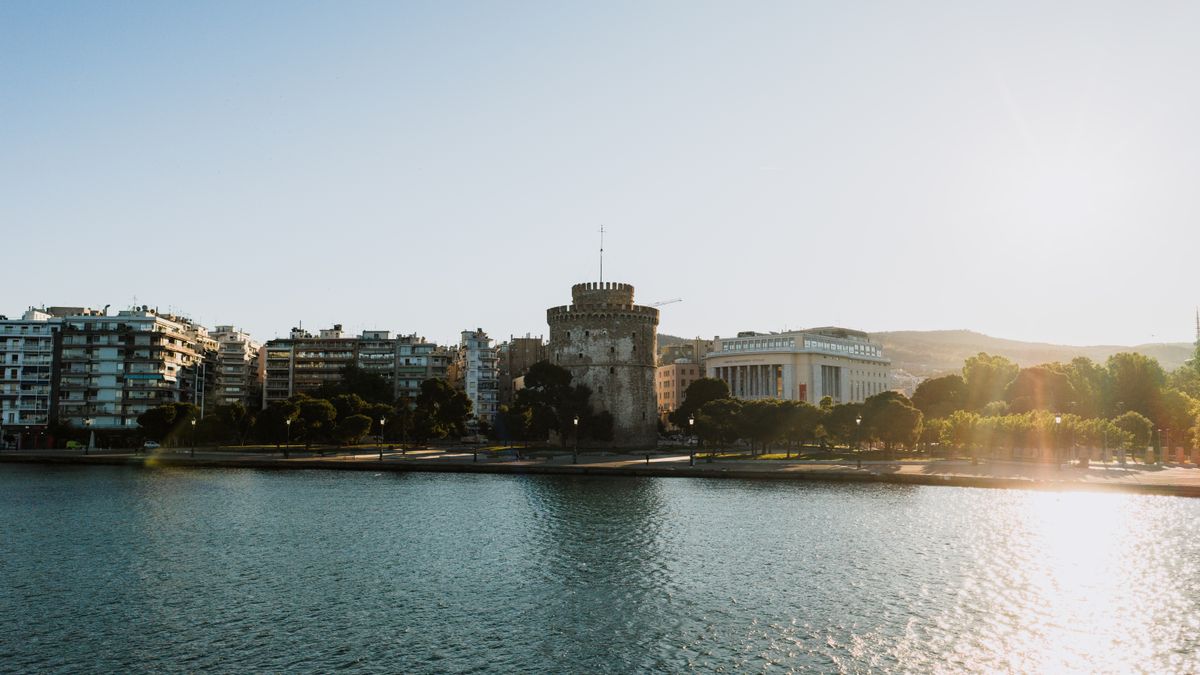
The centre is entirely walkable, and the distance from the White Tower up into Ano Poli is about forty minutes of steady climbing. Summer is hot and humid, and the city empties in August, when residents leave for the sea.
The Byzantine monuments on the World Heritage list are described by UNESCO, and general visitor information by the Greek national tourism organisation.
Frequently asked questions (FAQ)
Conclusion
Thessaloniki has been built over itself for two thousand three hundred years, with Roman monuments in the basements of metro stations and a cuisine drawn from three traditions that all arrived here as refugees.
Give it two or three days, eat at the mezedopoleia rather than on the waterfront, walk up to Ano Poli towards evening, and leave one morning free for queuing for bougatsa.
